
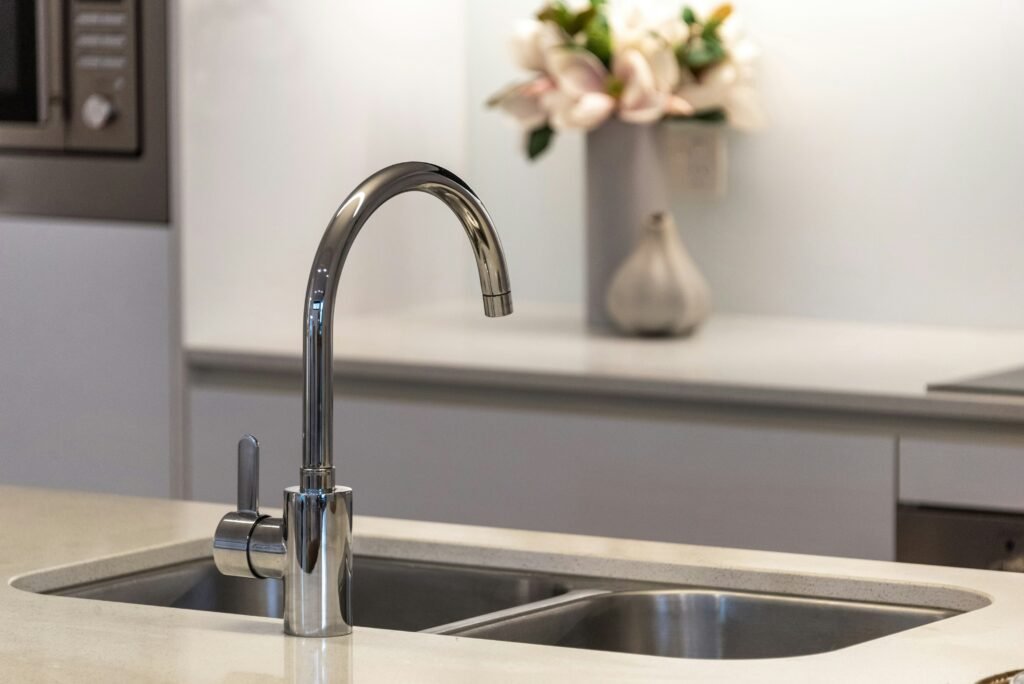
Replacing a kitchen sink can be a relatively simple upgrade or a surprisingly involved job, depending on whether the new sink fits the existing worktop and plumbing.
For a straightforward like-for-like replacement in the UK, a sensible 2026 budget is around £250–£500 including the sink, labour and basic fittings. If you are changing sink size, worktop cut-outs, waste positions or taps, the total can rise to £500–£800 or more.
The sink itself may cost anywhere from under £100 for a basic stainless-steel model to several hundred pounds for ceramic, composite granite or premium designs. Labour is often one of the smaller parts of the total if the new sink drops into the existing opening without major alterations.
This guide explains how much it costs to replace a kitchen sink in the UK in 2026, including sink prices, plumber charges, tap replacement, worktop alterations and when the job becomes part of a wider kitchen renovation.
If you are already considering several kitchen upgrades at once, compare the overall project against our 2026 new kitchen cost guide.
Average kitchen sink replacement cost in the UK
For budgeting, these are useful broad figures:
| Kitchen sink job | Typical 2026 cost |
|---|---|
| Basic like-for-like sink replacement | £250–£400 |
| Mid-range sink replacement | £350–£500 |
| Sink plus new tap | £350–£600 |
| Sink requiring worktop alteration | £400–£700+ |
| Sink plus plumbing changes | £450–£800+ |
| Premium ceramic/composite installation | £500–£900+ |
| Sink only | Around £70–£500+ |
| Labour only for straightforward replacement | Around £100–£250 |
These figures are budgeting ranges rather than fixed prices.
The biggest question is whether the new sink is a direct replacement.
If it fits the same opening and existing pipework can be reused, the job can be relatively straightforward.
If the new sink is larger, deeper or positioned differently, the plumber or kitchen fitter may need to alter the worktop, waste pipe and water connections.
How much does a kitchen sink cost?
Kitchen sink prices vary enormously depending on material, size and brand.
Stainless-steel sink
A standard stainless-steel sink is usually one of the most affordable options.
Budget roughly:
£70–£250
depending on size, bowl configuration and quality.
Stainless steel is popular because it is practical, relatively light and easy to coordinate with different kitchen styles.
Composite granite sink
Composite sinks tend to cost more.
A typical range might be:
£150–£450
They are available in colours such as black, grey, white and beige and can create a more contemporary look.
Ceramic sink
Ceramic sinks often cost around:
£150–£500+
Traditional Belfast-style sinks and larger premium models can cost more.
Ceramic is visually attractive but heavy, so the cabinet and worktop arrangement need to be suitable.
Premium or designer sinks
Large workstation sinks, specialist ceramic models and premium composite designs can cost:
£400–£1,000+
At that point, the sink itself becomes a significant part of the project budget.
How much does labour cost to replace a kitchen sink?
For a straightforward replacement, labour may cost around £100–£250.
That usually assumes:
- good access;
- existing plumbing in reasonable condition;
- no major worktop alteration;
- no unusual sink system;
- the new sink fits the existing space.
The plumber or kitchen fitter may need to:
- isolate the water;
- disconnect the tap;
- disconnect the waste;
- remove the old sink;
- clean and prepare the opening;
- install the new sink;
- reconnect waste and water;
- reseal the edges;
- test for leaks.
A simple replacement can often be completed within a few hours.
The cost increases when the job goes beyond these basic steps.
What makes kitchen sink replacement more expensive?
Several factors can increase the price significantly.
Changing the sink size
If the new sink is larger than the old one, the worktop opening may need enlarging.
That is much easier with some laminate worktops than with stone, quartz or solid-surface materials.
Changing the sink type
Moving from a standard top-mounted sink to an undermount or Belfast-style sink can require much more extensive work.
Plumbing alterations
If the new waste outlet or tap connections sit in different positions, pipework may need to be changed.
Worktop material
Laminate is generally easier to alter.
Quartz, granite and other stone surfaces often require specialist cutting.
Cabinet changes
A deeper or wider sink may not fit comfortably inside the existing base unit.
New tap
Many homeowners replace the tap at the same time, which adds both product and labour cost.
Waste disposal unit
If the sink includes or removes a waste disposal unit, additional plumbing and electrical considerations may apply.
How much does it cost to replace a sink and tap together?
Replacing the sink and tap at the same time can often cost around £350–£600, depending on the products chosen and the amount of plumbing work required.
This can be more efficient than replacing them separately because the plumber is already disconnecting the water supply and working beneath the sink.
If your existing tap is old, leaking or visually dated, replacing both together can make sense.
Our guide to how much it costs to replace a tap in the UK explains tap costs in more detail.
Should I replace the tap when replacing the sink?
Not necessarily.
If the existing tap is:
- in good condition;
- compatible with the new sink;
- the right style;
- not leaking;
you may be able to reuse it.
But this is often a convenient opportunity to upgrade.
Replacing both together can avoid paying for another plumbing visit shortly afterwards.
It can also make the finished sink area feel more cohesive.
How much does it cost to replace a stainless-steel kitchen sink?
A basic stainless-steel sink replacement may cost around £250–£400 all in where the job is straightforward.
For example:
Sink: £100
Waste and fittings: £30
Labour: £150
Estimated total: £280
This is only an example rather than a guaranteed quote, but it shows why a standard stainless-steel replacement can be relatively affordable.
If a new tap is added, the total rises.
How much does it cost to replace a ceramic sink?
Ceramic sinks usually cost more to buy and can require more careful handling.
A typical replacement might cost around:
£350–£700+
depending on the style and installation.
A Belfast sink can be particularly involved because it may sit differently from the original sink and require changes to:
- cabinet height;
- worktop;
- supports;
- waste position.
It can therefore become more like a small kitchen-fitting project than a simple plumbing swap.
How much does it cost to replace a composite sink?
For a composite or granite-effect sink, budget roughly £350–£650 for many straightforward replacements.
The sink itself may cost around £150–£450, while labour and fittings add to the total.
Composite sinks are heavier than many basic stainless-steel models, but they remain a popular choice in modern kitchens because they can coordinate closely with worktops and cabinetry.
What is the cheapest way to replace a kitchen sink?
The cheapest route is usually:
same size + same installation type + same plumbing position.
That means choosing a new sink that fits the existing worktop opening and connects to existing pipework with minimal adjustment.
Changing from:
single bowl stainless steel → similar single bowl stainless steel
is usually simpler than changing to:
large ceramic Belfast sink + new worktop + new tap + altered plumbing.
The more you preserve the existing layout, the lower the labour cost is likely to be.
Can you replace a kitchen sink without replacing the worktop?
Yes, often.
If the existing worktop is in good condition and the new sink fits the opening, the worktop can usually remain.
This is one of the main reasons sink replacement can be a relatively affordable kitchen update.
However, the sink must be compatible with:
- existing cut-out size;
- worktop thickness;
- cabinet width;
- tap position.
If the new sink is smaller than the existing opening, the worktop may need replacing because there is no practical way to reduce the hole cleanly.
Can you fit a bigger sink into an existing worktop?
Sometimes.
If there is enough worktop and cabinet space, the existing opening may be enlarged.
This is most straightforward with laminate.
Stone and quartz require much more care and may need specialist fabrication.
Before buying a larger sink, measure:
- cabinet width;
- existing cut-out;
- sink dimensions;
- tap clearance;
- space around the waste.
Do not assume that because the sink physically fits on top of the cabinet, it can be installed properly.
Can you change from an overmount to an undermount sink?
Potentially, but this can be a much larger project.
An overmount sink sits over the worktop opening.
An undermount sink is fixed underneath.
Undermount sinks are commonly paired with materials such as:
- quartz;
- granite;
- solid surface.
The exposed worktop cut-out must be finished attractively because it remains visible.
If your existing laminate worktop was designed for a standard drop-in sink, converting to an undermount system may not be practical without changing the worktop.
How much do worktop alterations add?
This varies dramatically according to material.
For laminate, a kitchen fitter may be able to enlarge the opening relatively easily.
For quartz or granite, specialist cutting may be required.
The job can therefore add anywhere from tens of pounds to several hundred pounds.
The safest approach is to confirm whether the new sink fits before purchasing it.
Does a plumber or kitchen fitter replace a sink?
Either may be suitable depending on the job.
A plumber is often ideal for:
- straightforward sink swaps;
- tap replacement;
- waste connections;
- pipework changes.
A kitchen fitter may be more appropriate where the job involves:
- cabinet alterations;
- worktop cutting;
- sink support changes;
- wider kitchen modifications.
Sometimes both skills are needed.
For example, a fitter may alter the worktop while a plumber handles the pipework.
How long does it take to replace a kitchen sink?
A straightforward like-for-like replacement can often take around 2–4 hours.
More involved jobs may take most of a day.
The timescale increases if:
- old fittings are difficult to remove;
- worktop alterations are required;
- pipework needs changing;
- cabinet changes are needed;
- sealant needs additional preparation;
- the sink is heavy or awkward.
If the sink is part of a complete kitchen renovation, installation will usually be coordinated with the worktop, tap and plumbing stages.
Do I need a new waste kit?
Possibly.
The existing waste fitting may be reusable, but many installers prefer to replace older components while the sink is already being changed.
A new waste kit may include:
- basket strainer;
- trap;
- connecting pipework;
- overflow fittings.
This is usually not the most expensive part of the job, and replacing worn components can reduce the risk of leaks afterwards.
What if the pipes under the sink are old?
This can increase the cost.
Once the old sink is removed, the plumber may discover:
- corroded fittings;
- poorly installed waste pipes;
- leaking valves;
- damaged seals;
- difficult pipe arrangements.
At that point, it may be sensible to correct the plumbing rather than simply attach a new sink to a poor installation.
Ask the tradesperson to explain any additional work before proceeding beyond the agreed quote.
Can I reuse my old kitchen tap?
Yes, if it is compatible.
But check:
- tap-hole size;
- number of tap holes;
- condition;
- hose connections;
- mounting system.
If your new sink has a different tap configuration, the old tap may not fit.
How much does it cost to move a kitchen sink?
Moving a sink is much more expensive than simply replacing one.
The total cost depends on how far it moves and what plumbing changes are needed.
A relocated sink may require:
- new hot and cold water supplies;
- new waste pipe;
- alterations through cabinets;
- floor or wall access;
- worktop changes.
A short move within the same cabinet run can be relatively manageable.
Moving the sink across the room can become a much larger project.
If you are already changing the kitchen layout, see our kitchen layout ideas before finalising the new position.
Should the sink stay in the same place during a renovation?
Often, keeping the sink in roughly the same location can save money.
Plumbing already exists there.
Moving it may improve the layout, but the practical benefit should justify the extra cost.
For example, if moving the sink creates a much better work triangle or frees a window area, the expense may be worthwhile.
If it only moves 50cm for cosmetic reasons, you may decide the money is better spent elsewhere.
How does sink position affect kitchen layout?
The sink is one of the main functional zones in a kitchen.
It normally needs to work well with:
- dishwasher;
- bin;
- food preparation area;
- fridge;
- cooking zone.
The dishwasher is usually most convenient near the sink.
A bin or food-waste container nearby also makes clearing plates easier.
If you are redesigning rather than simply replacing the sink, our kitchen layout guide explains how to organise these zones effectively.
Single bowl vs 1.5 bowl vs double sink
The sink configuration also affects cost and practicality.
Single bowl
Best for:
- compact kitchens;
- large pans;
- simple layouts.
1.5 bowl
Provides one main bowl plus a smaller secondary bowl.
Useful for draining, rinsing or food preparation.
Double bowl
Useful where two separate sink areas are genuinely needed.
However, it requires more cabinet width.
Do not choose the biggest sink possible if it removes too much worktop space.
Is a ceramic sink worth it?
Ceramic sinks are popular because they look substantial and suit both traditional and modern kitchens.
Advantages include:
- strong visual impact;
- smooth finish;
- compatibility with Shaker kitchens;
- classic appearance.
Potential disadvantages include:
- weight;
- higher cost;
- risk of chipping;
- more involved installation.
If appearance is the main priority, they can be worth the additional cost.
If you simply want the most economical and straightforward replacement, stainless steel is usually easier.
Is a black composite sink practical?
Black composite sinks can look excellent with modern worktops and handleless cabinetry.
However, they can show:
- limescale;
- soap marks;
- water residue.
This is particularly noticeable in hard-water areas.
That does not make them a poor choice, but maintenance should be considered alongside appearance.
Follow the manufacturer’s care recommendations rather than using abrasive cleaners.
Should the kitchen sink match the tap?
They do not need to match exactly.
Popular combinations include:
Stainless sink + chrome tap
Classic and easy.
Black composite sink + black tap
Modern and coordinated.
White ceramic sink + brass tap
Warm and traditional.
Black sink + brass tap
Strong contrast.
The sink, tap and worktop should be considered together rather than selected separately.
How much should I spend on a kitchen sink?
For many households, spending around £100–£300 on the sink itself provides plenty of choice.
You may want to spend more if:
- design is particularly important;
- you want ceramic;
- you need a large workstation sink;
- you want premium composite materials.
But remember that the sink is only one part of the job.
A £400 sink with £200 labour and a £250 tap creates an £850 upgrade before any worktop alteration.
Is replacing a kitchen sink worth it?
Yes, particularly if the existing sink is:
- damaged;
- badly stained;
- leaking;
- too small;
- poorly configured;
- visually dated.
It can refresh the kitchen without replacing cabinets or worktops.
A new sink and tap together can have a surprisingly large visual impact because they sit in one of the most frequently used areas of the room.
Kitchen sink replacement vs full kitchen renovation
If the worktop, cabinets and layout are still good, replacing only the sink can be excellent value.
But if you are already planning to replace:
- sink;
- tap;
- worktop;
- cabinets;
- flooring;
- appliances;
you are moving towards a full kitchen renovation.
At that point, individual repair prices become less useful.
Use our 2026 UK new kitchen cost guide to compare the wider project.
Can I replace a kitchen sink myself?
A competent DIYer may be able to replace a straightforward drop-in sink.
The job can involve:
- disconnecting water;
- disconnecting waste;
- removing sealant;
- lifting the old sink;
- fitting the new sink;
- reconnecting plumbing;
- sealing;
- leak testing.
However, mistakes can lead to water damage.
DIY becomes less attractive where:
- worktop cutting is required;
- stone surfaces are involved;
- pipework needs altering;
- the sink is very heavy;
- the waste layout is complicated.
If you’re uncertain, paying for a professional installation can be cheaper than repairing a damaged worktop or leaking cabinet later.
What should be included in a sink replacement quote?
Ask whether the price includes:
- removing old sink;
- fitting new sink;
- waste kit;
- plumbing alterations;
- resealing;
- tap fitting;
- disposal of old sink;
- worktop cutting;
- VAT where applicable.
This is particularly important when comparing quotes.
One plumber might quote £180 for labour only.
Another might quote £280 including waste fittings, tap installation and disposal.
The second figure is not necessarily worse value.
How can I reduce the cost?
The easiest way is to choose a replacement that works with the existing kitchen.
Look for:
- same or compatible cut-out size;
- similar bowl position;
- existing tap-hole arrangement;
- no major pipe changes.
You can also combine sink and tap replacement during one visit.
For expensive jobs, get comparable quotes before proceeding.
Common kitchen sink replacement mistakes
Buying the sink before measuring
Always confirm the cabinet and cut-out dimensions.
Choosing a sink that is too deep
A deeper bowl may interfere with drawers or waste pipework.
Forgetting the tap
The new sink may use a different tap-hole arrangement.
Ignoring worktop material
Stone cannot be altered as casually as laminate.
Moving the sink unnecessarily
Plumbing changes can add significant cost.
Reusing poor old fittings
Replacing worn waste components during installation can prevent future leaks.
Choosing appearance over practicality
A huge sink may leave almost no preparation surface.
Frequently asked questions
How much does it cost to replace a kitchen sink in the UK?
For a straightforward replacement, budget around £250–£500 including the sink and labour. More complicated jobs involving new taps, worktop alterations or plumbing changes can cost £500–£800 or more.
How much does a plumber charge to replace a kitchen sink?
Labour alone may cost around £100–£250 for a relatively straightforward job, depending on location and complexity.
Can I replace a kitchen sink without changing the worktop?
Yes, if the replacement sink fits the existing opening and the worktop remains in good condition.
How long does it take to fit a new kitchen sink?
A simple replacement can often take around 2–4 hours. More complicated work can take most of a day.
Is it cheaper to replace the sink and tap together?
It can be, because the plumber is already disconnecting and reconnecting the water supply. Combining both jobs may reduce duplicated labour.
Can I put a ceramic sink into an existing kitchen?
Potentially, but its weight, dimensions, cabinet support and worktop arrangement need to be suitable.
How much does it cost to move a kitchen sink?
Moving a sink can add several hundred pounds because new water and waste pipework may be required. Larger relocations can cost considerably more.
Do I need a plumber to replace a sink?
Not necessarily for every simple installation, but a plumber or experienced kitchen fitter can reduce the risk of leaks and plumbing problems.
Final thoughts: how much should you budget to replace a kitchen sink?
For most straightforward UK sink replacements in 2026, £250–£500 is a sensible starting budget.
If you choose a basic stainless-steel sink and keep the existing plumbing and worktop opening, the job can sit towards the lower end.
If you choose:
premium sink + new tap + altered worktop + plumbing changes
the cost can rise to £500–£800 or more.
The most important money-saving decision is usually to keep the replacement compatible with the existing kitchen.
If you are also replacing the tap, use our UK tap replacement cost guide to budget for both jobs together.
If you are considering moving the sink or changing the wider room arrangement, our kitchen layout ideas can help you decide whether the new position genuinely improves the space.
And if the sink replacement is only one part of a much larger project, compare the total against our 2026 new kitchen cost guide.
When you’re ready to get the work done, you can use The Right Guy to discover local plumbers, kitchen fitters and other relevant tradespeople.

Author: The Right Guy Team
UK service guides published by The Right Guy Ltd.