
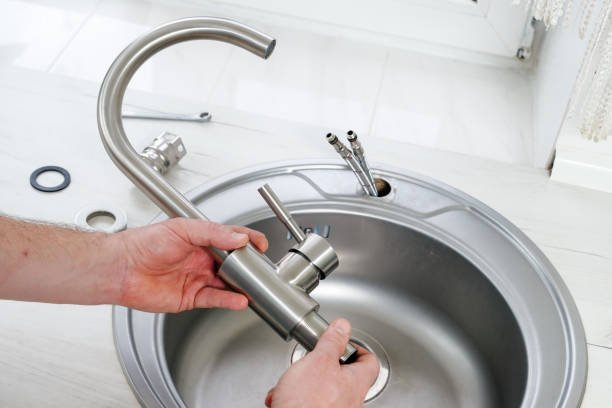
Replacing a tap sounds like one of the simpler plumbing jobs, but the price can vary surprisingly widely. Swapping an old basin mixer for a similar new tap may take little more than an hour, while fitting a different style of kitchen tap can involve altering pipework, difficult access beneath the sink or additional connections.
So, how much does it cost to replace a tap in the UK?
For a straightforward like-for-like replacement, plumber labour is typically around £40–£60 per hour, and a normal kitchen or bathroom tap change often takes one to two hours. Once the new tap is included, a straightforward replacement can commonly cost somewhere around £80–£200, although premium taps, difficult access or pipework alterations can push the total substantially higher. Current 2026 guides put a simple kitchen tap replacement at around £110 in total in some cases, while average professional tap-installation labour is around £140 depending on the work involved.
The most important distinction is whether you are simply replacing an existing tap in the same position or creating a new plumbing arrangement.
Here is what homeowners should budget for in 2026.
Tap replacement costs in the UK at a glance
A useful starting budget is:
| Tap replacement | Typical budget |
|---|---|
| Plumber labour | Around £40–£60 per hour |
| Straightforward kitchen tap replacement | Around £80–£150+ |
| Basic bathroom basin tap replacement | Around £80–£150+ |
| Bath tap replacement | Around £100–£200+ |
| Outside tap like-for-like replacement | Around £80–£150 |
| New tap requiring additional pipework | Often £150–£300+ |
| Premium/specialist tap installation | Potentially several hundred pounds |
These figures are indicative rather than fixed prices. Current UK cost guides show a straightforward kitchen tap replacement at around £110 in some cases, while outside tap replacement using the existing pipework is estimated at approximately £80–£150.
The tap you choose can also make a huge difference. A basic replacement might cost £20–£50, while pull-out, filtered, sensor and boiling-water taps can cost hundreds of pounds before installation begins.
What affects the cost of replacing a tap?
Tap replacement prices depend on more than the cost of the tap itself.
The type of tap
A straightforward basin mixer is generally much simpler than a specialist boiling-water or filtered-water system.
You might be replacing:
- separate hot and cold basin taps;
- a basin mixer;
- a bath filler;
- a bath/shower mixer;
- a kitchen mixer;
- a pull-out kitchen tap;
- a filtered-water tap;
- an outside tap;
- a boiling-water tap.
The more complicated the tap and its connections, the more installation time may be required.
Whether the replacement is like-for-like
The cheapest scenario is normally replacing an old tap with a new one that fits the existing hole configuration and pipework.
If the new tap requires different connections, extra holes in a worktop or basin, altered pipework or new water supplies, the job becomes more involved.
This is why two homeowners who both say they are “just replacing a tap” can receive very different quotes.
How easy the tap is to access
Kitchen sink taps can be surprisingly awkward.
The plumber may need to work inside a small cupboard behind a sink bowl, waste pipe and other plumbing.
Old fittings may also be corroded and difficult to remove.
A job that looks like a 30-minute swap from above the worktop can therefore take considerably longer underneath it.
Where you live
Plumbing rates vary across the UK.
Current estimates put a typical plumber at around £40–£60 per hour, averaging approximately £50, although rates can be higher in London and other expensive locations.
For a wider breakdown of call-out fees, hourly rates and day rates, see our guide to how much a plumber costs in the UK in 2026.
How much does it cost to replace a kitchen tap?
For a straightforward kitchen tap replacement, budgeting roughly £80–£150 or more including a basic tap is reasonable, although premium products quickly increase the total.
One current 2026 UK guide estimates a straightforward kitchen tap replacement at around £110 total, assuming no major changes to the water supply. If additional water lines or alterations are required, labour can rise significantly.
A new kitchen tap itself might cost anywhere from a relatively inexpensive basic mixer to several hundred pounds.
Current published ranges include approximately £50–£150 for pull-out or pull-down kitchen taps, £80–£250 for sensor taps and much higher prices for some boiling-water systems.
Before ordering an expensive tap online, check that it is compatible with your sink, water system and available installation space.
How much does it cost to replace bathroom taps?
Bathroom tap costs vary according to whether you are replacing basin taps, bath taps or a mixer.
A basic basin tap swap is generally towards the lower end of the range because the plumbing arrangement is relatively simple when access is good.
Bath taps can be more awkward.
In some bathrooms, the taps are positioned against a wall or beneath tiled bath panels, making access more difficult than it appears.
If the plumber needs to remove and reinstate panels or work in a particularly confined space, labour costs can rise even though the replacement tap itself is inexpensive.
For a normal straightforward replacement, a budget of around £80–£200 including a standard tap is a sensible starting point, but the exact quote will depend heavily on the fitting and accessibility. Current 2026 labour estimates of £40–£60 per hour mean even a modest increase in installation time can noticeably change the bill.
How much does it cost to replace an outside tap?
A like-for-like outside tap replacement is usually relatively straightforward if the existing pipework and wall connection remain usable.
Current UK estimates put a basic outside tap replacement at around £80–£150, including a typical minimum call-out charge.
Installing an outside tap where one does not already exist is different.
New pipework may have to be run from an internal cold-water supply and through an exterior wall, so the job can require more labour and materials.
Do not compare a quote for a new outside-tap installation with the price of simply unscrewing and replacing an existing external tap.
How much does the actual tap cost?
There is an enormous range.
A simple tap can cost only a few tens of pounds.
Mid-range kitchen and bathroom mixers often cost considerably more, while designer, touchless, filtered and boiling-water taps can reach several hundred pounds.
For example, current UK estimates show pull-out kitchen taps around £50–£150, sensor taps around £80–£250, and boiling-water systems at around £400–£450 on average depending on the product.
That means the labour may be almost identical for two straightforward installations while the final invoice differs by hundreds of pounds because of the taps chosen.
Do not assume a more expensive tap will necessarily cost more to fit. Installation complexity matters more than the retail price alone.
Should you repair a dripping tap or replace it?
A leaking tap does not automatically need replacing.
The problem might be a worn washer, cartridge, valve or seal rather than a failure of the complete tap.
Straightforward leaking-tap repairs during normal working hours are currently estimated at roughly £70–£150, including labour and basic parts.
If the tap is relatively new and otherwise in good condition, repair may make financial sense.
Replacement becomes more attractive when the tap is badly corroded, damaged, difficult to repair, obsolete or already something you wanted to upgrade.
Before ordering a replacement, read our guide to why your tap is dripping, the common causes and how to fix it. It can help you determine whether the problem is likely to justify replacing the entire fitting.
Is it cheaper to supply your own tap?
Potentially.
Buying your own tap allows you to shop around and choose exactly the style and price you want.
However, compatibility matters.
If you buy the wrong fitting and the plumber arrives before anyone realises, you may still have to pay for the wasted visit or additional time.
Check:
Number of tap holes. Does your sink or basin have the correct configuration?
Water pressure requirements. Some taps perform better with particular systems or pressures.
Connections. Are the supplied tails or connectors compatible with your plumbing?
Size. Will the tap physically fit the sink and surrounding space?
Clearance. Can handles and pull-out hoses operate properly?
For an expensive specialist tap, it can be sensible to confirm suitability with the plumber before purchasing.
How long does it take to replace a tap?
A straightforward kitchen or bathroom tap replacement generally takes around one to two hours.
However, this assumes reasonably accessible plumbing and compatible replacement fittings.
The job may take longer if:
- old nuts are seized or badly corroded;
- access is restricted;
- valves do not shut off properly;
- existing pipework needs alteration;
- the replacement tap uses different connections;
- additional plumbing faults are discovered.
This is why plumbers sometimes quote a fixed price rather than charging strictly by the hour.
Can you replace a tap yourself?
A competent DIYer may be comfortable replacing a straightforward like-for-like tap where the water supply can be safely isolated and the existing connections are in good condition.
The difficulty is rarely just attaching the new tap.
You need to isolate the water correctly, disconnect the old fitting without damaging existing pipework, create watertight connections and check carefully for leaks afterwards.
Restricted access can make apparently simple installations frustrating.
If pipework needs alteration, valves are seized or you are not confident creating watertight plumbing joints, hiring a plumber can be significantly cheaper than dealing with a leak afterwards.
Do you need a plumber to replace a tap?
Not legally for every basic tap replacement, but many homeowners choose one because it is a relatively short professional job and water leaks can cause disproportionately expensive damage.
A plumber is particularly worthwhile where:
- pipework needs altering;
- the existing plumbing is old;
- isolation valves are faulty;
- access is difficult;
- the tap is expensive;
- the installation involves additional equipment;
- you are uncertain about the water system.
Professional installation is also useful when the tap manufacturer’s warranty has specific fitting requirements.
Why might my tap replacement quote be more than £200?
A high quote does not necessarily mean someone is overcharging.
Find out what the plumber has included.
The tap itself may account for a substantial part of the cost.
There may also be extra work involving:
- new isolation valves;
- replacement flexible hoses;
- altered copper or plastic pipework;
- removal of corroded fittings;
- difficult access;
- drilling or adapting the sink/worktop;
- fixing an existing leak;
- specialist filtration equipment.
Ask for the price to be broken down where the quote is substantially above the cost of a simple replacement.
Should isolation valves be replaced at the same time?
Not automatically.
If existing isolation valves operate correctly and are in good condition, there may be no reason to replace them.
But if a plumber tries to isolate the tap and discovers that the valve is seized, leaking or unusable, replacing it may be sensible while the system is already being worked on.
Isolation valves can make future tap maintenance much easier because the water to the individual fixture can be turned off without necessarily isolating a larger part of the property.
Ask the plumber to explain why any additional valve replacement is being recommended.
Do plumbers charge a call-out fee to replace a tap?
Some do and some do not.
For a small job, a plumber may have a minimum charge because travelling to your property, arranging the appointment and carrying tools and materials takes time regardless of whether the actual repair lasts 20 minutes.
Other plumbers quote a fixed amount that already includes attendance.
That distinction matters when comparing quotes.
A plumber advertising £50 per hour may actually cost more than someone quoting £100 fixed if the first company also adds a substantial call-out charge.
Ask for the total expected price, not just the hourly rate.
Is replacing two taps cheaper than booking separately?
Often, yes.
If you already need a plumber at the property, asking them to replace two straightforward taps during the same appointment may cost less than arranging two separate visits.
You still pay for the additional labour and materials, but you may avoid paying another minimum call-out charge.
This applies to other small plumbing jobs too.
If you have several minor issues — perhaps a dripping tap, faulty isolation valve and another tap that needs replacing — mention them when requesting the quote.
The plumber can then allow enough time and potentially complete everything in one visit.
Do I need an emergency plumber for a broken tap?
Usually not.
A dripping tap or faulty mixer that can be safely isolated can normally wait for a standard appointment.
Emergency attendance may be necessary if a tap or connected pipework has failed and water is escaping uncontrollably.
Emergency plumbing rates are substantially higher than normal daytime rates, so there is little reason to pay them for a non-urgent cosmetic replacement.
Current UK estimates put normal plumbing rates at around £40–£60 per hour, whereas emergency or out-of-hours plumbing can cost significantly more.
If water is actively escaping, isolate the relevant supply where you can safely do so and contact a plumber.
How can you avoid overpaying for a tap replacement?
The easiest way is to make sure you are comparing the same service.
Ask each plumber whether the quote includes:
- labour;
- call-out;
- VAT where applicable;
- removal of the old tap;
- fitting the new tap;
- standard connectors;
- disposal of the old fitting;
- testing for leaks afterwards.
If you are providing the tap yourself, say so when asking for the quote.
Also mention any access problems you already know about.
Photographs of the existing tap and pipework underneath the sink can sometimes help a plumber understand the likely job before arriving.
For more substantial work, use our guide to the 12 essential questions to ask before hiring a plumber before accepting a quote.
Frequently asked questions about tap replacement costs
How much should a plumber charge to change a tap?
For a straightforward replacement, plumbers typically charge around £40–£60 per hour, and the job commonly takes one to two hours. The tap itself is then added to the total if the plumber supplies it.
How much does it cost to change a kitchen tap?
A straightforward kitchen tap replacement can cost roughly £80–£150+ depending on the tap and labour involved. One current 2026 estimate puts a basic straight swap at around £110 overall.
How much does it cost to replace bathroom taps?
For a straightforward basin or bath tap replacement, a practical budget is around £80–£200+, depending on tap price, access and whether existing plumbing can be reused. Current plumber labour rates are approximately £40–£60 per hour.
Is replacing a tap a quick job?
Usually. A standard compatible tap replacement commonly takes around one to two hours, although seized fittings, difficult access or pipe modifications can increase the time.
Is it worth repairing an old tap instead?
Sometimes. If the problem is simply a replaceable internal component, repairing the existing tap may be cheaper. If it is heavily corroded, damaged or obsolete, replacement may offer better value.
Do plumbers supply taps?
Many plumbers can supply them, while others are happy to install a tap you have purchased. Ask whether a supplied tap includes any trade markup and who is responsible if the product itself turns out to be faulty.
Can I replace separate taps with a mixer tap?
Potentially, but it is not always a direct swap. The basin, bath or sink needs the appropriate hole arrangement and the plumbing may require alteration. Ask a plumber to check compatibility before purchasing.
How much should you budget to replace a tap in 2026?
For most straightforward domestic jobs, a sensible starting budget is around £80–£200 including a standard replacement tap.
Labour itself is commonly around £40–£60 per hour, with a normal tap swap taking approximately one to two hours.
You may pay less where the replacement is exceptionally simple and the tap inexpensive.
You can also pay significantly more if you choose a premium mixer, filtered tap, sensor tap or boiling-water system, or if the plumber needs to modify existing pipework.
The best question is therefore not simply “How much does it cost to replace a tap?”
Ask:
How much will this particular tap cost to fit into my existing plumbing, including everything required to complete the job?
That produces a far more useful quote.
If you need a tap replacing and would prefer professional installation, you can find local plumbers through The Right Guy. Compare what is included in the quote, check whether the tap and materials are supplied, and choose a plumber who can clearly explain any additional work required before starting.

Author: The Right Guy Team
UK service guides published by The Right Guy Ltd.