
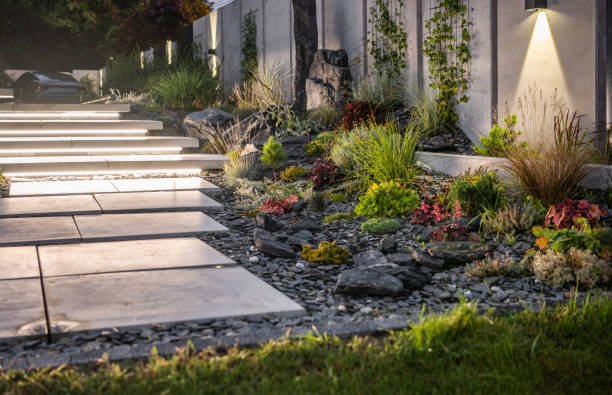
Garden design in 2026 is becoming less about creating a perfectly manicured outdoor space and more about making every part of the garden work harder.
The biggest garden trends for 2026 combine attractive design with practical benefits: more planting, spaces for wildlife, gardens that cope better with changing weather, edible plants squeezed into smaller spaces and comfortable outdoor areas that feel like genuine extensions of the home.
In the UK, climate is becoming particularly influential. The Royal Horticultural Society’s 2026 gardening predictions identify climate change as a major driver of how people are gardening, with greater emphasis on plant diversity, managing water, supporting wildlife and choosing resilient plants.
So if you are redesigning a garden this year, these are the trends worth knowing — including several that are likely to last considerably longer than one season.
1. Naturalistic gardens are replacing overly perfect landscaping
One of the strongest garden design directions for 2026 is a softer relationship between modern landscaping and planting.
The ultra-minimal garden consisting almost entirely of immaculate paving, fencing and a few architectural plants is giving way to something more relaxed.
Think structured paths surrounded by grasses, flowering perennials, shrubs and plants allowed to overlap slightly rather than remaining confined to rigid little rectangles.
The result can still look sophisticated. In fact, the contrast between clean hard landscaping and loose planting often makes both elements more noticeable.
If you like contemporary gardens, you do not have to abandon modern design completely. Our modern garden ideas show how strong lines and contemporary materials can work alongside generous planting.
2. Climate-resilient planting is becoming essential
Plant choice is increasingly about more than colour.
UK gardens need to cope with periods of heat and drought as well as heavy rainfall and occasional flooding. The RHS is therefore placing significant emphasis in 2026 on plant diversity and choosing plants capable of dealing with changing conditions.
That does not mean filling every UK garden with plants associated with hot Mediterranean climates.
It means choosing plants for the conditions they will actually experience.
A dry, exposed south-facing border requires a different planting palette from a garden where heavy soil remains wet through winter.
Diversity matters too. A garden containing a mixture of appropriate plants is less dependent on one species coping perfectly with every weather extreme.
The practical 2026 approach is therefore:
understand your garden first → choose plants second.
It sounds simple, but it can save considerable money replacing plants that were attractive in the garden centre but unsuitable for the site.
3. Wildlife-friendly gardens are becoming mainstream
Wildlife gardening is moving from a specialist interest into everyday garden design.
The RHS has made biodiversity the focus of its Bringing Nature Home campaign throughout 2026, encouraging gardeners to create more opportunities for wildlife regardless of whether they have a large garden or a small courtyard.
And wildlife-friendly does not have to mean abandoning your garden to become completely wild.
You can introduce wildlife value through flowering plants, shrubs, trees, hedges, small areas of longer grass and water.
A garden can still have a contemporary patio and organised borders while providing food and habitat for insects and other animals.
4. Garden ponds are making a practical comeback
Water features have always appeared in garden design, but the modern wildlife pond has a more practical purpose.
The RHS specifically recommends ponds and rain gardens as ways gardens can provide habitat while helping wildlife cope with changing climatic conditions.
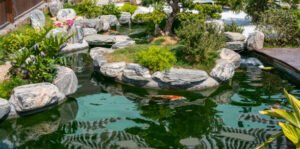
You do not necessarily need an enormous ornamental pond filled with expensive equipment.
Even relatively modest water features can increase the variety of habitat within a garden. For wildlife ponds, features such as accessible edges and suitable planting can be important.
The appearance is changing too. Instead of the perfectly formal pond isolated in the middle of a lawn, contemporary designs often integrate water with rocks, grasses and surrounding planting.
Just remember that ponds require careful consideration where young children have access to the garden.
5. Outdoor living rooms continue to evolve
The idea of treating the garden as an extra room is not disappearing in 2026.
It is becoming more sophisticated.
Instead of putting a table and four chairs on the patio, homeowners are creating defined outdoor lounge areas with sofas, coffee tables, lighting and shelter.
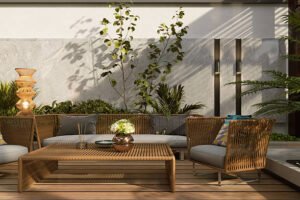
The aim is comfort.
Outdoor furniture is increasingly arranged in the same conversational layouts you would use indoors, while planting around the perimeter stops the space feeling like furniture sitting on an empty slab of paving.
A pergola or partial roof can make the space more usable in British weather, and well-positioned lighting extends its usefulness after sunset.
6. Pergolas and covered garden spaces are becoming more useful
Pergolas are no longer being added simply because an empty patio needs something above it.
They are increasingly becoming functional structures that define outdoor rooms.
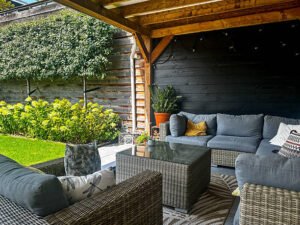
A covered seating area can provide shade during hot weather and some protection during less predictable conditions, depending on the roof design.
Add comfortable seating and lighting and it becomes somewhere the household can realistically use from spring into autumn rather than only on perfect summer afternoons.
Climbing plants can also soften the structure and help integrate it into the surrounding garden.
Where privacy is an issue, carefully positioned screens or planting around the pergola can make the seating area more secluded. Our garden privacy ideas include practical ways to screen overlooked spaces without making the entire garden feel enclosed.
7. Outdoor kitchens are becoming proper cooking spaces
The outdoor kitchen trend continues, but homeowners are increasingly thinking beyond enormous luxury installations.
A useful outdoor kitchen could simply combine a good BBQ with preparation space and storage.
At the other end of the scale, larger gardens can accommodate sinks, refrigeration, pizza ovens, cabinetry and covered dining areas.
The important change is that outdoor kitchens are becoming integrated into the overall garden layout.
Instead of putting a BBQ wherever there happens to be room, the cooking area becomes one zone within a larger entertaining space.
If this is something you are considering, our complete guide to outdoor kitchen ideas covers compact BBQ kitchens, covered designs, sinks, lighting and outdoor dining layouts.
8. Fire pits are extending the garden season
Another way homeowners are getting more use from their gardens is by designing for cooler evenings.
Fire pits create a natural gathering point and can help turn an unused corner into an evening seating area.
Rather than placing a fire bowl randomly in the middle of the lawn, contemporary designs incorporate it into the landscaping.
That could mean a circular gravel seating area, a fire pit built into a patio or a larger sunken entertaining zone.
The practical side matters as much as appearance. Position, surrounding materials, clearances and the particular fire pit manufacturer’s instructions all need consideration.
Our fire pit ideas guide explores different layouts for small gardens, patios and larger outdoor living spaces.
9. Small-space food growing is getting smarter
You no longer need a traditional vegetable garden with long rows of crops to grow food at home.
One of the RHS’s specific predictions for 2026 is the growth of tabletop vegetables, driven partly by compact varieties designed for people with limited growing space.
The organisation highlights compact aubergines, tabletop chillies, hanging-basket cucumbers and even compact grape vines, while noting continuing interest in potted herbs.
That makes edible gardening increasingly relevant to balconies, patios and tiny urban gardens.
Containers can hold herbs and compact vegetables while raised beds can combine edible plants with flowers.
The result does not necessarily need to look like an allotment.
Food-producing plants can become part of the decorative garden itself.
10. Gardens are being designed around water
For decades, the default approach to rainwater was essentially to move it away as quickly as possible.
Garden design is gradually becoming more sophisticated.
Rain gardens, water collection and planting that helps manage different moisture conditions are increasingly relevant as gardens experience periods of both heavy rain and dry weather.
The RHS recommends careful water management and highlights rain gardens as one way of supporting wildlife and responding to changing weather. It also advises retaining green areas rather than unnecessarily replacing them with hard surfaces.
For an ordinary homeowner, this might mean something as simple as installing a water butt and using collected rainwater in the garden.
Larger landscaping projects can consider drainage from the beginning rather than treating it as an afterthought.
11. Pollinator-friendly planting is becoming part of the design
Bees and other pollinators are influencing plant choices in 2026.
The RHS reported stronger interest in pollinator plants during 2025 and expects that focus to continue, while its 2026 programme places biodiversity firmly at the centre of gardening.
This does not require planting a random packet of wildflower seed across the entire garden.
A more considered approach is to include flowering plants across different parts of the growing season.
Lavender can fit beautifully into contemporary planting, while herbs such as rosemary and thyme can provide both culinary and ornamental value when allowed to flower.
If you are new to planting and want varieties that are relatively straightforward to manage, start with our guide to the best plants for beginners.
12. Lower-maintenance gardens are becoming smarter, not emptier
Low maintenance remains a major priority, but there is an important distinction between low maintenance and no garden.
Covering almost everything with hard landscaping may remove some gardening jobs, but it can create other problems and sacrifices many of the benefits that planting provides.
The smarter approach is to reduce repetitive work through better design.
Use ground-cover plants to fill bare soil. Mulch borders. Choose shrubs appropriate for their eventual space rather than constantly pruning oversized plants. Make paths easy to access and maintain.
And deal with weeds through prevention rather than allowing them to become a huge annual job. Our guide on how to stop weeds permanently explains how mulch, planting density and properly prepared hard landscaping can dramatically reduce ongoing weeding.
For a broader garden redesign, our low-maintenance garden ideas provide more ways to make the garden easier to manage without removing its character.
One trend that is fading: paving everything
One of the more important shifts is what homeowners are beginning to move away from.
The RHS advises minimising unnecessary paving and hard surfaces, noting their implications for wildlife, runoff and urban heat.
That does not mean patios are suddenly unfashionable.
A good patio remains incredibly useful.
The difference is balance.
Rather than paving from the back door all the way to the fence, a modern garden might combine a defined patio area with generous borders, permeable areas, trees and other planting.
The hard landscaping creates structure. The planting makes it a garden.
The colours and materials shaping gardens in 2026
The overall visual direction is noticeably natural.
Warm timber, stone, gravel and muted paving work particularly well alongside abundant green planting.
Instead of introducing five competing hard-landscaping materials, many successful contemporary gardens use a restrained palette and allow plants to provide most of the variation.
Naturalistic does not necessarily mean rustic.
A smooth porcelain patio can sit beside ornamental grasses. A dark contemporary fence can create a dramatic background for green foliage. Timber pergolas can soften modern rendered walls.
The key is contrast without clutter.
Are artificial lawns still a garden trend in 2026?
Artificial grass remains available and some homeowners choose it for specific practical reasons, but the broader direction in gardening is moving strongly towards biodiversity, planting, climate resilience and keeping outdoor spaces green in the living sense.
For someone redesigning a garden in 2026, it is therefore worth considering alternatives before automatically choosing artificial turf.
A smaller real lawn, planted beds, gravel paths, ground-cover planting or a combination of surfaces may provide the low-maintenance layout you want while retaining more living material in the garden.
What is the biggest garden trend of 2026?
If one idea connects most of the garden trends of 2026, it is purpose.
Plants are being chosen not only because they look attractive, but because they may also support pollinators, provide food, tolerate difficult weather or cover soil.
Pergolas provide shelter rather than being purely decorative.
Ponds support wildlife.
Outdoor kitchens and fire pits extend how people use the garden.
Rain gardens help manage water.
This matches the RHS’s wider direction for 2026, which places biodiversity, climate resilience and planting for purpose at the heart of gardening.
Which 2026 garden trends are worth investing in?
Trends inevitably change, so expensive permanent landscaping should never be based entirely on what happens to be fashionable this year.
The safest investments are improvements with a practical purpose.
A well-built patio will remain useful. Trees and established planting can become more attractive with age. Good drainage solves a genuine problem. A comfortable seating area makes the garden easier to enjoy. Outdoor lighting can extend how long you use it.
By contrast, extremely distinctive decorative finishes can date more quickly.
If you are investing significant money, build the permanent structure of the garden around functionality and introduce fashionable elements through planting, furniture, pots and accessories that are easier to change.
Garden trends in 2026 are about making outdoor space work harder
The most interesting thing about garden trends in 2026 is that they are not dominated by one colour, one paving material or one must-have plant.
UK gardens are becoming more purposeful.
Wildlife is being invited back in. Planting is becoming more diverse. Water is being managed rather than simply drained away. Smaller spaces are producing food. Patios are becoming outdoor living rooms, and gardens are being designed for evening use as well as sunny afternoons.
You do not need to incorporate every trend.
A small wildlife pond, better planting around an existing patio or a sheltered seating area could change how the entire garden feels without requiring a complete redesign.
If you are planning a larger transformation, you can find local gardeners, landscapers and other garden professionals through The Right Guy. From planting and patios to pergolas, lighting and complete garden redesigns, the right professional can help turn the ideas that suit your space into a garden designed to last beyond 2026.

Author: manager
Company test