
Starting a garden can feel surprisingly complicated. One plant wants full sun, another prefers shade, some need pruning at exactly the right time, and others seem to struggle the moment you forget to water them.
Fortunately, gardening does not have to begin that way.
Some of the best plants for beginners are remarkably forgiving once they are planted in the right place. Choose plants suited to your garden’s conditions and you can create borders, pots and beds that look established without needing years of gardening experience.
Below are 15 beginner-friendly plants that work well in many UK gardens, along with the basic conditions they need and the common mistakes worth avoiding.
Before choosing plants, check your garden first
The easiest plant in the world can become difficult if it is planted in completely the wrong place.
Before visiting the garden centre, spend a little time looking at your garden.
The most important question is how much sunlight different areas receive. A south-facing border might receive strong sunshine for much of the day, while a bed beside a north-facing fence could remain shaded.
Also look at your soil. Does water disappear quickly after rain, or does the ground remain wet for days? Is the soil heavy and sticky or relatively light and free-draining?
You do not need to become a soil scientist. Simply understanding whether you have a sunny or shady garden and whether the ground tends to stay wet or drain quickly will dramatically improve your chances of choosing suitable plants.
1. Lavender
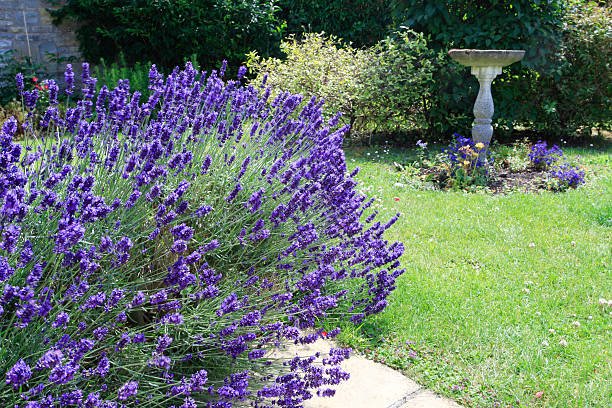
Lavender is an excellent starting point for a sunny UK garden.
Once established in suitable conditions, it requires relatively little attention and provides fragrant foliage and masses of purple flowers. It is also popular with pollinating insects when in bloom.
Lavender generally prefers plenty of sun and well-drained soil. One of the easiest ways to struggle with it is to plant it somewhere that remains persistently wet, particularly during winter.
Avoid giving lavender excessively rich conditions. It is naturally suited to relatively lean, free-draining ground.
A light annual trim can help keep plants compact, but avoid cutting deeply into old woody growth unless appropriate for the particular plant.
If you want an attractive garden without creating a demanding maintenance schedule, lavender also works beautifully in many of our low-maintenance garden ideas.
2. Hydrangeas
If you want impressive flowers without becoming an expert gardener first, hydrangeas deserve consideration.
Their large flower heads can create substantial impact from a relatively small number of plants, and there are many different types available.
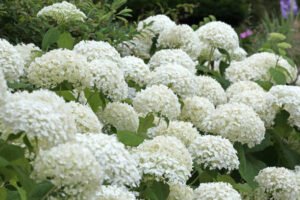
Many hydrangeas prefer moisture-retentive soil and can perform well in partial shade, although exact requirements vary between types. Some are happier with more sun than others, particularly where the soil does not dry out.
The main beginner mistake is assuming every hydrangea should be treated identically.
Check the label when buying because pruning requirements can differ according to the type. Cutting the wrong hydrangea hard at the wrong time can remove stems that would otherwise carry flowers.
3. Hardy geraniums
Hardy geraniums should not be confused with the colourful tender pelargoniums commonly sold for summer containers.
Hardy geraniums are dependable perennial garden plants. Many return year after year and spread to create attractive clumps that can help cover bare soil.
They are particularly useful for beginners because there are varieties suited to a wide range of conditions, from sunny borders to areas with partial shade.
Once established, many require relatively little intervention beyond occasionally cutting back tired growth.
They are also useful for filling gaps between larger shrubs, giving a border a fuller appearance without needing dozens of different plants.
4. Hostas
Have a shady garden? Do not assume nothing interesting will grow there.
Hostas are grown primarily for their impressive foliage, which can range from deep green to blue-green and variegated combinations.
They are particularly useful beneath trees, beside shaded walls and in other areas where sun-loving plants may struggle.
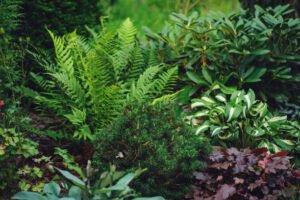
Hostas generally appreciate soil that does not become excessively dry. Slugs and snails can damage their leaves, so they are not entirely problem-free, but the plants themselves are straightforward when their basic conditions are met.
Combining hostas with ferns can create a lush garden area using foliage rather than relying entirely on flowers.
5. Sedum and Hylotelephium
If you regularly forget to water plants, drought-tolerant choices can make gardening considerably easier.
Many plants commonly known as sedums have fleshy leaves that help them tolerate periods of dry weather once established.
Larger border types, including plants now classified within the genus Hylotelephium, produce clusters of flowers later in the season and can provide structure long after many summer flowers have finished.
They generally perform best in sunny, well-drained positions.
Avoid planting them in permanently wet soil. As with lavender, choosing the right location does much of the gardening work for you.
6. Heucheras
Heucheras are a good choice if you want colour without relying solely on flowers.
Depending on the variety, their foliage can be green, lime, bronze, purple, caramel or almost burgundy.
That means they provide interest for a much longer period than plants grown only for a short flowering season.
Heucheras can work in borders and containers, and many varieties are suited to partial shade. Requirements differ somewhat between cultivars, so check the plant label when choosing one.
They look particularly effective planted in small groups or repeated through a border rather than scattered randomly.
7. Ferns
Ferns are another excellent beginner plant for gardens with shade.
Once established in appropriate conditions, many hardy garden ferns require surprisingly little attention. Their foliage also creates a natural woodland effect when combined with hostas and other shade-tolerant plants.
Not all ferns have identical requirements, but many appreciate shade or partial shade and soil that retains some moisture.
Some are evergreen or semi-evergreen, while others disappear during winter before returning in spring.
If your garden has a difficult shady corner where flowering plants repeatedly fail, stop fighting the conditions. A combination of ferns and foliage plants may be a much easier solution.
8. Rosemary
Rosemary earns its place in a beginner’s garden because it is useful as well as attractive.
Give it a sunny position with well-drained soil and it can develop into a substantial aromatic shrub. You can then cut small amounts for cooking directly from the garden.
Its flowers can also attract pollinating insects.
Like lavender, rosemary dislikes sitting in persistently waterlogged conditions. Container-grown rosemary therefore needs drainage rather than a pot where water continually accumulates around the roots.
In exposed or particularly cold locations, plant choice and positioning become more important, so choose a variety suitable for your conditions.
9. Mint
Mint is incredibly easy to grow.
In fact, sometimes it is a little too easy.
Once happy, mint can spread vigorously through garden soil. For beginners, growing it in a pot is often the simplest way to enjoy fresh leaves while keeping the plant under control.
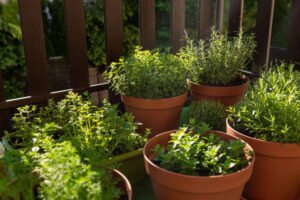
Keep the compost from drying out completely during hot weather and harvest leaves regularly.
A collection of herb pots close to the kitchen is one of the easiest introductions to edible gardening because you can start with just a few inexpensive plants.
Mint, rosemary, thyme, parsley and chives can create a useful little herb garden without requiring a vegetable plot.
10. Thyme
Thyme is another excellent herb for sunny gardens and containers.
It prefers free-draining conditions and does not need constant attention once established. Its compact growth also makes it useful around the edges of beds and in smaller spaces.
Different varieties offer slightly different flavours, scents and appearances.
Because thyme does not appreciate permanently wet roots, be careful about planting it in heavy ground where water regularly sits during winter.
If drainage is poor, growing thyme in a suitable container may be considerably easier.
11. Nasturtiums
Beginners wanting to try growing plants from seed could start with nasturtiums.
Their large seeds are relatively easy to handle, and the plants can produce masses of colourful flowers during the growing season.
Depending on the variety, they can trail from containers, spread through borders or climb with support.
They generally perform well in sunny conditions and do not require highly fertile soil to put on a display. In fact, very rich conditions can encourage lots of leafy growth at the expense of flowers.
Nasturtiums are usually grown as annuals in the UK, so they will typically need to be sown again for another season rather than becoming a permanent part of the border.
12. Marigolds
Marigolds are another straightforward choice for someone creating their first summer display.
They are widely available as young plants, meaning you can skip seed sowing entirely if you prefer.
Plant them in containers, window boxes or sunny borders for reliable seasonal colour. Deadheading spent flowers can encourage the display to continue.
Because they are seasonal plants rather than permanent shrubs, marigolds are also useful if you are still experimenting with your garden design.
You can change the colour scheme next year without having to dig up an established border.
13. Hebes
For beginners who want something more permanent, hebes can provide evergreen structure as well as flowers.
There are many sizes and varieties available, from compact plants suitable for pots and the front of borders to larger shrubs.
Many prefer a relatively sunny, sheltered position with well-drained soil.
Their evergreen foliage means the garden does not become completely bare once summer flowers disappear.
When buying a hebe, check the expected mature size and hardiness of the particular variety rather than choosing only by how it looks in a small nursery pot. Some are more tolerant of cold and exposed conditions than others.
14. Buddleja
Buddleja is famous for attracting butterflies when its flowers are open.
It is also a vigorous shrub and can be remarkably forgiving, which makes it attractive to inexperienced gardeners with enough space.
The important phrase is enough space.
Some buddlejas can become large if left unchecked. Choose a variety whose mature size suits your garden rather than planting a vigorous shrub into a tiny border and fighting it every year.
There are also more compact varieties available for smaller spaces.
Buddleja generally prefers a sunny position, and pruning helps keep many common varieties productive and manageable. Check the requirements of the specific type you buy.
15. Ornamental grasses
Ornamental grasses can make a beginner’s garden look much more professionally designed.
Their foliage introduces movement and texture, while many produce attractive flower heads that remain interesting into autumn and winter.
Different grasses suit different conditions, so there is no single care rule for all of them. Some prefer full sun and dry ground, while others tolerate more moisture or shade.
The advantage is that, once you find a variety suited to your garden, many need relatively little intervention.
Try repeating the same grass through a border instead of buying one each of ten different varieties. Repetition is one of the simplest ways to make a planting scheme feel intentional.
What are the easiest plants to grow in a UK garden?
For a beginner, there is no single easiest plant because garden conditions vary enormously.
For sunny, well-drained areas, lavender, rosemary, thyme and many sedums are good plants to investigate.
For partial shade, hardy geraniums, heucheras and certain hydrangeas can be relatively straightforward.
For shadier areas, hostas and many ferns are useful choices.
For containers, herbs such as mint, rosemary and thyme can be an accessible place to begin, provided each is given suitable conditions.
The secret is not finding a plant that survives absolutely anywhere. It is matching an easy plant to the conditions you already have.
What plants come back every year?
Plants that live for multiple years include perennials, shrubs and trees.
Hardy geraniums, hostas and many sedums are examples of herbaceous perennials that can return year after year, although their visible growth may disappear or die back during winter.
Lavender, rosemary, hydrangeas, hebes and buddlejas are examples of longer-lived woody plants or shrubs, subject to variety and suitable growing conditions.
Annuals such as nasturtiums normally complete their lifecycle within one growing season, although some plants can self-seed and produce new seedlings.
If you do not want to replant the whole garden every spring, build the main structure using perennials and shrubs and use annual flowers for additional seasonal colour.
What are the best plants for someone who forgets to water?
Once established, drought-tolerant plants are generally more forgiving than thirsty plants, although almost every newly planted specimen requires attention while its root system establishes.
Lavender, thyme, rosemary and many sedums can cope with relatively dry conditions once established when grown in appropriate soil.
Containers are different because compost dries much faster than garden soil. Even drought-tolerant plants in pots may need regular watering during warm, dry periods.
Choosing larger containers can help because they generally dry out more slowly than tiny pots.
What are the easiest plants for pots?
Beginners have plenty of options for container gardening.
Herbs are particularly useful because they are inexpensive, compact and practical. Mint is usually better contained in a pot anyway because of its tendency to spread.
You can also grow lavender, compact hebes, heucheras, seasonal flowers and many other plants in containers.
The key is drainage and watering. Containers need holes that allow excess water to escape, but they can also dry rapidly during summer.
Choose the pot according to the eventual size of the plant rather than how small it looks when you first buy it.
How do beginners make a garden look established?
One of the most common beginner mistakes is buying one of everything.
You arrive at the garden centre, see 15 beautiful plants and return home with 15 completely different specimens.
The result can look busy rather than established.
Instead, choose a smaller palette and repeat plants.
For example, you might create a sunny border using lavender, ornamental grasses and hardy geraniums, repeating those plants along its length. A shaded border could combine groups of hostas, ferns and heucheras.
Plants of different heights also create depth. Use taller shrubs or grasses towards the back, medium-sized perennials through the middle and lower plants around the front.
This kind of simple structure is also useful when planning garden privacy, as taller planting can help soften boundaries and screen particular views without filling every available space.
Five beginner gardening mistakes worth avoiding
You do not need perfect gardening knowledge, but avoiding a few common mistakes can save a lot of disappointment.
Buying plants before checking the garden conditions. A sun-loving plant will not suddenly learn to enjoy deep shade because you like the way it looks.
Planting too closely together. Garden-centre plants are young. Check their expected mature spread and leave room for growth.
Overwatering everything. More water is not automatically better. Persistently saturated soil can be damaging to plants that need good drainage.
Ignoring the eventual size of shrubs. That attractive 30 cm plant may eventually become considerably larger.
Giving up after losing a plant. Experienced gardeners lose plants too. Sometimes the variety was wrong for the site, the weather was unusually difficult or the plant simply failed to establish.
The useful part is learning what works in your particular garden.
Start simple and let your garden develop
The best plants for beginners are not necessarily plants that require zero care. They are plants whose needs are straightforward enough to understand and that suit the conditions you can provide.
Start with a few reliable choices rather than trying to fill the entire garden immediately. Lavender and herbs can transform a sunny area; hostas and ferns can bring life to shade; hydrangeas can provide dramatic flowers; and hardy geraniums can gradually fill gaps between larger plants.
Once you see what thrives, you can add more varieties with much greater confidence.
And if you would rather have help choosing plants, preparing borders or redesigning an overgrown garden, you can find local gardeners and landscapers through The Right Guy. A professional can help identify the conditions in your garden and create a planting scheme designed around the amount of maintenance you actually want to do.

Author: manager
Company test