
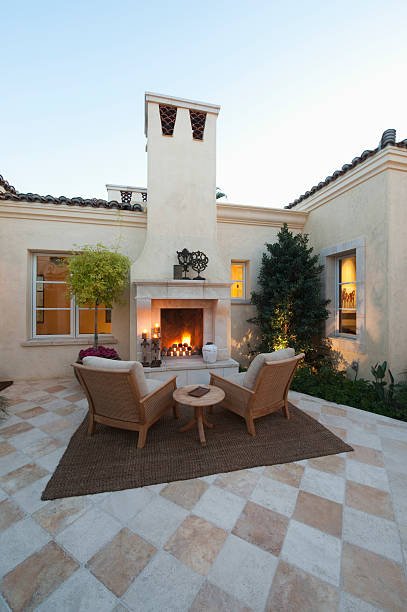
A fire pit can completely change how you use your garden. Instead of heading indoors as soon as the evening becomes chilly, you can create a warm, inviting place to sit, talk and enjoy the garden long after the sun has gone down.
The best fire pit ideas are not simply about choosing something that produces a flame. Position, seating, surrounding materials, garden size, fuel type and safety all matter. A compact portable fire pit might be ideal for a small garden, while a large patio could accommodate a permanent stone fire pit surrounded by built-in seating.
For UK gardens in particular, it is worth designing a fire pit area that works with our cooler evenings and unpredictable weather. Here are 15 practical and stylish ideas to inspire your own outdoor space.
1. Create a dedicated fire pit seating area
One of the most effective fire pit ideas is also one of the simplest: give the fire pit its own defined area of the garden.
Instead of placing it randomly beside existing furniture, create a destination around it. Position chairs around the fire so people can comfortably talk to one another, leaving sufficient space between seating and the heat source.
The surrounding surface can help visually separate the area from the rest of the garden. Paving, gravel or another suitable non-combustible surface can make the fire pit feel intentional rather than temporary.
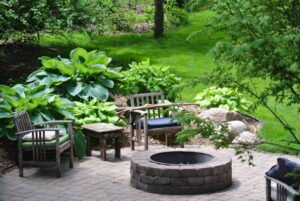
Planting around the outer edges can soften the hard landscaping and make the area feel secluded, but vegetation should not be positioned where it could come into contact with flames, sparks or excessive heat.
If you are redesigning more than just this corner, our modern garden ideas can help you connect the fire pit with the wider garden design.
2. Build a fire pit into the patio
If you already have a patio — or are planning a new one — consider incorporating the fire pit from the beginning rather than adding it afterwards.
A built-in design can create a much more polished result. Circular fire pits work particularly well when the surrounding paving follows their shape, while square and rectangular designs complement contemporary patios.
Think carefully about circulation. People still need to move between the house, seating and rest of the garden without walking dangerously close to the fire.
Material choice around the fire pit also matters. Products used close to high temperatures should be appropriate for that application rather than selected purely because they match the rest of the patio.
If you are planning the entire area from scratch, explore our patio design ideas before deciding where the fire pit should sit.
3. Choose a portable fire pit for maximum flexibility
Not every fire pit needs to become a permanent part of the garden.
Portable models can be a good solution for renters, smaller spaces or anyone who does not want to commit to a major landscaping project. They can also allow you to reclaim the space when the fire pit is not being used.
A portable fire pit should still be treated as a real fire rather than simply another piece of garden furniture. Place it on a stable surface appropriate for the product and follow the manufacturer’s guidance on clearances and use.
Never move a fire pit while it is hot or while fuel is still burning.
4. Make a small garden feel cosy with a compact fire pit
Small gardens can actually suit fire pits extremely well.
You do not need a huge circular entertaining area. A compact freestanding fire pit positioned in an appropriately chosen part of the garden can create plenty of atmosphere without dominating the space.
Keep the furniture relatively simple. Two or three chairs may work better than trying to squeeze a large outdoor sofa around the fire.
Portable designs are particularly useful because they can be stored away when you need the floor space for something else.
Lighting can also make a small fire pit area feel much more intentional. Warm outdoor lights above or around the seating provide background illumination while allowing the fire to remain the focal point.
5. Build a permanent stone fire pit
Stone and masonry fire pits can look as though they have always belonged in the garden.
They work particularly well in traditional, rustic and woodland-style gardens, where natural materials blend into surrounding planting.
A permanent fire pit also gives you the opportunity to design the seating and landscaping around its exact dimensions.
However, a DIY fire pit should not simply be constructed from any spare bricks or stones available. Materials exposed directly to intense heat need to be suitable for the purpose, and the design must account for the intended fuel and fire pit construction.
For anything more substantial than a simple manufacturer’s kit, consider speaking to an experienced landscaper or builder.
6. Create a modern fire pit patio
Fire pits do not have to look rustic.
For a contemporary garden, use clean lines, restrained materials and simple furniture. A low-profile fire bowl or geometric fire pit can work particularly well against large-format paving.
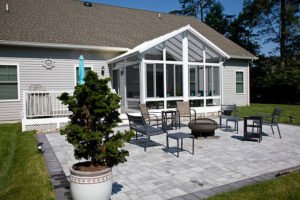
Try to avoid filling every part of the patio with furniture. Leaving open space around the fire pit often makes the overall design look larger and more considered.
Repeating materials elsewhere in the garden can help too. The paving surrounding the fire pit might continue towards the house, while similar tones appear in planters, walls or outdoor furniture.
7. Add built-in seating around your fire pit
Built-in seating can transform a fire pit into a genuine outdoor room.
A curved bench around a circular fire pit creates a sociable arrangement, while an L-shaped bench works particularly well in a corner of a patio.
It can also be space-efficient because you do not need to accommodate numerous individual chairs.
Comfort still matters. Outdoor cushions can soften masonry or timber seating, but they should be removed or appropriately stored when conditions require it and kept safely away from the fire itself.
Do not position fixed seating before confirming the recommended safe distance for your particular fire pit. Once a masonry bench is built, you cannot simply move it backwards.
8. Surround the fire pit with gravel
Gravel can be an attractive way of visually defining a fire pit zone and may cost less than paving an entire section of the garden.
It works especially well in relaxed or naturalistic garden designs. Combine a gravel area with timber chairs, stone edging and planting around the perimeter for a simple but finished appearance.
Ground preparation is important if you want the area to remain tidy. Proper edging helps stop gravel migrating into lawns and borders.
Remember that the suitability of the surface directly beneath a particular fire pit depends on the product and its heat output, so follow the manufacturer’s instructions rather than assuming that every gravel installation is suitable.
For homeowners trying to improve the surrounding garden without a huge landscaping budget, our cheap garden makeover ideas include other ways to make a noticeable difference without rebuilding everything.
9. Turn the fire pit into an outdoor living room
One reason fire pits have become such an appealing garden feature is that they help make outdoor spaces feel more like rooms.
Instead of simply placing chairs around a flame, add comfortable outdoor seating, side tables and subtle lighting. An outdoor rug may also help define the seating zone where it is appropriate for the layout and kept well away from heat and sparks.
The result can feel much more like a living room without walls.
A permanent outdoor fireplace can take this idea even further, creating a dramatic architectural focal point.
This works especially well on a large patio where the fire feature anchors the furniture arrangement rather than leaving chairs floating in the middle of an empty paved space.
10. Add a fire pit to a sunken seating area
A sunken fire pit can create one of the most dramatic garden designs.
The fire sits at the centre while seating is constructed around it at a lower level, creating an intimate conversation area.
This type of project requires considerably more planning than positioning a freestanding fire bowl. Excavation, drainage, retaining structures and safe access all need to be considered.
Drainage is especially important in the UK. A beautiful sunken seating area quickly becomes impractical if rainwater collects at the lowest point.
For this reason, sunken fire pits are generally better treated as a landscaping project rather than a casual weekend DIY job.
11. Combine a fire pit with garden privacy
Fire pits tend to encourage people to spend longer outside, particularly during the evening. That can make privacy more important than it was before.
Strategic planting, fences or screens can make a seating area feel much more secluded.
Avoid surrounding the fire too closely, however. A fire pit needs suitable clearance, and combustible screening or overhanging plants should not be placed where they could be exposed to heat, sparks or flame.
Think about sightlines rather than trying to build a solid wall around the entire area. Sometimes blocking the view from one neighbouring window is enough to make a seating area feel substantially more private.
Our guide to garden privacy ideas explores several ways to make overlooked gardens feel more secluded.
12. Create a woodland-style fire pit area
If your garden already has mature trees and informal planting, work with that character rather than trying to introduce a highly polished patio.
A simple stone fire pit surrounded by wooden chairs can create a relaxed woodland feel.
Hostas, ferns and shade-tolerant planting around the wider seating area can help it blend into the garden.
Trees and vegetation do, however, introduce additional fire considerations. Avoid positioning a fire pit underneath low branches or close to dry vegetation, and maintain the clearances specified for the product.
The visual goal may be to feel immersed in the planting — not to put the fire itself inside it.
13. Use a fire bowl for a minimalist look
If you like contemporary gardens but do not want a permanent structure, a simple fire bowl can be a good compromise.
Its low profile keeps views across the garden open, and the shape works with both modern and more traditional furniture.
Large metal bowls can become striking sculptural objects even when they are not lit.
Consider where the fire pit will live when not in use. Some products can remain outdoors, while others may benefit from suitable protection or dry storage according to the manufacturer’s instructions.
14. Combine your fire pit with an outdoor kitchen
If you enjoy entertaining, consider designing the fire pit and outdoor kitchen as two connected zones.
The cooking area can remain closer to the house while the fire pit sits beyond the dining area, encouraging people to move from dinner to a more relaxed seating space later in the evening.
This creates a natural sequence:
cook → eat → relax around the fire.
It is much more practical than trying to make one small section of patio perform every function.
If an outdoor cooking space is part of your plans, our guide to outdoor kitchen ideas covers everything from compact BBQ stations to covered kitchens with dining areas.
15. Make the fire pit part of a low-maintenance garden
A fire pit can work particularly well in a garden designed to require relatively little ongoing maintenance.
Instead of surrounding it with lawn that needs cutting around furniture, create a defined hard-landscaped zone using suitable paving, gravel or another practical surface.
Use resilient planting around the outer edges and keep the central seating area relatively simple.
This approach can be especially useful if the main purpose of your garden is relaxation rather than gardening.
For more inspiration, see our low-maintenance garden ideas for practical ways to reduce ongoing garden work.
Wood-burning, gas or smokeless fire pit: which is best?
Choosing the fire pit itself is just as important as designing the area around it.
Wood-burning fire pits
Wood creates the traditional crackling-fire experience many people want. It can produce plenty of atmosphere, but it also creates smoke, sparks and ash and requires appropriate fuel storage and cleaning.
Where you live can also matter. If you are in a smoke control area, rules apply to the emission of smoke from chimneys and the use of certain fuels and appliances. Check the current requirements that apply to your location rather than assuming every type of wood-burning setup is suitable.
Gas fire pits
Gas fire pits offer a different experience. They can provide a cleaner-looking flame without the ash associated with burning logs.
Installation and use need to follow the manufacturer’s requirements, and permanent gas work should only be carried out by someone appropriately qualified for the work involved.
Smokeless fire pits
So-called smokeless fire pits are designed to improve combustion and significantly reduce the amount of smoke compared with a conventional open fire.
“Smokeless” does not mean literally zero smoke, particularly during lighting or if inappropriate or damp fuel is used, but the design can make sitting around the fire more comfortable.
Where is the best place to put a fire pit?
Choose a level, stable location with adequate clearance from buildings, fences, sheds, trees, furniture and other combustible materials.
There is no universal distance that applies to every fire pit. Different products and fuels have different installation requirements, so the manufacturer’s instructions should be your starting point.
Also consider the prevailing wind. Even when a fire pit is technically well positioned, smoke continually blowing towards the house, neighbours or seating can make it unpleasant to use.
Avoid putting a fire pit where it obstructs an important route through the garden.
Can you put a fire pit on a patio?
Potentially, yes, but whether it is appropriate depends on both the fire pit and the paving.
Fire pits can generate considerable heat. Some surfaces may crack, stain or otherwise become damaged if exposed to high temperatures.
Check the instructions supplied with the fire pit and the suitability of the surface beneath it. A purpose-designed heat-resistant base may be recommended for some installations.
The same caution applies to decking. Never assume that a fire pit can safely sit directly on timber or composite decking simply because you have seen similar setups online.
What can you put around a fire pit?
A successful fire pit area usually combines practical hard landscaping with comfortable seating.
Depending on the design, you might use suitable paving, gravel or masonry around the fire area, with planting positioned further towards the perimeter.
Chairs should be stable and easy to move if necessary. Permanent benches can work beautifully but need to be positioned correctly from the beginning.
Avoid placing flammable decorative materials immediately around the fire.
Are fire pits allowed in UK gardens?
There is not a blanket UK-wide ban on simply having a domestic garden fire pit, but that does not mean you can burn anything or use one without considering local restrictions and nuisance.
Rules concerning smoke, waste burning and smoke control areas may be relevant depending on where you live and what you burn. Councils can also act where smoke amounts to a statutory nuisance.
Never use a fire pit to dispose of household waste, plastics, painted or treated timber or other inappropriate materials.
If you are unsure about local restrictions, check your council’s current guidance before using a wood-burning fire pit.
How much does a garden fire pit area cost?
The range is enormous because the project could be as simple as buying a portable fire pit and using furniture you already own, or as involved as constructing a completely new landscaped patio.
A basic portable fire pit can often be bought for well under a few hundred pounds, while larger premium models can cost considerably more.
Once you add paving, permanent masonry, built-in seating, drainage, lighting or major landscaping, the overall project can easily move into the thousands.
Rather than relying on one national average, set a budget for each element: the fire pit, ground preparation, surface, seating, lighting and landscaping. If professional work is required, compare itemised quotes based on your actual garden.
Create a fire pit area you will actually use
The strongest fire pit ideas combine atmosphere with practicality. A beautiful fire pit is of little value if smoke constantly blows towards the seating, nobody can move comfortably around it or the surrounding materials are unsuitable for the heat.
Start by deciding how many people you normally want to seat. Then choose the fire pit, establish an appropriate location and design the surrounding patio or landscaping around those requirements.
A portable fire bowl and a few chairs may be all a small garden needs. Larger spaces can become genuine outdoor living areas with built-in seating, paving, lighting and carefully planned planting.
If creating your fire pit area involves a new patio, masonry, landscaping, electrical work or substantial garden alterations, you can find local tradespeople through The Right Guy, including landscapers, patio installers, builders, gardeners and electricians who can help turn the design into a finished outdoor space.

Author: manager
Company test