
If your home has uninsulated cavity walls, cavity wall insulation can be one of the more cost-effective ways to reduce heat loss and make your property easier to keep warm. But there is an important condition: your walls need to be suitable for it.
Cavity wall insulation is not something that should simply be injected into every older UK house. The condition of the walls, width of the cavity, exposure to wind-driven rain and any existing damp problems all need to be considered before installation.
So, is cavity wall insulation worth it? For a suitable property, often yes. Energy Saving Trust describes cavity wall insulation as highly cost-effective, while UK government guidance calls it one of the most cost-effective ways of improving domestic energy efficiency.
The important part is making sure your property is suitable and the work is carried out correctly.
What is cavity wall insulation?
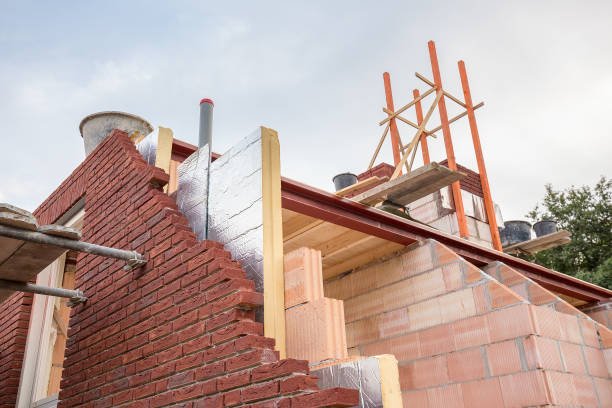
Many UK external walls are constructed from two separate layers, or “leaves”, with a gap between them.
That gap is the cavity.
In an uninsulated cavity wall, heat can pass through the inner wall and escape towards the outside of the building. Cavity wall insulation fills the gap with an insulating material designed to reduce that heat transfer.
For a typical retrofit, installers drill small holes through the external wall and inject or blow insulation into the cavity. The holes are then filled afterwards.
Common cavity wall insulation materials can include mineral wool fibre, polystyrene beads and foam systems, depending on the property and installation specification.
Energy Saving Trust notes that around a third of heat lost from an uninsulated home can escape through its walls, which explains why wall insulation can make such a noticeable difference.
Is cavity wall insulation worth it financially?
For the right house, it certainly can be.
Unlike replacing an entire heating system, cavity wall insulation tackles the amount of energy the property actually needs in the first place.
Think about it this way:
Your boiler or heat pump produces heat. Your insulation determines how quickly you lose it.
Reducing that heat loss means your heating system does not need to work as hard to maintain a comfortable indoor temperature.
Energy Saving Trust’s installer guidance currently gives a typical cavity wall insulation cost of around £1,925 for a semi-detached house, although actual quotes vary significantly according to the property.
That should be treated as an indication rather than a fixed UK price.
The final cost can depend on:
- property size and wall area;
- access around the building;
- cavity width and construction;
- insulation material;
- condition of the walls;
- scaffolding or specialist access requirements;
- your location;
- remedial work required before installation.
The financial return also depends on how much energy you currently use. Someone heating a large detached property throughout winter could potentially benefit differently from someone who occupies a small mid-terrace and uses very little heating.
What are the main benefits of cavity wall insulation?
Lower heating bills are usually the headline benefit, but they’re not the only reason homeowners consider it.
Your home can retain heat for longer
An uninsulated external wall provides a route for heat to escape.
Insulating the cavity slows that transfer.
That can help rooms remain warmer for longer after the heating has been running and may make external walls feel less cold.
Your heating system has less work to do
Reducing heat loss can reduce the energy needed to maintain your chosen indoor temperature.
This is important regardless of whether you currently use a gas boiler or are considering switching to another heating system in future.
Improving the building fabric can be particularly useful before investing in low-temperature heating technologies because the heating system can be designed around a lower overall heat demand.
It can complement other energy-efficiency improvements
Cavity wall insulation shouldn’t necessarily be viewed in isolation.
A well-insulated house combines improvements to different parts of the building envelope.
That might include:
- wall insulation;
- loft insulation;
- suitable glazing;
- draught proofing;
- floor insulation where appropriate;
- efficient heating controls.
For example, upgrading the walls while leaving a poorly insulated loft untouched means you are still allowing substantial heat to escape elsewhere. If you’re planning a wider efficiency upgrade, our guide to loft insulation costs in the UK can help you compare another relatively straightforward insulation measure.
How do I know if my house has cavity walls?
The age and construction of the house provide clues, but they aren’t enough to confirm suitability.
Older UK properties often have solid walls, while cavity-wall construction became increasingly common during the 20th century.
Looking at the external brickwork can sometimes provide clues.
With many cavity-wall properties, bricks are laid predominantly lengthways. Older solid brick walls may show alternating patterns where some bricks appear end-on.
But this isn’t foolproof.
Properties can have unusual construction, extensions built at different times, rendered external walls or previous alterations that make visual identification difficult.
If you’re seriously considering insulation, have the walls properly assessed rather than relying on an internet checklist.
How can I tell if my cavity walls are already insulated?
Again, there can be clues.
Small, regularly spaced filled holes in the mortar joints of external walls may indicate that insulation has previously been injected.
You may also find information in:
- paperwork supplied when you bought the property;
- an Energy Performance Certificate (EPC);
- previous renovation records;
- insulation guarantees.
But an EPC or visible drill holes don’t necessarily tell you the current condition or completeness of the insulation.
A professional assessment can be useful where there is uncertainty.
Which homes are suitable for cavity wall insulation?
This is where the decision becomes more complicated.
Having a cavity does not automatically mean it should be filled.
Energy Saving Trust states that cavity wall insulation requires a suitability assessment. It highlights factors including the building’s condition, height and exposure to wind-driven rain as considerations that can make conventional cavity filling inappropriate.
An installer should therefore assess the property before recommending the work.
They may need to consider:
The condition of the external walls
Existing cracks, defective pointing or other problems allowing water penetration should not simply be hidden behind an insulation project.
Repairs may be required first.
Existing damp
If your home already has damp patches, mould or water penetration, determine the underlying cause before proceeding.
Insulation is not a substitute for repairing defective gutters, leaking pipes, damaged masonry or other moisture problems.
Exposure to driving rain
Some properties are considerably more exposed than others.
A sheltered suburban house and an exposed coastal property can experience very different weather conditions.
Government research has specifically examined rain penetration and cavity-wall insulation in exposed locations, illustrating why exposure needs to be considered rather than assuming every cavity is suitable for filling.
The cavity itself
The installer needs to establish whether the cavity is appropriate for the proposed insulation system and whether there are obstructions or other construction issues.
This is why a proper survey is so important.
Can cavity wall insulation cause damp?
This is probably the biggest concern homeowners have.
Properly specified and installed cavity wall insulation in a suitable property should not simply be assumed to cause damp.
In fact, insulation can help keep internal surfaces warmer, which can reduce the conditions that encourage surface condensation.
The latest English Housing Survey notes that insulating a whole dwelling, including walls and lofts, should reduce the risk of serious damp because inadequate insulation can contribute to moisture build-up and condensation.
However, problems can occur where insulation is installed incorrectly, the property was unsuitable, or existing defects were not addressed.
Government guidance acknowledges that genuine problems have occurred in a small number of cavity-wall insulation installations.
That is why the question shouldn’t be:
“Does cavity wall insulation cause damp?”
A better question is:
“Is my particular property suitable for cavity wall insulation?”
What should be checked before cavity wall insulation is installed?
Don’t accept an installation simply because somebody has confirmed that your property contains a cavity.
A proper assessment should consider the condition and construction of the building.
Pay particular attention to existing signs of:
- penetrating damp;
- cracked masonry;
- deteriorated pointing;
- damaged render;
- overflowing or leaking gutters;
- defective downpipes;
- obvious water ingress.
If these problems exist, identify and correct the cause first.
You also want the installer to explain why your property is suitable, what insulation system they propose to use and how it matches the building.
How long does cavity wall insulation take?
For many conventional properties, installation is relatively quick compared with major renovation work.
Energy Saving Trust says simpler measures such as cavity wall and loft insulation can typically take around half a day, although the actual duration naturally depends on the property.
Larger homes, difficult access or additional remedial work can increase the time required.
The process generally involves drilling through the external wall at specified intervals, installing the insulation and making good the drill holes afterwards.
Because most of the work is performed externally, disruption inside the house can be comparatively limited.
Does cavity wall insulation need maintenance?
One advantage is that you aren’t adding another mechanical system that needs annual servicing.
Energy Saving Trust notes that cavity wall insulation located within the wall generally requires no routine maintenance. Some fabric insulation measures can potentially last for the lifetime of the building, while others have specified design lives.
However, you still need to maintain the building itself.
Keeping gutters, roofing, pointing, render and external walls in good condition remains important.
Insulation doesn’t make the house immune to future water ingress.
Cavity wall insulation vs loft insulation: which should you do first?
Ideally, think about the house as a complete system rather than choosing one improvement in isolation.
If your loft has little or no insulation, upgrading it can be relatively straightforward.
If your cavity walls are also empty and suitable for insulation, tackling both can substantially improve the thermal envelope.
The right order may depend on:
- current insulation levels;
- budget;
- ease of access;
- condition of the property;
- which improvement offers the best return.
If you only have enough budget for one measure, compare quotes and potential energy savings for your actual property rather than following a generic ranking.
Our UK loft insulation cost guide explains what different loft insulation projects may involve.
Cavity wall insulation vs double glazing
Homeowners sometimes face another decision:
Should I insulate the walls or replace the windows first?
If your existing windows are functioning reasonably well but your cavity walls have no insulation, wall insulation may deserve serious consideration before replacing every window purely for energy savings.
However, windows aren’t only about energy efficiency.
You might replace them because of:
- failed sealed units;
- draughts;
- poor operation;
- damaged frames;
- noise;
- security;
- appearance.
The two upgrades therefore solve somewhat different problems.
If you’re weighing them against each other, our guide to how much double glazing costs in the UK in 2026 explains the typical factors affecting window replacement prices.
Will cavity wall insulation make my house warmer?
It can make a noticeable difference to thermal comfort in a suitable previously uninsulated property.
Insulation does not generate heat.
Instead, it slows the rate at which heat escapes.
That means the house may warm more efficiently when the heating is running and retain that warmth for longer afterwards.
The difference you notice will depend on how poorly insulated the property was beforehand and what other heat-loss problems remain.
A house with insulated walls but severe window draughts and virtually no loft insulation will obviously still lose heat.
Does cavity wall insulation reduce electricity bills?
Not necessarily your electricity bill specifically.
It reduces the energy required for space heating.
If your home uses electric heating, that could translate into lower electricity consumption.
If you heat primarily with gas, the saving would more directly affect gas consumption.
For households trying to reduce electricity use more broadly, our guide to 25 practical ways to reduce electricity bills covers appliances, lighting, heating and everyday energy use.
Is cavity wall insulation worth it before installing a heat pump?
Potentially, yes.
When upgrading a home’s heating system, reducing heat loss first can be valuable.
A lower heat demand can help a properly designed heating system maintain comfortable temperatures using lower-temperature heat emitters.
But don’t assume that every home must receive cavity wall insulation before a heat pump can be installed. Some properties do not have cavity walls, and others may not be suitable for cavity filling.
The correct approach is a whole-property assessment.
Is cavity wall insulation worth it if you’re moving house?
This is less straightforward.
If you’re selling very soon, you may not remain in the property long enough to recover the installation cost through reduced energy bills.
However, improving insulation can still make the house more comfortable and may improve its energy performance.
If you’re staying for several years, the argument becomes stronger because you have longer to benefit from reduced heat loss.
Don’t rely on cavity wall insulation solely as a way of increasing your property’s sale price. There are too many other factors influencing house values.
What are the disadvantages of cavity wall insulation?
Although cavity wall insulation can be an excellent improvement, it isn’t right for every home.
The main considerations are:
Upfront cost. Even where long-term savings are attractive, you still need to fund the installation.
Suitability. Not every cavity wall should be filled.
Installation quality matters. Poor workmanship or inappropriate specification can create problems.
Existing defects must be addressed. Insulation won’t repair damaged walls or eliminate the source of penetrating damp.
It won’t solve every heat-loss problem. Your loft, windows, doors, floors and ventilation can all affect energy performance.
These aren’t reasons to avoid cavity wall insulation. They’re reasons to have it assessed and installed properly.
What should you ask a cavity wall insulation installer?
Before agreeing to the work, ask the installer to explain:
- how they determined your walls are suitable;
- what insulation material will be used;
- whether existing damp or masonry defects need repairing;
- how exposed the property is to wind-driven rain;
- what certification applies to the insulation system;
- what guarantee comes with the installation;
- exactly what is included in the quote;
- how the drilled areas will be made good.
Energy Saving Trust notes that insulation systems may use independent certification such as Agrément Certificates to demonstrate suitability for particular applications and help satisfy relevant requirements.
Don’t choose solely because one installer gives you the lowest quote.
The insulation will be concealed inside your walls once the work is complete, making correct assessment and installation considerably more important than saving a relatively small amount upfront.
Frequently asked questions
Is cavity wall insulation worth doing in 2026?
For a suitable home with uninsulated cavity walls, it can be one of the more cost-effective energy-efficiency improvements. The exact financial return depends on installation cost, property size, heating use and energy prices.
How much does cavity wall insulation cost?
Energy Saving Trust’s current installer guidance gives a typical figure of around £1,925 for a semi-detached house, but individual quotes can differ significantly.
How long does cavity wall insulation last?
It is a building-fabric improvement rather than mechanical equipment. Energy Saving Trust notes that some fabric insulation can last for the lifetime of the building, while other products have specified design lives, typically at least 20 years.
Can I install cavity wall insulation myself?
This is not generally a DIY insulation project. Correctly assessing the cavity and installing the material requires specialist equipment, knowledge and appropriate installation procedures.
Does cavity wall insulation cause mould?
It should not be assumed to cause mould when properly specified and installed in a suitable property. However, inappropriate installation or unresolved building defects can create problems, which is why a suitability survey matters.
Is cavity wall insulation better than loft insulation?
They address different areas of heat loss. If both your cavity walls and loft are poorly insulated, improving both may provide a more complete result than treating either measure as a substitute for the other.
Does cavity wall insulation make rooms warmer?
It can help a home retain heat by reducing heat transfer through external walls. The actual improvement in comfort depends on the property’s existing insulation and other sources of heat loss.
So, is cavity wall insulation worth it?
For many UK homeowners, yes — provided the house is genuinely suitable for it.
It can reduce heat loss without taking up living space, normally requires relatively little disruption and doesn’t involve replacing your entire heating system.
But suitability comes before savings.
A cheap installation is not good value if the building should never have had its cavity filled in the first place. Have the wall construction, exposure and condition properly assessed, deal with existing defects and use an appropriate insulation system.
It also makes sense to view cavity insulation as part of a broader energy-efficiency strategy. Combining suitable wall insulation with loft insulation, effective glazing and sensible energy use can address several routes through which your home loses energy.
If you’re considering cavity wall insulation and want the property assessed professionally, you can find local insulation specialists and other home-improvement professionals through The Right Guy. Compare the recommendations as well as the prices — a good installer should be able to explain why the proposed insulation is appropriate for your particular home.

Author: The Right Guy Team
UK service guides published by The Right Guy Ltd.