
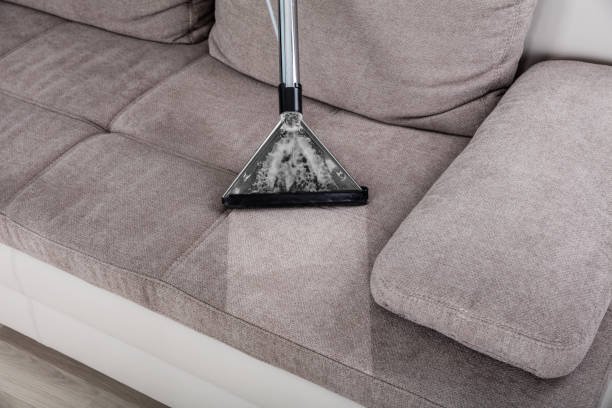
Professional sofa cleaning in the UK typically costs around £60–£120 for a standard two-seater sofa and roughly £70–£150 for a three-seater, although prices vary considerably depending on the upholstery fabric, cleaning method, condition and where you live.
Larger corner sofas, delicate fabrics, significant staining and specialist treatments can push the price higher. Many upholstery cleaners also have a minimum call-out charge, meaning cleaning one small armchair on its own may cost disproportionately more than having several pieces cleaned during the same visit.
If you’re wondering how much does sofa cleaning cost, the number of seats is therefore only part of the calculation.
This 2026 UK guide explains realistic sofa-cleaning prices, what professional upholstery cleaning normally includes, which extras can increase the bill and when cleaning makes more financial sense than replacing your sofa.
How much does sofa cleaning cost in the UK in 2026?
For budgeting purposes, these are reasonable typical ranges:
| Upholstery cleaning service | Typical UK cost |
|---|---|
| Armchair | £30–£60 |
| 2-seater sofa | £60–£120 |
| 3-seater sofa | £70–£150 |
| 4-seater sofa | £90–£180 |
| Corner sofa | £100–£250+ |
| Sofa bed | £80–£160+ |
| Dining chair | £10–£25 each |
| Additional stain treatment | £10–£30+ |
| Fabric protection treatment | Often £20–£50+ |
These figures should be treated as budgeting ranges rather than fixed national prices.
A lightly used synthetic two-seater may sit near the lower end. A large pale corner sofa covered in stains and pet hair could require considerably more work.
The best way to get an accurate price is to provide the cleaner with photographs, dimensions and information about the fabric and stains.
What affects the cost of professional sofa cleaning?
Two sofas that look roughly the same size can receive very different quotes.
The biggest pricing factors are usually the following.
Size of the sofa
More upholstery means more labour, cleaning product and extraction time.
A compact two-seater will normally cost less than a large modular corner sofa.
Upholstery fabric
Different materials require different approaches.
Some synthetic fabrics tolerate wet extraction well, while delicate or specialist upholstery may require lower-moisture or specialist treatment.
Condition
A sofa that receives professional cleaning regularly is generally easier to clean than one containing years of body oils, food spills and embedded dirt.
Staining
Specific stains can require additional treatment and time.
Pet hair and odours
Heavy pet hair can dramatically increase preparation time, while urine and other odours may require specialist treatment.
Location
Labour and operating costs vary across the UK, with prices often higher in London and parts of the South East.
Minimum call-out charges
A cleaner may have a minimum job value regardless of how small the piece of furniture is.
This makes combining several items into one appointment potentially better value.
How much does it cost to clean a 2-seater sofa?
A professional clean for a typical two-seater fabric sofa may cost around £60–£120.
A straightforward synthetic sofa with no significant stains will usually be towards the lower end.
The price can increase if the sofa has:
- removable cushions requiring separate treatment;
- heavy staining;
- pet hair;
- unpleasant odours;
- delicate upholstery;
- extensive soiling.
When requesting a quote, send a photograph of the entire sofa rather than simply saying you have a two-seater.
The cleaner can often identify important details immediately.
How much does it cost to clean a 3-seater sofa?
For a standard three-seater sofa, around £70–£150 is a sensible broad UK budget.
Again, size can be misleading.
One three-seater may be compact and relatively simple.
Another might have:
- large loose cushions;
- deep seats;
- substantial arms;
- upholstered back panels;
- numerous decorative cushions.
The actual amount of fabric being cleaned can therefore differ considerably.
How much does a 4-seater sofa cost to clean?
A larger four-seater might cost approximately £90–£180, with specialist or heavily soiled upholstery potentially costing more.
At this size, ask whether the quote includes:
seat cushions + back cushions + arms + frame + rear upholstery.
If the sofa normally sits against a wall, some homeowners assume the back does not need cleaning.
Others expect every upholstered surface to be included.
Agree this before the appointment.
How much does corner sofa cleaning cost?
Corner sofas are usually more expensive because of their size.
Expect roughly £100–£250+ for many professional corner-sofa cleaning jobs.
Large modular sofas can exceed this.
Instead of describing yours simply as a “corner sofa”, send:
- photographs;
- approximate dimensions;
- number of sections;
- number of cushions.
That will produce a much more useful quotation.
How much does it cost to clean an armchair?
Professional armchair cleaning might cost around £30–£60.
However, this is where minimum call-out charges matter.
A business may charge £40 to clean an armchair but require a minimum booking of £70 or £80.
If you have a sofa that also needs cleaning, doing both together may therefore provide better value.
Ask:
“How much would the armchair cost if you clean it at the same time as the sofa?”
That is more useful than comparing the standalone price.
How much does dining chair cleaning cost?
Fabric dining chairs may cost around £10–£25 each, depending on whether only the seat is upholstered or the back also requires cleaning.
Six chairs could therefore cost approximately £60–£150.
Dining chairs are particularly prone to:
- food stains;
- drink spills;
- grease;
- hand marks.
If several chairs have significant staining, photographs can help the cleaner provide a more realistic quote.
What does professional sofa cleaning include?
A professional upholstery-cleaning appointment will usually begin with an inspection.
The cleaner needs to establish what fabric they are dealing with and whether there are any obvious risks or problem areas.
Depending on the material and cleaning method, the process may then include:
- Inspection of the sofa and upholstery.
- Dry vacuuming to remove loose dirt and debris.
- Pre-treatment of suitable stains.
- Application of upholstery-cleaning solution.
- Gentle agitation where appropriate.
- Extraction or another suitable cleaning process.
- Additional attention to problem areas.
- Removal of excess moisture.
- Final inspection.
- Drying and aftercare advice.
Not every sofa should receive exactly the same treatment.
That is one of the main advantages of using someone experienced in upholstery cleaning rather than simply applying a general household product to the entire sofa.
How long does professional sofa cleaning take?
A standard sofa might take approximately one to two hours to clean, although large or heavily soiled furniture can take longer.
A corner sofa can require considerably more time.
The cleaning process itself is only part of the appointment.
The cleaner may also need to:
- inspect the fabric;
- vacuum thoroughly;
- test products;
- pre-treat stains;
- clean individual cushions;
- extract moisture;
- set up and pack away equipment.
A suspiciously fast service is not necessarily good value simply because you regain the room quickly.
How long does a sofa take to dry after cleaning?
After wet extraction, upholstery commonly needs several hours to dry, although exact drying time depends on the fabric, cleaning method, ventilation, temperature and how much moisture was used.
Some sofas may be dry later the same day.
Others can take longer.
Improve airflow where practical and follow the cleaner’s instructions.
Do not sit on damp upholstery simply because the surface feels nearly dry.
Cushion interiors can retain moisture longer than the outer fabric.
Is sofa steam cleaning safe?
People commonly refer to professional upholstery extraction as steam cleaning, although the actual process can involve hot water and cleaning solution being applied and extracted.
It can be appropriate for many upholstery fabrics.
But not every sofa should be treated identically.
Certain fabrics can be sensitive to:
- moisture;
- heat;
- agitation;
- particular chemicals.
Always check the manufacturer’s care information where available.
If you are cleaning the sofa yourself, our guide to the best way to clean a sofa for different fabrics explains why identifying the upholstery material should come before choosing a cleaning method.
Can all sofas be professionally cleaned?
Most upholstered furniture can be cleaned in some form, but the appropriate method varies.
A professional should assess the fabric first.
Some upholstery may require:
- wet extraction;
- low-moisture cleaning;
- dry cleaning;
- specialist treatment.
Vintage furniture, delicate fibres and fabrics with unstable dyes may require particular care.
If your sofa still has its manufacturer’s care label, don’t remove it before the cleaner arrives.
That information may be useful.
Does sofa cleaning remove stains?
It can remove or significantly improve many stains.
But no reputable upholstery cleaner should guarantee that every stain will disappear.
Results depend on:
- what caused the stain;
- how long it has been there;
- fabric type;
- previous cleaning attempts;
- whether the fibres have been permanently damaged.
A fresh water-based spill may respond very well.
Bleach damage is entirely different because the colour of the fabric itself may have been changed.
Tell the cleaner what caused the stain if you know.
That can influence the treatment.
Does professional sofa cleaning remove smells?
Often, yes.
Cleaning can remove dirt and residues responsible for many everyday odours.
However, persistent smells can sometimes penetrate deeper into:
- cushion filling;
- foam;
- upholstery backing;
- internal materials.
This is particularly relevant to pet urine, smoke and other strong odours.
Specialist deodorising treatments may be available, but they may cost extra.
Ask whether odour treatment is included rather than assuming ordinary upholstery cleaning will completely remove every smell.
Does sofa cleaning remove pet urine?
Professional cleaning can help, particularly where contamination is mainly within the surface upholstery.
But pet urine can penetrate deeply.
If it reaches cushion foam, cleaning only the outer fabric may not completely remove the smell.
Tell the cleaner beforehand.
They may recommend:
- specialist urine treatment;
- deeper treatment;
- cleaning removable cushion interiors where appropriate;
- replacement of badly contaminated filling in extreme cases.
Trying to disguise urine odour with fragrance is not the same as removing the contamination causing it.
Does professional sofa cleaning remove pet hair?
Yes, professional preparation can remove a significant amount of pet hair.
However, pet hair can be surprisingly difficult to remove from some upholstery.
Hair becomes embedded between fibres, beneath cushions and along seams.
A sofa heavily used by several shedding pets may therefore cost more or take longer than an otherwise identical sofa.
You can sometimes reduce the professional cleaning time by vacuuming obvious loose pet hair before the appointment.
Does sofa cleaning kill dust mites?
Professional cleaning can remove dust, skin debris and other material from upholstery, which can improve overall cleanliness.
However, avoid choosing a service based solely on exaggerated claims that one clean will permanently eliminate every dust mite or allergen.
Upholstered furniture is continuously exposed to dust and human use.
Regular vacuuming, suitable cleaning and general household maintenance all contribute to keeping it clean.
For households particularly concerned about allergens, ask the cleaner what process and products they use rather than relying on broad marketing claims.
Can professional cleaning remove mould from a sofa?
Minor superficial marks may sometimes be treatable.
More substantial mould is different.
Mould can penetrate upholstery and filling, and it may indicate that the furniture has been exposed to prolonged damp conditions.
Cleaning the visible marks without addressing the moisture source can result in the problem returning.
Extensive mould contamination may make replacement more appropriate than repeated surface cleaning.
If the sofa became mouldy because the room itself is damp, investigate the underlying moisture problem too.
How much does stain protection cost?
Many professional upholstery cleaners offer an optional fabric-protection treatment after cleaning.
For a typical sofa, you might pay an additional £20–£50 or more, depending on its size and the product used.
Fabric protection is intended to make future spills easier to deal with.
It does not make your sofa completely stain-proof.
You still need to respond to spills quickly.
Before adding it, ask:
- what product is used;
- whether it is suitable for your fabric;
- how long it takes to cure;
- what aftercare is required.
Is professional sofa cleaning worth it?
Often, particularly if the sofa is fundamentally in good condition.
Suppose you have a sofa that originally cost £1,200.
The frame is solid, cushions remain comfortable and the upholstery has no serious physical damage — but the fabric looks dull and dirty.
Spending £100–£150 on professional cleaning could be considerably more economical than replacing the entire sofa.
Professional cleaning makes particular sense when the problem is:
dirt rather than damage.
If the sofa has broken springs, collapsed foam, ripped fabric and structural problems, cleaning alone will not make it new again.
Should you clean or replace an old sofa?
Look at what is actually wrong with it.
Cleaning may be worthwhile if:
- fabric is dirty;
- colours look dull;
- there are treatable stains;
- pet hair has accumulated;
- the sofa smells stale;
- the frame remains sound;
- cushions remain comfortable.
Replacement or repair may make more sense if:
- the frame is broken;
- cushions have collapsed;
- upholstery is extensively torn;
- fabric is severely worn through;
- filling is heavily contaminated;
- repairs plus cleaning approach replacement cost.
Do not confuse a dirty sofa with a worn-out one.
A professional clean can sometimes make surprisingly tired-looking upholstery look considerably better.
Is DIY sofa cleaning cheaper?
Yes, in direct financial terms.
You might buy upholstery cleaner for £5–£20 or hire a suitable extraction machine.
But there is a trade-off.
DIY cleaning puts responsibility for:
- identifying the fabric;
- selecting products;
- testing colourfastness;
- controlling moisture;
- extracting cleaning solution;
- drying;
onto you.
Using too much water is a common problem.
A sofa can look dry on the surface while moisture remains inside the cushions.
If you’re considering doing it yourself, read our complete guide to cleaning a sofa safely before putting any product across the entire piece of furniture.
Can a normal house cleaner clean a sofa?
Possibly at a basic surface level, but specialist upholstery cleaning is not normally the same as routine domestic cleaning.
Your regular cleaner may:
- vacuum the sofa;
- remove loose debris;
- wipe suitable surfaces;
- spot-clean minor marks where agreed.
Professional extraction requires different equipment and knowledge.
If your regular cleaner offers upholstery cleaning, ask whether they use dedicated equipment and what method they use.
For general domestic rates, our guide to how much a cleaner costs per hour in the UK explains typical 2026 pricing.
Is sofa cleaning included in a deep house clean?
Usually not automatically.
A deep house clean normally concentrates on the property itself:
- kitchens;
- bathrooms;
- floors;
- skirting boards;
- surfaces;
- fixtures.
Upholstery extraction is commonly a separate specialist service.
This is an important distinction when comparing cleaning packages.
Our deep cleaning vs regular cleaning guide explains what you can generally expect from each type of household cleaning.
If you want the sofa professionally extracted as well, mention it explicitly when requesting your quote.
Should you have your sofa cleaned before moving house?
It can be a convenient opportunity.
Cleaning before moving means you take clean furniture into the new property.
Alternatively, cleaning immediately after moving can remove dust and marks picked up during transportation.
If the sofa will spend time in storage, cleaning before storage needs more thought.
It should be completely dry before being wrapped or placed into an enclosed space.
Trapping residual moisture around upholstery can create unpleasant odours and potentially encourage mould growth.
How often should a sofa be professionally cleaned?
There is no universal rule.
For many households, professional cleaning every 12–24 months can be reasonable.
You may want it more frequently if:
- pets use the sofa;
- young children regularly use it;
- food is eaten on it;
- someone smokes indoors;
- the sofa receives very heavy daily use.
A lightly used sofa in a spare room may need professional cleaning far less frequently.
Vacuuming and dealing with spills promptly can significantly extend the time between professional cleans.
Should you vacuum your sofa regularly?
Yes.
Routine vacuuming is one of the easiest ways to keep upholstery cleaner.
Pay particular attention to:
- beneath cushions;
- seams;
- crevices;
- areas where pets sit;
- the front edge of seats.
Dry debris that remains in the fabric is repeatedly disturbed and worked into the upholstery through normal use.
Removing it regularly makes deeper cleaning easier later.
Why do sofa-cleaning quotes vary so much?
Imagine two companies quote:
Company A: £65
Company B: £125
That does not automatically make Company A the better choice.
Ask what each price includes.
One might provide a straightforward extraction clean.
The other might include:
- detailed vacuuming;
- stain pre-treatment;
- specialist agitation;
- cushion cleaning;
- odour treatment;
- fabric protection.
Alternatively, they might provide almost identical services and simply have different pricing.
You cannot know without comparing the scope.
Is a £30 sofa clean too cheap?
Not necessarily, but investigate what is actually being offered.
It could be:
- a promotional price;
- a very small sofa;
- an add-on to another service;
- a surface-level clean;
- a price excluding extras;
- subject to a minimum call-out charge.
Do not judge professionalism purely from price.
Equally, don’t assume that the most expensive cleaner automatically provides the best result.
Ask about the process.
Is a £200 sofa clean too expensive?
For an ordinary two-seater with straightforward synthetic upholstery, £200 would be towards the expensive end of the market.
For a very large corner sofa, delicate fabric, extensive staining or a package involving specialist treatments, £200 may be perfectly reasonable.
The question should always be:
£200 for what?
Size, condition and scope matter more than the headline figure.
Can you negotiate sofa-cleaning prices?
Rather than negotiating the cleaner’s rate aggressively, look for ways to make the appointment better value.
Ask about combining:
- sofa;
- armchairs;
- dining chairs;
- carpets;
- rugs.
A company already travelling to your property and setting up extraction equipment may offer better package pricing for additional items.
This can reduce the effective cost per item.
Is it cheaper to clean the sofa and carpets together?
It often can be.
Many carpet-cleaning companies also offer upholstery cleaning using related specialist equipment.
If your carpets need attention anyway, request:
carpet-only quote
and
carpet + sofa package quote.
You may find the sofa costs substantially less as an add-on than it would as a standalone appointment because the business has already absorbed travel and setup time.
How should you prepare for professional sofa cleaning?
You normally don’t need to do much.
Before the cleaner arrives:
- remove blankets and throws;
- remove toys and personal belongings;
- clear the area around the sofa;
- vacuum loose pet hair if requested;
- identify specific stains;
- tell the cleaner what caused stains where known;
- keep pets and children away from the working area.
Do not apply random stain removers immediately beforehand.
Some household chemicals can interfere with professional products or alter the fabric.
If you have already used something, tell the cleaner what it was.
What should you ask before booking a sofa cleaner?
Before agreeing to a quote, ask:
What cleaning method will you use?
Is the method suitable for my upholstery?
Are loose cushions included?
Is stain treatment included?
Is there a minimum call-out charge?
Does the quote include VAT where applicable?
How long will the sofa take to dry?
Does pet-odour treatment cost extra?
Is fabric protection optional or included?
Can you guarantee stain removal?
Be cautious if someone promises every stain will definitely disappear without even seeing the upholstery.
How can you save money on professional sofa cleaning?
The easiest strategy is to avoid paying several call-out charges.
If other upholstery or carpets need cleaning, consider doing everything during one appointment.
You can also:
- remove clutter beforehand;
- vacuum loose pet hair;
- provide accurate photographs;
- tell the cleaner about stains before arrival;
- compare complete quotes rather than headline prices;
- avoid unnecessary extras.
And don’t wait until the sofa becomes extremely dirty.
A sofa with years of accumulated contamination may require much more work than one maintained periodically.
How much should you budget for sofa cleaning?
For a straightforward professional clean in the UK, a useful 2026 budget is approximately:
Armchair: £30–£60
2-seater sofa: £60–£120
3-seater sofa: £70–£150
4-seater sofa: £90–£180
Corner sofa: £100–£250+
For the average family sofa, keeping around £100–£150 available should therefore provide a reasonable starting budget.
Add more if you need stain treatment, odour removal, fabric protection or several pieces of furniture cleaned.
Sofa cleaning cost UK: the verdict
So, how much does sofa cleaning cost in the UK?
For 2026, expect roughly £60–£120 for a two-seater sofa and £70–£150 for a typical three-seater, while larger four-seater and corner sofas can cost anywhere from around £90 to £250 or more.
The biggest variables are the sofa’s size, fabric, condition and whether specialist stain or odour treatment is required.
Before choosing a cleaner, send photographs and ask for the complete price.
More importantly, ask what that price includes.
If your sofa is structurally sound but simply dirty, professional cleaning can be a relatively inexpensive way to extend its useful life rather than replacing perfectly good furniture.
If you’d rather have the job professionally handled, you can find local cleaners and upholstery-cleaning professionals through The Right Guy. Describe the sofa size, fabric where known, stains and any pet-related issues so you can compare realistic quotes for the same work.

Author: The Right Guy Team
UK service guides published by The Right Guy Ltd.