
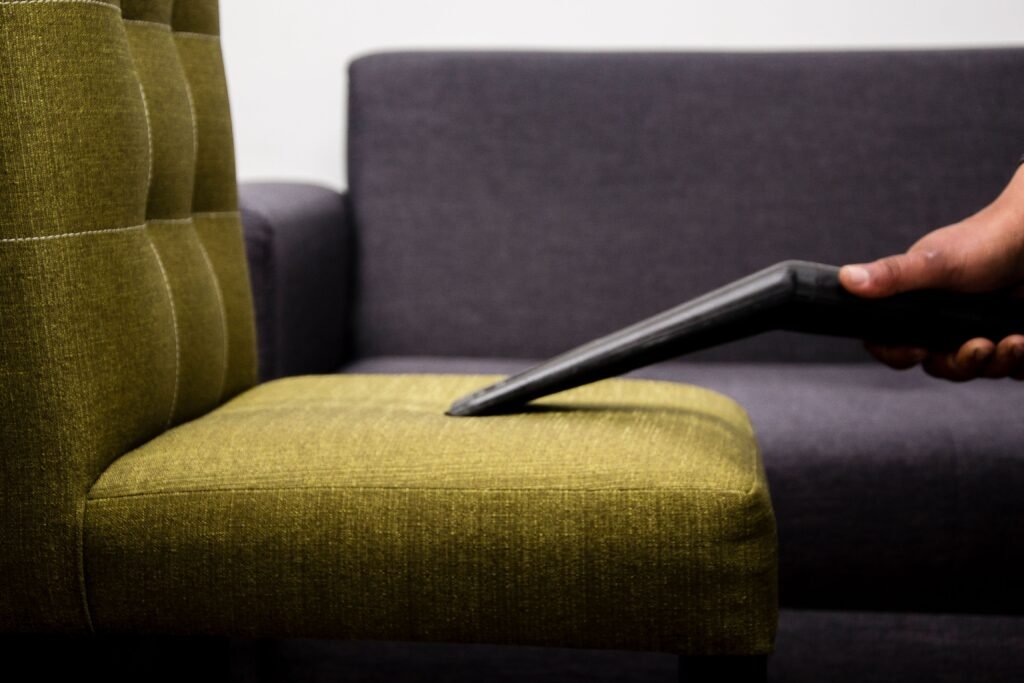
Your sofa is probably one of the most-used pieces of furniture in your home.
From muddy paws and food spills to everyday dust and stains, it’s no surprise that sofas can quickly start looking tired. The good news is that most sofas can be cleaned safely if you use the right method.
Here’s the best way to clean your sofa without damaging the fabric.
Step 1: Check the cleaning label
Before using any cleaning products, check the manufacturer’s care label.
Common cleaning codes include:
- W – Water-based cleaners are safe.
- S – Use solvent-based cleaners only.
- WS – Water or solvent cleaners can be used.
- X – Vacuum only. Professional cleaning is recommended.
Using the wrong product could permanently damage your sofa.
Step 2: Vacuum thoroughly
Start by removing loose dirt, crumbs and pet hair.
Use a vacuum cleaner with an upholstery attachment to clean:
✔ Cushions
✔ Crevices
✔ Armrests
✔ Under the cushions
✔ Around the edges
Regular vacuuming helps prevent dirt from becoming embedded in the fabric.
Step 3: Treat stains carefully
Blot spills immediately with a clean cloth.
Avoid rubbing the stain, as this can push it deeper into the fabric.
For many water-safe fabrics, a small amount of warm water with mild washing-up liquid is enough for light stains.
Always test any cleaning solution on a hidden area first.
Step 4: Remove odours
If your sofa smells a little stale:
- Sprinkle bicarbonate of soda over the fabric.
- Leave it for 20–30 minutes.
- Vacuum thoroughly.
This simple method can help absorb unwanted odours without harsh chemicals.
Step 5: Allow the sofa to dry
If you’ve used water during cleaning:
- Open windows.
- Increase ventilation.
- Allow the sofa to dry naturally.
Avoid sitting on it until it’s completely dry to prevent water marks.
How to clean different sofa materials
Fabric sofas
Most fabric sofas can be cleaned using mild upholstery cleaners or water-based products if the care label allows it.
Avoid soaking the fabric.
Leather sofas
Leather requires different care.
Use a cleaner specifically designed for leather and finish with a leather conditioner to help prevent cracking.
Never use excessive water on leather.
Velvet sofas
Velvet is delicate.
Vacuum gently using a soft brush attachment and follow the manufacturer’s cleaning instructions.
If you’re unsure, it’s best to use a professional upholstery cleaner.
Microfibre sofas
Microfibre is generally durable but should still be cleaned according to the manufacturer’s care code.
Always avoid using more moisture than necessary.
Common mistakes to avoid
❌ Scrubbing stains aggressively.
❌ Using bleach or harsh chemicals.
❌ Soaking the fabric.
❌ Skipping the patch test.
❌ Ignoring the care label.
These mistakes can permanently damage upholstery.
How often should you clean your sofa?
A good routine is:
- Vacuum weekly.
- Spot-clean spills immediately.
- Deep clean every 6–12 months.
- Arrange professional upholstery cleaning every 12–24 months, depending on usage.
Homes with pets or young children may benefit from more frequent deep cleaning.
When should you hire a professional?
Professional upholstery cleaning is worth considering if:
- Stains won’t come out.
- The sofa has an unpleasant smell.
- There’s pet urine damage.
- The fabric is delicate.
- You’re preparing to sell or rent your home.
Professionals use specialist equipment that can often achieve far better results than DIY cleaning.
Frequently Asked Questions
Can I use a carpet cleaner on my sofa?
Only if the manufacturer states it’s suitable for upholstery and your sofa’s care label allows water-based cleaning.
What’s the best homemade sofa cleaner?
For many water-safe fabrics, warm water with a small amount of mild washing-up liquid works well for light cleaning.
Always test it on an inconspicuous area first.
How long does a sofa take to dry?
Depending on the fabric and how much moisture was used, most sofas dry within 4–12 hours.
Can professional cleaning remove old stains?
In many cases, yes.
However, some stains may be permanent depending on their type, age and the fabric.
Final thoughts
Regular sofa cleaning doesn’t just improve appearance—it can also help extend the life of your furniture.
Vacuuming weekly, treating spills quickly and arranging occasional professional cleaning will keep your sofa looking and smelling its best for years to come.
If you’re dealing with stubborn stains or delicate upholstery, a professional cleaner is often the safest and most effective solution.
Find a trusted upholstery cleaner
Need help cleaning your sofa?
Use The Right Guy to compare trusted local upholstery cleaning specialists, read genuine customer reviews and request quotes from experienced professionals near you.
Own an upholstery or carpet cleaning business? Create your free business listing on The Right Guy and help more homeowners discover your services.

Author: The Right Guy Team
UK service guides published by The Right Guy Ltd.