
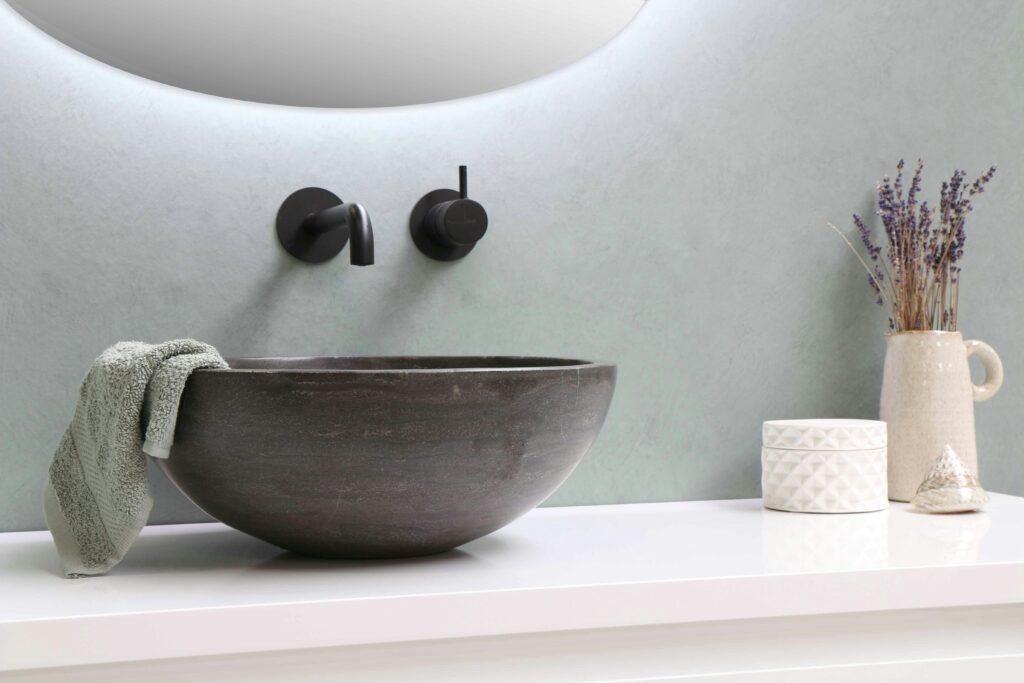
Replacing a bathroom sink can be a relatively affordable upgrade, especially if the new basin fits the existing position and the plumbing does not need major alterations.
In the UK in 2026, a straightforward bathroom sink replacement will typically cost around £250–£500 including the basin, labour and basic fittings. A simple budget basin replacement may come in below this, while fitting a vanity unit, moving pipework or choosing a premium countertop basin can push the total towards £500–£800 or more.
The final price depends on the type of basin, how it is mounted, whether the existing taps can be reused, the condition of the pipework and how much making good is required after the old sink is removed.
This guide explains how much it costs to replace a bathroom sink in the UK in 2026, including labour, basin prices, taps, vanity units and plumbing alterations, plus when replacing the sink alone makes sense compared with renovating the whole bathroom.
If you’re already considering several changes at once, compare the project against our 2026 bathroom renovation cost guide.
Average bathroom sink replacement cost in the UK
For budgeting, these are useful broad 2026 price ranges:
| Bathroom sink job | Typical cost |
|---|---|
| Straightforward basin replacement | £250–£400 |
| Mid-range basin replacement | £300–£500 |
| Basin plus new tap | £350–£600 |
| Basin and vanity replacement | £400–£750 |
| Countertop basin installation | £400–£700+ |
| Basin requiring pipework changes | £450–£800+ |
| Premium basin/vanity installation | £600–£1,000+ |
| Basin only | Around £50–£400+ |
| Labour for simple replacement | Around £100–£250 |
These are budgeting ranges rather than fixed quotes.
A basic pedestal basin swapped for a similar model is usually much cheaper than removing it and installing a wall-hung vanity with concealed pipework and a new tap.
How much does a bathroom sink cost?
The basin itself can be one of the least expensive parts of the job, although designer products can quickly increase the budget.
Basic pedestal basin
A straightforward ceramic basin may cost roughly:
£50–£150
Pedestal basins remain common because they are simple, familiar and relatively inexpensive.
Wall-hung basin
Small wall-mounted basins can start at around:
£70–£200
Larger or designer models may cost considerably more.
They can be particularly useful in small bathrooms because more of the floor remains visible.
Countertop basin
A countertop vessel basin typically costs around:
£80–£300+
These sit on top of a vanity or worktop and are available in ceramic, stone-effect and other finishes.
The final installation can cost more because a suitable vanity, worktop, waste and tap arrangement are also required.
Vanity basin
A basin supplied with a vanity unit can range from around:
£150–£700+
depending on size, construction and finish.
This costs more than a basic pedestal basin but adds valuable bathroom storage.
If storage is one of the reasons you are changing the sink, our bathroom storage ideas include more ways to make use of the area around a vanity.
How much does a plumber charge to replace a bathroom sink?
For a straightforward like-for-like replacement, labour will often cost around £100–£250.
This could include:
- isolating the water supply;
- disconnecting taps;
- disconnecting the waste;
- removing the existing basin;
- fitting the replacement;
- reconnecting water and waste;
- sealing where necessary;
- testing for leaks.
A straightforward job may take only a few hours.
However, the price rises if the plumber needs to alter pipework, remove furniture, repair previous installations or deal with difficult access.
How long does it take to replace a bathroom sink?
A simple replacement can often be completed in approximately 2–4 hours.
The job can take longer if:
- new pipework is required;
- the basin position changes;
- a vanity unit needs assembling;
- wall fixings need altering;
- tiles need cutting;
- old fittings are difficult to remove;
- the wall requires repair.
If the sink is being installed as part of a complete bathroom renovation, the work will usually be coordinated with tiling, decorating and other plumbing.
How much does it cost to replace a bathroom sink and tap?
Replacing the basin and tap together might cost around £350–£600 for many straightforward installations.
This can be efficient because the plumber already needs to disconnect the tap to remove the old basin.
For example:
Basin: £120
Tap: £100
Waste and fittings: £40
Labour: £180
Estimated total: £440
That is only an illustrative calculation rather than a fixed market price, but it shows how the individual elements add up.
For a detailed look at tap pricing, see our guide to how much it costs to replace a tap in the UK.
Should you replace the bathroom tap at the same time?
You do not have to.
If the existing tap is:
- working properly;
- in good condition;
- compatible with the new basin;
- a style you still like;
it may be reusable.
However, replacing both together can make sense when the existing tap is old or worn.
The plumber is already working on the water connections, so combining the jobs may avoid another call-out later.
Compatibility is particularly important.
A basin designed for one tap hole will not work automatically with separate hot and cold taps, while countertop basins may require taller or wall-mounted taps.
How much does it cost to replace a pedestal basin?
A straightforward pedestal basin replacement can cost around £250–£450, depending on the product and plumbing.
This is often one of the cheaper basin replacements because the basic installation is relatively conventional.
A simple project could involve:
New basin and pedestal: £80–£180
Waste/fittings: £20–£50
Labour: £120–£220
If the existing tap is reused, the cost may stay towards the lower end.
How much does a vanity unit with sink cost to install?
Replacing a pedestal basin with a vanity can typically cost £400–£750 or more.
The total includes more than plumbing.
The installer may need to:
- remove the existing basin;
- assemble or fit the vanity;
- modify it around pipework;
- secure it to the wall;
- fit the basin;
- install the tap and waste;
- alter plumbing;
- seal the unit.
Wall-hung vanity units can require especially secure fixings because the furniture and basin are supported by the wall.
The advantage is practical storage.
A vanity can replace the wasted area beneath a pedestal basin with drawers or cupboards for toiletries, cleaning products and spare supplies.
Floor-standing vs wall-hung vanity: which costs more?
Floor-standing vanities are generally straightforward to install because their weight is supported by the floor.
Wall-hung units create a cleaner contemporary look but need suitable wall support.
Floor-standing vanity
Advantages:
- often simpler installation;
- plenty of storage;
- wide range of prices.
Wall-hung vanity
Advantages:
- more floor remains visible;
- easier to clean underneath;
- can make a small bathroom feel more spacious.
Installation may cost more if additional wall reinforcement or alterations are required.
How much does a countertop bathroom basin cost to install?
A countertop basin installation may cost around £400–£700+ once the vanity or worktop, basin, tap and plumbing are considered.
Although the basin itself can be inexpensive, the surrounding arrangement adds cost.
You may need:
- vanity unit;
- worktop;
- tap;
- waste;
- suitable holes cut in the worktop;
- plumbing adjustment.
The final result can look more bespoke than a standard pedestal basin.
Can you replace a bathroom sink without changing the tiles?
Often, yes.
A like-for-like replacement may allow the existing wall and floor finishes to remain.
However, problems can arise if the new basin is:
- smaller;
- differently shaped;
- positioned at another height;
- wall-hung instead of pedestal-mounted.
The old installation may leave behind:
- screw holes;
- unpainted areas;
- missing tiles;
- sealant marks;
- pipe openings.
A larger basin or vanity can sometimes hide these.
A smaller one can expose them.
Check the area behind the existing basin before choosing the replacement if possible.
Does removing a pedestal leave damage?
It can.
Pedestal basins often hide pipework and sections of flooring.
After removal, you might discover:
- incomplete flooring;
- old pipework;
- screw holes;
- sealant residue;
- damaged paint;
- missing tiles.
This is particularly relevant when replacing a traditional pedestal with a wall-hung basin.
The new design exposes more of the floor and wall, so additional decorating or tiling may be required.
How much does it cost to move a bathroom sink?
Moving a basin can increase the cost substantially.
A simple replacement uses existing:
- hot-water pipe;
- cold-water pipe;
- waste pipe.
Move the basin across the bathroom and those services may need extending or rerouting.
A short relocation might add a few hundred pounds.
A more difficult move could cost considerably more, especially if floors, walls or tiles need opening up.
This is why keeping bathroom fixtures in approximately the same positions often saves money during renovation.
Can a bathroom sink be moved anywhere?
Not necessarily.
Water supplies are relatively flexible, but waste drainage needs appropriate routing.
The further a basin moves from the existing waste connection, the more complicated the job can become.
Other obstacles can include:
- floor joists;
- walls;
- existing pipework;
- other fixtures;
- doorways;
- electrical locations.
If you are redesigning the whole bathroom, get the plumbing feasibility checked before buying furniture.
How much does it cost to replace a cracked bathroom sink?
If only the basin itself is damaged and everything else can be reused, replacement may cost towards the lower end of the range.
A straightforward cracked basin replacement might be around £200–£400, depending on the replacement product.
If you can find the same or a compatible basin, installation may be especially simple.
Do not attempt to treat significant cracks in a ceramic basin as a permanent cosmetic repair if the integrity of the fixture is compromised.
Replacement is usually the more sensible long-term option.
Why is my bathroom sink leaking?
Not every leak means the entire basin needs replacing.
Water can leak from:
- tap connections;
- waste fitting;
- trap;
- flexible hoses;
- sealant;
- pipe joints.
A leaking waste or tap connector may only require a relatively small plumbing repair.
Before buying a new basin, establish where the water is actually coming from.
If the ceramic itself is cracked, replacement may be necessary.
Is it cheaper to repair or replace a bathroom sink?
Repair is cheaper when the sink itself remains sound.
For example, replacing:
- waste seal;
- trap;
- tap;
- connector;
will usually cost less than replacing the entire basin.
Replacement makes more sense when:
- the basin is cracked;
- it is badly damaged;
- you want a significantly different design;
- the existing fixture is being removed for a vanity.
The decision is often aesthetic rather than purely mechanical.
Is a wall-hung basin good for a small bathroom?
Yes.
Wall-hung basins are particularly useful in small bathrooms and ensuites because keeping the floor visible can make the room feel less crowded.
Compact models can also have a shallower depth.
The trade-off is storage.
A wall-hung basin provides very little space for toiletries unless you add:
- mirrored cabinet;
- wall shelf;
- separate cupboard.
If storage is a priority, a compact wall-hung vanity may give you the best combination of floor visibility and useful drawers.
How can a new sink add bathroom storage?
Changing the basin is an excellent opportunity to add storage because the area underneath traditional pedestal sinks is often wasted.
Consider replacing it with:
- floor-standing vanity;
- floating vanity;
- drawer vanity;
- compact corner unit.
Drawers can be especially useful because items at the back remain easier to access than in a deep cupboard.
Our guide to 19 bathroom storage ideas explores this in more detail.
Should you choose drawers or cupboards under a bathroom sink?
Both have advantages.
Drawers
Good for:
- toiletries;
- make-up;
- hair products;
- smaller items.
You can see most of the contents as soon as the drawer opens.
Cupboards
Good for:
- taller bottles;
- cleaning products;
- larger supplies.
Pipework can sometimes make cupboard storage awkward.
Vanities designed with U-shaped drawers can make efficient use of the space around the waste pipe.
What material is best for a bathroom sink?
Ceramic remains one of the most common choices.
It is:
- easy to clean;
- familiar;
- available in many shapes;
- compatible with most bathroom styles.
Other products may use:
- mineral composite;
- solid surface;
- glass;
- stone.
More unusual materials can create a stronger design feature but may cost more and require specific cleaning or installation.
White or coloured bathroom sink?
White remains by far the easiest basin colour to coordinate.
It works with almost any:
- tile;
- vanity;
- tap finish;
- colour scheme.
Coloured and black basins can create a much stronger feature, but consider maintenance.
Dark finishes may make:
- toothpaste;
- soap residue;
- limescale;
- water marks
more visible.
The practicality depends partly on the finish and local water hardness.
What size bathroom sink should you choose?
Do not simply buy the largest basin that fits the wall.
Consider:
- walkway width;
- bathroom door;
- toilet clearance;
- shower access;
- storage;
- tap position.
In a compact cloakroom, a shallow basin can make a significant difference.
In a larger family bathroom, a wider vanity might provide much more useful storage.
Measure the room before purchasing, including how far the sink projects into the walking area.
Can you install two bathroom sinks?
Yes, if the vanity, room and plumbing allow it.
Double basins are popular in larger bathrooms because two people can use the vanity simultaneously.
But they require considerably more width.
A double vanity might be attractive, but in a medium-sized bathroom one large basin plus extra worktop and storage can sometimes be more practical.
Think about how many people genuinely need the sink at the same time.
Do you need a plumber and carpenter for a vanity unit?
Often one bathroom fitter can handle the entire job, but it depends on the complexity.
A plumber handles:
- water supplies;
- waste;
- tap connections.
A carpenter or fitter may be useful for:
- altering cabinetry;
- fitting worktops;
- modifying units.
For a standard bathroom vanity, one experienced bathroom installer may be able to complete everything.
Should you buy the basin before getting a quote?
For a straightforward replacement, you can identify the basin you want first.
But for more complex jobs, it is safer to confirm compatibility before ordering.
Provide the installer with:
- product dimensions;
- tap-hole configuration;
- waste requirements;
- vanity dimensions.
This reduces the risk of buying something that does not suit the existing plumbing or available space.
What should a bathroom sink replacement quote include?
Ask whether the quoted price includes:
- old basin removal;
- new basin installation;
- tap installation;
- waste fitting;
- plumbing adjustments;
- vanity installation;
- silicone/sealing;
- disposal;
- making good;
- VAT where applicable.
One contractor’s £250 quote may cover only plumbing.
Another’s £400 quote may include the basin, tap fitting and disposal.
Compare like with like.
How can you reduce bathroom sink replacement costs?
The easiest approach is to choose a replacement compatible with the existing plumbing.
Keeping:
- same location;
- similar dimensions;
- same tap arrangement;
usually reduces labour.
You can also save by reusing a good existing tap.
If several bathroom jobs need doing, consider completing them during the same renovation rather than arranging repeated visits.
However, do not expand a £300 sink replacement into a £10,000 bathroom refurbishment just because someone is already working there.
Should you replace the sink during a full bathroom renovation?
Usually, yes, if the rest of the bathroom is being replaced.
A new basin allows you to coordinate:
- vanity;
- taps;
- tiles;
- mirror;
- storage;
- lighting.
The plumbing can also be planned before the final surfaces are completed.
If the current sink is relatively new and suits the new design, reusing it can save money, but most complete renovations include new sanitaryware.
Our bathroom renovation cost guide can help you compare the sink cost with the total project.
Can I replace a bathroom sink myself?
A competent DIYer may be able to replace a straightforward basin.
However, the job includes both plumbing and securely mounting a relatively heavy ceramic fixture.
Mistakes can cause:
- leaks;
- damaged tiles;
- damaged walls;
- unstable basin;
- water damage.
Wall-hung basins and vanities require particularly reliable fixings.
If you’re not confident, professional installation is generally sensible.
Common bathroom sink replacement mistakes
Buying the wrong size
Measure the projection as well as the width.
Forgetting tap compatibility
Check the number and position of tap holes.
Ignoring the wall behind the old sink
A smaller replacement may expose unfinished areas.
Choosing a floating vanity without checking the wall
The wall needs to support the installation appropriately.
Moving the basin unnecessarily
Relocating plumbing can significantly increase costs.
Forgetting storage
A beautiful basin may be frustrating if there is nowhere for everyday toiletries.
Choosing furniture unsuitable for bathrooms
Bathroom furniture needs to cope with a humid environment.
Forgetting disposal
Ask who removes the old basin and pedestal.
Frequently asked questions
How much does it cost to replace a bathroom sink in the UK?
For a straightforward replacement in 2026, £250–£500 is a sensible starting budget, including a typical basin and professional installation. More involved vanity or plumbing work can cost £500–£800 or more.
How much does a plumber charge to replace a bathroom sink?
Labour for a straightforward replacement may be around £100–£250, depending on location, access and the work required.
How long does replacing a bathroom sink take?
A simple like-for-like replacement can often take around 2–4 hours. Vanity installation and pipe alterations can take considerably longer.
Is it cheaper to replace the basin and tap together?
It can be. The tap has to be disconnected during many basin replacements anyway, so fitting a new one during the same appointment can avoid duplicated labour.
Can I replace a pedestal basin with a vanity?
Yes, in many bathrooms. Plumbing may need adjusting, and the wall and floor hidden by the old pedestal may need making good.
Can I replace just the bathroom basin?
Yes. If the existing plumbing, tap and surrounding finishes are suitable, there is no need to renovate the whole bathroom.
Does a bathroom sink need to be fitted by a plumber?
Not necessarily in every circumstance, but professional installation reduces the risk of leaks and ensures the water and waste connections are dealt with correctly.
How much does a vanity with basin cost?
A complete vanity and basin can cost from around £150 for basic products to £700 or more for larger or premium designs, before installation.
Final thoughts: how much should you budget to replace a bathroom sink?
For most straightforward UK bathroom sink replacements in 2026, £250–£500 is a realistic budget.
If you choose:
basic basin + existing tap + existing plumbing
you may stay towards the lower end.
If you choose:
new vanity + countertop basin + new tap + plumbing alterations
the project can reach £500–£800 or more.
The most economical option is usually to keep the basin in the existing location and choose a replacement compatible with the current plumbing.
If you are replacing the tap too, see our 2026 tap replacement cost guide.
If you are using the upgrade to create more practical storage, our bathroom storage ideas can help you choose between pedestal basins, vanities and wall-mounted options.
And if the basin is only one part of a larger refurbishment, compare the costs against our 2026 bathroom renovation guide before committing to individual upgrades.
When you’re ready to get the work done, you can use The Right Guy to discover local plumbers, bathroom fitters and other relevant professionals.

Author: The Right Guy Team
UK service guides published by The Right Guy Ltd.