
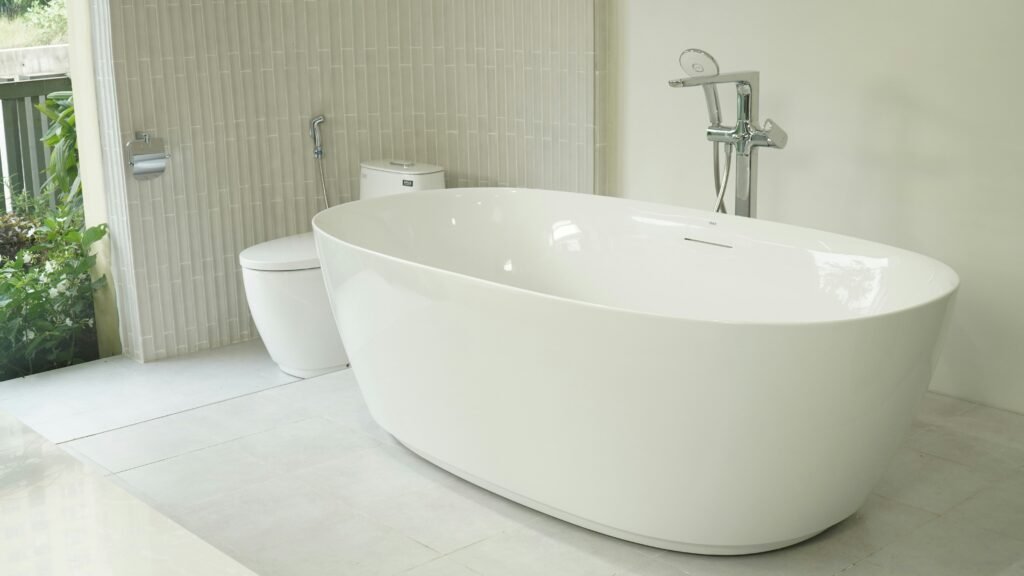
Installing a new bath can cost anything from a few hundred pounds for a straightforward like-for-like replacement to several thousand pounds for a premium freestanding, stone or specialist bath.
So, how much does it cost to install a new bath in the UK in 2026?
For the installation itself, Checkatrade’s March 2026 figures put typical bath fitting at around £250–£400, averaging approximately £325. Its separate bathtub guide puts average installation labour at around £300.
Once you include the bath, taps, waste, bath panel, removal of the existing bath and any necessary tiling or plumbing work, a realistic total for many straightforward replacements is around £500–£1,000. More complicated freestanding, cast-iron, stone or repositioned baths can cost substantially more.
The biggest cost difference usually comes down to one question:
Are you putting a similar bath in exactly the same position, or changing the bathroom layout?
Keeping the existing plumbing can save hundreds of pounds.
If your new bath is part of a larger refurbishment, our guide to how much a bathroom renovation costs in 2026 will help you budget for the complete project.
Average cost to install a new bath in the UK
Here are useful 2026 figures to start with:
| Bath installation | Typical cost |
|---|---|
| Bath installation labour | £250–£400 |
| Average bath installation | Around £300–£325 |
| Basic acrylic bath supplied and fitted | From around £200–£250+ |
| Steel bath supplied and fitted | Around £250–£450+ |
| Like-for-like replacement overall | Around £450–£1,000 |
| Remove and dispose of old bath | From around £75+ |
| Bath panel | From around £50+ |
| Tiled bath panel | From around £150+ |
| Cast-iron bath supplied and fitted | Around £1,250–£1,650+ |
| Walk-in bath supplied and fitted | Around £1,500–£1,700+ |
| Natural stone bath supplied and fitted | Around £1,500–£4,000+ |
These figures should be treated as budgeting estimates rather than fixed quotations. Bath type, location, access, plumbing and surrounding finishes can all change the final price considerably.
How much does the bath itself cost?
There is an enormous difference between a basic acrylic bath and a premium freestanding design.
Acrylic bath
Acrylic is one of the most common choices for UK bathrooms.
Basic models can start from roughly:
£100–£300
while larger and better-quality designs cost more.
Acrylic baths are popular because they are relatively:
- affordable;
- lightweight;
- easy to install;
- widely available;
- available in many shapes and sizes.
For a standard family bathroom, acrylic often provides the most economical option.
Steel bath
Steel baths are generally heavier and can feel more substantial.
Expect the bath itself to cost from roughly:
£150–£500+
depending on specification.
Checkatrade currently estimates approximately £250–£450+ supplied and fitted for some steel bath installations.
Steel can be a good middle ground between inexpensive acrylic and significantly heavier premium materials.
Freestanding bath
Freestanding baths can range enormously in price.
You might pay:
£400–£2,000+
for the bath itself, although designer models can go much higher.
Installation can also cost more because the plumbing may need to be:
- repositioned;
- concealed beneath the floor;
- connected to floor-standing taps;
- carefully planned around the visible bath.
If you are considering this style, see our 17 freestanding bath ideas before deciding on the final layout.
Cast-iron bath
Cast iron sits firmly towards the premium end.
Checkatrade’s 2026 data estimates around £1,250–£1,650+ supplied and fitted.
The bath is extremely heavy, which can affect:
- delivery;
- moving it upstairs;
- installation labour;
- floor suitability.
A large cast-iron bath should therefore be planned properly rather than treated as a direct replacement for a lightweight acrylic model.
Natural stone bath
Natural stone baths can become extremely expensive.
Checkatrade currently gives a broad supplied-and-fitted estimate of around:
£1,500–£4,000+.
Premium designer models can cost considerably more.
Weight also becomes an important consideration, particularly in upstairs bathrooms.
How much does a plumber charge to fit a bath?
For the installation itself, approximately £250–£400 is a useful starting point for a conventional bath, with Checkatrade putting the average at about £325.
A typical installation may involve:
- removing the existing bath if necessary;
- preparing the area;
- assembling the bath frame or legs;
- positioning and levelling the bath;
- fitting the taps;
- connecting hot and cold water;
- installing the waste and overflow;
- testing the plumbing;
- fitting the bath panel;
- sealing around the bath.
The job becomes more expensive when additional plumbing, tiling or repair work is needed.
How long does it take to install a bath?
For a straightforward replacement, the installation itself may take around 2–4 hours, according to current 2026 UK pricing guidance.
But this assumes a relatively simple situation.
It can take longer if:
- the old bath is difficult to remove;
- pipework needs altering;
- taps are difficult to access;
- the new bath is a different size;
- tiles need removing;
- flooring needs repairing;
- a new bath panel needs constructing;
- the bath is extremely heavy.
A complicated installation can easily become a full-day or multi-trade job.
How much does it cost to replace an existing bath?
For a straightforward like-for-like replacement, a useful overall budget is around:
£450–£1,000.
That broadly covers the type of project where the old bath comes out and a relatively standard replacement goes into approximately the same position.
For example:
New acrylic bath: £200
Taps: £100
Waste/fittings: £40
Installation: £300
Old bath removal: £75
Example total: £715
This is an illustrative calculation rather than a quote, but it demonstrates why the bath itself is often only part of the final bill.
How much does it cost to remove an old bath?
Checkatrade currently estimates from around £75 for removing and disposing of an existing bath.
However, removal can become more expensive if:
- the bath is cast iron;
- access is difficult;
- it needs dismantling;
- tiles must be removed;
- the property has narrow stairs;
- additional waste disposal is required.
Ask whether removal is included in the installation quote.
Do not automatically assume it is.
What affects the cost of installing a new bath?
Several factors have a significant effect.
Bath type
A standard acrylic bath is usually much cheaper to install than a heavy freestanding or stone bath.
Bath position
Keeping the bath where it is normally saves money.
Plumbing
Moving hot, cold or waste pipework adds labour.
Taps
Standard deck-mounted taps can be relatively straightforward.
Floor-standing or wall-mounted taps may require considerably more work.
Tiling
Removing the old bath can damage or expose tiles.
Bath panel
A simple acrylic panel costs much less than a bespoke tiled panel.
Access
Getting a large bath upstairs can sometimes be a job in itself.
Location
Labour rates tend to be higher in London and parts of the South East.
Is it cheaper to keep the bath in the same position?
Usually, yes.
This is one of the easiest ways to control bathroom renovation costs.
If the new bath uses the existing:
- hot-water supply;
- cold-water supply;
- waste position;
the plumber may only need relatively minor adjustments.
Move the bath to the opposite side of the room and suddenly you may need:
- floors lifted;
- new pipework;
- new waste route;
- additional tiling;
- more labour.
Screwfix’s current bathroom cost guidance similarly identifies keeping the existing layout as an important way to avoid expensive pipe rerouting.
How much does it cost to move a bath?
There is no useful single figure because it depends on where the bath is moving.
A small adjustment might add only a few hundred pounds.
Moving it across the room could add hundreds or potentially £1,000+ once plumbing, flooring, tiling and making good are considered.
The waste pipe can be particularly important because drainage needs to work properly.
Before buying a bath for a completely different location, ask a plumber or bathroom fitter whether the proposed layout is practical.
How much does a freestanding bath cost to install?
Freestanding baths typically cost more to install than standard baths.
One current 2026 UK cost guide puts fitting alone at around £400–£600 outside London, rising to approximately £550–£800 in London and the South East.
Why more?
Because the bath may require:
- different pipework;
- concealed plumbing;
- floor-mounted taps;
- additional handling;
- precise positioning.
The plumbing is also much more visible.
With a standard bath, pipes can often disappear behind the panel.
With a freestanding bath sitting in the middle of the room, you do not have that luxury.
Is a freestanding bath worth the extra cost?
That depends on the bathroom.
A freestanding bath can become the main design feature in a large bathroom.
It works particularly well:
- beneath a window;
- against a feature wall;
- in a large ensuite;
- with statement floor-standing taps.
But don’t squeeze one into a room simply because it looks luxurious online.
You need enough space around it for the bathroom to remain practical.
Our guide to freestanding bath ideas for UK bathrooms shows different ways to make the design work.
How much does a shower bath cost?
A shower bath combines bathing and showering in the same footprint.
Popular options include:
- straight bath with shower;
- P-shaped bath;
- L-shaped bath.
Installation costs can be slightly higher than a very basic bath because you may also need:
- shower;
- screen;
- additional plumbing;
- suitable wall finish.
One 2026 estimate puts labour for fitting P- or L-shaped shower baths at around £350–£500 outside London, although product and shower costs are additional.
For shower pricing specifically, see our guide to how much it costs to install a shower in the UK.
Bath or separate shower?
If you have enough space, having both provides maximum flexibility.
A bath can be particularly useful for:
- families with young children;
- soaking;
- washing pets;
- homeowners who simply enjoy baths.
A separate shower can be quicker and easier for everyday use.
But many UK bathrooms do not have enough space for both.
In that situation, a shower over the bath can provide a practical compromise.
Should I replace my bath with a shower?
This depends more on how you use the bathroom than on current trends.
Replacing a bath with a shower can make sense if:
- nobody uses the bath;
- accessibility is becoming important;
- you want a larger shower;
- the bathroom is very small.
Current Checkatrade figures put an over-bath shower conversion at around £500–£1,000, a bath-to-shower-enclosure conversion at around £1,300–£2,000, and replacing a bath with a walk-in shower at roughly £2,500 on average.
However, think carefully before removing the only bath in a family-sized property.
How much does it cost to install a bath and shower together?
The total depends on the shower system.
A simple shower over a standard bath is usually much cheaper than installing a bath plus a separate walk-in enclosure.
Costs may include:
- bath;
- bath installation;
- shower;
- shower installation;
- screen;
- waterproof wall finish;
- plumbing.
If you are budgeting for both, our shower installation cost guide breaks down the shower side separately.
How much does a bath panel cost?
Basic bath panels can start from around £50, while tiled bath panels may cost around £150+, before more elaborate bespoke finishes.
Common options include:
Acrylic panel
Usually inexpensive and easy to remove.
MDF or timber-effect panel
Can create a more furniture-like appearance.
Tiled panel
Creates a built-in look but requires more labour.
Bespoke panel
Useful for unusual bath dimensions or higher-end designs.
Remember that access to plumbing may still be required.
How much do bath taps cost?
Bath taps vary enormously.
Basic taps can cost well under £100, while premium brassware can cost several hundred pounds or more.
Common types include:
- pillar taps;
- mixer taps;
- bath/shower mixers;
- wall-mounted taps;
- freestanding taps.
The installation cost can change significantly depending on the style.
A pair of conventional taps fitted directly to a bath is very different from installing a freestanding tap requiring pipework beneath the floor.
Should you buy the bath before hiring a plumber?
You can choose the bath beforehand, but check that it is suitable for the space.
Confirm:
- overall length;
- width;
- height;
- waste position;
- tap-hole arrangement;
- capacity;
- access into the bathroom.
That last point is easy to overlook.
Measure:
- front door;
- hallway;
- staircase;
- bathroom door.
A beautiful bath is not much use if it cannot physically reach the bathroom.
Can a heavier bath go upstairs?
Potentially, but weight needs consideration.
This becomes particularly important with:
- cast iron;
- natural stone;
- very large baths.
The bath itself is only part of the load.
Once filled, you also have:
bath + water + person.
If there is any concern about floor capacity, get professional advice before installation rather than assuming the structure is adequate.
Do you need to replace tiles when replacing a bath?
Not always.
If the replacement bath is approximately the same:
- height;
- width;
- length;
you may be able to retain most existing tiles.
But removing the old bath can expose areas that were previously hidden.
A new bath may also sit at a slightly different height.
That can leave:
- missing tiles;
- damaged grout;
- old silicone lines;
- gaps.
Budget for at least some making good unless you know the new bath is a direct replacement.
What about waterproofing around the bath?
The junction between the bath and wall needs to be finished correctly to prevent water penetrating behind the bath.
This is particularly important where a shower is installed over it.
Repeated water exposure can eventually cause problems with:
- plasterboard;
- timber;
- flooring;
- ceilings below.
Do not treat silicone as an unimportant cosmetic detail.
The surrounding wall system and sealing need to be appropriate for the way the bath will be used.
Can I install a new bath myself?
A competent DIYer may be able to install a straightforward bath, but there are several opportunities for things to go wrong.
The bath must be:
- level;
- securely supported;
- correctly connected;
- properly sealed;
- leak-free.
Poor installation can lead to water escaping behind the bath where you may not notice it immediately.
A slow leak can damage:
- flooring;
- joists;
- ceilings;
- walls.
Professional installation is particularly sensible when plumbing needs altering.
What tradesperson installs a bath?
A plumber can usually handle a straightforward bath replacement.
A bathroom fitter may be more suitable when the project also includes:
- tiling;
- flooring;
- vanity installation;
- shower installation;
- decorating;
- wider bathroom alterations.
A complete bathroom renovation can involve several trades.
Checkatrade’s June 2026 figures put bathroom fitter day rates at roughly £320–£480 per day, with complete bathroom fitting labour often around £1,500–£3,000 depending on the project.
What should a bath installation quote include?
Before accepting a quote, establish whether it includes:
- removal of old bath;
- disposal;
- new bath installation;
- taps;
- waste and overflow;
- plumbing alterations;
- bath panel;
- sealing;
- tiling repairs;
- VAT where applicable.
This makes comparing quotes much easier.
For example:
Quote A: £350
may cover installation only.
Quote B: £500
may include removal, disposal, waste fittings and panel installation.
The cheaper headline quote is not necessarily cheaper overall.
How can you reduce the cost of installing a bath?
The biggest saving usually comes from keeping things simple.
Keep the bath in the same place
Avoid unnecessary plumbing alterations.
Choose standard dimensions
Unusual bath sizes can complicate installation.
Use conventional taps
Freestanding and wall-mounted taps can require more work.
Avoid disturbing good tiles
A compatible replacement may reduce making-good costs.
Combine bathroom work
If you’re replacing several fixtures soon, doing everything during one planned renovation can be more efficient.
Compare complete quotes
Look at what is included, not simply the lowest total.
New bath vs complete bathroom renovation
If the rest of the bathroom is in good condition, replacing only the bath can be excellent value.
But suppose you also need:
- new toilet;
- new basin;
- new shower;
- new flooring;
- new tiles;
- electrical work.
You are no longer really talking about a bath replacement.
You are planning a bathroom renovation.
Current 2026 estimates put a standard complete UK bathroom at roughly £5,500–£8,000, although specification and complexity can push the price considerably higher.
Use our bathroom renovation cost guide to budget for the whole room.
Is a new bath worth it?
Replacing the bath can be worthwhile if the existing one is:
- cracked;
- badly scratched;
- stained;
- leaking;
- uncomfortable;
- too small;
- unsuitable for the room.
It can also dramatically update the appearance of the bathroom without requiring a full renovation.
A modern bath, new taps and a fresh panel can make an older bathroom feel considerably newer for a fraction of the cost of replacing everything.
Common bath installation mistakes
Buying before measuring
Check the bathroom and the access route.
Moving the bath unnecessarily
Plumbing alterations quickly increase costs.
Forgetting the waste position
A different outlet location may require additional pipework.
Choosing taps too late
Tap type can influence plumbing requirements.
Forgetting the bath panel
It is not always supplied with the bath.
Ignoring the floor
Very heavy baths need suitable support.
Assuming tiles will survive
Allow some budget for making good.
Forgetting disposal
Ask who is responsible for the old bath.
Choosing style over practicality
A spectacular freestanding bath that makes it difficult to reach the toilet is not a successful bathroom design.
Frequently asked questions
How much does it cost to install a new bath in the UK?
For fitting alone, current 2026 figures put a conventional bath installation at around £250–£400, averaging roughly £300–£325. A straightforward supply-and-fit replacement can commonly cost around £450–£1,000, depending on the bath and work involved.
How much does a plumber charge to fit a bath?
Approximately £250–£400 is a useful starting range for standard installation, although more complex jobs cost more.
How long does it take to install a bath?
A straightforward installation can take around 2–4 hours, while plumbing alterations, tiling and more complicated baths can extend the job significantly.
How much does it cost to remove an old bath?
Current estimates start at approximately £75+ for removal and disposal, although heavy baths and difficult access can increase the cost.
Is a freestanding bath more expensive to install?
Usually, yes. Plumbing may need repositioning or concealing, and the bath can be more difficult to handle. One current guide puts fitting at around £400–£600 outside London for freestanding models.
Can I replace a bath without replacing the tiles?
Often, yes, particularly with a similarly sized replacement. However, some tile or sealant repair may be required around the edges.
Is it cheaper to replace a bath with a shower?
Not necessarily. A bath-to-shower conversion can involve removal, new drainage, waterproofing, tiling and an enclosure. A full walk-in conversion can cost significantly more than a basic bath replacement.
Does a new bath add value to a home?
A new bathroom can improve presentation and buyer appeal, but there is no guaranteed amount that one new bath will add to a property’s value. Choose it primarily because it improves the bathroom and suits how the household uses the space.
Final thoughts: how much should you budget for a new bath?
For a standard UK bath installation in 2026, £250–£400 for fitting alone is a sensible starting point.
Once you include the bath itself, taps, waste, removal and basic finishing, around £500–£1,000 is a more realistic budget for many straightforward replacements.
The cheapest scenario is generally:
standard bath + same position + existing plumbing + minimal tile repairs.
The expensive scenario is:
premium freestanding bath + new position + new plumbing + floor-standing taps + new flooring and tiling.
If you’re considering a statement design, explore our freestanding bath ideas before choosing your layout.
If you’re adding or replacing a shower at the same time, see our 2026 shower installation cost guide.
And if the bath is only one part of a much bigger project, our bathroom renovation cost guide will help you plan the complete budget.
When you’re ready to get the work done, you can use The Right Guy to discover local plumbers, bathroom fitters and other relevant professionals.

Author: The Right Guy Team
UK service guides published by The Right Guy Ltd.