
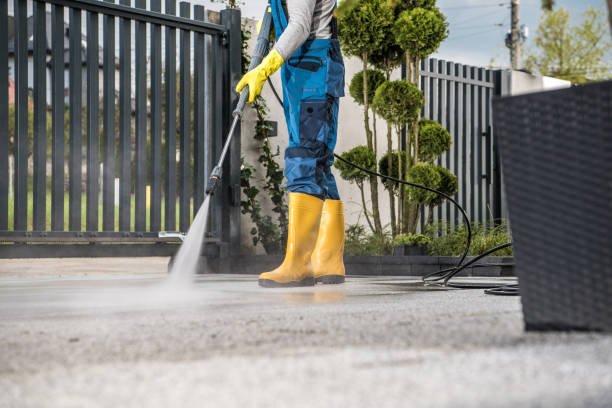
A dirty driveway can make the whole front of a property look tired. Moss appears between paving blocks, tyre marks become increasingly visible, weeds push through joints and years of weathering gradually hide the original colour of the surface.
Professional cleaning can make a dramatic difference without the expense of replacing the driveway — but how much does driveway cleaning cost in the UK in 2026?
For professional driveway cleaning, a sensible UK budget is approximately £100–£400+, depending on the driveway’s size, surface and condition. For a typical medium-sized driveway, current 2026 estimates commonly sit around £250–£400, with approximately £350 given as an average by some national cost guides.
As a broad guide:
| Driveway cleaning job | Typical 2026 UK cost |
|---|---|
| Small driveway | £100–£250 |
| Medium driveway | £220–£400 |
| Large driveway | £350–£500+ |
| Pressure washing only | Roughly £5–£15.50 per m² |
| Block paving clean + re-sand | Roughly £5–£10 per m² |
| Cleaning + sealing | Often £10–£20+ per m² |
| Medium driveway clean + seal | Around £400–£700+ |
There is a particularly wide spread in published per-square-metre rates. Current national guides quote around £8.50–£15.50 per m², while some specialist operators advertise basic cleaning closer to £3.50–£7 per m². The difference usually comes down to minimum charges, location and, crucially, what the service actually includes.
That last point is important.
A quote for pressure washing alone should not be compared directly with a quote covering weed treatment, pressure washing, block-paving re-sanding and sealing.
How Much Does Driveway Cleaning Cost by Size?
The easiest way to estimate the cost is to measure the approximate surface area.
Length × width gives you the area in square metres.
A driveway measuring 8 metres long and 4 metres wide, for example, is approximately:
8 × 4 = 32m²
But cleaners do not always simply multiply your area by one fixed rate. Small jobs can be disproportionately expensive because the company still needs to travel to your home, unload equipment, connect water, prepare the area and pack everything away afterwards.
Small driveway cleaning cost
For a small one- or two-car driveway, approximately £100–£250 is a reasonable starting range.
Current UK sources vary substantially. Some specialist companies advertise small 25m² block-paved drives around £90–£150, while broader national estimates put small professional driveway cleaning closer to £250.
This difference demonstrates why headline prices need context.
A £100 service may be a straightforward pressure wash.
A £250 service may involve more extensive treatment, specialist machinery, minimum half-day pricing or additional aftercare.
Medium driveway cleaning cost
For a typical medium driveway, allow approximately £220–£400.
Current 2026 national guidance puts a medium driveway at around £350, while MyBuilder estimates professional cleaning of a standard 40m² drive at approximately £250–£400.
A 40m² block-paved driveway requiring cleaning and re-sanding may therefore fall somewhere around £200–£400 depending on the provider, condition and local market.
Large driveway cleaning cost
A large driveway can cost around £350–£500+, with particularly large or heavily neglected areas costing substantially more.
A long driveway serving a rural property, for example, should not be expected to cost the same as a four-car suburban frontage simply because both are described as “large”.
At this scale, cleaners are more likely to price after seeing photographs, measurements or the property itself.
How Much Does Driveway Cleaning Cost Per Square Metre?
Current 2026 pricing varies more than you might expect.
Checkatrade gives a professional driveway-cleaning range of approximately £8.50–£15.50 per m².
Other current specialist pricing is lower. Published block-paving rates of approximately £3.50–£7 per m² can be found, sometimes including treatment and re-sanding.
Rather than treating one figure as the definitive national rate, it is more useful to think in terms of the service:
Basic pressure washing: potentially around £3–£8 per m² in competitive local markets.
More comprehensive professional cleaning: often around £8–£15+ per m².
Cleaning, re-sanding and sealing: potentially £10–£20+ per m² depending on the system.
Minimum charges matter too.
If someone charges £5 per m² but has an £100 minimum, a tiny 12m² driveway will still cost £100 rather than £60.
For a broader comparison of exterior-cleaning prices, see our guide to how much pressure washing costs in the UK.
What Does Professional Driveway Cleaning Include?
This is where homeowners need to look beyond the headline quote.
A basic driveway-cleaning service may involve:
- clearing loose debris;
- pressure or power washing;
- cleaning edges;
- rinsing surrounding areas;
- removing the resulting dirt.
A more comprehensive service might additionally include:
- weed removal or treatment;
- moss and algae treatment;
- specialist stain treatment;
- re-sanding block paving;
- application of biocide;
- sealing after the surface dries.
Those additional stages can make a major difference to the finished result — and the price.
Ask for an itemised quote wherever possible.
“Driveway cleaning: £250” tells you very little.
“Pressure wash, weed treatment and kiln-dried sand replacement: £250” is far easier to compare with another quotation.
How Much Does Block Paving Cleaning Cost?
Block paving needs particular attention because pressure washing can remove material from the joints between the blocks.
Current specialist 2026 prices for block-paving cleaning are commonly around £3.50–£7 per m², while more comprehensive cleaning and re-sanding packages can reach approximately £5–£10 per m².
For a 40m² driveway:
£5 per m² = £200
£8 per m² = £320
£10 per m² = £400
The important question is whether re-sanding is included.
Pressure washing block paving can remove some of the jointing sand. Simply leaving the joints depleted after cleaning is not good practice.
Kiln-dried sand is normally brushed back into dry joints once the surface has dried.
If your driveway itself needs replacing rather than cleaning, our guide to block paving costs in the UK explains the much larger cost of installing new paving.
How Much Does Re-Sanding a Driveway Cost?
Some companies include re-sanding in their block-paving cleaning price.
Others quote it separately.
Current published specialist pricing puts cleaning plus kiln-dried sand re-sanding at approximately £5–£10 per m² in some markets.
So for 50m² of paving:
£5 × 50 = £250
At £8 per m²:
£8 × 50 = £400
Again, these are examples rather than guaranteed national prices.
The amount of sand required depends on joint width, paving condition and how much material is removed during cleaning.
Most importantly, the paving normally needs to be sufficiently dry before kiln-dried sand can be brushed effectively into the joints.
How Much Does Driveway Sealing Cost?
Sealing is one of the biggest optional additions.
Current 2026 estimates put driveway sealing at around £5–£8 per m² for many standard applications, with a 40m² driveway costing roughly £200–£400 for sealing alone.
Other systems and premium finishes can cost more.
When cleaning and sealing are combined, current estimates put a typical medium driveway at around £400–£700, while some London block-paving packages reach approximately £10–£20 per m² depending on the type of sand and sealant.
Sealing is therefore not a small add-on.
For a 50m² driveway, adding £6 per m² means another:
50 × £6 = £300
You should decide whether sealing offers enough value for your particular surface rather than assuming every cleaned driveway needs it.
Does a Driveway Need Sealing After Pressure Washing?
Not necessarily.
Pressure washing and sealing are separate processes.
A driveway can be professionally cleaned without being sealed afterwards.
Sealing may be considered where the paving and sealant system are suitable and you want additional surface protection or a particular finish.
But it should not be treated as compulsory after every clean.
Different materials require different products, and applying an unsuitable sealer — or sealing a surface before it has dried properly — can create problems.
If you are considering sealing, ask the contractor:
What exact product are you using?
Is it suitable for my driveway material?
How many coats are included?
What preparation is required?
How long must the driveway remain unused afterwards?
The answers matter more than simply seeing “sealant included” on a quotation.
How Much Does Oil Stain Removal Cost?
Oil is one of the more difficult driveway stains.
A pressure washer can remove surface dirt around an oil mark without necessarily removing the oil that has penetrated into the material.
Specialist degreasers or stain treatments may therefore be required.
Some current professional price lists charge roughly £3.50–£7.50 per individual oil stain as an additional treatment, although severe contamination can cost more.
Even professional treatment cannot guarantee that every old oil stain disappears completely.
Porous concrete and paving can absorb contamination beneath the immediate surface.
Tell the cleaner about oil stains when requesting the quotation rather than expecting ordinary pressure washing to deal with them automatically.
What Affects Driveway Cleaning Prices?
Driveway size
More square metres means more time, water and cleaning.
But larger jobs can sometimes cost less per square metre because the cleaner’s travel and setup costs are spread across a bigger area.
Surface material
Block paving, concrete, tarmac, resin-bound surfaces and natural stone should not simply be treated identically.
A contractor should adjust their cleaning technique to the material.
Condition
A driveway washed regularly may have little more than general grime and light algae.
A neglected driveway could contain:
- thick moss;
- weeds;
- lichen;
- oil;
- tyre marks;
- organic staining;
- years of embedded dirt.
Current specialists report higher prices for heavily neglected paving because of the additional labour and treatment required.
Access
A driveway is usually easier to access than a back garden, but complications still arise.
The contractor may need access to an outside water supply and electricity depending on their equipment.
Difficult parking or restricted access can also increase setup time.
Drainage
Pressure washing creates dirty wastewater.
A professional should consider where that water and debris will go rather than simply pushing it into inappropriate areas.
Location
Prices differ considerably across the country.
London and parts of southern England generally have higher labour costs, while strong local competition can reduce rates elsewhere.
The spread between current national and local specialist pricing demonstrates just how significant location can be.
Does Pressure Washing Damage a Driveway?
It can if it is done badly.
“More pressure” does not automatically mean “better cleaning”.
Excessive pressure, holding the nozzle too close or using an unsuitable technique can potentially damage certain surfaces or remove jointing material unnecessarily.
Block paving is particularly important because high-pressure cleaning affects the sand between the blocks.
Older or already damaged surfaces also require more care.
A professional cleaner should assess the material before deciding how aggressively to clean it.
If your driveway has substantial cracks, sinking or loose paving, cleaning may improve its appearance without fixing the actual structural problem.
Cleaning Won’t Fix a Failing Driveway
This is an important distinction.
Pressure washing is excellent at dealing with dirt.
It cannot fix:
- significant subsidence;
- badly sunken blocks;
- major cracks;
- broken drainage;
- crumbling concrete;
- severely damaged tarmac;
- failing foundations.
If the driveway is simply dirty, spending a few hundred pounds cleaning it could make it look dramatically better.
If the surface itself has failed, continually paying to clean it may be poor value.
For comparison, our complete guide to driveway costs in the UK explains what different replacement surfaces can cost.
The difference is substantial: cleaning generally costs hundreds of pounds, while installing a completely new driveway can cost thousands.
That makes professional cleaning particularly attractive where the existing driveway is structurally sound.
Is Professional Driveway Cleaning Worth It?
For many properties, yes.
A driveway occupies a large proportion of the visible frontage of a house. When it becomes dark, green and weed-covered, it can make the whole exterior look poorly maintained.
Cleaning is especially worth considering when:
- the driveway is structurally sound;
- moss and algae have become established;
- weeds dominate the joints;
- you’re preparing the property for sale;
- the original paving colour has disappeared beneath grime;
- you cannot achieve a good result with domestic equipment.
The economics can be compelling.
If a structurally sound driveway would cost several thousand pounds to replace but can be substantially refreshed for £200–£400, cleaning is worth considering before replacement.
But that does not mean every driveway needs the most expensive clean-and-seal package.
Sometimes a straightforward professional wash is enough.
Professional vs DIY Driveway Cleaning
Hiring a pressure washer and doing the work yourself can save labour costs.
But professional cleaning has several advantages.
Commercial equipment can be substantially more capable than a small domestic pressure washer, and an experienced operator should know how to adapt the method to the surface.
A professional also deals with the less glamorous parts:
preparation, debris, edges, wastewater, equipment and clean-up.
DIY cleaning becomes particularly time-consuming on large driveways.
Block paving also requires another stage after washing because jointing sand may need replacing.
If you decide to do the work yourself, identify the driveway material first and follow the surface manufacturer’s maintenance recommendations rather than simply using maximum pressure everywhere.
How Long Does Driveway Cleaning Take?
A straightforward small driveway may be completed in a few hours.
A larger driveway or one requiring substantial weed treatment and stain removal could take most of a working day.
Current UK cost guidance generally suggests around half a day for a small drive and potentially a full day for a larger or more complicated job, particularly where additional treatments are involved.
Cleaning and sealing may need to happen over separate stages because the surface must dry before some products can be applied.
Likewise, block paving may need to dry before re-sanding.
So while the actual pressure washing might take only several hours, the complete process can extend beyond one visit.
When Is the Best Time to Clean a Driveway?
Dry, reasonably mild weather generally makes the process easier, especially where re-sanding or sealing is planned.
The cleaning itself can often be carried out across a wider range of conditions, but aftercare is more weather-dependent.
If sealing is included, the contractor should check the product’s required temperature and drying conditions before application.
For block paving, dry conditions are particularly useful when kiln-dried jointing sand needs to be brushed back into the paving.
Booking purely because one day looks sunny is not essential, though. A professional exterior cleaner should plan around the forecast and the requirements of the products being used.
How Often Should You Clean a Driveway?
There is no fixed rule.
A relatively open driveway with little shade may remain presentable for years.
A shaded driveway beneath trees can become green much more quickly.
Factors that encourage frequent cleaning include:
- nearby trees;
- damp conditions;
- shade;
- heavy traffic;
- poor drainage;
- frequent organic debris.
Some professional block-paving specialists suggest a deeper clean approximately every two to three years, although individual properties can require attention sooner or later.
Light maintenance between professional cleans can help prevent the driveway reaching the point where restoration becomes a much larger job.
How to Save Money on Driveway Cleaning
One of the easiest ways to avoid overpaying is to understand exactly what you need.
If the driveway only has light surface dirt, you probably do not need an expensive restoration package.
If block paving has weeds throughout the joints and badly depleted sand, a cheap “wash only” quote may be false economy.
Measure the driveway before requesting quotes
You do not need surveyor-level accuracy.
Knowing whether your driveway is approximately 25m², 50m² or 100m² immediately helps cleaners provide more meaningful estimates.
Send photographs
Photographs allow the cleaner to see:
- paving type;
- weeds;
- moss;
- stains;
- access;
- overall condition.
That reduces the chance of the price changing once they arrive.
Combine nearby surfaces
If the front path or patio also needs cleaning, ask for a combined quotation.
Once professional equipment is already at the property, additional areas may be cheaper than arranging another visit later.
Compare the specification, not just the total
A £180 quotation may sound better than £260.
But if £180 means:
pressure wash only
and £260 means:
weed treatment + pressure wash + re-sanding
the second quote may represent better value.
Questions to Ask a Driveway Cleaner
Before booking, ask:
What exactly is included in the price?
Is the quote based on square metres or a fixed total?
Is weed or moss treatment included?
Are oil stains charged separately?
If I have block paving, is re-sanding included?
What type of sand will you use?
Is sealing included or optional?
What sealing product do you use?
How long will the driveway need to dry?
When can vehicles be parked on it again?
Will you clean surrounding walls, doors and windows if they get splashed during the work?
These questions make quotations far easier to compare.
Frequently Asked Questions
How much does it cost to pressure wash a driveway in the UK?
Professional driveway pressure washing generally costs approximately £100–£400, depending on the driveway’s size, surface and condition. Current 2026 guidance puts many standard 40–50m² pressure-washing jobs around £150–£250, while broader full driveway-cleaning estimates reach £250–£400.
How much does driveway cleaning cost per m²?
Current published prices vary significantly, from roughly £3.50–£7 per m² among some specialist block-paving companies to approximately £8.50–£15.50 per m² in broader national cost guidance.
Always check what is included before comparing the rates.
How much does it cost to clean a 50m² driveway?
At £5 per m², the cleaning would cost approximately £250.
At £10 per m², it would cost approximately £500.
The actual quotation depends on the surface, condition, minimum charges and whether re-sanding or other treatments are included.
Does driveway cleaning include re-sanding?
Not always.
For block paving, pressure washing can remove sand from the joints, so re-sanding is an important part of the process. Some professional packages include it while others charge separately.
How much does driveway cleaning and sealing cost?
For a standard driveway, current UK estimates commonly fall around £400–£700, although large driveways and premium sealants can cost more.
Will pressure washing remove oil stains?
It may improve some marks, but old oil can penetrate porous paving and concrete.
Specialist degreasing or stain treatment may be required, and complete removal cannot always be guaranteed.
Is it worth sealing a driveway after cleaning?
It can be worthwhile on suitable surfaces where additional protection or a particular finish is wanted, but sealing is not compulsory after every driveway clean.
Ask what product will be used and whether it is appropriate for your particular surface.
Can I pressure wash my own driveway?
Yes, provided you use a cleaning method appropriate for the material.
Take particular care with damaged surfaces and block paving, where excessive pressure can remove jointing sand.
So, How Much Should You Budget for Driveway Cleaning?
For most UK homeowners in 2026, a useful starting budget is approximately:
£100–£250 for a smaller driveway
£220–£400 for a medium driveway
£350–£500+ for a large driveway
A straightforward pressure wash may cost less, particularly where a local contractor prices competitively by square metre. More extensive block-paving work involving weed treatment, re-sanding and sealing can push the bill towards £400–£700 or considerably more on a large drive.
The key is to establish what problem you are actually paying to solve.
If the driveway is simply dirty, a professional wash may be all it needs.
If the joints have lost sand, weeds are established and the paving needs sealing afterwards, compare complete restoration packages rather than choosing the cheapest pressure-washing quote.
And if the surface is cracked, badly sunken or structurally failing, cleaning may improve its appearance without fixing the real problem.
If you would rather bring in professional help, The Right Guy can help you discover local pressure-washing, driveway and exterior-cleaning professionals. Give businesses your approximate driveway dimensions, surface type and a few photographs where possible so you can compare quotes based on the same scope of work.

Author: The Right Guy Team
UK service guides published by The Right Guy Ltd.