
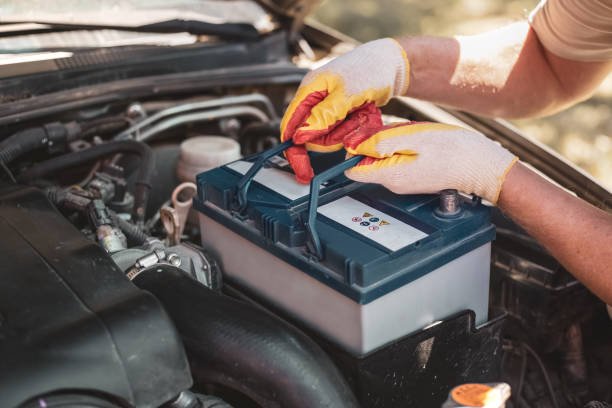
A failing car battery has a habit of becoming obvious at the worst possible time. The engine turns over slowly, the lights seem weaker than usual or, one morning, the car simply refuses to start.
So, how much does a car battery replacement cost in the UK?
For many cars, you can expect to pay around £100–£300 for a replacement battery supplied and fitted in 2026. A relatively simple conventional battery for a small car will usually sit towards the lower end, while vehicles with stop-start technology, larger engines or AGM batteries can cost considerably more.
Current RAC data puts its average mobile car battery replacement at around £214, while other UK repair-market data shows a similar average of approximately £217. However, there is no meaningful single price that applies to every car because the correct battery depends heavily on the vehicle.
This guide explains typical UK car battery replacement costs, what affects the price, the difference between standard, EFB and AGM batteries, how to recognise a failing battery and whether you should use a garage or mobile mechanic.
Average Car Battery Replacement Cost in the UK
A useful starting point for budgeting is:
| Type of battery | Typical fitted cost |
|---|---|
| Standard lead-acid battery | £80–£155 |
| EFB stop-start battery | £115–£195 |
| AGM stop-start battery | £170–£325 |
| Typical replacement across many cars | £100–£300 |
| Premium/large vehicle battery | £200–£350+ |
These figures are intended as UK guide prices rather than fixed quotes.
The RAC reports an average replacement cost of around £214 based on its 2026 mobile-mechanic data. The price varies considerably by vehicle: its averages include around £230 for Ford and Volkswagen vehicles, £258 for Mercedes, £270 for Audi and £286 for BMW.
Your own quote could be significantly lower or higher because battery specification matters more than the badge on the bonnet.
What Does a Car Battery Replacement Price Include?
A straightforward quote will usually consist of two main elements:
The battery itself is normally the largest expense. Prices depend on its technology, capacity, manufacturer and warranty.
Fitting covers removal of the old battery and installation of the replacement. Some modern cars can also require battery registration or electronic procedures after installation.
As an example of current fitting charges, Halfords advertises battery fitting from around £30–£35 for standard batteries and £40–£50 for start-stop batteries.
When comparing quotes, therefore, check whether you are looking at the price of the battery alone or the complete supplied-and-fitted price.
A £120 battery advertised online is not necessarily a £120 battery replacement once fitting and any necessary electronic work are added.
Why Do Car Battery Replacement Costs Vary So Much?
Two cars parked next to each other can require completely different batteries.
That is why asking “how much does a car battery cost?” without specifying the vehicle can produce such a wide range of answers.
Battery type
The first major factor is the battery technology your vehicle requires.
Older and simpler vehicles commonly use conventional lead-acid batteries. Many modern cars equipped with automatic stop-start systems require either an EFB (Enhanced Flooded Battery) or AGM (Absorbent Glass Mat) battery.
These are designed to cope with considerably greater demands than a conventional starter battery.
They are also more expensive.
Current UK market pricing places many standard batteries at roughly £70–£130 before or around basic fitting costs, while AGM units can reach £150–£280 or more depending on specification.
Battery capacity
Cars with larger engines or greater electrical demands often need batteries with greater capacity and starting power.
Battery specifications include measurements such as amp-hours (Ah) and cold-cranking amps (CCA). You do not need to become an expert in these numbers before visiting a mechanic, but they help explain why two physically similar-looking batteries can have very different prices.
The replacement must meet the specification required for your vehicle.
Stop-start technology
If your car switches the engine off automatically when stationary and restarts when you release the brake or engage the clutch, it probably uses a battery designed for stop-start operation.
This can make replacement more expensive.
Repeatedly stopping and starting an engine puts greater demands on the battery than a traditional system where the engine is normally started once at the beginning of a journey.
It is therefore important not to downgrade to a cheaper conventional battery simply to reduce the initial replacement cost.
Make and model
Battery size, capacity, technology and accessibility all differ between vehicles.
RAC’s 2026 mobile replacement figures demonstrate the difference clearly:
| Car make | RAC average replacement price |
| Ford | £230 |
| Volkswagen | £230 |
| Nissan | £224 |
| Toyota | £234 |
| Vauxhall | £226 |
| Mercedes | £258 |
| Land Rover | £266 |
| Audi | £270 |
| BMW | £286 |
These figures are useful for context but should not be treated as a guaranteed price for every model made by those manufacturers.
Battery location
On many cars, the battery sits conveniently beneath the bonnet.
On others, manufacturers position it in the boot, beneath a seat or behind other components.
More difficult access can increase the time required to remove and replace it, which may affect labour charges.
Where you live
Labour rates and operating costs vary around the country.
Even mobile replacement prices show geographic differences. RAC’s 2026 figures, for example, vary between different UK locations, reinforcing why national averages should be used for budgeting rather than as an exact quote.
Standard vs EFB vs AGM Car Batteries
Understanding these three terms makes comparing battery quotes much easier.
Standard lead-acid battery
Traditional lead-acid starter batteries are commonly found in cars without stop-start technology.
They are generally the least expensive option and can be perfectly suitable where the vehicle manufacturer specifies one.
The important word is specifies. A standard battery is not automatically a cheaper substitute for a more advanced battery fitted to a modern vehicle.
EFB battery
EFB stands for Enhanced Flooded Battery.
These batteries provide greater cycling durability than conventional starter batteries and are commonly used with certain stop-start systems.
They normally cost more than a standard battery but less than a comparable AGM unit.
AGM battery
AGM stands for Absorbent Glass Mat.
AGM batteries are designed for demanding electrical systems and are commonly used in vehicles with more sophisticated stop-start technology and higher electrical loads.
They are normally the most expensive of the three common 12V starter-battery types.
If your car currently has an AGM battery, do not assume you can save money simply by fitting a standard battery instead. Replacement battery technology should meet the vehicle manufacturer’s requirements.
Does a New Car Battery Need Coding?
Sometimes.
Modern vehicles can use battery-management systems that monitor battery condition and control charging.
On some models, replacing the battery involves registering or configuring the new battery with the vehicle’s electronics. The exact procedure depends on the manufacturer and model.
This is one reason a battery replacement on a modern premium vehicle can involve more than simply disconnecting two terminals and fitting another battery.
When requesting quotes, ask:
“Does this price include any battery registration or coding required for my car?”
That simple question can make different quotes much easier to compare.
How Do I Know If My Car Battery Needs Replacing?
A completely dead battery is obvious. A battery approaching the end of its useful life can be less straightforward.
One common symptom is slow engine cranking. Instead of starting immediately, the engine turns over noticeably more slowly.
You may also experience intermittent starting problems, particularly after the car has been parked for a while or during colder weather.
Other electrical symptoms can occur, although electrical problems do not automatically mean the battery itself is defective.
Possible warning signs include:
- slow or hesitant starting
- repeated flat-battery problems
- unreliable starting after the car has been parked
- electrical equipment behaving unusually
- visible battery damage or corrosion
- needing frequent jump starts
However, diagnosis matters.
A battery can become flat because the car has been left unused, lights were left switched on or another electrical component is drawing power. A faulty alternator or charging-system problem can also result in a battery repeatedly losing charge.
Replacing a healthy battery will not solve an underlying charging fault.
Flat Battery vs Failed Battery: What’s the Difference?
A flat battery is not necessarily a failed battery.
Imagine leaving an interior light on overnight. The battery may discharge enough that it can no longer start the engine, but after being properly recharged it may continue working normally.
A failed or badly deteriorated battery is different. It may no longer hold sufficient charge reliably even after charging.
This distinction matters because immediately buying a new battery every time a vehicle needs a jump start can result in unnecessary expense.
If the cause is unclear, having the battery and charging system tested can help determine whether replacement is actually necessary.
Is Battery Replacement Included in a Car Service?
Normally, the cost of a replacement battery itself is not included in the standard price of a routine car service.
A service may identify battery condition or starting issues, but replacement parts and additional repair work can usually be charged separately.
If your car is due for broader maintenance anyway, it can make sense to have several items assessed during the same visit.
Our guide to how much a full car service costs in the UK explains what you can typically expect from a full service and which factors affect the final bill.
Likewise, if you’re trying to build a realistic annual maintenance budget, our guide to the cost of an oil change in the UK covers another of the most common routine maintenance expenses.
Mobile Car Battery Replacement vs Taking It to a Garage
A battery problem creates an unusual dilemma: the part that needs replacing may prevent you from driving the car to the place that can replace it.
That makes battery replacement particularly well suited to mobile mechanics.
A mobile mechanic can come to your home or workplace, test the battery and potentially replace it without requiring you to arrange recovery or repeatedly jump-start the car.
Current FixMyCar marketplace data puts mobile battery replacement at around £196 on average, compared with approximately £217 for battery replacement more broadly.
That does not mean mobile mechanics will always be cheaper. Pricing depends on the vehicle, location, battery and provider.
The real advantage is convenience.
If the car starts reliably and you already use a trusted local garage, taking it there may make perfect sense. If it is sitting dead on your driveway, mobile fitting can eliminate the problem of getting it to a workshop.
We’ve compared both options in more detail in our guide to mobile mechanics vs garages.
Can I Replace a Car Battery Myself?
On some older vehicles, replacing the battery can be relatively straightforward for somebody with appropriate mechanical knowledge and tools.
Modern vehicles can make the job more complicated.
You need to buy a battery with the correct specification and dimensions, disconnect and reconnect it safely and ensure it is secured correctly. Some vehicles can also require battery registration or other procedures following replacement.
There may also be vehicle-specific considerations involving electronic settings or security systems.
If you are unsure what your particular car requires, professional fitting is usually a small expense compared with the cost of diagnosing electrical problems caused by an incorrect battery or installation.
How Long Does a Car Battery Replacement Take?
A straightforward battery replacement can often be completed relatively quickly — frequently in around 30–60 minutes when the battery is readily accessible and no additional problems are discovered.
The physical replacement itself may take considerably less time on a simple vehicle.
However, battery location, electronic registration requirements, testing and seized or corroded connections can increase the time required.
If the battery has gone flat repeatedly, the mechanic may also need additional time to determine whether the battery is actually responsible.
How Long Should a Car Battery Last?
There is no exact lifespan that applies to every battery.
How long yours lasts depends on the battery itself, vehicle, driving pattern, weather, electrical demands and charging conditions.
Frequent short journeys can be particularly demanding because the battery repeatedly starts the engine without necessarily receiving a long period of charging afterwards.
Cars that remain unused for extended periods can also experience battery problems.
Instead of replacing a battery automatically because it reaches a particular age, pay attention to starting performance and have its condition checked if you notice deterioration.
Is a More Expensive Car Battery Worth It?
Not automatically.
The most important requirement is buying the correct battery for the vehicle.
Within the appropriate specification, different manufacturers may offer different warranties, construction quality and prices.
A premium battery may be worthwhile for a vehicle you intend to keep for several years, but paying extra for specifications your vehicle does not require does not necessarily provide a meaningful benefit.
Likewise, choosing the cheapest possible battery becomes poor value if it does not meet the manufacturer’s required specification.
Compare:
- correct battery type
- capacity and starting specification
- warranty length
- battery brand
- fitting charges
- required coding or registration
- total fitted price
This gives you a much more meaningful comparison than looking at battery price alone.
How Can I Save Money on a Car Battery Replacement?
Start by confirming that the battery genuinely needs replacing.
If the car simply went flat once after being left unused, testing may save you from buying a battery unnecessarily.
Next, compare fully fitted quotes rather than battery prices.
One provider might advertise a battery for £120 and charge separately for fitting, while another quotes £160 including everything. The apparently cheaper option is not necessarily cheaper once the complete job is calculated.
You should also provide your registration when requesting quotes. This helps mechanics and battery suppliers identify the correct battery rather than giving you an unreliable generic estimate.
Finally, compare the warranty as well as the initial price. Saving £15 on the purchase price may not represent better value if the alternative includes a substantially stronger warranty.
Frequently Asked Questions
How much does a new car battery cost with fitting in the UK?
For many cars, expect approximately £100–£300 supplied and fitted. Standard batteries can fall below this range, while premium AGM batteries and more complicated installations can exceed £300.
What is the average cost of replacing a car battery?
Current UK repair data varies by provider. RAC reports an average of around £214 from its 2026 mobile battery replacements, while FixMyCar currently reports an average replacement cost of approximately £217.
How much does Halfords charge to fit a battery?
Halfords currently advertises fitting from approximately £30–£35 for a standard battery, while fitting a stop-start battery costs around £40–£50, in addition to the applicable battery cost.
Are stop-start car batteries more expensive?
Generally, yes. Stop-start vehicles commonly require EFB or AGM batteries capable of handling greater cycling demands than conventional starter batteries.
Can a mobile mechanic replace a car battery?
Yes. Battery replacement is particularly suitable for mobile mechanics because the work can often be carried out where the vehicle is parked. This can be useful when a failed battery means the car cannot be driven to a garage.
Should I replace a battery after one flat battery?
Not necessarily. A healthy battery can become discharged because lights were left on, the vehicle has not been driven for a long period or another electrical issue exists. Testing can establish whether the battery is failing or simply needs charging.
Why does my new car battery keep going flat?
If a recently replaced battery repeatedly goes flat, the battery may not be the underlying problem. A charging-system fault, electrical drain or another issue may need diagnosis.
Is £250 expensive for a car battery replacement?
It depends on the vehicle. £250 would be relatively expensive for a basic battery on an older small car but can be entirely plausible for a modern vehicle requiring a high-capacity EFB or AGM battery, professional fitting and electronic registration.
Find a Local Mechanic for Car Battery Replacement
So, how much does a car battery replacement cost in the UK? A realistic budget for many vehicles is around £100–£300 supplied and fitted, with current UK averages sitting at a little over £200 across some major repair services.
The biggest mistake is comparing prices without checking what battery is actually being supplied. A conventional battery, EFB battery and AGM battery are different products, and your vehicle’s required specification should determine which one is fitted.
If your battery is struggling to start the car, repeatedly losing charge or has failed completely, you can use The Right Guy to find local mechanics, garages and automotive professionals who can diagnose the problem and discuss replacement options.

Author: The Right Guy Team
UK service guides published by The Right Guy Ltd.