
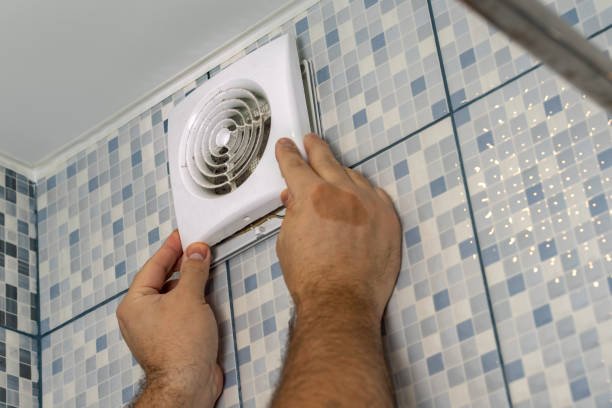
A bathroom extractor fan may be a relatively small piece of equipment, but it plays an important role in controlling moisture, condensation and mould. If your bathroom stays steamy long after a shower, the mirror takes ages to clear or mould keeps appearing around the ceiling, improving the ventilation may be worthwhile.
In the UK in 2026, installing a bathroom extractor fan typically costs around £150–£350, depending on the fan, electrical work and ducting required. A straightforward like-for-like replacement can cost around £80–£200, while installing a completely new fan where there is no existing wiring or ducting can cost approximately £250–£450+. More complicated ceiling or inline installations with long duct runs can reach £350–£600 or more. Current UK pricing sources put the average new extractor-fan installation at roughly £300.
The biggest difference is whether you are:
replacing an existing fan
or
creating an entirely new ventilation system.
A replacement can sometimes take only an hour or two. A new installation may require electrical wiring, drilling through an external wall, new ducting and an external vent.
If the extractor fan forms part of a larger project, our 2026 bathroom renovation cost guide can help you plan the complete budget.
Average bathroom extractor fan installation cost in the UK
For budgeting in 2026, these are useful ranges:
| Extractor fan job | Typical cost |
|---|---|
| Like-for-like fan replacement | £80–£200 |
| Standard new fan installation | £250–£350 |
| New wall-mounted fan | £250–£450 |
| Ceiling fan with loft ducting | £350–£600+ |
| Inline extractor fan | £150–£350+ |
| Basic fan unit only | £20–£60 |
| Timer/humidistat fan | £40–£100+ |
| Quiet/premium fan | £80–£150+ |
| Electrician labour | Around £45–£70 per hour |
Current UK estimates vary because the phrase “install an extractor fan” covers very different jobs. Checkatrade’s June 2026 figures put replacement at around £200 and a completely new installation at around £300, while other current estimates put straightforward like-for-like replacements as low as £80–£150.
These are budgeting figures rather than guaranteed quotations.
How much does it cost to replace an existing bathroom extractor fan?
If the existing:
- wiring;
- duct;
- wall opening;
- external grille
can all be reused, replacement is usually the cheapest option.
Budget around:
£80–£200
for many straightforward replacements.
Current UK estimates put a typical replacement at approximately £200 including the fan and installation, although simpler swaps can cost less.
The electrician may simply need to:
- isolate the electrical supply;
- remove the old fan;
- inspect the existing wiring;
- install the replacement;
- reconnect it;
- test operation.
This can often be completed within one to two hours.
How much does it cost to install a completely new extractor fan?
A completely new installation is more expensive.
Expect approximately:
£250–£450+
for many standard installations.
A new installation may require:
- new electrical supply;
- fan isolator;
- wall opening;
- ducting;
- external grille;
- connection to the lighting circuit or separate controls.
Checkatrade currently gives an average of approximately £300 for a new extractor-fan installation in the UK.
More complicated installations can exceed this considerably.
How much does the bathroom fan itself cost?
A standard bathroom extractor fan can cost around:
£20–£100
while premium models can exceed £150.
The price depends on:
- extraction rate;
- noise level;
- timer;
- humidity sensor;
- motion sensor;
- design;
- fan type.
Checkatrade’s current average for a bathroom extractor fan itself is approximately £75.
Basic extractor fan cost
A simple axial fan may cost around:
£20–£60
and can be perfectly suitable where the duct run is short.
These are commonly installed directly through an external wall.
How much does a timer extractor fan cost?
A timer fan might cost around:
£40–£80+
depending on the model.
Instead of stopping immediately when the bathroom light is switched off, the fan continues running for a set period.
For example:
Light off → fan continues for 15 minutes → fan stops.
This can help remove moisture that remains after you finish showering.
How much does a humidistat extractor fan cost?
A humidity-sensing fan may cost around:
£40–£100+
depending on specification.
Instead of relying entirely on the light switch, it monitors humidity.
When moisture levels increase, the fan can activate automatically.
This can be particularly useful in busy family bathrooms where people may otherwise forget to use the extractor.
How much does a quiet bathroom extractor fan cost?
A quieter premium fan may cost:
£60–£150+
depending on performance and features.
Noise matters more than people sometimes expect.
A loud fan can be annoying enough that household members:
- switch it off;
- disable the timer;
- avoid using it.
Paying slightly more for a quieter fan can therefore make practical sense.
How much does an inline bathroom extractor fan cost?
An inline fan is normally installed away from the bathroom itself, often in a loft space, with ducting connecting:
bathroom ceiling vent → fan → outside.
A professionally installed inline system might cost around:
£150–£350+
for relatively straightforward installations, with more complicated long-duct systems costing considerably more.
One advantage is reduced fan noise inside the bathroom.
They can also be useful where longer duct runs make a simple wall-mounted axial fan less suitable.
Axial vs inline extractor fan
Axial fan
Usually best for:
- short duct runs;
- external walls;
- straightforward bathrooms.
They are generally:
- inexpensive;
- compact;
- easy to replace.
Inline fan
Often useful for:
- internal bathrooms;
- ceiling extraction;
- longer duct runs;
- installations where quieter operation is desirable.
The right choice depends on the ventilation route rather than appearance alone.
How much does a ceiling extractor fan cost to install?
A ceiling-mounted installation with ducting through a loft may cost around:
£350–£600+
where substantial new ducting and electrical work are required.
This is more expensive because the installer may need to create:
- ceiling opening;
- loft duct route;
- roof/soffit/wall termination;
- electrical supply;
- access for maintenance.
The fan must ultimately extract the moist air outside, rather than simply releasing it into the loft.
Can a bathroom extractor fan vent into the loft?
No — bathroom moisture should be ducted to the outside.
Simply terminating the duct in the loft transfers the moisture problem from your bathroom into the roof space.
That can contribute to:
- condensation;
- damp;
- mould;
- timber problems.
The duct should terminate appropriately outside the building.
How much does new ducting cost?
Ducting cost depends heavily on the route.
A short duct straight through an external wall is relatively inexpensive.
A long run through:
- ceiling;
- loft;
- soffit;
- roof
requires more labour and materials.
The installer also needs to minimise unnecessary bends and restrictions because poor duct design can dramatically reduce the actual airflow.
What affects bathroom extractor fan installation cost?
Existing fan
Replacing an existing unit is normally cheapest.
New electrical wiring
New wiring increases labour.
Duct length
Longer routes generally cost more.
Wall construction
Drilling through a straightforward external wall is different from dealing with difficult construction or finished surfaces.
Fan type
Premium, inline and humidity-controlled models cost more.
Location
London and the South East commonly have higher labour costs.
Access
Easy loft access can simplify ceiling installations.
Making good
Tiles, plaster and paint may need repairing afterwards.
How much does electrician labour cost?
Current UK estimates put electrician labour for extractor-fan work at roughly:
£45–£70 per hour
although rates vary by location.
A simple replacement might require only:
1–2 hours.
A completely new installation could require:
half a day or more.
Some electricians charge a fixed price instead of an hourly rate.
For a clearly defined installation, a fixed quotation can make budgeting easier.
Why does one electrician quote £150 and another £400?
They may not be quoting for exactly the same job.
For example:
£150 quote
Could include:
- replacing existing fan;
- existing wiring;
- existing duct;
- basic fan.
£400 quote
Could include:
- new premium fan;
- new wiring;
- wall drilling;
- ducting;
- external grille;
- testing.
Always compare scope, not just price.
Does the bathroom extractor fan need an isolator switch?
Depending on the installation and controls, suitable isolation needs to be provided so the fan can be safely maintained.
For example, a fan with an overrun timer may have permanent and switched electrical supplies. IET guidance notes that an overrun fan’s isolator will need to appropriately isolate the relevant conductors and be positioned outside the bathroom electrical zones.
Your electrician should determine the correct arrangement for the installation.
What are bathroom electrical zones?
Bathrooms have defined electrical zones because electricity and water create additional risk.
The suitability of electrical equipment depends partly on its position relative to:
- bath;
- shower;
- water sources.
Equipment installed within relevant bathroom zones needs appropriate protection against moisture. For example, IET guidance states that suitable 230V extractor fans can be installed in zones 1 and 2 when they provide at least IPX4 protection.
This is one reason you should not simply buy the cheapest extractor fan online without checking where it will be installed.
What IP rating does a bathroom extractor fan need?
The required protection depends on its location.
Bathroom electrical zones determine what equipment can safely be installed in different areas.
For example, equipment within certain areas close to baths and showers generally requires at least IPX4 protection against water ingress.
The electrician should select a fan suitable for the intended position.
How powerful should a bathroom extractor fan be?
Fan performance is normally measured in:
litres per second (l/s)
or:
cubic metres per hour (m³/h).
For intermittent bathroom extraction, Approved Document F uses 15 litres per second as the minimum extract rate for bathrooms in the relevant circumstances.
However, simply buying a fan labelled with a high airflow figure does not guarantee good real-world extraction.
Actual performance can be reduced by:
- long ducting;
- tight bends;
- restrictive grilles;
- poor installation.
The entire ventilation route matters.
Does a bigger bathroom need a bigger fan?
Potentially.
A large bathroom with:
- powerful shower;
- frequent use;
- long duct route
may benefit from a higher-performing system.
The installer should consider:
- room;
- required ventilation rate;
- duct resistance;
- fan performance.
Do not choose purely by the physical diameter of the fan.
Where should a bathroom extractor fan be positioned?
Ideally, the fan should remove moisture efficiently from the wettest part of the room while remaining suitable for the relevant electrical zone.
A common approach is to position extraction relatively near the:
- shower;
- bath;
rather than beside the bathroom door.
Think about airflow:
fresh air enters → travels across bathroom → moist air leaves through extractor.
Poor positioning can result in the fan running without effectively clearing the steam.
Why does my bathroom stay steamy even with an extractor fan?
Several problems are possible.
Fan is underpowered
It may not move enough air.
Duct is blocked
Dust or debris can restrict airflow.
Duct is too long
The fan may struggle against resistance.
Too many bends
Each bend reduces efficiency.
External grille is blocked
Air cannot escape properly.
Fan shuts off too quickly
Moisture remains after the shower ends.
No replacement air
The fan needs air to enter the room as it extracts air.
Sometimes replacing the fan alone will not solve the problem.
Can an extractor fan help prevent bathroom mould?
Yes, effective ventilation can substantially reduce condensation and moisture — two major contributors to bathroom mould.
However, a fan cannot solve every mould problem.
Other causes may include:
- leaks;
- poor insulation;
- cold surfaces;
- inadequate heating;
- building defects.
If mould continues despite good ventilation, investigate the wider cause rather than continually buying more powerful fans.
Should the fan run after I leave the bathroom?
Often, yes.
A large amount of moisture remains in the room after the shower has finished.
A timer fan can continue extracting for perhaps:
10–20 minutes
depending on its settings and the room.
Humidity-controlled models can instead continue operating until humidity falls sufficiently.
Is a humidistat better than a timer?
Neither is automatically better.
Timer fan
Good if:
- bathroom usage is predictable;
- fan is connected to the lighting;
- you want simple controls.
Humidistat
Useful if:
- condensation is persistent;
- people forget to use the fan;
- showers create large amounts of moisture.
Some fans combine both features.
Should I connect the extractor fan to the bathroom light?
This is common.
The fan may activate when:
light ON → fan ON.
A timer model can then continue after:
light OFF → fan continues → fan stops later.
However, some people prefer independent controls because the fan does not necessarily need to operate every time someone switches the bathroom light on.
Can I install a bathroom extractor fan myself?
Replacing a simple fan may appear straightforward, but bathrooms are higher-risk electrical environments.
A new installation can involve:
- mains wiring;
- bathroom electrical zones;
- isolation;
- ducting;
- drilling;
- testing.
Using a qualified electrician is the sensible option where fixed wiring needs installing or altering.
Does bathroom extractor fan installation need certification?
The requirements depend on exactly what electrical work is carried out and where it is located.
Bathroom electrical work can fall within specific Building Regulations requirements, particularly when new circuits or certain alterations are involved.
Ask the electrician before work begins:
“Will this installation require electrical certification or Building Regulations notification?”
and make sure any required documentation is provided.
If you are unsure about the condition of the wider electrical system, our 2026 EICR cost guide explains what a full electrical inspection involves.
Should I install a new fan during a bathroom renovation?
This is often the best time.
If you are already:
- removing tiles;
- opening ceilings;
- replacing electrics;
- plastering;
- changing the bathroom layout;
new wiring and ducting can be installed before the finishes are completed.
This can make the work both easier and neater.
Our bathroom renovation cost guide can help you include ventilation within the overall project budget.
Should ventilation be planned with bathroom lighting?
Yes.
Both may require work within the ceiling.
Planning them together can reduce unnecessary disruption.
For example, if you are already opening the ceiling for:
- new spotlights;
- extractor duct;
- wiring;
it makes sense to coordinate the work before plastering.
Our bathroom lighting ideas can help you plan lighting alongside ventilation.
Can you combine a bathroom light and extractor fan?
Yes, combination units exist.
Some products combine:
- lighting;
- extraction.
However, they still need to be suitable for their bathroom location and provide adequate ventilation.
Choose based on performance rather than appearance alone.
How much does it cost to upgrade to a humidistat fan?
If the existing installation is suitable, upgrading may cost around:
£150–£300
depending on the fan and wiring.
The cost rises if additional wiring is required.
For example, a fan with more advanced controls may require a different electrical supply arrangement than the old basic model.
How much does it cost to move a bathroom extractor fan?
Moving the fan may cost around:
£250–£500+
depending on:
- new electrical wiring;
- duct route;
- new wall/ceiling opening;
- closing the old opening.
In many cases, moving the fan is almost equivalent to carrying out a completely new installation.
Is £200 reasonable for replacing a bathroom extractor fan?
Yes.
Current 2026 UK pricing puts a typical replacement around £200, making this a perfectly plausible price for supplying and fitting a standard replacement unit.
A particularly straightforward replacement may cost less.
Is £300 expensive for installing a bathroom fan?
Not for a new installation.
Around £300 is currently a typical UK figure for installing a new extractor fan where there wasn’t one previously.
If £300 is being charged for simply swapping a £30 fan using existing wiring and ducting, you would want to understand what else is included.
Is £500 too much for an extractor fan?
Not necessarily.
£500 can be realistic when the job involves:
- ceiling installation;
- long duct route;
- loft work;
- new electrical supply;
- difficult external vent position.
MyJobQuote’s current figures put new ceiling installations with loft ducting at roughly £350–£600.
Example bathroom extractor fan costs
Example 1: basic replacement
New fan: £50
Labour: £100
Estimated total: £150
Example 2: new wall fan
Fan: £75
Electrical work: £100
Wall opening and ducting: £100
Labour/testing: £100
Estimated total: £375
Example 3: ceiling/inline system
Inline fan: £130
Ducting and external vent: £100
Electrical materials: £70
Labour: £300
Estimated total: £600
These examples are illustrative rather than guaranteed quotations.
What should an extractor fan installation quote include?
Ask whether the price includes:
- extractor fan;
- electrical wiring;
- isolator;
- ducting;
- external grille;
- wall/ceiling drilling;
- electrical testing;
- certification where applicable;
- making good;
- VAT where applicable.
Also ask:
“Does the quote include everything required to vent the fan outside?”
That is particularly important for new installations.
How can I reduce bathroom extractor fan installation costs?
Replace the fan in the existing position
Avoid new ducting and wiring where possible.
Install it during renovation
Open walls and ceilings make access easier.
Choose the right fan rather than the most expensive one
You may not need every smart feature.
Keep the duct route short
Shorter, straighter routes can improve performance and reduce installation work.
Combine electrical work
If an electrician is already installing bathroom lighting, coordinate the fan at the same time.
Common bathroom extractor fan mistakes
Buying a fan before checking the duct route
The fan needs to suit the installation.
Venting into the loft
Moisture needs to go outside.
Choosing purely by price
Noise and extraction performance matter.
Ignoring bathroom electrical zones
The fan must be suitable for its position.
Using unnecessarily long ducting
This can reduce airflow.
Too many duct bends
Every restriction makes extraction harder.
Switching the fan off immediately after showering
Moisture remains in the air.
Assuming a new fan will fix every mould problem
Ventilation is only one possible cause.
Frequently asked questions
How much does it cost to install a bathroom extractor fan in the UK?
In 2026, budget around £150–£350 for many installations, with straightforward replacements potentially costing around £80–£200 and more complicated new installations reaching £350–£600+.
How much does it cost to replace an existing extractor fan?
A straightforward like-for-like replacement typically costs around £80–£200, depending on the fan and electrician.
How much does a bathroom extractor fan cost?
The fan itself commonly costs around £20–£100, although premium and specialist models can cost more.
How long does it take to replace a bathroom extractor fan?
A straightforward replacement can often take around one to two hours. A completely new installation can take several hours or potentially a full day.
Can a bathroom extractor fan vent into the loft?
No. Moist air should be ducted outside rather than discharged into the loft.
Do I need an electrician to install a bathroom extractor fan?
For new fixed electrical wiring or alterations in a bathroom, using a qualified electrician is strongly advisable.
Is a humidistat extractor fan worth it?
It can be particularly useful where condensation is persistent or household members regularly forget to operate the fan.
How powerful should a bathroom extractor fan be?
For intermittent bathroom extraction, Approved Document F uses a minimum extraction rate of 15 litres per second in the relevant circumstances.
Final thoughts: how much should you budget for a bathroom extractor fan?
For most UK homeowners in 2026, £150–£350 is a sensible starting budget for installing a bathroom extractor fan.
A straightforward existing fan replacement may cost:
£80–£200
while:
new wiring + new ducting + wall/ceiling work
can push the project towards:
£250–£450+.
More complicated ceiling and inline installations can reach:
£350–£600 or more.
If you’re renovating the entire room, use our 2026 bathroom renovation cost guide to plan the ventilation alongside the rest of the project.
If you are also redesigning the electrics, our bathroom lighting ideas can help you plan lighting and extraction together.
And if you are concerned about the condition of the property’s electrical system generally, our 2026 EICR cost guide explains the cost of having the installation formally inspected.
When you’re ready to get quotes, you can use The Right Guy to discover local electricians, bathroom installers and other relevant professionals.

Author: The Right Guy Team
UK service guides published by The Right Guy Ltd.