
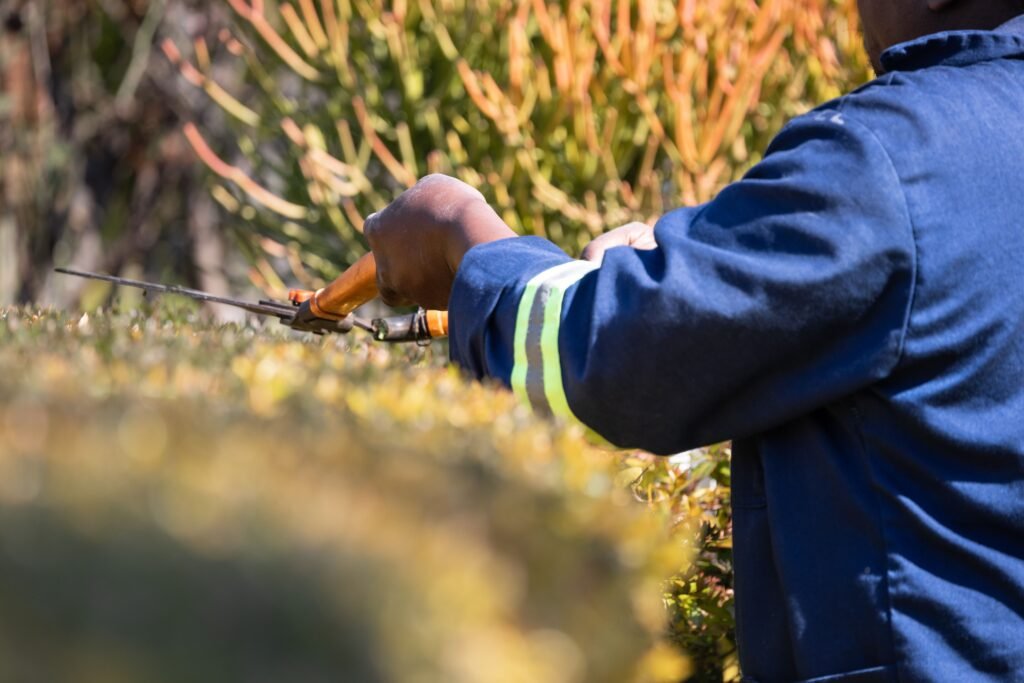
A professional gardener typically costs around £15–£45 per hour in the UK in 2026, with current Checkatrade guidance putting the average at approximately £35 per hour. For routine garden maintenance specifically, current pricing is slightly tighter at around £15–£40 per hour, averaging about £30.
That difference matters because “hiring a gardener” can describe everything from mowing a lawn and pulling weeds to pruning established plants, clearing an overgrown garden or planning a planting scheme.
A gardener who visits every fortnight to maintain an already tidy garden may charge differently from someone brought in once to tackle six months of overgrowth. Location, experience, equipment, waste removal and minimum call-out charges also influence the final bill.
So, how much does a gardener cost per hour in the UK, and how many hours should you actually expect to pay for?
How much does a gardener cost per hour in the UK in 2026?
Current UK pricing gives a useful range of:
| Gardening service | Typical 2026 cost |
|---|---|
| General gardener | £15–£45 per hour |
| Current average gardener rate | Around £35 per hour |
| Routine garden maintenance | £15–£40 per hour |
| Average maintenance gardener | Around £30 per hour |
| Grass cutting | Around £15–£30 per hour |
| Weeding | Around £15–£30 per hour |
| Pruning | Around £15–£35 per hour |
| General gardener day rate | £150–£200 |
| Landscape gardener day rate | £180–£280 |
Checkatrade’s March 2026 gardener pricing puts the general UK hourly range at £15–£45, averaging £35, with ordinary gardener day rates of around £150–£200.
Its more specific garden-maintenance data, updated for 2026, gives £15–£40 per hour with an average of £30, while common maintenance jobs such as mowing and weeding average around £25 per hour.
MyJobQuote’s July 2026 quote data is lower, putting many local gardeners at roughly £14–£25 per hour.
This is exactly why a sensible UK budgeting range is more useful than pretending there is one correct national hourly rate.
Why do gardener hourly rates vary so much?
A £20-per-hour gardener and a £45-per-hour gardener may not necessarily be offering the same thing.
Rates can vary according to:
- experience and horticultural knowledge;
- location;
- type of work;
- equipment required;
- whether waste disposal is included;
- whether you book regularly or once;
- size and condition of the garden;
- whether one or several gardeners attend.
Basic mowing and weeding can usually be performed at the lower end of gardening rates.
More skilled pruning, specialist plant care or difficult maintenance can justify higher rates.
The most useful comparison is therefore:
hourly rate × hours required + extras
rather than hourly rate alone.
How much does a gardener cost for two hours?
Using typical 2026 rates:
| Hourly rate | Two-hour visit |
|---|---|
| £20/hour | £40 |
| £25/hour | £50 |
| £30/hour | £60 |
| £35/hour | £70 |
| £40/hour | £80 |
| £45/hour | £90 |
For many ordinary gardens, a two-hour visit costing around £50–£80 is a realistic expectation.
Two hours can be enough for a useful maintenance visit in a reasonably tidy garden.
For example, the gardener might:
- mow the lawn;
- edge it;
- weed key areas;
- carry out light pruning;
- tidy paths.
But you should not expect an entire neglected garden to be restored within two hours simply because you have booked a gardener.
How much does a gardener cost for half a day?
A half-day gardening visit often works out at roughly £80–£140+, depending on how the gardener defines a half day and their normal rate.
For example:
4 hours × £30 = £120
Some gardeners instead use a fixed half-day price rather than multiplying their hourly rate exactly.
This can be worthwhile when you have several jobs to complete.
A half-day might cover:
lawn + borders + pruning + hedge tidy + general cleanup.
Just be clear about priorities before work begins.
How much does a gardener cost per day?
Current Checkatrade pricing puts an ordinary gardener at around £150–£200 per day, averaging approximately £175.
Its garden-maintenance data gives a broader daily range of £120–£320, averaging around £240, reflecting the fact that larger maintenance businesses, longer days and different tasks can vary substantially.
MyJobQuote also puts the typical gardener day rate at around £150–£200.
A day rate can make more sense than hourly pricing if you have:
- a larger garden;
- several different maintenance jobs;
- a badly overgrown space;
- significant pruning;
- a major seasonal tidy.
Ask how many working hours the quoted “day” actually represents.
Is a gardener cheaper if you hire them regularly?
Often, yes.
Regular customers can be easier for gardeners to schedule into established rounds.
The gardener also becomes familiar with:
- your garden;
- access;
- plants;
- equipment requirements;
- what needs doing each visit.
Most importantly, a regularly maintained garden usually requires less work than one repeatedly allowed to become overgrown.
MyJobQuote’s current 2026 guidance notes that regular maintenance visits can be discounted compared with one-off work because they reduce repeated quoting and travel inefficiencies.
A £60 fortnightly maintenance visit can sometimes offer much better value than paying £250 every few months for emergency garden rescue.
How much does a gardener cost per month?
This depends mostly on frequency.
Suppose you pay £60 for a two-hour visit.
Fortnightly
Two visits per month:
£60 × 2 = around £120 per month
Weekly
Roughly four visits:
£60 × 4 = around £240 per month
Monthly
One visit:
around £60 per month
However, a monthly visit may need longer because weeds, grass and shrubs have had more time to grow.
For many ordinary UK gardens, a fortnightly schedule during the main growing season provides a sensible balance.
How many hours does a gardener need?
This depends less on garden size than many people expect.
A large lawn-only garden can be quicker to maintain than a small densely planted garden.
As a rough starting point:
| Garden | Possible regular maintenance time |
|---|---|
| Very small/simple garden | 1–2 hours |
| Small garden | 1.5–2.5 hours |
| Medium garden | 2–4 hours |
| Large garden | 4–8+ hours |
| Overgrown garden | Half-day to several days |
Think about the actual contents.
A garden containing:
lawn + two borders
requires much less work than one containing:
lawn + five hedges + roses + fruit trees + climbers + densely planted beds.
What can a gardener do in one hour?
Quite a lot if the garden is small and prepared.
Perhaps:
- mow a modest lawn;
- strim edges;
- perform quick weeding;
- tidy one border.
But one hour disappears quickly.
Travel and minimum charges also mean many gardeners do not accept tiny one-hour appointments unless the property fits neatly into their existing round.
For a meaningful maintenance visit, two hours is often more practical.
What can a gardener do in two hours?
Two hours gives much more flexibility.
For a straightforward garden, a professional might manage:
- mowing;
- edging;
- some weeding;
- light pruning;
- sweeping;
- basic tidy-up.
But priorities matter.
If you ask them to spend an hour carefully pruning shrubs, there is only one hour left for everything else.
A simple priority list can make the appointment much more useful:
1. Lawn
2. Weeds
3. Hedge if time remains
That is often better than handing over a huge list and being disappointed when only half is completed.
What can a gardener do in a full day?
A full day can transform an ordinary garden.
Depending on the work involved, it may include:
- substantial weeding;
- lawn maintenance;
- pruning;
- hedge work;
- cutting back;
- borders;
- seasonal cleanup;
- clearing significant waste.
For an extremely overgrown garden, one day may still not be enough.
If the space needs complete clearance or redesign, it begins moving beyond routine gardening into garden clearance or landscaping.
How much does lawn mowing cost from a gardener?
Current Checkatrade garden-maintenance data puts grass cutting at around £15–£30 per hour, averaging approximately £25.
Its broader gardener guide gives a current average grass-cutting price of about £30 per hour.
The exact cost depends on:
- lawn size;
- slopes;
- obstacles;
- edging;
- waste;
- access.
A tiny lawn can still attract a minimum call-out charge.
This is why combining mowing with other gardening tasks can provide better value.
How much does weeding cost?
Current 2026 maintenance guidance puts weeding at around £15–£30 per hour, averaging approximately £25.
But “weeding” covers a huge range of jobs.
Pulling occasional weeds from an established border is straightforward.
Recovering a garden completely overtaken by perennial weeds and brambles can require many hours or even several days.
The second job is closer to garden clearance than routine maintenance.
How much does pruning cost?
Current guidance puts ordinary pruning at roughly £15–£35 per hour, averaging around £25.
Skilled pruning can justify higher rates where the gardener needs to know:
- which plants to prune;
- when to prune;
- how much growth to remove;
- where to make cuts.
There is a major difference between cutting back a generic shrub and correctly maintaining valuable roses, fruit trees or ornamental plants.
If your garden contains plants you particularly care about, experience can matter more than saving £5 per hour.
How much does hedge trimming cost?
Basic hedge maintenance may fall within a general gardening visit, but larger hedge work can be priced separately.
The cost depends on:
- hedge length;
- height;
- width;
- access;
- waste;
- equipment.
A gardener tidying one short waist-height hedge is ordinary maintenance.
Cutting several metres from a tall mature boundary hedge is a different project.
For a proper breakdown, see our guide to how much hedge trimming costs in 2026.
Is garden waste included in the gardener’s hourly rate?
Not always.
This is one of the most important questions to ask.
A gardener might:
- leave waste in your green bin;
- bag it and leave it;
- take it away within the quoted price;
- charge separately for disposal.
Removing green waste costs the gardener additional time and vehicle capacity.
Larger jobs can generate far more material than a normal household green bin can hold.
Before hiring someone, ask:
“Does your hourly rate include taking garden waste away?”
Does a gardener bring their own tools?
Usually, a professional gardener will provide most equipment required for normal maintenance.
This might include:
- mower;
- strimmer;
- hedge trimmer;
- secateurs;
- pruning tools;
- blower;
- basic hand tools.
Some gardeners may prefer to use the homeowner’s mower for an established regular arrangement.
Either setup is fine if agreed beforehand.
Specialist machinery may be charged separately.
Are materials included in a gardener’s hourly price?
Usually not.
If the gardener needs to buy:
- compost;
- mulch;
- plants;
- fertiliser;
- stakes;
- lawn feed;
- weed treatments;
expect materials to be charged separately unless the quotation says otherwise.
Some gardeners may also add time or a modest handling charge for collecting materials.
For larger planting projects, ask for a materials estimate before work begins.
Does a gardener charge for travel?
Sometimes explicitly, but more often travel is built into the hourly rate or minimum call-out.
A gardener travelling 30 minutes each way cannot realistically charge £15 for a 30-minute mowing visit and operate a sustainable business.
That is why minimum visits exist.
You may get a better price from someone who already works regularly in your area because the travel can fit into an established local route.
What is a gardener’s minimum call-out charge?
There is no universal figure.
Some gardeners require:
- minimum one hour;
- minimum two hours;
- minimum £30–£50 visit.
This is especially relevant for tiny lawns and small jobs.
If you need only 20 minutes of gardening, consider creating a list of other useful tasks.
For example:
mow lawn + weed front bed + prune shrubs.
You get much better value from the minimum appointment.
Does location affect gardener prices?
Yes.
Labour rates vary significantly around the UK.
MyJobQuote’s current guidance says gardeners in London and parts of the South East can charge around £3–£10 more per hour than equivalents in northern or western parts of the country.
Local supply and demand matter too.
In a rural area with few gardeners covering large distances, travel can affect pricing.
In a city, operating and parking costs may be higher.
National averages therefore provide a useful benchmark, not a guaranteed local price.
Why do gardeners in London cost more?
The same factors affecting most London services apply:
- higher living costs;
- higher wages;
- vehicle expenses;
- parking;
- congestion;
- business overheads.
You may therefore see rates above the £35 national average.
For a highly experienced London gardener, £40–£50+ per hour would not automatically be unreasonable.
Compare local businesses rather than expecting every area to match a UK-wide average exactly.
Gardener vs landscape gardener: what’s the difference?
This is important because their pricing is different.
Gardener
Generally handles ongoing care:
- lawn mowing;
- weeding;
- pruning;
- planting;
- maintenance;
- hedge care.
Landscape gardener
Often carries out larger physical changes:
- patios;
- paths;
- new lawns;
- drainage;
- retaining structures;
- fencing;
- garden redesign.
Current 2026 Checkatrade pricing puts gardeners around £150–£200 per day, while landscape gardeners average £180–£280 per day.
If you want your existing garden maintained, hire a gardener.
If you want it rebuilt, our garden landscaping prices guide gives a better idea of project-level costs.
Gardener vs garden designer: what’s the difference?
A garden designer focuses on planning the space.
They may produce:
- layouts;
- planting schemes;
- material plans;
- design concepts.
A gardener physically maintains the garden.
Some experienced gardeners provide informal design and planting advice, but a complex redesign may benefit from a dedicated designer or landscaping business.
Do not pay a specialist design rate if all you need is someone to mow the grass every fortnight.
Equally, don’t expect two hours of basic gardening labour to include a comprehensive professional garden design.
Gardener vs tree surgeon: when do you need each?
A gardener can deal with ordinary shrubs and smaller pruning.
Tree surgeons handle more substantial tree work.
You may need a tree professional where work involves:
- large trees;
- high branches;
- complex tree removal;
- climbing;
- rigging;
- chainsaw work at height.
If a mature tree needs removing, see our separate guide to tree-removal pricing rather than using a basic gardener’s hourly rate as the benchmark.
The specialist service costs more because the work, equipment and risks are different.
Is the cheapest gardener usually good enough?
Sometimes.
There is nothing wrong with choosing the cheapest person if:
- they have appropriate experience;
- they are reliable;
- the scope is identical;
- they have suitable equipment;
- you’re satisfied with their work.
But a £15/hour gardener who needs five hours costs £75.
A £30/hour gardener who does an equally good job in two hours costs £60.
Hourly rate alone does not tell you the final cost.
Productivity matters enormously in gardening.
Why can an experienced gardener actually be cheaper?
Knowledge saves time.
An experienced gardener may:
- know what needs pruning immediately;
- use efficient professional equipment;
- understand weed-control priorities;
- avoid unnecessary work;
- spot problems early;
- complete tasks more quickly.
Paying £10 more per hour can therefore be economical if you need fewer hours.
It can also prevent costly mistakes such as pruning valuable plants at the wrong time or damaging them through inappropriate cutting.
Do gardeners need qualifications?
There is no single compulsory qualification for ordinary domestic gardening.
Someone can offer lawn mowing and garden-maintenance services without holding a horticulture degree.
But qualifications and knowledge can become much more relevant for:
- specialist plant care;
- horticultural work;
- pesticides;
- complex pruning;
- tree work.
Match the person’s expertise to the job.
You do not need a highly qualified horticulturist simply to cut the grass.
Is it cheaper to maintain the garden yourself?
Yes, in direct financial terms.
Once you own basic tools, many jobs cost very little to perform yourself.
DIY maintenance can include:
- mowing;
- hand weeding;
- deadheading;
- light pruning;
- leaf clearance.
You are effectively exchanging your own time for the gardener’s fee.
Hiring someone becomes more attractive when:
- you are short on time;
- the garden is large;
- you do not enjoy maintenance;
- physical work is difficult;
- you lack storage for equipment;
- specialist knowledge is useful.
How much can a gardener save you in equipment costs?
Potentially hundreds of pounds, particularly when you need only occasional gardening.
Buying your own:
- mower;
- strimmer;
- hedge trimmer;
- blower;
- pruning tools;
can create a substantial upfront cost.
They also require:
- storage;
- maintenance;
- batteries or fuel;
- eventual replacement.
If your garden needs just two hours of professional care every month, owning a shed full of equipment may not necessarily be the cheaper practical option.
Should I hire a gardener weekly or fortnightly?
For many typical UK gardens, fortnightly during the main growing season can provide a good compromise.
Weekly care may suit:
- formal lawns;
- larger gardens;
- heavily planted gardens;
- homeowners wanting everything consistently immaculate.
Fortnightly visits can suit:
- average family gardens;
- moderate lawn growth;
- basic borders and hedges.
Monthly may be enough for a deliberately low-maintenance garden.
If reducing the amount of work required is one of your goals, our low-maintenance garden ideas can help you design the garden around a smaller ongoing workload.
Do I need a gardener during winter?
Possibly, but usually less frequently.
Winter garden work can include:
- suitable pruning;
- leaf clearing;
- tidying;
- mulching;
- border maintenance;
- preparation for spring.
Grass growth slows, so mowing generally reduces substantially.
Many homeowners move from fortnightly summer visits to monthly or occasional winter maintenance.
A flexible seasonal arrangement can save money.
Can I hire a gardener just for spring and summer?
Absolutely.
This can be very practical where the main maintenance burden is:
- lawn mowing;
- weeds;
- hedge growth;
- vigorous planting.
You might use regular visits from March or April through October, then reduce or stop them during winter.
Ask the gardener whether they prefer a year-round arrangement before assuming seasonal work is acceptable.
Busy gardeners may give priority to established regular customers.
How can I make a gardener cheaper?
The easiest solution is making their time productive.
Before they arrive:
- move toys from the lawn;
- clear garden furniture where practical;
- unlock gates;
- decide your priorities;
- have green bins available;
- avoid asking them to wait while you decide what needs doing.
You can also carry out basic tasks yourself.
Perhaps you mow the lawn but pay the gardener for pruning and borders.
Or you weed occasionally and have them handle the heavier seasonal work.
A mixed DIY/professional approach can reduce costs considerably.
How do I get the best value from a two-hour gardening visit?
Give the gardener a priority order.
For example:
1. Mow and edge lawn
2. Weed front and rear beds
3. Prune shrubs if time remains
This is much better than saying:
“Just do whatever needs doing.”
unless you already have a long-term relationship and trust them to decide.
You can also ask whether two hours is realistic for what you want.
A professional may tell you that three hours once a month would work better than two hours twice a month, or vice versa.
Should I pay hourly or agree a fixed price?
Hourly pricing works particularly well for ongoing maintenance.
You agree:
two hours every fortnight.
The gardener then tackles priority jobs during that period.
Fixed pricing can work better for clearly defined tasks such as:
- hedge cutting;
- garden clearance;
- one-off tidy-up.
If you want one hedge trimmed, knowing it costs £120 is often more useful than wondering whether the gardener will take three or five hours.
Choose the pricing structure that makes the job easiest to understand.
Why did I receive hourly quotes of £20 and £40?
Several explanations are possible.
The £40 gardener may include:
- waste removal;
- professional equipment;
- specialist knowledge;
- VAT where applicable.
The £20 gardener may expect to use your green bin and provide basic maintenance only.
Or both may provide practically identical services and simply price differently.
Ask:
What is included?
How long do you expect the work to take?
That gives you a much better comparison.
What should I ask before hiring a gardener?
Before agreeing to regular work, establish:
- hourly rate;
- minimum appointment;
- expected visit length;
- jobs included;
- tools supplied;
- garden-waste arrangements;
- materials charges;
- preferred visit frequency;
- payment method;
- VAT where applicable;
- whether the same gardener normally attends.
If you have specialist plants or difficult hedges, mention them before the first appointment.
How should you compare gardener quotes?
Compare the complete cost of achieving the result you want.
For example:
Gardener A
£22 per hour × 4 hours = £88
Waste removal: £20
Total: £108
Gardener B
£35 per hour × 3 hours
Waste included
Total: £105
Gardener B appears dramatically more expensive when you look only at the hourly rate.
For the actual job, they cost slightly less.
This is why asking only:
“What’s your hourly rate?”
is not always enough.
How much should I budget for a gardener?
For an ordinary UK garden in 2026, a sensible starting budget is:
Basic/regular gardener: around £20–£35 per hour.
Broader current UK market: approximately £15–£45 per hour.
Average professional rate: around £30–£35 per hour.
Two-hour maintenance visit: around £50–£80.
Half day: around £80–£140+.
Full day: around £150–£200 for many general gardeners.
For specialist landscaping, allow substantially more.
The most useful budgeting figure for a normal family garden is probably around £60–£80 for a two-hour professional maintenance visit.
How much does a gardener cost per hour? The verdict
So, how much does a gardener cost per hour in the UK?
Current 2026 UK guidance puts the broad professional range at around £15–£45 per hour, with an average of approximately £35. For routine garden maintenance, around £30 per hour is a particularly useful benchmark.
But the hourly rate should never be considered in isolation.
Find out how many hours your garden actually needs, whether tools and waste removal are included, and whether the gardener offers a better rate for regular work.
A £35-per-hour gardener who completes the job efficiently can easily offer better value than someone charging £20 but taking twice as long.
For larger transformations rather than routine maintenance, use our garden landscaping price guide. If hedges make up a large portion of the work, our hedge trimming cost guide gives more specific pricing.
If you need help maintaining your outdoor space, you can find local gardeners and garden professionals through The Right Guy. Tell them the approximate garden size, what jobs you want completed and how often you need help so you can compare realistic quotes rather than hourly rates alone.

Author: The Right Guy Team
UK service guides published by The Right Guy Ltd.