
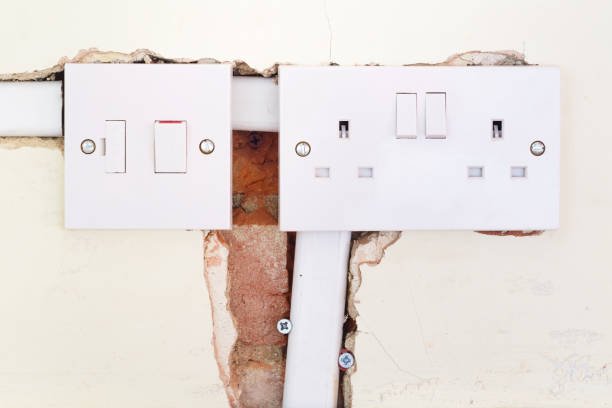
Electrical wiring doesn’t last forever.
If your home has old or damaged wiring, it may no longer meet modern safety standards and could increase the risk of electrical faults or even fires.
So, when does a house need rewiring?
Most homes don’t require a full rewire for 25–30 years, but this depends on the condition of the wiring, how it’s been maintained and whether it still meets current electrical regulations.
Here are the signs your home may need rewiring.
Signs your house may need rewiring
Frequent fuse box trips
If your fuse box regularly trips without an obvious reason, your electrical system could be overloaded or have faulty wiring.
While occasional trips aren’t unusual, repeated problems should always be investigated.
Flickering or dimming lights
Lights that flicker or dim when using appliances could indicate loose wiring, overloaded circuits or ageing electrical components.
Old wiring
If your property still has:
- Rubber-insulated wiring
- Fabric-covered wiring
- Lead-sheathed cables
it’s likely time to have the installation inspected by an electrician.
These older wiring systems are no longer used in modern homes.
Burning smells or scorch marks
If you notice:
- Burning smells
- Warm sockets
- Discoloured switches
- Black marks around outlets
turn off the affected circuit immediately and contact an electrician.
These can be signs of dangerous electrical faults.
Not enough sockets
Older homes often have very few plug sockets.
If you’re relying on extension leads throughout the house, your electrical system may no longer suit modern living.
A rewire often includes installing additional sockets and upgraded circuits.
Old fuse box
If your home still has an old-style fuse box with rewireable fuses instead of a modern consumer unit, it’s worth arranging an electrical inspection.
A modern consumer unit provides improved safety features such as RCD protection.
How old is the property?
As a general guide:
| Property age | Recommendation |
|---|---|
| Less than 25 years | Usually no rewire needed unless faults are present |
| 25–30 years | Consider an electrical inspection (EICR) |
| 30+ years | Rewiring may be required depending on the condition |
Age alone doesn’t determine whether a rewire is necessary—an inspection is the best way to assess the condition of the wiring.
Do I need a full rewire?
Not always.
Sometimes an electrician may recommend:
- Replacing the consumer unit
- Installing additional sockets
- Replacing damaged circuits
- Upgrading specific areas
A full rewire is only necessary if the existing wiring is no longer safe or practical.
How do I know for sure?
The best way to assess your home’s electrical system is with an Electrical Installation Condition Report (EICR).
An EICR checks:
✔ Wiring condition
✔ Consumer unit
✔ Earthing and bonding
✔ Socket safety
✔ Electrical circuits
The report will identify whether repairs or a full rewire are recommended.
How much does rewiring cost?
Typical UK rewiring costs are:
| Property | Estimated 2026 cost |
|---|---|
| 1-bedroom flat | £3,500–£5,000 |
| 2-bedroom house | £4,000–£6,500 |
| 3-bedroom house | £5,000–£8,500 |
| 4-bedroom house | £7,000–£10,500 |
The final price depends on the size of the property and how accessible the wiring is.
Can I live in the house during a rewire?
Yes, but it can be disruptive.
Rewiring often involves:
- Lifting floorboards
- Chasing walls
- Temporary power interruptions
- Dust and noise
Many homeowners choose to carry out rewiring before moving into a property or during major renovations.
How to keep your electrics safe
To reduce the risk of electrical problems:
- Arrange an EICR if your home is older.
- Avoid overloading sockets.
- Replace damaged sockets and switches.
- Investigate flickering lights promptly.
- Have electrical work carried out by a qualified electrician.
Regular inspections can identify issues before they become serious.
Frequently Asked Questions
Does every old house need rewiring?
No.
Many older homes still have safe wiring.
The only reliable way to know is to have an Electrical Installation Condition Report (EICR) carried out.
How often should a house be rewired?
There’s no fixed rule, but many electrical systems last 25–30 years before significant upgrades may be needed.
Can I buy a house that needs rewiring?
Yes.
Many buyers purchase older homes knowing they’ll need electrical improvements as part of the renovation.
Is rewiring covered by home insurance?
Generally not.
Rewiring is usually considered routine maintenance rather than an insured event.
Final thoughts
A full rewire isn’t something most homeowners need to think about often, but recognising the warning signs can help keep your home safe.
If your property is over 30 years old, your fuse box frequently trips or your wiring looks outdated, it’s worth arranging an EICR with a qualified electrician. If a rewire is needed, dealing with it early can prevent more serious electrical problems in the future.
Find a trusted electrician
Think your home may need rewiring?
Use The Right Guy to compare trusted local electricians, read genuine customer reviews and request quotes from experienced professionals near you.
Own an electrical business? Create your free business listing on The Right Guy and help more homeowners discover your services.

Author: The Right Guy Team
UK service guides published by The Right Guy Ltd.