
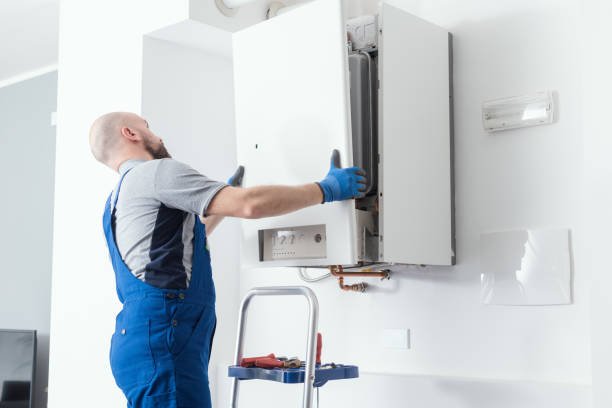
A boiler rarely chooses a convenient time to stop working. One day it seems fine; the next, you’re standing in a cold house wondering whether the strange noise you’ve been ignoring for six months was trying to tell you something.
Fortunately, complete breakdown is not always the first indication of trouble.
Common signs your boiler is failing can include increasingly frequent breakdowns, unusual noises, inconsistent heating or hot water, recurring pressure loss, leaks, unexplained error codes and rising repair bills.
Some problems can be fixed relatively cheaply. Others may indicate that an older boiler is reaching the point where continuing to repair it no longer makes financial sense.
There are also a few warning signs that should not be treated as ordinary boiler faults — particularly anything suggesting a gas or carbon monoxide safety issue.
Here’s how to recognise the difference.
1. Your boiler keeps breaking down
One breakdown doesn’t necessarily mean your boiler needs replacing.
Components fail, and sometimes replacing a relatively inexpensive part can give an otherwise healthy boiler years of additional service.
The pattern matters.
If you’ve needed an engineer several times within a relatively short period, the cost of keeping the boiler running can begin to change the calculation.
Imagine spending:
£250 on one repair.
Another £180 several months later.
Then £400 the following winter.
At that point, the question isn’t simply whether the latest fault can be repaired. It is whether continuing to put money into the existing appliance makes sense.
Our guide to whether you should repair or replace your boiler looks at this decision in more detail.
2. Your boiler is making noises it didn’t make before
Boilers aren’t completely silent, and normal operating sounds vary between models.
But a new or noticeably different noise deserves attention.
You might hear:
- banging;
- knocking;
- whistling;
- gurgling;
- vibrating;
- humming;
- rattling.
Different sounds can have very different causes.
For example, noise could potentially be associated with trapped air, system pressure, pumps, scale, sludge, water flow or another component.
Don’t diagnose the boiler purely from the sound.
A video online claiming “three bangs means you need a new heat exchanger” cannot tell you what is happening inside your particular heating system.
If a new noise persists, have the cause investigated.
[INSERT IMAGE 2 HERE – heating engineer inspecting a wall-mounted boiler after unusual noises or performance problems]
Alt text: Heating engineer checking a boiler showing signs of failure
3. Your home takes much longer to heat up
Think about how your heating normally behaves.
If the boiler used to bring the house up to temperature relatively predictably but now seems to run for much longer without achieving the same result, something may have changed.
However, don’t immediately blame the boiler.
Poor heating performance can also result from:
- trapped air in radiators;
- sludge in the heating system;
- radiator balancing problems;
- thermostat issues;
- circulation problems;
- insulation and heat-loss problems;
- very cold outdoor temperatures.
The boiler may be functioning correctly while another part of the heating system is causing the problem.
A proper diagnosis should consider the complete system rather than replacing the most expensive component first.
4. Your hot water temperature keeps changing
One minute the shower is hot.
Then lukewarm.
Then hot again.
Inconsistent domestic hot water can indicate a boiler or system fault, particularly if the problem is happening throughout the property rather than at one individual tap or shower.
Potential causes vary according to boiler type and system design.
For a combi boiler, an engineer may investigate components involved in detecting demand, controlling water flow and transferring heat.
But don’t assume fluctuating water temperature automatically means the entire boiler has failed.
Sometimes the underlying component can be repaired or replaced.
The important question is whether this is an isolated fault or another problem in a growing list of failures.
5. The boiler keeps losing pressure
Many sealed central-heating systems have a pressure gauge or digital pressure reading.
The normal operating range depends on the boiler, so check the manufacturer’s instructions rather than relying on one universal number.
If you need to repressurise the system repeatedly, however, something may need investigation.
Pressure loss can potentially be associated with:
- leaks somewhere in the heating system;
- radiator valves;
- pipework;
- pressure-relief components;
- expansion-vessel problems;
- other internal faults.
Occasionally topping up pressure after work has been carried out isn’t the same as constantly doing it.
If the pressure repeatedly drops, find the cause rather than turning repressurising into part of your weekly routine.
6. The boiler is leaking water
Water around a boiler should not simply be ignored.
A leak can originate from different components or connections, and the seriousness depends on its cause.
It may be a plumbing connection.
It may involve a valve or seal.
It may indicate deterioration within the appliance.
Water can also damage surrounding surfaces and potentially affect electrical components.
Don’t remove the boiler casing and start investigating internally yourself.
Gas boilers should be worked on by appropriately qualified Gas Safe registered engineers.
If you notice water beneath or inside the vicinity of the boiler, arrange for it to be assessed.
[INSERT IMAGE 3 HERE – close-up of water leaking or dripping beneath a domestic boiler]
Alt text: Water leaking beneath a boiler as a warning sign of boiler failure
7. Error codes keep returning
Modern boilers are designed to detect certain faults and may display an error or fault code when something isn’t operating correctly.
One error code doesn’t necessarily mean the boiler is finished.
The code may point an engineer towards a repairable fault.
The warning sign is when the same error repeatedly returns, particularly after resets or previous repairs.
Write the code down or photograph the display before contacting an engineer.
That can provide useful information when arranging the visit.
Avoid repeatedly resetting a boiler without understanding why it is locking out. A safety or operating control may be stopping the appliance for a reason.
8. Some radiators remain cold despite basic checks
Cold radiators aren’t automatically a boiler problem.
If the top of a radiator is cold, trapped air may be responsible.
If the bottom remains cold, sludge or poor circulation could potentially contribute.
A single cold radiator may point towards a local problem with that radiator or valve.
But if multiple radiators suddenly stop heating properly, particularly alongside other boiler symptoms, the heating system should be assessed more broadly.
An engineer can investigate circulation, controls, pumps and boiler performance rather than guessing from radiator temperature alone.
9. Your boiler switches itself off unexpectedly
A boiler that repeatedly shuts down or locks out is telling you something isn’t operating as expected.
Possible causes vary considerably and can involve:
- pressure;
- circulation;
- ignition;
- sensors;
- condensate issues;
- internal components;
- system controls.
A one-off lockout may be resolved according to the manufacturer’s instructions.
Repeated lockouts are different.
Don’t simply reset the boiler every morning indefinitely. If the fault keeps returning, have the cause diagnosed.
10. Your energy use appears to be increasing without explanation
Higher energy bills don’t prove that a boiler is failing.
Energy prices change, winters differ, household occupancy changes and people alter their heating habits.
However, if your actual gas consumption is noticeably increasing under broadly similar conditions, and the boiler is also showing other signs of deterioration, reduced system performance may be worth investigating.
Look at consumption rather than simply the £ amount on the bill.
A boiler service can help identify whether the appliance is operating correctly.
Regular maintenance also matters. Energy Saving Trust recommends routinely servicing a boiler, usually annually, and notes that poor maintenance can reduce heating-system efficiency.
If yours is overdue, our guide to what a boiler service should cost in 2026 explains what UK homeowners can expect to pay and what should be included.
11. Replacement parts are becoming difficult or expensive to obtain
A repair isn’t useful if the necessary part is obsolete, extremely expensive or difficult to source.
This becomes increasingly relevant with older boiler models.
Even if an engineer manages to repair one component today, ask whether parts availability is becoming a wider issue.
If several major components are ageing simultaneously, investing heavily in another repair may provide poor value.
This doesn’t mean every old boiler needs replacing.
It means repairability should be part of the decision.
An older boiler that is reliable, serviceable and supported with readily available parts may continue operating perfectly well.
One requiring increasingly expensive or hard-to-source components is a different proposition.
12. The boiler is old and showing several other warning signs
Age alone is not a fault.
There isn’t a magic birthday on which every boiler suddenly needs replacing.
Some appliances remain dependable for many years, while others develop significant problems earlier.
What matters is the combination of age and condition.
An older boiler becomes a stronger replacement candidate when it is also:
- breaking down regularly;
- becoming expensive to repair;
- struggling to heat the property;
- leaking;
- producing recurring faults;
- requiring obsolete components.
If your boiler is still working reliably, age alone isn’t necessarily a reason to spend thousands replacing it tomorrow.
But if several signs your boiler is failing are appearing together, it is sensible to start budgeting before an emergency breakdown makes the decision for you.
Warning signs that could indicate a gas-safety problem
Most boiler faults are inconvenient.
Some potential gas-appliance problems are more serious.
Gas Safe Register advises homeowners to look out for warning signs including dark or sooty staining around a gas appliance, yellow or floppy flames where a crisp blue flame would normally be expected, increased condensation and a pilot light that repeatedly goes out.
If you suspect a gas appliance is unsafe, don’t try to repair it yourself.
Gas appliances should be checked by a Gas Safe registered engineer.
What about carbon monoxide?
Carbon monoxide is particularly dangerous because you cannot see or smell it.
A boiler or other fuel-burning appliance that is faulty, poorly installed or poorly maintained can potentially produce carbon monoxide.
Possible symptoms of carbon monoxide poisoning include:
- headache;
- dizziness;
- nausea or vomiting;
- weakness;
- tiredness or confusion;
- chest or muscle pain;
- shortness of breath.
Symptoms may become worse while you are inside the affected building and improve after going outside.
If you think carbon monoxide may be present, stop using the suspected appliance if you can, go outside and seek medical advice promptly. The NHS advises calling 999 or going to A&E for serious symptoms such as difficulty breathing, sudden confusion or loss of consciousness.
You should also have suitable carbon monoxide alarms in rooms containing fuel-burning appliances and maintain them according to the manufacturer’s instructions.
This is one situation where waiting to see whether the boiler “gets worse” isn’t appropriate.
Does a failing boiler always need replacing?
No.
Many boiler faults are repairable.
An engineer may identify a relatively straightforward component failure in an otherwise serviceable boiler.
Replacement becomes more compelling when you have a combination of:
high repair cost + frequent faults + poor reliability + ageing equipment.
Think about the total cost of ownership rather than the latest repair bill alone.
Suppose a repair costs £350 and is likely to give a healthy boiler several more years of service.
That may be excellent value.
If you’re being asked to spend £700 on a boiler that has already needed three significant repairs and is becoming difficult to maintain, replacement deserves serious consideration.
When should you repair a boiler?
Repair may be the sensible option when:
- the boiler is otherwise reliable;
- the fault is clearly identifiable;
- repair cost is reasonable;
- replacement parts are readily available;
- there aren’t multiple other developing faults;
- the engineer considers the boiler to be in generally good condition.
Don’t replace an entire boiler simply because one inexpensive component has failed.
When should you replace a boiler?
Replacement becomes more attractive when repairs are frequent or increasingly expensive, the boiler is unreliable, significant components are deteriorating or parts availability is becoming problematic.
Your own circumstances matter too.
If you’re already planning major heating-system improvements, you may decide that investing heavily in an ageing boiler isn’t worthwhile.
Our detailed guide to repairing vs replacing a boiler can help you weigh the cost of another repair against investing in a new system.
How much does replacing a boiler cost?
There isn’t one fixed UK boiler replacement price.
The total depends on:
- boiler type;
- output;
- manufacturer and model;
- whether you’re replacing like-for-like;
- whether the boiler is being relocated;
- pipework modifications;
- controls;
- flue arrangements;
- system cleaning;
- additional components;
- labour;
- location.
A straightforward combi-for-combi replacement can be considerably simpler than changing from a conventional heating system to a combi boiler while moving the appliance to another part of the property.
Before assuming replacement will cost a particular amount, see our full 2026 UK boiler replacement cost guide for a more detailed breakdown.
Should you wait until your boiler completely breaks?
Not necessarily.
If the boiler is functioning normally, there is little reason to panic simply because it is getting older.
But waiting for a boiler that is already showing repeated signs of failure to stop completely can leave you making an expensive decision under pressure.
And boilers have an unfortunate habit of becoming most noticeable when you need them most: during cold weather.
If repairs are becoming frequent, start researching replacement costs before the final breakdown.
That gives you time to:
- compare options;
- get several quotes;
- research installers;
- consider different boiler models;
- budget for the work.
Planned replacement is generally easier to manage than waking up without heating and accepting the first available quotation.
How often should you service your boiler?
For many domestic boilers, an annual service is a sensible routine and may also be required under manufacturer warranty conditions.
Energy Saving Trust recommends routine boiler servicing, usually once a year.
A service isn’t a guarantee that nothing will ever fail.
But regular professional inspection can identify problems, check the appliance’s operation and help keep the heating system maintained.
If you aren’t sure what you should be paying, read our guide to boiler service costs in 2026 before booking.
Can you diagnose a boiler yourself?
You can perform basic checks allowed by the manufacturer’s instructions.
For example, you might check:
- whether there is power;
- thermostat settings;
- the displayed fault code;
- system pressure;
- whether other gas appliances appear affected;
- whether the boiler needs resetting according to its manual.
But don’t remove the boiler casing or attempt gas-related repairs.
Gas Safe Register states that gas work should be carried out by registered engineers and warns against DIY gas work.
A boiler contains gas, combustion, electricity and hot water components. This is not the place to save money by experimenting.
What should you tell the engineer?
Giving the engineer useful information can make diagnosis easier.
Before they arrive, note:
- boiler make and model;
- approximate age if known;
- fault/error code;
- when the problem started;
- whether it happens constantly or intermittently;
- whether heating, hot water or both are affected;
- whether system pressure changes;
- any unusual noises;
- previous repairs.
If the boiler makes an intermittent noise, recording it can be useful because naturally it may decide to behave perfectly the moment the engineer arrives.
Should you get more than one quote for boiler replacement?
For a planned replacement, yes, comparing quotations is sensible.
Don’t compare only the final price.
Check whether each quotation includes the same:
- boiler;
- controls;
- installation work;
- flue;
- system cleaning;
- filters;
- disposal of the old appliance;
- warranty;
- commissioning;
- VAT.
A quotation £400 cheaper may not actually represent better value if significant items are missing.
For emergency repairs, you may have less time to shop around. That is another advantage of investigating replacement before an unreliable boiler finally stops working.
Frequently asked questions
What are the first signs a boiler is failing?
Early signs can include unusual noises, recurring pressure loss, inconsistent hot water, longer heating times, intermittent error codes and more frequent repairs.
How do I know if my boiler needs replacing?
Consider the overall pattern. An ageing boiler that repeatedly breaks down, requires expensive repairs and has poor parts availability is a stronger replacement candidate than a reliable older boiler with one inexpensive fault.
Is a noisy boiler dangerous?
Not necessarily. Boiler noises can have several causes, some relatively straightforward. However, a new or persistent noise should be investigated rather than ignored.
Why does my boiler keep losing pressure?
Pressure loss can be associated with leaks or faults elsewhere in the heating system. If you continually need to repressurise it, arrange an inspection rather than repeatedly topping it up.
Should I replace a 10-year-old boiler?
Not automatically. Age should be considered alongside reliability, efficiency, condition, repair history and parts availability.
Is it worth repairing an old boiler?
It can be if the repair is inexpensive and the rest of the appliance is in good condition. Repeatedly spending substantial sums on an unreliable older boiler may make replacement more economical.
Can a boiler suddenly stop working?
Yes. Some failures occur without much obvious warning, although recurring faults, unusual noises, leaks and unreliable operation can sometimes appear beforehand.
Can I repair my own gas boiler?
You should not undertake gas work yourself. Gas-related boiler work should be carried out by an appropriately qualified Gas Safe registered engineer.
Signs your boiler is failing: what should you do next?
Not every strange noise or error code means you need a new boiler.
The important thing is to look for a pattern.
One inexpensive fault in an otherwise reliable boiler may simply need repairing.
But repeated breakdowns, leaks, recurring pressure problems, inconsistent heating and increasingly expensive repairs can indicate that the boiler is approaching the point where replacement makes more financial sense.
Don’t wait for complete failure before investigating your options.
If the boiler is becoming unreliable, arrange an assessment and compare the likely repair cost with the price of replacement. Our 2026 boiler replacement cost guide can help you understand the likely budget before getting quotes.
If you need an engineer to diagnose a fault, service the boiler or discuss replacement, you can find local heating engineers, plumbers and other home-service professionals through The Right Guy. For gas-boiler work, make sure the person carrying out gas work is appropriately Gas Safe registered.

Author: The Right Guy Team
UK service guides published by The Right Guy Ltd.