
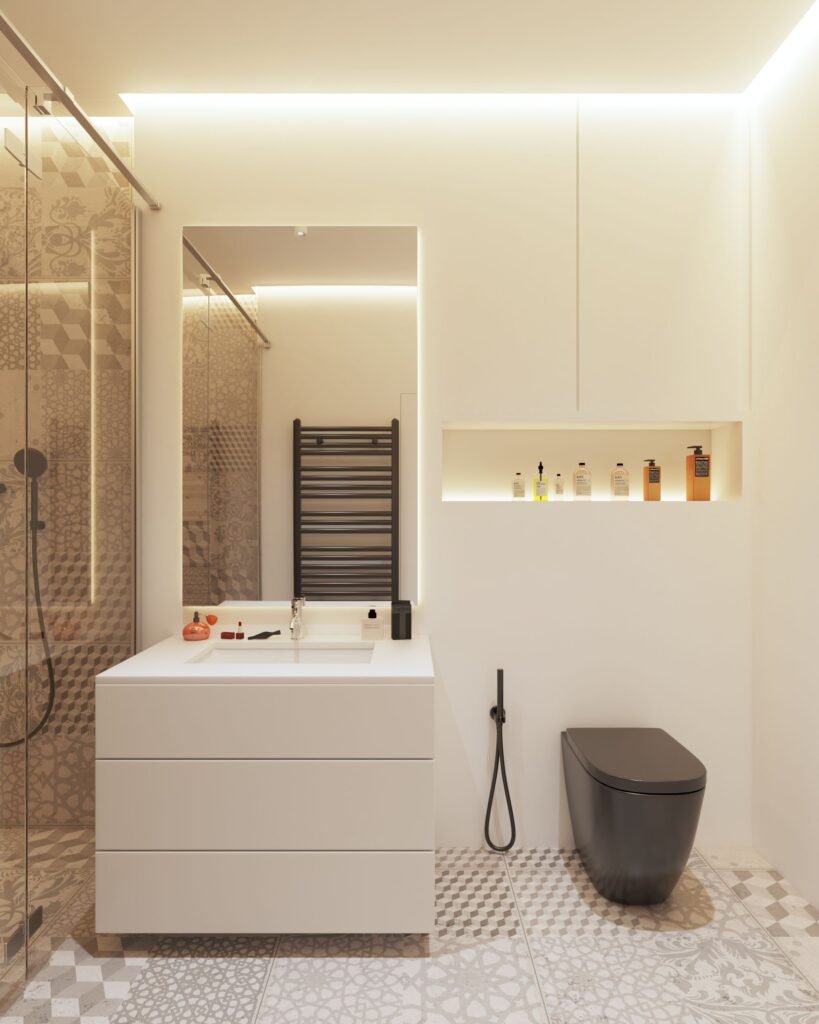
You’re getting your home ready to sell and suddenly every flaw in the bathroom seems impossible to ignore.
The grout looks tired. The silicone has started discolouring. The taps aren’t particularly modern. Maybe the tiles were fashionable fifteen years ago.
And then comes the expensive question:
Should I replace my bathroom before selling?
A modern bathroom can certainly make a home more attractive to buyers. But spending £8,000–£15,000 on a complete renovation doesn’t mean your property will automatically sell for £8,000–£15,000 more.
Sometimes a new bathroom makes sense.
Sometimes £500 spent refreshing the existing bathroom could achieve most of what you need.
Here’s how to tell the difference.
Should I replace my bathroom before selling?
Usually, not automatically.
If your bathroom is clean, functional and in reasonable condition, replacing it purely because the style is dated may not be financially worthwhile.
Before considering a complete renovation, look at cheaper improvements such as:
- Replacing old silicone
- Cleaning or refreshing grout
- Repainting suitable walls
- Replacing damaged fixtures
- Updating taps
- Changing a tired mirror
- Improving lighting
- Replacing an old toilet seat
- Repairing minor damage
- Deep cleaning the entire room
However, if the bathroom has serious damage, leaks, broken fittings or obvious deterioration, more substantial work may make sense.
The important distinction is:
Does the bathroom look dated — or does it look like an expensive problem?
Those are two very different things.
Why bathrooms matter when selling a house
Bathrooms are one of the rooms buyers pay close attention to because renovating one can involve several different trades and significant disruption.
A buyer can look at a dated bedroom and think:
“We’ll paint it next weekend.”
A badly deteriorated bathroom can create a different reaction:
“How much is THAT going to cost?”
That perceived expense may influence how much they’re prepared to offer.
But this doesn’t mean every old bathroom needs ripping out.
A clean, well-maintained bathroom from ten years ago can be considerably more appealing than a badly installed brand-new one.
When replacing your bathroom before selling might be worth it
There are situations where a larger renovation deserves serious consideration.
1. The bathroom is in genuinely poor condition
There’s a difference between an unfashionable bathroom and a failing bathroom.
More substantial renovation may be worth investigating if you’re dealing with:
- Broken sanitaryware
- Significant water damage
- Persistent leaks
- Severely damaged tiles
- Rotten flooring
- Failed fittings
- Major mould problems
- An impractical or unusable layout
Deal with underlying problems rather than simply trying to disguise them before viewings.
2. Buyers will immediately see it as a major project
Imagine walking into an otherwise beautifully maintained property and finding a bathroom that clearly requires complete renovation.
That one room can influence the buyer’s perception of the entire house.
They may start mentally subtracting the expected renovation cost from their offer — potentially with an additional margin for inconvenience and uncertainty.
Improving the bathroom could therefore make the property more attractive.
But first establish whether it genuinely requires replacement or merely looks tired.
3. Comparable homes nearby have much better bathrooms
Your property doesn’t exist in isolation.
Buyers may be viewing several similar houses.
If yours and another property have similar:
- Locations
- Bedrooms
- Gardens
- Parking
- Floor areas
- Asking prices
but the competing property has a significantly better bathroom, buyers may favour it.
This is why checking local competition before selling can be useful.
4. The numbers actually make sense
Don’t renovate based purely on the assumption that:
new bathroom = higher house price.
Run the numbers.
Suppose your property could realistically sell for around £260,000 now.
Comparable renovated homes are actually selling for around £270,000.
If your proposed bathroom costs £12,000, spending that money purely to chase a potential £10,000 difference isn’t particularly convincing.
If you can achieve the necessary improvement for £3,000, however, the calculation changes.
The numbers matter more than the renovation itself.
When you probably shouldn’t replace your bathroom
A complete replacement may be unnecessary in several common situations.
1. It’s dated but perfectly usable
Maybe you’ve got:
Beige tiles.
Chrome taps.
A basic white bath.
An older vanity unit.
None of those things necessarily mean the bathroom needs replacing.
Fashion changes much faster than bathrooms stop functioning.
If everything is clean, maintained and working properly, buyers may simply see an older bathroom rather than a problem.
2. You’re renovating according to your own taste
This is one of the biggest risks when renovating immediately before selling.
You might choose:
Black taps + dark green tiles + brass lighting.
Your buyer might have wanted:
White marble-effect tiles + chrome fittings + pale wood.
Neither design is objectively wrong.
That’s the problem.
You’re spending thousands choosing a bathroom for someone you’ve never met.
If resale is the objective, keep expensive permanent decisions relatively versatile.
3. The rest of the property needs renovation too
Imagine installing a beautiful new bathroom while the rest of the house needs:
- New kitchen
- Extensive decorating
- Flooring
- Electrical work
- Heating improvements
- Major repairs
Buyers looking for a renovation project may not assign enough additional value to your one newly renovated room to justify what you spent.
Sometimes selling honestly as a property requiring modernisation makes more financial sense.
4. You’re planning a luxury bathroom in a modest property
A £20,000 bathroom can be beautiful.
But your local market may not care that the taps cost £600.
This is the same problem homeowners encounter with luxury kitchens.
Property value is influenced heavily by:
Location + size + property type + condition + local demand.
Premium tiles and designer fittings don’t automatically override those fundamentals.
Refresh or replace? Start here
Before requesting quotes for a complete bathroom renovation, make a list of everything you dislike about the existing room.
You may write:
- Silicone looks horrible
- Grout looks dirty
- Wall colour is dated
- Mirror looks old
- Taps have limescale
- Toilet seat needs replacing
- Lighting isn’t good
- Vanity handles look dated
Read that list again.
Do you actually need a new bathroom?
Or does your existing bathroom need a weekend and a few hundred pounds?
That’s the calculation worth making first.
10 cheaper ways to refresh a bathroom before selling
1. Replace old silicone
This is one of the smallest jobs that can produce a surprisingly noticeable difference.
Silicone around:
- Baths
- Showers
- Sinks
- Worktops
can become stained, cracked or mouldy.
Fresh, neatly applied sealant can make the surrounding area look much cleaner.
But don’t simply cover old silicone with another layer.
And never use cosmetic work to hide an underlying leak.
2. Clean or refresh the grout
Dirty grout can make relatively good tiles look terrible.
Start with proper cleaning.
If grout is genuinely damaged, cracked or missing, it may require repair or replacement.
You don’t necessarily need to remove perfectly good tiles just because the grout between them looks tired.
3. Deep clean everything
Before deciding you hate your bathroom, clean it properly.
Pay attention to:
Shower screen
Taps
Grout
Tiles
Bath
Toilet
Sink
Mirrors
Flooring
Extractor fan
Windows
Limescale alone can make fittings appear much older than they actually are.
4. Repaint the walls
If your bathroom has painted areas, a fresh colour can transform the space relatively inexpensively.
Use a paint suitable for the environment.
For resale, broadly appealing colours might include:
- Warm white
- Soft off-white
- Pale greige
- Muted sage
- Light neutral
You don’t have to remove every trace of personality, but remember that you’re preparing the room for a broad range of potential buyers.
5. Replace an old mirror
A tired mirror or small mirrored cabinet can make the room feel dated.
A larger, simpler mirror may help the room feel brighter and more spacious.
If the bathroom is small, this can be particularly effective because the mirror reflects both light and the room itself.
6. Improve the lighting
Poor bathroom lighting can make even a decent bathroom look dull.
Check whether the room feels:
- Too dark
- Too yellow
- Too cold
- Unevenly lit
Better lighting can improve the appearance of tiles, paint and fittings without changing them.
Any electrical work in a bathroom needs to comply with the relevant safety requirements, so use an appropriately qualified professional where necessary.
7. Replace obviously dated accessories
You don’t need to buy a new bathroom suite to modernise the details.
Consider relatively inexpensive items such as:
- Toilet seat
- Towel rail
- Handles
- Hooks
- Shower accessories
- Bath panel
- Storage
Consistency matters.
Five different metal finishes scattered around a small bathroom can make it feel more visually cluttered.
8. Update the taps
Old, damaged or heavily deteriorated taps can make the basin or bath around them look older.
Replacing them may provide a relatively inexpensive update compared with replacing the entire suite.
But don’t replace perfectly functional fittings solely because they’re a few years old.
Clean them first.
9. Declutter the room
Buyers don’t need to see:
Seven shampoo bottles.
Three toothbrushes.
Cleaning spray.
Razors.
Children’s bath toys.
Laundry.
Half the contents of your bathroom cupboard.
Keep enough to make the bathroom feel lived in, but remove excessive clutter before photographs and viewings.
You want buyers looking at the room, not your toiletries.
10. Add simple finishing touches
Once the bathroom is clean and repaired, a few inexpensive details can make it feel much more finished.
Think:
Fresh towels
Simple bath mat
One plant where appropriate
Matching soap dispenser
Clean mirror
Clear surfaces
You don’t need to turn your bathroom into a hotel.
Just make it feel cared for.
Should I replace the bath before selling?
Not simply because it’s old.
If the bath is clean, functional and undamaged, replacement may be unnecessary.
If it’s badly cracked, significantly damaged or causing problems, that’s different.
Also consider your target buyer.
In a family home, retaining a bath may be attractive to buyers with young children.
Removing the only bath to install a large walk-in shower could therefore reduce the appeal for some buyers.
That doesn’t mean you should never do it.
It simply means you should think about who is likely to buy the property.
Should I replace the shower before selling?
Again, condition matters more than age.
If the shower works properly but looks slightly dated, cleaning, replacing damaged seals or updating smaller components may be enough.
If it leaks, doesn’t function correctly or has caused water damage, address the underlying problem.
Don’t simply decorate around it.
Should I replace bathroom tiles before selling?
Usually not unless they’re:
- Extensively damaged
- Loose
- Severely cracked
- Allowing water penetration
- Particularly detrimental to the room
A tile colour being unfashionable isn’t automatically enough reason to spend thousands replacing it.
Clean the tiles and grout first.
You may be surprised how different they look.
Should I replace a coloured bathroom suite?
Older coloured bathroom suites can divide opinion.
A highly distinctive avocado, pink or blue suite may make a bathroom feel much more dated to some buyers.
But replacement still needs a financial calculation.
If the entire bathroom would need rebuilding around the change, the cost could become substantial.
If you’re selling immediately, ask local estate agents whether they believe replacement would materially change the property’s saleability or likely price before committing.
Should I remove the bath and install a walk-in shower?
Be careful.
Walk-in showers can be attractive, practical and modern.
But removing the only bath in a family-sized property could make the home less appealing to some households with young children.
If you have multiple bathrooms, the decision may be easier.
If this is the property’s only bathroom, think carefully about your likely buyer before removing functionality.
Does a new bathroom increase house value?
It can contribute to the overall appeal and condition of a property.
But there is no rule saying:
Spend £10,000 → property becomes worth £10,000 more.
A bathroom is only one part of the valuation.
Buyers and valuers also consider factors such as:
- Location
- Property size
- Bedroom count
- Overall condition
- Parking
- Garden
- Layout
- Local demand
- Comparable sales
A beautiful bathroom doesn’t move your house to a better postcode.
Can a bad bathroom reduce buyer interest?
Potentially.
Particularly if buyers believe they’ll need to spend significant money immediately after moving.
That’s why the distinction between dated and poorly maintained is so important.
Dated can be acceptable.
Dirty, leaking and damaged creates a different impression.
How much should I spend on a bathroom before selling?
Don’t begin with an arbitrary budget.
Work backwards.
Step 1
Estimate your property’s realistic value in its current condition.
Step 2
Look at recently sold comparable properties with renovated bathrooms.
Step 3
Estimate how much difference the bathroom realistically makes.
Step 4
Get genuine renovation or refresh quotes.
Step 5
Compare the potential benefit with the full cost.
If you’re spending £12,000 chasing a potential £5,000 improvement, the financial case is weak if resale is your only motivation.
Ask an estate agent before spending thousands
Before commissioning a major bathroom renovation purely for resale, ask a couple of local estate agents:
“What would you expect the property to sell for as it is?”
Then ask:
“Would renovating this bathroom materially change the likely selling price?”
You want numbers.
Not simply:
“Yes, buyers love modern bathrooms.”
Of course they do.
The question is whether they love yours £10,000 more.
New bathroom vs bathroom refresh before selling
| Current condition | Consider |
|---|---|
| Clean but dated | Keep it |
| Dirty grout | Deep clean |
| Old silicone | Replace silicone |
| Tired painted walls | Repaint |
| Dated accessories | Small updates |
| Poor lighting | Improve lighting |
| Old but functional taps | Clean first |
| Damaged taps | Consider replacing |
| Broken tiles | Repair where practical |
| Major water damage | Investigate and repair |
| Bathroom largely unusable | Consider renovation |
| Luxury renovation solely for resale | Calculate very carefully |
What should I do before bathroom viewings?
Even if you’re spending almost nothing, do these before photographs or buyers arrive:
- Remove excessive toiletries.
- Clean the shower screen.
- Remove limescale.
- Clean the mirror.
- Replace visibly mouldy or damaged silicone where appropriate.
- Clean grout.
- Remove laundry.
- Put away cleaning products.
- Open blinds and maximise natural light.
- Make sure the room smells clean and fresh.
- Fix obvious minor defects.
- Use clean towels.
These changes aren’t expensive.
But they can dramatically improve presentation.
The mistake of creating your dream bathroom for somebody else
This is exactly the same trap homeowners fall into with kitchens.
You’re moving.
So why are you spending thousands creating your dream bathroom?
The next owner may hate your tiles.
They may replace your expensive black taps with chrome.
They may remove your vanity.
They may prefer a bath where you’ve installed a walk-in shower.
If you’re selling soon, your objective isn’t necessarily to create an Instagram-perfect bathroom.
It’s to create one that feels:
Clean.
Functional.
Maintained.
Presentable.
Anything beyond that needs a financial justification.
Should I replace my bathroom before selling? The verdict
For many homeowners, the answer will be:
Probably not.
At least, not immediately.
Start by cleaning the bathroom thoroughly.
Repair genuine defects.
Replace damaged silicone.
Refresh grout.
Improve lighting.
Declutter.
Repaint where appropriate.
Then look at the room again.
If it is now clean, functional and presentable, spending thousands replacing it purely because the tiles aren’t fashionable may not make sense.
If the bathroom remains clearly damaged, dysfunctional or significantly behind competing properties, investigate renovation costs and compare them with realistic local property values.
Because sometimes you need a new bathroom.
But sometimes what looks like a £10,000 bathroom problem is actually a £500 presentation problem.
Frequently Asked Questions
Should I renovate my bathroom before selling my house?
Not automatically. If the bathroom is functional and in reasonable condition, inexpensive repairs, cleaning and cosmetic improvements may be sufficient. Consider major renovation when the condition is genuinely poor and the likely financial benefit justifies the cost.
Does a new bathroom add value to a house?
A good bathroom can improve buyer appeal and may contribute to property value, but there is no guaranteed relationship between the renovation cost and the value added.
Is an old bathroom bad when selling a house?
Not necessarily. A clean, functional but dated bathroom may be perfectly acceptable, particularly when the property’s price reflects its overall condition.
Should I replace bathroom tiles before selling?
Usually not solely because they’re unfashionable. Cleaning grout, repairing damaged areas and improving the rest of the room may be sufficient unless the tiles are in genuinely poor condition.
Is it worth replacing a bath before selling?
If the bath works and is in reasonable condition, replacement may not be necessary. In family properties, keeping at least one bath can also appeal to households with young children.
Should I remove a bath for a walk-in shower before selling?
Consider your target market first. Removing the property’s only bath may make it less attractive to some family buyers, even if the new shower looks more modern.
Is it worth painting a bathroom before selling?
If the existing walls are tired or heavily marked, fresh paint can be a relatively inexpensive way to improve presentation. Use a product appropriate for a moisture-prone environment.
Final Thoughts
Before replacing your bathroom because you’re selling, separate old from bad.
An older bathroom can still be clean, functional and attractive.
And that’s often enough.
Spend your first pounds fixing what is actually wrong — not replacing everything that isn’t currently fashionable.
If you’re considering a major renovation purely to increase the sale price, compare the complete cost with what renovated properties are actually selling for locally.
The goal isn’t to give the next owner your dream bathroom.
It’s to avoid spending £10,000 fixing something buyers might have accepted after a £500 refresh.
Need Help Refreshing Your Bathroom?
Whether you need a plumber, tiler, painter, electrician, bathroom fitter or handyman, The Right Guy can help you find local tradespeople for your project.

Author: The Right Guy Team
UK service guides published by The Right Guy Ltd.