
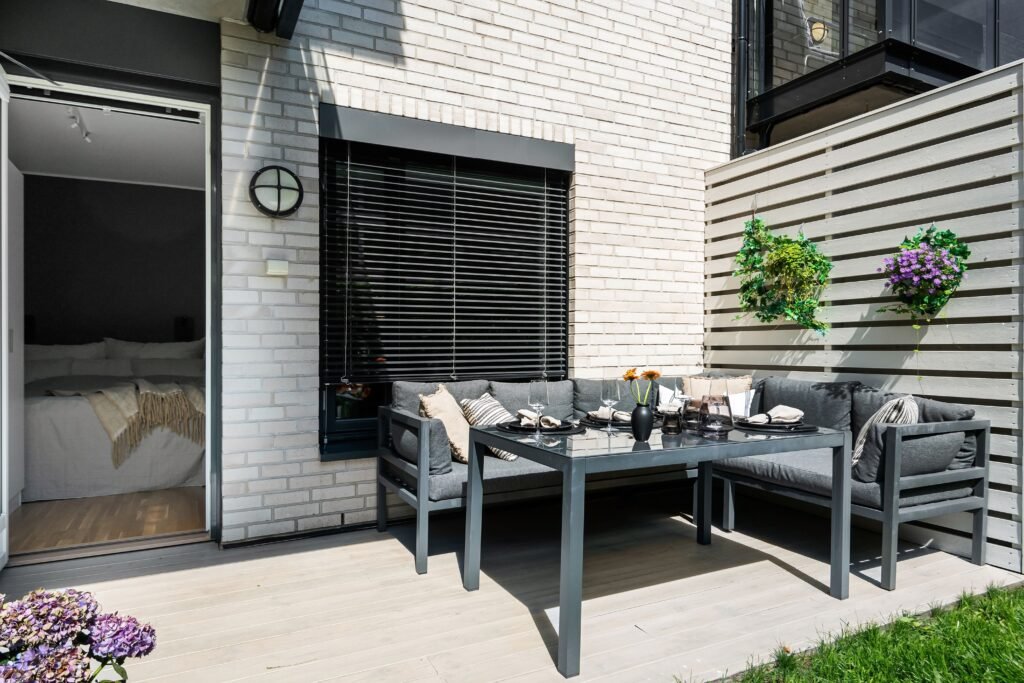
A good patio can completely change how you use your garden.
Instead of being somewhere you occasionally put a couple of chairs in summer, it can become an outdoor dining room, entertaining area, quiet coffee spot or extension of your home.
And you don’t necessarily need an enormous garden or luxury renovation budget to create one.
Whether you’re planning a completely new patio or improving an existing space, these 15 patio design ideas can help you create an outdoor area that’s practical, comfortable and beautiful.
1. Treat your patio like an outdoor room
One of the easiest ways to design a patio is to stop thinking about it simply as paving.
Think of it as another room.
Decide what you actually want to use it for first. Dining? Relaxing? Entertaining? Cooking?
Once the purpose is clear, choosing furniture, lighting and the layout becomes considerably easier.
2. Create a dedicated dining area
If you enjoy eating outside, make the dining table the centre of the design rather than squeezing it into whatever space remains.
Leave enough room around the table for chairs to move comfortably and consider how easily you can carry food from the kitchen.
Positioning the patio close to the house can make outdoor dining much more practical.
3. Use screening to make the patio feel private
A beautiful patio isn’t particularly relaxing if you feel like the neighbours are watching you.
Slatted timber screens, planting, trellis and carefully positioned fencing can make seating areas feel considerably more secluded.
You don’t necessarily need to screen the entire garden — concentrating privacy around the patio may be enough.
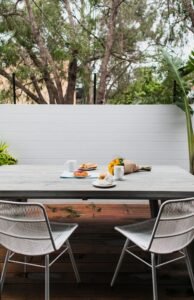
If privacy is one of your main problems, see our guide to garden privacy ideas for more ways to create a secluded outdoor space.
4. Connect the patio to the house
A patio works particularly well when it feels like a natural continuation of the interior.
Large doors, similar colours and complementary materials can visually connect the two spaces.
If you’re designing a new patio, also think about the route between the kitchen and outdoor dining area. Carrying plates through three rooms every time you eat outside gets annoying surprisingly quickly.
5. Introduce plants around hard landscaping
Large areas of paving can sometimes feel harsh.
Plants soften those edges.
You could use raised beds, containers, ornamental grasses or planted borders around the patio to make the transition between the hard landscaping and garden feel more natural.
Large pots are particularly useful because they can be repositioned as the layout changes.
6. Create zones on a larger patio
If you have enough space, your patio doesn’t have to perform only one job.
You could create separate areas for:
Dining | Relaxing | Cooking | Entertaining
Different furniture arrangements, planters or changes in paving direction can subtly separate the zones without needing physical walls.
7. Create a small courtyard-style patio
You don’t need a huge garden.
Small enclosed spaces can actually make fantastic patios because they naturally feel intimate.
Use comfortable furniture, plants and warm lighting to turn a small courtyard into somewhere that feels deliberately designed rather than simply cramped.

8. Add outdoor lighting
Lighting can completely change a patio after sunset.
Wall lights, festoon lights and subtle low-level garden lighting can create atmosphere while making paths and steps easier to navigate.
Rather than using one extremely bright light, several softer sources often create a more comfortable environment.
Any permanent electrical installation outdoors should be suitable for external use and installed appropriately.
9. Consider a covered patio
British weather doesn’t always cooperate with garden plans.
Adding some form of shelter can make the patio usable for more of the year.
Depending on the property and budget, this might mean a pergola, canopy or more substantial covered structure.
Larger structures can potentially involve planning or building requirements, so check what applies to your project before starting construction.
10. Add an outdoor kitchen
If you regularly entertain outside, an outdoor cooking area can turn the patio into a genuine extension of the home.
It doesn’t need to be an enormous luxury kitchen either.
A simple preparation surface, barbecue area and storage can already make outdoor cooking considerably easier.
More elaborate designs can incorporate sinks, refrigeration and permanent cooking equipment.
11. Mix patio materials
Using a single material everywhere can look clean and contemporary, but combining materials can add character.
For example:
paving + gravel
stone + timber
porcelain + planting
The important thing is keeping the overall palette relatively consistent so the patio doesn’t become visually chaotic.
12. Use large-format paving for a modern look
Large paving slabs can create clean lines and make contemporary patios feel less visually busy.
They’re particularly effective when combined with simple furniture, architectural planting and neutral colours.
But don’t choose paving based purely on appearance.
For an outdoor patio, consider factors such as durability, drainage, maintenance and slip resistance too.
13. Build seating into the design
Built-in seating can be useful where space is limited.
A bench running along a boundary or raised bed can provide plenty of seating without requiring numerous individual chairs.
Add outdoor cushions and it can become a comfortable lounging area while keeping the patio relatively uncluttered.
14. Add colour through accessories
You don’t necessarily need colourful paving or furniture to make the patio interesting.
A neutral base allows you to change the appearance relatively cheaply using cushions, planters, flowers and outdoor accessories.
It also means you can update the look later without replacing expensive hard landscaping.
15. Don’t forget drainage
It isn’t the glamorous part of patio design, but it matters.
Water needs somewhere to go.
Poorly designed paving can leave puddles sitting across the patio or potentially direct water towards the house.
Drainage, levels and the appropriate fall should therefore be considered before the patio is laid rather than after problems appear.
What is the best patio material?
There isn’t one material that’s best for every garden.
Natural stone can provide plenty of character, while porcelain is popular for contemporary designs. Concrete paving can offer a broad range of styles and price points.
Your choice should consider budget, appearance, maintenance, durability and how the surface performs outdoors.
A landscaper or patio installer can also advise which materials are appropriate for your particular site.
How can I make a small patio look bigger?
Keep the layout relatively simple.
Too many different materials, colours and pieces of furniture can make a small patio feel even smaller.
Using appropriately sized furniture, maintaining clear walking routes and extending consistent paving across the space can create a calmer appearance.
Vertical planting can also introduce greenery without consuming valuable floor space.
How can I make an existing patio look better cheaply?
You don’t necessarily need to replace it.
Start by thoroughly cleaning the existing surface and removing weeds where appropriate.
Then consider relatively inexpensive additions such as new planters, outdoor cushions, lighting and furniture.
If the patio itself is damaged, unstable or suffering from drainage problems, address those issues before spending money decorating it.
How much does a new patio cost in the UK?
The cost can vary enormously depending on the size of the patio, paving material, ground preparation, access, drainage requirements and labour costs.
A simple small patio using relatively inexpensive paving will naturally cost far less than a large porcelain or natural-stone installation requiring significant excavation and landscaping.
For that reason, getting several itemised quotes for your actual garden is generally more useful than relying on one generic square-metre figure.
Planning a bigger garden transformation?
Your patio doesn’t have to be designed in isolation.
Think about how it connects with the lawn, planting, boundaries and other parts of your garden.
For inspiration, explore our modern garden ideas, cheap garden makeover ideas and low-maintenance garden ideas.
Need someone to build your patio?
Laying a few slabs might look straightforward, but achieving the correct ground preparation, levels, drainage and finish can make a huge difference to how well a patio performs over time.
Use The Right Guy to find local landscapers, patio installers, paving specialists and gardeners in your area.
If you’re a tradesperson or landscaping business, you can also list your business on The Right Guy and reach homeowners looking for local services.

Author: manager
Company test