

For several years, living rooms were dominated by cool grey, brilliant white and very minimal colour palettes.
That is changing.
The biggest living room colour trends for 2026 are noticeably warmer. Natural browns, creamy neutrals, muted greens, earthy terracotta and rich accent colours are appearing alongside softer versions of classic neutrals.
That doesn’t mean you need to completely redecorate your living room every time trends change. Instead, these ideas can help you find a colour palette that feels current while still being comfortable enough to live with for years.
Here are 12 living room colour ideas to consider in 2026.
1. Warm neutrals
Warm neutrals are one of the easiest trends to introduce.
Think:
- Warm white
- Cream
- Oatmeal
- Sand
- Beige
- Mushroom
- Light taupe
They create a softer atmosphere than brilliant white while still providing a versatile background for furniture.

2. Chocolate and earthy brown
Brown has moved well beyond traditional dark wooden furniture.
Chocolate, mocha, caramel and earthy brown tones are increasingly useful as actual decorating colours.
You don’t necessarily need brown walls either. Introduce the colour through curtains, timber, upholstery, rugs and accessories.
Image 5 is also a very good example of this layered approach.
3. Cream instead of brilliant white
White living rooms aren’t disappearing, but warmer whites can make them feel less clinical.
Creamy whites pair beautifully with timber, stone and other natural materials.
4. Terracotta and burnt orange
Warm orange shades can inject energy without feeling excessively bright.
Terracotta, rust, clay and burnt orange work particularly well with:
Warm white + terracotta + walnut
or
Cream + rust + olive green
You don’t have to paint the walls orange to use this trend.

5. Natural wood tones
Technically, wood isn’t a paint colour.
But it has become such an important part of modern colour palettes that ignoring it would miss half the picture.
Pale oak, walnut and mid-toned timber introduce natural warmth and pair particularly well with cream, beige, green and brown.
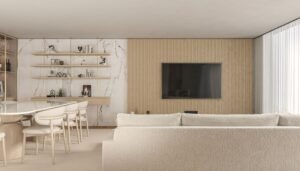
Slatted timber walls can also add texture without introducing another strong colour.
6. Soft grey isn’t completely gone
Grey hasn’t suddenly become unusable.
The difference is how it’s being used.
Instead of completely grey interiors, softer greys can sit alongside warmer colours, natural timber and textured fabrics.
A grey sofa against a warm beige wall, for example, feels very different from the all-grey interiors that were everywhere several years ago.
7. Muted green
Green remains one of the easiest colours to bring into a living room because of its connection with nature.
Instead of extremely bright green, consider shades such as:
Sage, olive, eucalyptus, moss and muted forest green.
Green can be used on walls, but it also works beautifully through plants, cushions, artwork and smaller pieces of furniture.
8. Layered white
An almost entirely white living room can still look sophisticated — provided it doesn’t become completely flat.

9. Black as an accent
Black can provide structure in very pale interiors.
You don’t need much.
Black window frames, lamps, picture frames, handles or a single piece of furniture can be enough to create contrast.
In warmer schemes, very dark brown can achieve a similar effect while appearing slightly softer.
10. Dusty blue
Blue is still an excellent living room colour, but softer and more muted shades tend to be easier to combine with warmer interiors.
Dusty blue works particularly well with:
- Warm white
- Cream
- Natural oak
- Camel
- Terracotta
- Muted green
For a more dramatic room, deeper navy can provide the same contrast that black would in a lighter scheme.
11. Mixing warm and cool neutrals
You don’t have to decide whether your entire room will be warm or cool.
Some of the most sophisticated schemes mix both.
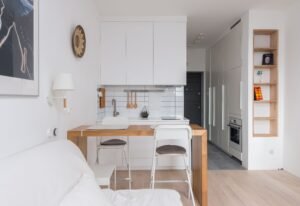
12. Tonal decorating
One of the easiest ways to create a more expensive-looking colour scheme is to stop thinking in terms of one exact colour.
Instead, choose a family of related tones.
For example:
Cream → beige → camel → chocolate
or
Sage → olive → forest green
or
Warm white → pale taupe → mushroom → brown
The colours don’t need to match perfectly.
In fact, slight differences are what create depth.
What living room colours are trending in 2026?
The broader direction is towards warmer, earthier and more natural palettes.
Rather than one single fashionable colour, we’re seeing combinations built around warm neutrals, brown, natural timber, muted greens, clay-inspired shades and softer whites.
The emphasis is increasingly on creating rooms that feel comfortable and layered rather than perfectly coordinated.
Are grey living rooms going out of style?
Not necessarily.
What looks more dated is the all-grey approach — grey walls, grey flooring, grey sofa, grey curtains and silver accessories all within the same room.
If you already have a grey sofa or flooring, don’t assume you need to replace it.
Try warming the room with:
Cream walls + timber furniture + warm lighting + brown textiles + plants.
You can dramatically change the overall palette without replacing expensive furniture.
What colour makes a living room look expensive?
There isn’t a particular paint colour that automatically makes a room look expensive.
What usually creates that effect is a controlled palette with several related tones, good lighting and a mixture of textures and materials.
📸 IMAGE 3 can also support this section
The combination of cream upholstery, pale timber, marble-style surfaces and restrained decoration creates a much more luxurious appearance than simply choosing one fashionable wall colour.
What colours make a small living room look bigger?
If creating a sense of space is your priority, lighter colours are usually easier to work with.
Warm whites, cream, pale greige and subtle neutral shades can help maximise available light.
But avoid assuming everything must be white.
Using similar colours across large surfaces and reducing harsh visual contrasts can also help a compact living room feel more continuous.
How to choose a living room colour scheme
Start with the things you’re not replacing.
If you’ve already got a £1,500 sofa, expensive flooring and curtains you love, choosing a fashionable paint colour that clashes with them makes little sense.
Instead, identify the undertones already present.
Then choose two or three main colours and one smaller accent colour.
For example:
Warm white walls
Natural oak furniture
Camel upholstery
Dark green accents
That gives you enough variation without making the room visually chaotic.
Don’t forget how your living room faces
Natural light dramatically changes colour.
A paint shade you loved in a brightly illuminated showroom may look completely different in your home.
North-facing rooms often receive cooler light, while rooms receiving strong sunlight can handle colour differently throughout the day.
Always test paint on your actual walls and look at it in:
Morning → afternoon → evening → artificial light.
Don’t choose your final colour based purely on a photograph online.
Living room colour combinations to try
If you need somewhere to start, try:
| Style | Colour combination |
|---|---|
| Warm minimalist | Cream + oak + beige |
| Earthy | Terracotta + cream + olive |
| Sophisticated | Mushroom + chocolate + warm white |
| Natural | Sage + oak + off-white |
| Contemporary | Greige + walnut + black |
| Soft & bright | Warm white + pale grey + natural timber |
| Dramatic | Forest green + cream + dark wood |
| Coastal | Dusty blue + warm white + pale oak |
Frequently Asked Questions
What is the most popular living room colour for 2026?
There isn’t one universal colour, but warm neutrals, earthy browns, muted greens and nature-inspired shades are strong directions for contemporary interiors.
Is beige coming back?
Beige and other warm neutrals have become increasingly useful alternatives to the cooler grey palettes that dominated interiors previously.
Are white living rooms still fashionable?
Yes. The more contemporary approach is often to layer warm whites, creams, natural materials and different textures instead of creating a completely stark-white interior.
What colours go well with a grey sofa?
Cream, warm white, taupe, natural wood, muted green, terracotta and brown can all help introduce warmth around grey furniture.
Should the living room and kitchen be the same colour?
Not necessarily. In an open-plan space, however, using related colours can create better visual continuity between the two areas.
Final thoughts
The biggest shift in living room colour trends for 2026 isn’t really about one fashionable paint shade.
It’s about warmth.
Cool, perfectly coordinated interiors are giving way to rooms with cream, timber, brown, muted green, terracotta and layered natural textures.
And that’s good news if you’re decorating your own home.
You don’t need to chase one specific trend.
Choose a warm base, introduce two or three complementary colours and build the room gradually through paint, furniture, textiles and accessories.
You’ll end up with something that feels current without looking outdated the moment the next trend arrives.
Find a painter or decorator near you
Planning to refresh your living room?
From painting and decorating to flooring, carpentry and complete renovations, The Right Guy helps homeowners discover local professionals for their next home improvement project.

Author: The Right Guy Team
UK service guides published by The Right Guy Ltd.