
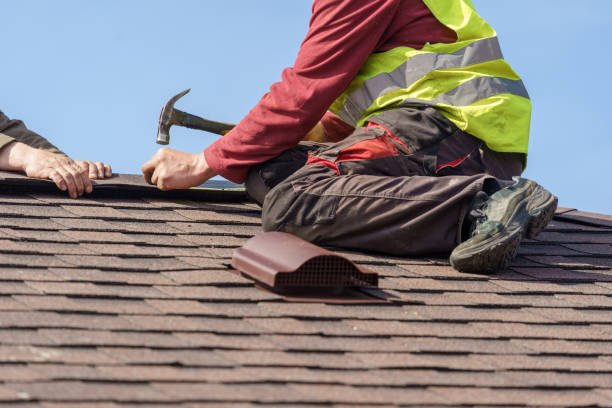
Roofing is one of the strongest local-service categories for lead generation because the customer usually has a clear problem and a strong reason to act.
A leaking roof cannot be ignored forever.
Missing tiles after a storm need attention.
A flat roof that keeps failing eventually needs repairing or replacing.
And a homeowner comparing quotes for a full reroof can be worth thousands of pounds in revenue.
That means the real challenge for roofing businesses is not whether demand exists.
It is whether your company appears when that demand becomes urgent.
The strongest UK roofing businesses usually combine:
Google visibility + genuine reviews + strong local SEO + fast response times + selective paid advertising + trusted referral channels + clear proof of previous work.
If you want more roofing leads, here is where to focus.
1. Start With Google Business Profile
For most local roofers, Google Business Profile should be one of the first priorities.
Homeowners search:
roofer near me
roof repair near me
roofers in Birmingham
flat roof repair Worcester
emergency roofer Manchester
new roof cost near me
These are high-intent searches.
The customer is not casually browsing.
They are actively trying to find someone.
A properly completed profile should include:
- correct business name;
- phone number;
- website;
- real service areas;
- opening hours;
- relevant roofing services;
- photographs;
- genuine reviews.
If you travel to customers rather than operating from a walk-in premises, set the profile up accurately as a service-area business.
Do not add keywords to the business name unless they are genuinely part of the real trading name.
A profile that looks manipulated can create problems and does not build trust.
2. Make Roof Repairs a Separate Service
Do not advertise only:
All roofing work undertaken.
That is too broad.
Customers search specific problems.
Create dedicated visibility around:
- roof repairs;
- roof leaks;
- slipped tiles;
- broken tiles;
- ridge tiles;
- flashing repairs;
- chimney repairs;
- flat roof repairs;
- guttering;
- fascias and soffits;
- full roof replacement.
This gives Google and customers a much clearer understanding of what you do.
Someone searching:
roof leak repair near me
should immediately see that you actually provide roof-leak repairs.
3. Build a Website Around Search Intent
Your website should not simply be:
Home
About
Gallery
Contact
Create useful service pages such as:
Roof Repair
New Roof Installation
Flat Roof Repair
Tile Replacement
Chimney Repair
Fascia and Soffit Replacement
Gutter Repair
Then add useful local coverage where you genuinely work.
For example:
Roof Repair in Hereford
Flat Roof Repair in Worcester
Roofers in Gloucester
The objective is not to create hundreds of thin town pages.
The objective is to create pages that genuinely answer the customer’s questions.
4. Create Local Roofing Pages That Actually Help
A strong local service page should include:
- exact service;
- genuine service area;
- common local roofing problems;
- photographs of your work;
- what your inspection process looks like;
- how quotes work;
- relevant FAQs;
- clear contact options.
For example:
Roof Repair in Worcester
Explain:
- missing/slipped tiles;
- leaking roofs;
- ridge problems;
- chimney flashing;
- flat roofs;
- emergency repairs.
Then show actual roofing projects.
That is much stronger than:
We are the best roofers in Worcester. Call now.
5. Use Roof Cost Content to Attract Customers Earlier
Customers do not always search:
roofer near me
first.
They may begin with:
how much does roof repair cost
how much is a new roof
how much to replace roof tiles
These searches happen earlier in the buying journey.
That means cost content can become an excellent SEO lead source.
For example, someone reading a guide to how much roof repair costs in the UK may be trying to decide whether their £900 quote is reasonable.
Someone comparing the cost of a new roof may be only a few steps away from contacting contractors.
Roofing businesses can use the same strategy on their own websites.
Helpful topics include:
- roof repair cost;
- new roof cost;
- flat roof replacement;
- roof tile replacement;
- chimney flashing;
- roof lifespan.
These pages create visibility before the customer chooses who to call.
6. Google Local Services Ads Can Be Extremely Relevant for Roofers
Roofing is currently one of the eligible home-service categories for Google’s Local Services Ads in the UK. Google says the ads can appear prominently when local customers search for relevant services, and businesses pay for valid leads rather than ordinary ad clicks.
That makes LSAs particularly interesting for roofers because the customer intent is already high.
Potential leads can contact you through:
- calls;
- messages.
Google also says providers can select their service areas and relevant job types.
This is much closer to:
someone actively wants a roofer
than:
someone happens to see a roofing advert on social media.
7. Local Services Ads Reward More Than Budget
Do not assume whoever pays most always wins.
Google says Local Services Ads ranking is influenced by the bid and overall profile quality, including factors such as responsiveness to enquiries. Missed calls or poor response behaviour can negatively affect ranking.
Google also recommends improving performance by:
- selecting relevant job types;
- using appropriate service areas;
- collecting reviews;
- adding high-quality photos.
That matters for roofing businesses.
You cannot simply switch on a large budget and ignore:
- unanswered calls;
- poor reviews;
- empty profile;
- weak photographs.
Operational quality affects marketing performance.
8. Understand How LSA Bidding Works
Google Local Services Ads use lead-based bidding.
Google currently offers options including:
- Maximise Leads;
- target cost per lead;
- manual maximum cost per lead.
Google recommends Maximise Leads for many advertisers and says the bid is effectively the maximum amount you are willing to pay for a lead.
Roofers should still judge LSA by:
cost per won job
not merely:
cost per lead.
For example:
£80 lead → £350 repair
may be weak.
£80 lead → £9,000 reroof
may be excellent.
Lead cost means very little without conversion value.
9. Google Ads for High-Intent Roofing Searches
Standard Google Search Ads can also work very well.
Target searches such as:
roof repair near me
flat roof repair
emergency roofer
new roof quote
roof tile replacement
chimney flashing repair
Avoid paying for huge volumes of vague searches such as:
roof
or:
roofing
unless you have strong negative-keyword control.
The more specific the service, the better you can match:
keyword → advert → landing page.
10. Do Not Send Every Roofing Ad to the Homepage
This wastes money.
If your advert targets:
Flat Roof Repair in Birmingham
send the visitor to a page specifically about:
flat roof repair in Birmingham.
Show:
- felt;
- EPDM;
- GRP;
- leak repair;
- photographs;
- service area;
- quote process;
- CTA.
Someone with water dripping through their flat-roof extension does not want to search your entire website to find out whether you do flat roofing.
11. Use Emergency Roofing Carefully
Emergency roofing terms can generate strong leads.
Examples:
emergency roofer near me
roof leaking now
storm roof repair
These customers often need help immediately.
But emergency work also creates:
- out-of-hours calls;
- urgent travel;
- difficult weather;
- temporary repairs.
Only advertise emergency response if you can genuinely support it.
Do not run:
24/7 Emergency Roofer
if nobody answers the phone after 5pm.
That damages trust and wastes ad spend.
12. Respond Faster Than Other Roofers
Roofing leads can disappear very quickly.
A homeowner notices water entering the bedroom during heavy rain.
They contact:
Roofer A
Roofer B
Roofer C
The first credible company to respond often has a major advantage.
You do not need to provide an instant price.
Respond:
Thanks for getting in touch. Please send the postcode and a few photos if safe to take them from ground level. Also let me know where the water is showing internally and when you first noticed it. We can then advise on the next step.
This moves the enquiry forward immediately.
13. Use WhatsApp Properly
WhatsApp can be particularly useful for roofing.
Customers can send:
- exterior photographs;
- internal leak stains;
- photos of fallen tiles;
- previous survey reports.
This allows you to triage the lead before travelling.
You may immediately see:
minor missing tile
versus:
major sagging roof area.
Do not give definitive structural diagnoses from blurry photos.
But photos can help determine whether a site visit is worthwhile.
14. Ask the Right Qualification Questions
Before driving 40 minutes to every roofing enquiry, ask:
What is the postcode?
What type of property is it?
What problem are you experiencing?
Is water currently entering the property?
When did it start?
Is it pitched or flat roof?
Do you know the roof age?
Can you send photos safely from ground level?
For new roofs:
Are you looking for repair or complete replacement?
Have you had another inspection?
These questions save enormous amounts of wasted time.
15. Use Real Roof Photography
Roofers have excellent visual marketing material.
Show:
Before
- missing tiles;
- damaged felt;
- cracked flashing;
- deteriorated ridge;
- failing flat roof.
During
- scaffold;
- membrane;
- battens;
- installation;
- detailing.
After
- completed roof;
- clean ridge line;
- flashing;
- guttering.
These photographs provide far more proof than stock photos of roofers wearing pristine hard hats.
16. Create Before-and-After Posts
A single completed roof can generate multiple marketing assets.
For example:
Roof replacement completed in Hereford
The original covering had widespread tile deterioration and repeated leaks. We stripped the roof, replaced the underlay and battens where required, installed the new covering and completed the ridge details.
Then show:
before → during → after.
Use it on:
- Google;
- Facebook;
- Instagram;
- website case study;
- The Right Guy profile.
One project can support your marketing for weeks.
17. Ask for Reviews Immediately After Completion
Roofing requires trust.
Customers cannot easily inspect every flashing detail or underlay installation themselves.
Reviews therefore matter.
Ask happy clients after:
- repair completed;
- leak resolved;
- snagging finished;
- final payment.
A strong review might naturally mention:
Came quickly after our roof started leaking, explained the problem clearly, showed photographs and completed the repair.
That is extremely valuable because it answers the fears of the next customer.
18. Make Reviews Detailed, Not Manufactured
Never write fake reviews.
Do not tell customers exactly what to say.
But you can encourage useful feedback by saying:
If you’re happy with the work, a Google review mentioning what we repaired would really help other homeowners understand the type of roofing work we do.
A review saying:
Great company.
is helpful.
A review saying:
Replaced our leaking flat roof in Worcester, kept us updated and left everything tidy.
is much stronger for trust and relevance.
19. Use The Right Guy as Another Discovery Point
Roofers should make sure they appear in multiple legitimate places where homeowners can find and evaluate local professionals.
The Right Guy gives roofing businesses another profile and discovery channel alongside their own website, Google presence and other platforms.
Treat your profile seriously.
Include:
- actual roofing services;
- location;
- genuine photographs;
- accurate contact information;
- useful description.
A customer may discover you on one platform and verify you on another before making contact.
That repeated visibility strengthens trust.
20. Test Checkatrade, MyBuilder and Similar Lead Sources Selectively
Trade platforms can work, but roofing companies should not blindly chase every lead.
A lead saying:
one tile slipped, 50 miles away
may not deserve the same attention as:
25-year-old roof leaking repeatedly, considering full replacement, 5 miles away.
The key metrics are:
lead source
lead cost
qualified leads
quotes
jobs won
job value
gross profit
If a platform produces lots of activity but little profit, reduce or stop spend.
21. Create Separate Lead Sources for Repairs and New Roofs
This is one of the most important roofing marketing distinctions.
Repair leads
Usually:
- urgent;
- smaller value;
- higher volume;
- shorter sales cycle.
Sources:
- Google Maps;
- Local Services Ads;
- Google Ads;
- directories;
- local groups.
New roof leads
Usually:
- high value;
- slower decision;
- multiple quotes;
- stronger trust requirements.
Sources:
- SEO;
- Google Search;
- Local Services Ads;
- referrals;
- surveyors;
- estate agents;
- long-form content.
Do not measure these two pipelines in the same way.
22. Use Pricing Content to Pre-Qualify New Roof Leads
A homeowner expecting a new roof to cost £2,000 is not ready for a realistic quote.
Educational content helps.
You can send prospects to a page explaining:
- tile type;
- property size;
- scaffolding;
- underlay;
- battens;
- waste;
- labour.
Our guide to how much a new roof costs in the UK is the type of content homeowners often consult before contacting roofers.
Your own website can do the same.
This reduces shock when the actual quotation arrives.
23. Create a Roof Inspection Funnel
Not every customer is ready to request a complete reroof quote.
Offer a simple next step:
Request a roof inspection
or:
Request a roofing assessment
The process might be:
- enquiry;
- send photos;
- qualify;
- site visit;
- photographs;
- recommendation;
- written quote.
This feels much more credible than:
GET FREE QUOTE NOW!!!
especially on large projects.
24. Use Roof Condition Content to Generate Leads
Homeowners often do not know whether they need a repair or replacement.
That creates excellent SEO content.
Topics include:
How Long Does a Roof Last?
When Should You Replace a Roof?
Why Do Roof Tiles Keep Slipping?
Signs of Roof Leaks
Signs a Flat Roof Is Failing
Repair vs Replace Roof
Our guide to 12 signs your roof needs replacing targets exactly this stage of customer research.
Content like this can attract homeowners before they have chosen a roofer.
25. Partner With Builders
Builders regularly encounter roofing work during:
- extensions;
- conversions;
- renovations;
- structural projects.
A good roofing subcontractor can become incredibly valuable to a builder.
Build relationships with local construction companies.
Tell them exactly what you specialise in.
For example:
We handle pitched roofing, flat roofs and roof repairs across [area]. If you ever need additional roofing capacity on extensions or renovation jobs, happy to send over examples of recent work.
One relationship can generate repeat roofing work for years.
26. Partner With Estate Agents
Estate agents frequently discover roof problems during:
- pre-sale preparation;
- buyer surveys;
- property inspections.
A buyer may receive a survey saying:
several slipped tiles and deteriorated flashing.
They immediately need estimates.
Become a roofer agents are comfortable recommending.
Responsiveness is critical.
An estate agent rarely wants to chase a contractor for seven days while a sale is being held up.
27. Build Relationships With Surveyors
Surveyors see roof defects every day.
They often identify:
- ageing coverings;
- slipped tiles;
- failing flat roofs;
- chimney defects;
- moisture.
A surveyor does not necessarily recommend one contractor, but strong professional relationships can generate introductions.
Show that you:
- quote clearly;
- photograph defects;
- explain recommendations;
- do not exaggerate problems.
That last point matters.
Surveyors value contractors whose opinions they can trust.
28. Work With Letting Agents and Landlords
Rental properties create repeat maintenance needs.
A letting agent managing 500 homes may regularly need:
- emergency roof repair;
- gutter repairs;
- slipped tiles;
- flat roof repairs.
One dependable commercial relationship can produce more work than dozens of random consumer leads.
But agents often require:
- fast communication;
- written quotations;
- invoices;
- insurance;
- photographic evidence.
Your admin needs to be as reliable as your roofing.
29. Target Property Investors
Investors often buy houses where surveys reveal:
- old roof;
- chimney deterioration;
- gutter failure;
- flat-roof problems.
They may need repairs before:
- renovation;
- refinance;
- resale;
- letting.
Investors are generally less interested in dramatic sales language and more interested in:
cost + timescale + reliability.
If you perform well, they can become repeat customers.
30. Use Site Boards
When permitted, a roofing site is highly visible advertising.
Your scaffold can be visible for days or weeks.
Use a professional board:
ABC ROOFING LTD
Roof Repairs • Flat Roofs • New Roofs
01234 567890
abcroofing.co.uk
People nearby live under roofs of similar age.
One replacement project can generate several local enquiries.
31. Put Your Branding on the Scaffold
Scaffolding makes roofing companies unusually visible.
If permitted by the scaffold company, property owner and relevant rules, clear branding can turn a necessary project cost into advertising.
Do not overcrowd it.
People need to read your company name and contact details from a distance.
32. Use Van Signage
Roofers travel throughout their target market every day.
Make the van work.
Keep it simple:
ABC ROOFING
Repairs • Flat Roofs • Re-Roofing
Phone
Website
Do not cover it with every service you have ever performed.
Clarity is stronger.
33. Leaflet Streets Around Current Roofing Work
Hyperlocal leaflet drops can work particularly well for roofs.
Why?
Houses on the same estate are often built at approximately the same time.
If one roof has started deteriorating, neighbours may be approaching the same stage.
A leaflet might say:
Roofing work currently being completed in your area
We provide roof repairs, tile replacement, flat-roof work and full reroofing across [location].
That is far more relevant than sending random leaflets across an entire county.
34. Use Facebook for Local Proof
Facebook is useful for:
- before-and-after projects;
- storm response;
- local awareness;
- project updates;
- customer reviews.
Example:
Storm damage repair completed today in Worcester. Several tiles had lifted and the exposed section was allowing water onto the underlay.
Show photographs.
Do not post only:
CALL NOW FOR ALL ROOFING.
Proof beats slogans.
35. Local Facebook Groups Can Fill Repair Gaps
People often ask:
Any roofer recommendations?
Respond professionally.
Avoid:
PM me mate.
Say:
We cover that area and handle roof repairs. If you send a couple of photos and the postcode, I can let you know whether we can help.
This looks organised and reduces low-quality back-and-forth.
36. Instagram Is a Portfolio, Not Necessarily Your Main Lead Source
Use Instagram to show:
- roof transformations;
- ridge work;
- flat roofs;
- lead flashing;
- tile work.
Potential clients who find you elsewhere may check your profile before calling.
That is where Instagram earns its value.
They see:
real jobs + regular activity + consistency.
37. Create Roofing Case Studies
Do not rely only on photo galleries.
Create case studies.
Example: Flat Roof Replacement in Worcester
Problem: repeated leak around old felt covering.
Assessment: widespread failure meant patching was poor value.
Work: removed covering, inspected decking, installed new membrane system.
Result: completed weatherproof roof.
This is strong for:
- SEO;
- conversion;
- trust.
It demonstrates your decision-making, not just the final appearance.
38. Photograph Hidden Roofing Work
Customers cannot see under the finished tiles.
Show them.
Take photographs of:
- underlay;
- battens;
- insulation;
- flashing;
- valley details.
This helps differentiate professional work from:
new tiles put over whatever was already there.
For major roofing projects, hidden details matter enormously.
39. Offer Before-and-After Documentation
At the end of larger projects, give customers:
- before photos;
- during photos;
- completion photos;
- invoice;
- warranty/guarantee information where applicable.
That improves the customer experience.
It can also create stronger reviews because the homeowner understands what was actually completed.
40. Build a Trust Page on Your Website
Roofing has a trust problem in parts of the UK market because homeowners regularly worry about:
- unnecessary repairs;
- inflated emergency charges;
- poor workmanship;
- contractors disappearing.
Address that directly.
Your website can explain:
- insurance;
- company details;
- quote process;
- payment process;
- how variations are handled;
- guarantees where genuinely provided.
The more expensive the job, the more important these details become.
41. Be Extremely Careful With “Your Roof Needs Replacing”
This is both an ethical and marketing issue.
Do not tell every repair customer they need a new roof.
If repair is viable, explain it.
A homeowner who trusts you because you said:
This can be repaired for £600. I don’t think you need a full roof yet.
may call you three years later when they genuinely need the £12,000 reroof.
Short-term honesty can create long-term business.
42. Give Repair and Replacement Options Where Appropriate
Suppose the roof is ageing but repair is still possible.
Quote:
Option A — Repair
£900
Expected to address current defect.
Option B — Replacement
£11,500
Recommended only if customer wants a longer-term renewal.
Explain the difference.
Giving choices can increase trust because the customer does not feel forced into the most expensive option.
43. Make Written Roofing Quotes Clear
A new roof quotation should explain:
- access/scaffolding;
- strip-off;
- waste;
- tiles/slates;
- underlay;
- battens;
- ridge system;
- flashing;
- valleys;
- gutters where relevant;
- labour;
- VAT where applicable.
A quote saying:
New roof £12,500
does not provide enough confidence.
Customers compare more than price.
Clear scope can help you win even when you are not the cheapest.
44. Follow Up Quotes
Roofers often assume:
no reply = lost job.
Not necessarily.
Customers may be:
- waiting for insurance;
- comparing quotes;
- waiting for payday;
- discussing with partner;
- selling property.
Send a short follow-up:
Hi John, just checking whether you had any questions about the roof replacement quote. Happy to clarify the materials or scope if useful.
One follow-up can recover work that would otherwise disappear.
45. Track Your Roofing Quote Conversion Rate
Suppose:
20 site visits
15 quotes
3 jobs
Quote conversion:
20%
Now compare by service.
Repairs
10 quotes → 4 jobs = 40%
New roofs
5 quotes → 1 job = 20%
Different services naturally convert differently.
But tracking tells you whether your problem is:
not enough leads
or:
poor conversion after the lead arrives.
46. Measure Roofing Lead Sources Properly
Track:
| Source | Leads | Qualified | Quotes | Jobs won | Revenue |
|---|---|---|---|---|---|
| Google Maps | 20 | 15 | 11 | 5 | £18,000 |
| Local Services Ads | 12 | 9 | 6 | 3 | £22,000 |
| Referral | 8 | 8 | 7 | 5 | £41,000 |
| 15 | 5 | 3 | 1 | £900 | |
| Directory | 10 | 4 | 3 | 1 | £5,000 |
Now your decisions become obvious.
Facebook may create activity.
Referrals may create money.
Do not confuse the two.
47. Calculate Cost Per Won Roofing Job
Suppose Local Services Ads cost:
£1,200
and generate:
4 won jobs.
Cost per customer:
£300
If those customers generate:
£18,000
of gross profit between them, excellent.
If they generate:
£600, terrible.
Similarly, Google says LSA lead prices vary depending on factors including location, job type and bidding settings.
So there is no useful universal statement such as:
“Roofing leads should cost £X.”
What matters is whether the economics work for you.
48. Separate Emergency Leads From Planned Work in Your Tracking
Emergency repairs behave differently from reroof enquiries.
Track them separately.
Emergency repair KPI
- response time;
- booked percentage;
- average repair value.
New roof KPI
- inspection-to-quote rate;
- quote conversion;
- average contract value;
- sales cycle.
Otherwise your data becomes misleading.
49. Use Weather Strategically
Roofing demand rises around bad weather.
After significant storms or prolonged rain, demand for:
- tile repairs;
- leak repairs;
- emergency roofing
can increase.
Be ready before demand spikes.
That means:
- ads prepared;
- phone answered;
- Google profile accurate;
- emergency landing page ready.
Do not wait until the storm has already happened before setting everything up.
50. Do Not Exploit Storm Customers
Urgency is not permission to overcharge unfairly.
Emergency work can reasonably cost more because of:
- out-of-hours labour;
- dangerous weather;
- urgent scheduling.
But explain the price clearly.
Roofing companies build reputations quickly — good and bad.
A customer who feels exploited during an emergency can generate serious reputational damage.
A 30-Day Roofing Lead Plan
Week 1 — Fix Google
Complete:
- Business Profile;
- services;
- photos;
- service area;
- website;
- phone details.
Week 2 — Build proof
Upload:
- five completed projects;
- before-and-after photographs;
- customer reviews.
Create dedicated pages for:
roof repair
flat roofs
new roofs.
Week 3 — Build acquisition
Test:
- Local Services Ads;
- tightly targeted Google Search Ads;
- The Right Guy profile;
- one selected trade platform.
Week 4 — Improve conversion
Create:
- lead-response template;
- qualification questions;
- written quote template;
- quote follow-up process.
Then track every source.
Frequently Asked Questions
How do I get more roofing leads in the UK?
Focus first on Google Business Profile, local SEO, reviews, your website and referral relationships. Add paid channels such as Google Local Services Ads and Google Search Ads once your conversion process is ready.
Are Google Local Services Ads available for roofers in the UK?
Yes. Roofing is currently listed by Google as an eligible home-service category for Local Services Ads.
How do Google Local Services Ads charge roofers?
Google says advertisers pay for valid leads rather than standard ad clicks, with pricing varying by factors such as location, job type and bidding setup.
How can I get more roof repair leads?
Prioritise:
- Google Maps;
- Local Services Ads;
- search ads;
- fast phone response;
- review collection;
- repair-specific landing pages.
Repair customers generally have stronger urgency than planned replacement customers.
How can I get more new roof leads?
Use:
- new-roof SEO pages;
- cost content;
- Google Search;
- Local Services Ads;
- referrals;
- surveyors;
- estate agents;
- previous customers.
New roofs have a longer decision cycle and need stronger trust signals.
Are Facebook Ads good for roofers?
They can be useful for local awareness and retargeting, but Google generally captures stronger immediate intent because customers are actively searching for roofing services.
Is SEO worth it for roofing companies?
Yes, particularly because roofing has many strong local and commercial searches such as roof repair, flat roof repair, roof tile replacement and new roof cost.
Should roofers pay for leads?
Potentially. The important metric is cost per profitable job won, not simply cost per enquiry.
How quickly should roofers respond to leads?
As quickly as practical, particularly for active leaks and emergency repairs. Google also states responsiveness can influence Local Services Ads performance.
What roofing services should I advertise?
Prioritise the services you genuinely want more of, such as roof repairs, flat roofs, tile replacement, chimney work, fascias/soffits and full roof replacements.
The Best Roofing Lead Strategy Is a System
The strongest roofing pipeline is not:
buy leads → hope.
It looks more like:
Google visibility → customer enquiry → fast response → qualification → inspection → clear quote → follow-up → job → review → referral.
Each stage strengthens the next.
A customer might first find your roof-repair page.
Then check your Google reviews.
Then look at your previous roof projects.
Then inspect your profile on The Right Guy.
Then call.
The more consistent and credible your business appears across those touchpoints, the easier the decision becomes.
And remember: the goal is not simply “more roofing leads”.
A roofing business can drown in low-quality enquiries.
What you actually want is:
more profitable, local, suitable roofing work.
That means targeting the right services, the right areas and the right customers — then measuring what happens after every enquiry arrives.

Author: The Right Guy Team
UK service guides published by The Right Guy Ltd.