
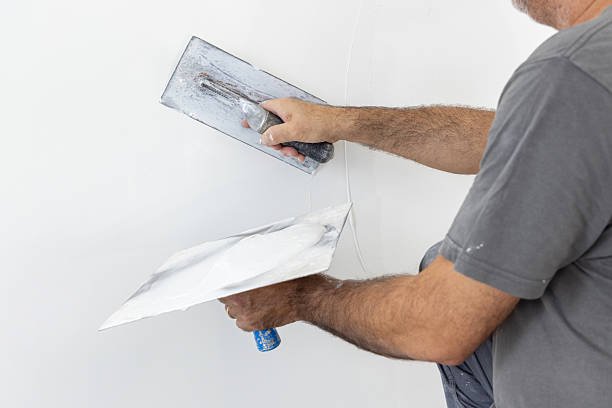
If your walls are covered in old paint marks, shallow cracks, previous repairs or an uneven finish, you may not need to strip everything back and completely replaster the room. Often, a thin new layer of finishing plaster — known as a skim coat — is enough to create the smooth surface needed for decorating.
So, how much does skimming a room cost in the UK in 2026?
For a straightforward re-skim, current UK pricing puts a typical room at approximately £430–£700, depending on its size and condition. Checkatrade’s June 2026 data puts a medium 3m × 3m room at around £430–£550, averaging approximately £480, while MyBuilder currently gives around £480–£700 for a medium-sized room.
A useful 2026 starting point is:
| Skimming job | Typical UK cost |
|---|---|
| Small room, walls only | £380–£500 |
| Medium room, walls only | £430–£700 |
| Large room | £535–£1,075 |
| Average skimming cost | Around £15–£25 per m² |
| Small ceiling | £200–£350 |
| Medium ceiling | £280–£440 |
| Large ceiling | £425–£725 |
| Typical plasterer day rate | Around £180–£300 |
| Full plastering rather than skimming | Around £30–£40 per m² |
The important distinction is skimming versus replastering.
If the existing plaster is basically sound but unattractive, skimming can be relatively economical.
If the plaster is loose, badly cracked, damaged by damp or falling away from the wall, simply covering it with another thin layer is unlikely to solve the problem.
What Does Skimming a Room Actually Mean?
Skimming involves applying a thin finishing coat of plaster over an existing surface to create a smooth, even finish.
It can be applied over suitable:
- existing plaster;
- plasterboard;
- repaired walls;
- certain properly prepared textured surfaces.
Unlike full plastering, the plasterer is not necessarily rebuilding the wall surface from the substrate upwards.
That is why skimming is generally cheaper.
Current MyJobQuote pricing puts skimming at around £15–£25 per m², compared with approximately £30–£40 per m² for full replastering.
Think of skimming as refinishing a fundamentally sound surface, rather than repairing a wall whose underlying plaster has failed.
Average Cost to Skim a Room in 2026
Current Checkatrade pricing gives particularly useful room-size benchmarks:
| Room | Low | Typical | High |
|---|---|---|---|
| Small room – approx. 2m × 2m | £378 | £440 | £496 |
| Medium room – approx. 3m × 3m | £430 | £480 | £550 |
| Large room – approx. 6m × 5m | £536 | £650 | £690 |
These figures are for re-skimming existing walls, rather than plastering them completely from scratch.
MyJobQuote’s July 2026 data gives somewhat wider ranges of approximately £285–£475 for a small room, £435–£725 for a medium room and £645–£1,075 for a large room, based on a £15–£25 per m² rate.
The variation between cost guides is useful rather than problematic: it reflects how much local labour rates, actual wall area and preparation can change real quotes.
For budgeting, around £450–£700 for an ordinary bedroom-sized room is therefore a sensible starting point.
How Much Does Skimming Cost Per Square Metre?
Current 2026 UK pricing generally puts skimming at approximately:
£15–£25 per m²
although Checkatrade’s room-based calculations produce an average of approximately £24 per m².
For example, if you have 30m² of wall area:
At £15 per m²:
30 × £15 = £450
At £20 per m²:
30 × £20 = £600
At £25 per m²:
30 × £25 = £750
But do not assume you can measure the floor and multiply that figure.
Plasterers are interested in wall and ceiling surface area, not simply floor area.
A 3m × 3m room with high ceilings can contain substantially more plasterable surface than another 3m × 3m room with standard ceilings.
How Much Does It Cost to Skim a Small Room?
For a small room of approximately 2m × 2m, current Checkatrade figures put re-skimming at:
£378–£496
with approximately:
£440 average.
MyJobQuote’s comparable range is approximately £285–£475, depending on actual wall area.
For practical budgeting, £350–£500 is therefore reasonable for many small rooms where the existing walls are sound.
A small room does not always mean a tiny bill.
The plasterer still needs to:
- travel to the property;
- protect the room;
- prepare the walls;
- mix plaster;
- clean equipment;
- complete the finish.
There is a minimum amount of labour involved regardless of whether the room is 2m × 2m or slightly larger.
How Much Does It Cost to Skim a Bedroom?
For a typical medium bedroom, budget approximately:
£430–£700
for the walls.
Checkatrade’s 3m × 3m benchmark averages £480, while MyJobQuote puts a comparable medium room at approximately £435–£725.
If the ceiling also needs skimming, the complete job can move towards:
£700–£1,000+
depending on size and preparation.
Doing walls and ceiling together can make practical sense because the plasterer is already:
- on site;
- protecting the room;
- mixing materials;
- setting up equipment.
It can also give you a consistently smooth finish across the entire room.
How Much Does It Cost to Skim a Living Room?
Larger living rooms naturally cost more.
Current Checkatrade pricing puts a large room around £536–£690, averaging approximately £650.
MyJobQuote’s larger 5m × 4m example reaches approximately:
£645–£1,075.
A realistic budget for many living rooms is therefore around:
£600–£1,000
depending on the amount of wall area and condition.
Living rooms can also contain:
- chimney breasts;
- alcoves;
- bay windows;
- large openings;
- multiple doors;
- decorative features.
These create additional corners and edges for the plasterer to finish.
A large rectangular room with uninterrupted walls can sometimes be easier than a smaller but architecturally complicated space.
How Much Does It Cost to Skim a Ceiling?
Ceilings are normally priced separately because working overhead is more difficult.
Current Checkatrade 2026 figures are:
| Ceiling size | Typical cost |
|---|---|
| Small – around 9m² | £200–£350 |
| Medium – around 15m² | £280–£440 |
| Large – around 25m² | £425–£725 |
The respective averages are approximately £275, £360 and £575.
If the ceiling is already smooth and in good condition, there is little point paying to skim it merely because you’re doing the walls.
But if it contains:
- cracks;
- poor repairs;
- uneven plaster;
- old textured finishes;
doing the ceiling at the same time can make sense.
Walls and Ceiling Together: What Should You Budget?
For a medium room, suppose the walls cost:
£480
and the ceiling costs:
£360
That produces:
£840
as a rough combined benchmark.
The actual quote may not simply be the two prices added together because completing everything during one job can improve efficiency.
For an ordinary bedroom, £700–£1,000 is therefore a useful broad budget for skimming both walls and ceiling where no major repairs are needed.
Large rooms or damaged surfaces can exceed £1,000.
Skimming vs Full Plastering: What’s the Difference?
This is one of the most important distinctions when getting quotes.
Skimming
A thin finishing layer is applied over an existing sound surface.
Current price:
around £15–£25 per m².
Full replastering
The wall requires more extensive work, such as a new base coat before the finishing plaster.
Current price:
around £30–£40 per m².
For a medium room, Checkatrade currently gives:
Re-skim: around £480
versus:
Plaster from scratch: around £755.
For a large room:
Re-skim: around £650
versus:
Plaster from scratch: around £1,300.
That is essentially double.
If you’re unsure which your walls require, our broader guide to how much it costs to plaster a room in the UK explains the different plastering methods and their costs in more detail.
When Is Skimming Enough?
Skimming can be appropriate when the existing plaster is structurally sound but has cosmetic problems.
Examples include:
- shallow cracks;
- old filling marks;
- uneven texture;
- minor dents;
- tired plaster;
- poor previous decorating;
- plasterboard that needs a finish coat.
The purpose is to create a smooth decorating surface.
If you run your hand across the wall and it is solid but visually poor, skimming may be all that is needed.
When Is Skimming Not Enough?
Skimming is not designed to rescue fundamentally defective plaster.
More extensive work may be needed if:
- plaster sounds hollow over large areas;
- sections are loose;
- plaster is crumbling;
- deep cracks keep returning;
- damp has damaged the substrate;
- walls are severely uneven;
- plaster has separated from the background.
Current Checkatrade guidance specifically notes that badly damaged, blown or uneven plaster may require more extensive work before a skim coat can be applied.
Covering failed plaster with a beautiful new skim is like decorating over a broken foundation.
The finish can only be as stable as what is supporting it.
What Is Blown Plaster?
“Blown” plaster means the plaster has lost its bond with the wall behind it.
It may:
- sound hollow when tapped;
- bulge;
- crack;
- move;
- eventually fall away.
A few isolated areas can sometimes be removed and repaired before skimming.
If much of the room has blown, the plasterer may recommend removing more of the existing plaster and rebuilding the surface.
MyJobQuote currently puts typical repairs to damaged or blown plaster at approximately £100–£300, depending on extent, before the wider skimming work.
What Preparation Is Included in Skimming?
A normal skimming quote may include basic preparation such as:
- protecting floors;
- removing loose material;
- cleaning the surface;
- minor filling;
- applying suitable bonding preparation;
- fitting beads where required;
- applying skim coats;
- final trowelling.
It does not necessarily include:
- stripping wallpaper;
- major plaster removal;
- damp repairs;
- moving radiators;
- extensive crack repair;
- plasterboarding;
- electrical alterations.
This is why two quotes for “skimming the bedroom” can differ substantially.
One plasterer may be quoting for ready-to-skim walls.
Another may have included two days of preparation.
How Much Does Wallpaper Removal Add?
Wallpaper needs to be removed before the wall can be properly assessed and skimmed.
Current MyJobQuote estimates put wallpaper removal at approximately:
£40–£120 for a single wall
or:
£300–£600 for a large room.
This can make removing wallpaper yourself one of the more realistic ways to reduce the bill.
But there is a catch.
Wallpaper sometimes hides:
- cracks;
- damaged plaster;
- damp staining;
- loose surfaces.
A £500 skimming job could therefore become an £800 job after the paper comes off.
If you’re renovating an older property, it is sensible to keep contingency money rather than assuming every wall underneath wallpaper will be perfect.
Can You Skim Over Painted Walls?
Often, yes — provided the existing surface is sound and properly prepared.
The plasterer needs to ensure the new skim will bond correctly.
That can involve cleaning the wall and applying an appropriate bonding treatment.
Loose or flaking paint cannot simply be covered.
If the old paint has poor adhesion, the skim may ultimately be relying on a failing layer underneath.
The plasterer should assess the surface rather than applying the same preparation to every painted wall.
Can You Skim Over Plasterboard?
Yes.
Plasterboard is routinely finished with a skim coat where that is the chosen system.
The boards need to be:
- securely fixed;
- correctly jointed/prepared;
- dry;
- suitable for plastering.
If you’re constructing a new partition or completely replacing damaged walls, plasterboard plus skim may be more appropriate than repairing old plaster repeatedly.
But boarding creates additional material and labour costs beyond the skim itself.
Can You Skim Over Artex?
Sometimes, yes.
If a textured ceiling is stable and suitable, a plasterer may be able to prepare and skim over it.
However, older textured coatings can contain asbestos, so they should not be casually sanded, scraped or otherwise disturbed before their composition is understood.
This is particularly relevant in older UK homes.
If the existing texture is deep, damaged or unsuitable for direct skimming, overboarding may be recommended instead.
Current MyJobQuote pricing puts ceiling overboarding at approximately £400–£1,000 depending on size and complexity.
Why Does Wall Condition Affect the Price So Much?
Plastering is highly dependent on preparation.
Imagine two identical 3m × 3m bedrooms.
Room A
Walls are:
- solid;
- stripped;
- relatively flat;
- ready for preparation and skim.
Price might sit close to the standard £430–£550 benchmark.
Room B
Walls have:
- old wallpaper;
- loose plaster;
- deep cracks;
- failed previous repairs;
- damaged corners.
The plasterer may spend an entire day making Room B suitable before the actual skim begins.
The floor dimensions are identical.
The amount of work is not.
How Much Does a Plasterer Charge Per Day?
Current figures vary by region and source.
Checkatrade’s June 2026 room-skimming guide uses approximately £300 per day as its typical plasterer day-rate benchmark.
MyJobQuote currently puts many plasterers around £180–£250 per day, rising towards £300 or more in London.
For homeowners, the final job quote is usually more useful than the day rate.
Consider:
Plasterer A
£220/day × 3 days = £660
Plasterer B
£300/day × 2 days = £600
The higher day rate produces the cheaper labour bill.
Ask for:
the complete price + what it includes + expected duration.
How Long Does It Take to Skim a Room?
Most room-skimming jobs take approximately one to three days, depending on room size and preparation.
Checkatrade gives:
Small room: around 1–1.5 days
Medium room: around 1–2 days
Large room: around 2–3 days.
That does not mean you can decorate immediately afterwards.
Fresh plaster then needs time to dry.
How Long Does Skimmed Plaster Take to Dry?
Current MyJobQuote guidance says plaster generally takes around three to seven days to dry, with a thin skim potentially drying in approximately three to five days under suitable conditions.
The actual time depends on:
- plaster thickness;
- temperature;
- ventilation;
- humidity;
- repairs underneath;
- season.
Do not judge readiness purely by the calendar.
Fresh plaster darkens while wet and becomes much paler as it dries.
The surface should be uniformly dry before decorating.
When Can You Paint Newly Skimmed Walls?
Do not rush this stage.
Once the plaster is completely dry, it needs to be prepared appropriately for its first paint system.
The correct first coat depends on the paint manufacturer’s instructions, but a suitable water-based matt emulsion system or specified new-plaster primer is commonly used.
Do not simply apply a thick coat of standard finish paint to damp new plaster.
Painting too early can contribute to poor adhesion and peeling.
If you’re having several rooms plastered and then decorated professionally, remember to include the drying period when planning the overall renovation.
How Much Does It Cost to Paint After Skimming?
Painting is a separate cost unless your quote explicitly includes decorating.
Once the skim has dried, you will generally need:
- appropriate first coat;
- finish coats;
- woodwork where required;
- ceiling painting.
If you’re budgeting for the next stage, see our complete guide to how much it costs to paint a house in the UK.
Do not make the common renovation-budgeting mistake of allocating £600 for plastering and assuming that produces a finished room.
You may still have to pay for:
drying + preparation + paint + decorating + flooring/skirting repairs.
Should You Skim Before Installing a New Kitchen?
Usually, major wall preparation should happen before the new kitchen is fitted where possible.
It is much easier to skim open walls than work around:
- cabinets;
- worktops;
- splashbacks;
- appliances.
The same principle applies during wider renovations.
A sensible sequence might be:
- structural and electrical work;
- plumbing changes;
- plasterboard and plaster repairs;
- skimming;
- drying;
- decorating;
- final fittings.
Planning the order properly avoids paying tradespeople to undo or protect newly finished work.
Is It Cheaper to Skim Several Rooms at Once?
It can be.
The plasterer still needs to quote for all the additional wall area, but completing several rooms during one project can reduce repeated:
- travel;
- setup;
- material collection;
- administration.
Suppose you have three bedrooms with tired but sound plaster.
Instead of commissioning them one at a time over six months, ask for:
individual room prices
and:
a combined price for all three.
That tells you whether there is a meaningful saving.
How Much Would It Cost to Skim a Whole House?
Whole-house costs depend heavily on property size and whether ceilings are included.
Using £15–£25 per m² as a rough skimming benchmark, a house containing 250m² of suitable wall surface could theoretically cost:
250 × £15 = £3,750
to:
250 × £25 = £6,250
before major repairs or ceilings.
That does not mean every three-bedroom house costs £3,750–£6,250.
The actual surface area needs measuring.
But it demonstrates how quickly a relatively affordable single-room job becomes a significant renovation expense when repeated throughout a property.
How to Save Money on Skimming Without Ruining the Job
Remove wallpaper beforehand
If the plaster underneath is reasonably sound, this can reduce labour.
Empty the room
Remove:
- furniture;
- curtains;
- pictures;
- shelves;
- belongings.
Give the plasterer a clear working space.
Combine rooms
Ask whether doing several rooms together produces a better overall price.
Fix known underlying problems first
Do not skim over unresolved damp.
You may end up paying twice.
Don’t automatically skim every wall
If one wall is already flat and in excellent condition, ask whether it genuinely needs doing.
Compare the scope, not just the total
A £450 quote and £650 quote may include completely different preparation.
These are the types of decisions that save money intelligently. Our guide to renovating on a budget without cutting the wrong corners covers the same principle across a wider renovation.
Should You Skim Walls Before Selling a House?
Not automatically.
If the walls are:
- badly cracked;
- heavily textured;
- visibly patched;
- extremely uneven;
a smooth finish can make the property look better maintained.
But skimming every slightly imperfect wall before selling may not generate enough benefit to justify the cost.
Sometimes careful filling and repainting is sufficient.
The decision should depend on how noticeable the defects are and the overall condition of the property.
DIY Skimming vs Hiring a Plasterer
Skimming is one of those jobs that looks much easier when performed by somebody experienced.
Applying plaster is only part of the skill.
The plasterer must control:
- consistency;
- thickness;
- timing;
- pressure;
- trowelling;
- edges;
- drying.
A poor skim can leave:
- ridges;
- waves;
- hollows;
- visible trowel marks.
You may then spend days sanding and filling the surface that was supposed to become smooth.
For a tiny repair, DIY can make sense.
For an entire living room that will be visible under natural light, professional plastering is often worth the labour cost.
What Should Be Included in a Skimming Quote?
Ask for clarity on:
- walls included;
- ceiling included or excluded;
- surface preparation;
- minor repairs;
- bonding treatment;
- corner beads;
- plaster materials;
- labour;
- floor protection;
- waste removal;
- VAT where applicable;
- expected duration.
Also ask what is not included.
For example:
Re-skim bedroom walls: £520. Includes preparation, bonding treatment, minor crack repairs, materials and labour. Ceiling and decorating excluded.
That is a useful quotation.
Plaster bedroom: £520.
That leaves too much open to interpretation.
How to Compare Skimming Quotes
Suppose you receive three prices:
£420
£550
£750
Do not immediately choose £420.
Ask what each plasterer saw.
Perhaps:
£420
Walls already prepared
Skim only
No repairs
£550
Minor repairs
Preparation
Walls skimmed
Materials included
£750
Wallpaper removal
Loose plaster repairs
Preparation
Skimming
Waste removed
These are not three prices for the same work.
The condition of the wall before the plasterer starts is often more important than the size of the room.
Frequently Asked Questions
How much does it cost to skim a room in the UK?
A straightforward room re-skim typically costs around £430–£700 in 2026, depending on room size, wall condition and location. Checkatrade’s current medium-room average is approximately £480.
How much does skimming cost per m²?
Current UK pricing is generally around £15–£25 per m², while Checkatrade’s room-based figures average approximately £24 per m².
How much does it cost to skim a bedroom?
For a medium bedroom, around £430–£700 is a useful current budget for walls in suitable condition.
How much does it cost to skim a living room?
A larger living room can cost approximately £535–£1,075, depending on its actual size, layout and preparation requirements.
How much does it cost to skim a ceiling?
Current Checkatrade prices range from approximately £200–£350 for a small ceiling, £280–£440 for a medium ceiling and £425–£725 for a large ceiling.
Is skimming cheaper than plastering?
Yes, assuming the existing surface is suitable.
Skimming currently costs approximately £15–£25 per m², while full replastering is more commonly around £30–£40 per m².
How long does it take to skim a room?
Approximately one to three days for most rooms, depending on size and preparation.
How long should plaster dry after skimming?
A thin skim can often take around three to five days, while plaster more generally can require approximately three to seven days or longer depending on conditions.
Can you skim over old plaster?
Yes, provided the existing plaster is sound, stable and properly prepared. Blown, crumbling or damp-damaged plaster may need repairing or replacing first.
Can you skim over Artex?
Sometimes, but older textured coatings can contain asbestos. The surface should be assessed before any preparation that could disturb it.
So, How Much Should You Budget to Skim a Room?
For room skimming in the UK in 2026, a realistic starting budget is:
Small room: around £350–£500
Medium room: around £430–£700
Large room: around £550–£1,000+
Skimming: approximately £15–£25 per m²
with ceilings generally adding another £200–£725, depending on size.
The biggest question is not actually the size of the room.
It is:
“Are these walls genuinely ready to skim?”
If they are solid and reasonably flat, a plasterer can apply a new finish relatively efficiently.
If wallpaper needs stripping, plaster has blown, cracks require investigation or the walls need rebuilding, the project is no longer a simple re-skim — and the price should reflect that.
When budgeting, also remember what happens afterwards. Fresh plaster needs to dry and then be decorated. A £500 plastering quote does not necessarily mean £500 gets you from damaged walls to a completely finished room.
If you’re planning a larger renovation, getting those stages in the right order can prevent wasted work and unnecessary spending.
If you need a plasterer for a room re-skim or a larger renovation, The Right Guy can help you discover local service professionals. When requesting quotes, send photographs and explain whether the walls are painted, wallpapered, cracked or damaged so plasterers can judge whether you need a straightforward skim or more extensive preparation.

Author: The Right Guy Team
UK service guides published by The Right Guy Ltd.