
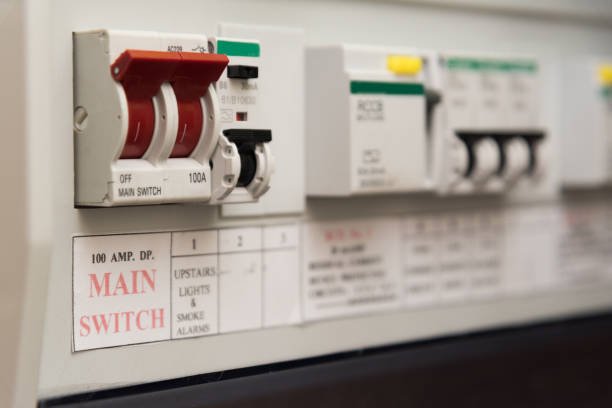
Replacing an old consumer unit — often still called a fuse box — is one of the more important electrical upgrades you can make to a home. It can improve protection, bring an older installation closer to current standards and make future electrical work easier to manage.
In the UK in 2026, replacing a standard domestic consumer unit typically costs around £550–£900, including the new board, labour, testing and certification. Smaller, straightforward installations can sometimes come in below this, while larger properties, more circuits, remedial work or additional surge protection can push the total towards £1,000–£1,500 or more.
The biggest variable is not usually the price of the consumer unit itself. It is the condition of the existing electrical installation.
If your wiring has faults, damaged circuits or poor earthing, the electrician may need to carry out additional work before the new board can be safely installed and certified.
If your current fuse box is regularly tripping, our guide to why your fuse box keeps tripping explains the common causes before you assume the whole consumer unit needs replacing.
Average consumer unit replacement cost in the UK
For budgeting, these are useful 2026 figures:
| Consumer unit job | Typical cost |
|---|---|
| Small consumer unit replacement | £450–£650 |
| Standard domestic replacement | £550–£900 |
| Larger house / more circuits | £750–£1,100 |
| Complex replacement with remedial work | £900–£1,500+ |
| Consumer unit only | Around £100–£350+ |
| Labour, testing and certification | Around £350–£650 |
| Additional electrical remedial work | £100–£1,000+ depending on faults |
| EICR before replacement | Around £150–£300+ depending on property |
These should be treated as budgeting ranges rather than fixed prices.
A modern three-bedroom house with sound wiring and ten circuits is very different from an older property with outdated wiring, poor earthing and undocumented alterations.
What is a consumer unit?
The consumer unit is the central distribution point for electricity in your home.
Electricity enters the property and is divided into individual circuits for areas such as:
- sockets;
- lighting;
- cooker;
- shower;
- boiler;
- outdoor electrics;
- garage;
- immersion heater.
Modern consumer units can include protection such as:
- circuit breakers;
- RCDs;
- RCBOs;
- surge protection.
The exact configuration depends on the installation.
Older properties may still have fuse boxes using rewireable fuses or much older forms of protection.
Is a consumer unit the same as a fuse box?
In everyday conversation, yes.
People commonly use the terms:
consumer unit
and
fuse box
interchangeably.
Technically, modern systems use protective devices rather than the old-style replaceable fuse wire many people associate with traditional fuse boxes.
If you are asking an electrician for a quote, either term will normally be understood.
How much does the consumer unit itself cost?
The board itself may cost roughly:
£100–£350+
depending on:
- number of ways;
- brand;
- type of protective devices;
- surge protection;
- specification.
But buying the board is only one part of the project.
A proper replacement also requires:
- safe isolation;
- removal of existing unit;
- circuit testing;
- reconnection;
- labelling;
- certification;
- possible Building Regulations notification.
That is why a consumer unit available online for £150 does not mean the complete job should cost £200.
How much does labour cost to replace a consumer unit?
Labour, testing and certification may account for roughly:
£350–£650
of a typical installation.
The electrician may need to:
- inspect the existing installation;
- safely isolate the supply;
- disconnect the existing board;
- install the new consumer unit;
- reconnect each circuit;
- carry out electrical tests;
- identify any faults;
- label the circuits;
- complete certification.
If faults are discovered during testing, the job can become more expensive.
How long does consumer unit replacement take?
A straightforward replacement can often take around:
4–8 hours
or roughly one working day.
Larger or more complicated installations can take longer.
The job may be extended if:
- circuits are poorly labelled;
- old wiring needs correction;
- earthing is inadequate;
- bonding requires improvement;
- there are existing faults;
- the consumer unit location is difficult to access.
You should expect the electricity to be turned off for part of the installation.
What affects consumer unit replacement cost?
Several factors make a significant difference.
Number of circuits
A small flat may have fewer circuits than a large house.
More circuits mean:
- larger consumer unit;
- more protective devices;
- more testing;
- more time.
Condition of existing wiring
This can be the biggest variable.
If everything tests correctly, the replacement may remain straightforward.
If the electrician discovers:
- insulation faults;
- borrowed neutrals;
- damaged cables;
- poor earthing;
- unsafe DIY alterations;
additional work may be needed.
Type of consumer unit
Different configurations can affect cost.
A board using individual RCBO protection across circuits can cost more than simpler configurations.
Surge protection
Modern installations often include surge protective devices where appropriate.
This adds some cost but can provide additional protection for electrical and electronic equipment.
Location of the board
A consumer unit inside an accessible hallway cupboard is much easier to work on than one hidden in a cramped or awkward position.
Regional labour rates
London and the South East often cost more than lower-cost parts of the UK.
What is an RCBO consumer unit?
An RCBO combines:
- overcurrent protection;
- residual current protection
for an individual circuit.
That means a fault on one circuit can potentially trip only that circuit rather than affecting several circuits protected by one shared RCD.
This can improve convenience and fault isolation.
RCBO-based boards can cost more than simpler configurations, but many homeowners value the additional separation.
What is an RCD?
An RCD — residual current device — is designed to disconnect the electrical supply quickly when it detects certain types of fault current.
This provides additional protection against electric shock.
Modern domestic installations commonly use RCD or RCBO protection across relevant circuits.
If your property has a very old fuse box without modern residual current protection, replacement may be worth discussing with an electrician.
What is surge protection?
A surge protective device — SPD — helps protect the electrical installation and connected equipment from transient overvoltages.
These can arise from events such as:
- switching;
- network disturbances;
- nearby lightning-related surges.
Modern homes contain many sensitive electronic devices, including:
- televisions;
- computers;
- smart-home equipment;
- appliances;
- heating controls.
The suitability of surge protection should be considered as part of the new consumer unit specification.
Do I need a new consumer unit because mine is plastic?
Not automatically.
The material of the enclosure is only one part of the installation’s condition.
An older plastic consumer unit does not necessarily mean the wiring is unsafe or that immediate replacement is mandatory.
The electrician should assess:
- age;
- condition;
- protective devices;
- signs of damage;
- installation quality.
An EICR can provide a more complete assessment of the system.
Our 2026 EICR cost guide explains what an inspection involves and what it may cost.
Does an old fuse box need replacing?
Not every old fuse box requires immediate replacement purely because of age.
However, replacement becomes more worth considering if the unit has:
- rewireable fuses;
- no suitable RCD protection;
- signs of overheating;
- physical damage;
- loose connections;
- repeated faults;
- inadequate capacity for new circuits.
A qualified electrician can assess the installation rather than relying on appearance alone.
Should I get an EICR before replacing the consumer unit?
In many cases, it is a good idea.
An EICR can identify faults before the replacement starts.
This gives you a clearer picture of:
- circuit condition;
- earthing;
- bonding;
- wiring faults;
- existing defects.
Without this information, an apparently simple £650 consumer unit replacement can turn into a £1,200 project once faults are discovered.
An EICR is particularly sensible for older properties or homes with unknown electrical history.
See our guide to how much an EICR costs in 2026 for more detail.
Will a new consumer unit stop my electrics tripping?
Not necessarily.
If the existing consumer unit itself is faulty, replacement may solve the problem.
But circuits can trip because of:
- faulty appliances;
- damaged cables;
- moisture;
- overloaded circuits;
- earth faults;
- defective accessories.
Installing a new consumer unit will not repair an underlying wiring fault.
In fact, modern protection may reveal faults that an older board was not detecting properly.
If your fuse box currently trips frequently, see our guide to why a fuse box keeps tripping.
Could a new consumer unit reveal wiring problems?
Yes.
This is one of the main reasons costs can rise after testing.
Older installations may appear to work normally but contain faults that become apparent once modern protective devices are fitted.
Possible problems include:
- insulation resistance faults;
- earth leakage;
- shared neutrals;
- incorrect connections;
- damaged cables.
These faults may need repairing before the installation can be completed properly.
How much can remedial work add?
This varies enormously.
A small defect may add:
£50–£150
while more serious wiring problems can add:
£500–£1,000+
If several circuits require replacement, the project can start moving towards partial or full rewiring.
That is why older properties benefit from proper assessment before work begins.
Consumer unit replacement vs house rewiring
Replacing a consumer unit does not replace the wiring around the property.
Think of it this way:
Consumer unit = central distribution and protection
Rewire = cables and circuits throughout the house
A new board cannot make severely deteriorated wiring new again.
If the wiring itself is old or unsafe, a rewire may be necessary.
Our guide to how much it costs to rewire a house in 2026 explains the much larger costs involved.
How do I know if my house needs rewiring instead?
Possible warning signs include:
- very old wiring;
- damaged cable insulation;
- widespread electrical faults;
- insufficient circuits;
- repeated unsafe alterations;
- poor earthing.
A qualified electrician should base the recommendation on inspection and testing rather than age alone.
Full rewiring is significantly more disruptive and expensive than consumer unit replacement.
Can you replace the consumer unit without rewiring the house?
Yes, often.
If the existing circuits test satisfactorily, a new consumer unit can be connected to the existing wiring.
This is common.
The important part is that the circuits need to be suitable for connection to the new protective devices.
Does changing a consumer unit need Building Regulations approval?
In England, replacing a consumer unit is generally treated as notifiable electrical work under Part P.
A registered electrician who belongs to an appropriate Competent Person Scheme can usually self-certify the work and arrange the necessary notification.
That is one reason it is important to use an appropriately qualified professional rather than treating the job as simple DIY.
Keep the documentation after completion.
What certificate should I receive?
For a consumer unit replacement, you should normally receive appropriate electrical certification for the work.
The exact documentation will depend on the installation and jurisdiction, but for substantial work this commonly includes an Electrical Installation Certificate.
Where the work is notifiable, relevant Building Regulations compliance documentation may also follow through the competent person scheme.
Store these documents with your property records.
They can be useful when:
- selling;
- letting;
- carrying out future electrical work.
Can I replace a consumer unit myself?
For most homeowners, this is not an appropriate DIY project.
The work involves:
- main electrical supply;
- multiple circuits;
- protective devices;
- testing;
- certification.
Simply connecting all the wires to a new box is not enough.
The installation must be tested correctly before being put back into service.
Use a qualified electrician.
Can any electrician replace a consumer unit?
Use an electrician competent to carry out the work and provide the appropriate testing and certification.
For notifiable domestic work in England, using someone registered with a recognised Competent Person Scheme can make the compliance process much simpler.
Ask before booking:
“Will you provide the electrical certificate and Building Regulations notification where required?”
How much does consumer unit replacement cost in London?
London pricing is typically higher.
A standard replacement might cost around:
£700–£1,200+
depending on circuits and specification.
Larger or more complicated installations can exceed this.
Higher:
- labour rates;
- parking costs;
- travel time
can all contribute.
Is £600 a reasonable price for a consumer unit replacement?
Yes.
For a relatively small, straightforward installation, £600 can be a perfectly reasonable 2026 price.
Check what is included.
Ideally, the quote should cover:
- new consumer unit;
- protective devices;
- labour;
- testing;
- certification;
- notification where applicable.
Is £1,000 too much for a consumer unit?
Not necessarily.
£1,000 can be reasonable for:
- larger properties;
- many circuits;
- premium RCBO board;
- surge protection;
- difficult access;
- minor remedial work.
If the quote exceeds £1,000, ask for an itemised breakdown so you understand whether the additional cost comes from the board itself or faults elsewhere in the installation.
Example consumer unit replacement costs
Example 1: small flat
Consumer unit: £180
Labour: £300
Testing/certification: £120
Estimated total: £600
Example 2: standard three-bedroom house
RCBO consumer unit: £280
Labour: £400
Testing/certification: £150
Estimated total: £830
Example 3: older house with remedial work
Consumer unit: £300
Labour/testing: £500
Earthing/bonding improvements: £250
Circuit fault repair: £300
Estimated total: £1,350
These examples are illustrative, not guaranteed quotations.
What should a consumer unit quote include?
A clear quotation should identify:
- consumer unit;
- number/type of protective devices;
- surge protection if included;
- labour;
- testing;
- certification;
- notification;
- VAT where applicable;
- known remedial work.
Ask what happens if additional faults are found.
For example:
“Will you stop and quote before carrying out extra remedial work?”
That prevents unexpected bills.
Should I replace the consumer unit before installing extra sockets?
Possibly, but not automatically.
If the existing consumer unit is suitable and has capacity, it may be able to accommodate additional electrical work.
If it is outdated or full, upgrading the board may make sense alongside the new circuits.
Our guide to extra socket installation costs can help you plan smaller electrical upgrades alongside the consumer unit.
Should I replace the consumer unit during a renovation?
This can be an excellent time.
If you are already:
- opening walls;
- adding sockets;
- changing lighting;
- renovating a kitchen;
- altering circuits;
upgrading the consumer unit can be easier to coordinate.
It also gives the electrician a chance to design the electrical system as a whole.
Can a new consumer unit reduce electricity bills?
Not directly.
A consumer unit is primarily a safety and distribution device.
Replacing it does not make appliances consume less electricity.
However, it may make it easier to safely add:
- modern heating controls;
- efficient lighting;
- EV charging;
- other upgrades.
Do not replace a fuse box expecting a noticeable reduction in your energy bill.
Will a new consumer unit add value to my house?
There is no guaranteed amount.
A modern, properly certified electrical installation can make a property more reassuring to buyers, but you should not expect a £700 consumer unit to automatically add £5,000 to the sale price.
The main benefit is:
- safety;
- modern protection;
- compliance;
- future flexibility.
How often does a consumer unit need replacing?
There is no simple replacement interval.
A consumer unit should be replaced based on:
- condition;
- protection provided;
- compatibility with the installation;
- damage;
- electrical assessment.
A properly installed modern board can remain serviceable for many years.
What are signs a consumer unit may need attention?
Warning signs include:
- burning smell;
- scorch marks;
- overheating;
- cracking;
- loose components;
- repeated unexplained tripping;
- very old rewireable fuses;
- absence of expected protective devices.
Some of these can indicate urgent problems.
Our guide to signs your electrics need checking can help you identify broader warning signs around the property.
Does a consumer unit need to be metal?
Modern domestic consumer units are commonly manufactured using non-combustible enclosures, often steel.
This was introduced as a fire-safety measure in domestic installations.
However, this does not mean every existing plastic consumer unit automatically needs immediate replacement.
Its condition and the safety of the installation need to be assessed properly.
Should I upgrade to RCBOs?
RCBOs can provide more individual protection for circuits.
One advantage is that a fault on one circuit may not disconnect several unrelated circuits.
For example, a fault on:
garden sockets
may trip only that circuit rather than taking out:
kitchen + upstairs sockets + garden
together.
This can make fault finding and everyday use more convenient.
The additional cost may be worthwhile in many modern installations.
Do I need surge protection?
Whether surge protection is appropriate should be considered as part of the design of the installation.
For many modern homes, adding an SPD is a relatively small additional cost compared with replacing the entire consumer unit.
Ask the electrician whether it is included and why they recommend the proposed arrangement.
What about AFDDs?
Arc Fault Detection Devices are another protective technology designed to detect certain dangerous electrical arcing conditions.
They are not simply required in exactly the same way for every circuit in every home.
Their use depends on the installation and applicable wiring requirements.
If an electrician recommends them, ask:
- where;
- why;
- how much extra they add.
How can I reduce the cost of replacing a consumer unit?
Get the installation checked first
An EICR can reveal additional costs before the job begins.
Choose the right size board
Allow sensible future capacity without buying something unnecessarily excessive.
Combine planned electrical work
If several circuits need updating, doing them together can be more efficient.
Make access easy
Clear the area around the consumer unit.
Compare detailed quotes
Make sure each electrician is pricing the same specification.
Cheap consumer unit replacement: what should you watch for?
Be cautious if one quote is dramatically cheaper than every other quote.
Check whether it includes:
- testing;
- certification;
- surge protection;
- appropriate protective devices;
- notification.
A cheap board change without proper testing is not equivalent to a professionally completed and certified consumer unit replacement.
Common consumer unit replacement mistakes
Replacing the board without testing circuits
The existing wiring still needs to be assessed.
Assuming a new fuse box fixes every electrical problem
It does not repair faulty circuits.
Ignoring remedial costs
Older installations can reveal additional defects.
Choosing the cheapest quote without comparing specification
One board may contain very different protective devices from another.
Forgetting certification
Keep all electrical documentation.
Attempting DIY replacement
This is not an appropriate beginner electrical project.
Rewiring unnecessarily
An old consumer unit does not automatically mean the whole house needs rewiring.
Frequently asked questions
How much does it cost to replace a consumer unit in the UK?
For a standard domestic replacement in 2026, £550–£900 is a sensible budget. Larger or more complicated installations can cost £1,000–£1,500 or more.
How long does it take to replace a consumer unit?
A straightforward replacement can often be completed in around 4–8 hours, although testing and remedial work can extend the job.
Does changing a consumer unit mean the house needs rewiring?
No. If the existing wiring tests satisfactorily, it can often be retained.
Does a new consumer unit stop the fuse box tripping?
Only if the existing board is causing the problem. Faulty appliances, wiring or circuits can continue to cause tripping.
Should I have an EICR before changing the fuse box?
It can be very useful, particularly in older properties, because it identifies potential faults before the replacement begins.
Is consumer unit replacement notifiable?
In England, consumer unit replacement is generally notifiable under Part P. Using a registered competent person can simplify certification and notification.
Is £800 a reasonable price for a new consumer unit?
Yes. Around £800 sits within a realistic range for a standard home with a modern board, testing and certification.
Can I replace a fuse box myself?
For most homeowners, no. The work requires electrical competence, proper testing and certification.
Final thoughts: how much should you budget for a new consumer unit?
For a typical UK home in 2026, £550–£900 is a realistic starting budget for replacing a consumer unit.
A straightforward property with sound wiring may stay near:
£550–£700
while:
larger board + more circuits + RCBOs + surge protection + remedial work
can push the total towards:
£900–£1,500+.
The most important thing is not to treat the consumer unit as an isolated box.
Its performance depends on the condition of the circuits connected to it.
If your current fuse box keeps tripping, start with our guide to why a fuse box keeps tripping.
If the property’s wiring is old or you have widespread electrical problems, compare the project with our 2026 house rewiring cost guide.
And if you want the existing installation assessed before deciding, see our EICR cost guide.
When you’re ready to get quotes, you can use The Right Guy to discover local electricians and relevant electrical professionals.

Author: The Right Guy Team
UK service guides published by The Right Guy Ltd.