
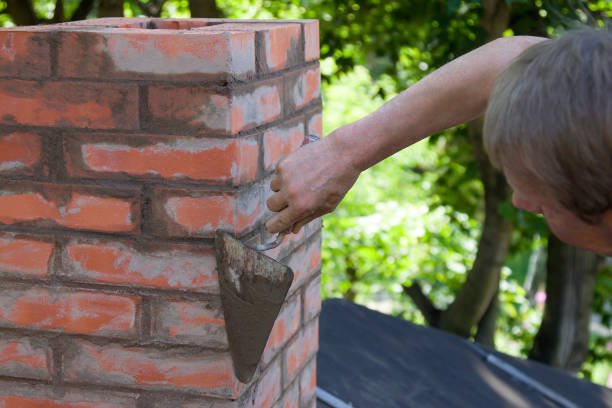
Chimney problems can range from a few loose mortar joints to serious structural deterioration affecting the entire stack.
That is why chimney repair prices vary so widely.
A small flashing repair may cost only a few hundred pounds. Repointing a weathered chimney can approach £1,000. Rebuilding a badly damaged stack can run into several thousand pounds.
So, how much does chimney repair cost in the UK in 2026?
For most ordinary domestic chimney repairs, a realistic current budget is around £180–£1,000. Current Checkatrade data puts smaller repairs such as chimney caps and minor flashing work towards the lower end, with repointing around £300–£1,000. More substantial structural repairs or chimney-stack removal can reach £1,800 or significantly more.
MyBuilder’s current 2026 pricing gives an even broader repair range of around £500–£2,000 for many projects, with chimney stack rebuilding potentially reaching £2,000–£10,000+ where damage is extensive.
As a practical starting point:
| Chimney repair | Typical 2026 UK cost |
|---|---|
| Minor chimney repair | £180–£500 |
| Chimney cap installation | £180–£520 |
| Flashing patch repair | £150–£250 |
| Full chimney flashing repair/replacement | £350–£1,000+ |
| Chimney repointing | £300–£1,000 |
| Broader repointing range on difficult chimneys | £450–£1,200+ |
| Chimney liner replacement | Around £250 per metre |
| Chimney stack removal | Around £260–£340 per metre |
| Typical stack removal project | Around £1,800 |
| Significant chimney stack rebuild | £2,000–£10,000+ |
The most important factor is what is actually wrong with the chimney.
Water coming into a bedroom beside the chimney does not automatically mean the brick stack needs rebuilding. Failed lead flashing may be responsible.
Likewise, crumbling mortar does not necessarily mean the whole chimney is unsafe. It may simply need repointing.
Correct diagnosis can save thousands of pounds.
What Counts as a Chimney Repair?
A chimney is more than the visible bricks sticking out of the roof.
Depending on the property, the structure can include:
- chimney stack;
- bricks or stone;
- mortar joints;
- chimney pots;
- flaunching;
- flashing;
- capping or cowls;
- flue;
- internal chimney breast.
Different components fail in different ways.
Common chimney repairs include:
- repointing mortar;
- replacing damaged bricks;
- repairing lead flashing;
- replacing chimney pots;
- repairing flaunching;
- fitting chimney caps;
- relining flues;
- stabilising leaning stacks;
- partial rebuilding;
- complete stack removal.
That is why asking a roofer:
“How much to repair my chimney?”
without describing the symptoms will rarely produce a meaningful quote.
How Much Does Chimney Repointing Cost?
Repointing is one of the most common repairs on older chimneys.
It involves removing deteriorated mortar from between the bricks and replacing it with fresh mortar.
Current Checkatrade 2026 figures put chimney repointing at around:
£300–£1,000
with approximately:
£750 as a typical average.
MyJobQuote’s July 2026 figures are slightly higher overall, putting typical chimney repointing around:
£450–£1,200
with an average of approximately:
£825.
This variation is mainly caused by access.
A small chimney on a bungalow may be relatively straightforward.
A central chimney on a two-storey semi-detached house may require scaffolding across the roof ridge, increasing the cost considerably.
Chimney Repointing Cost by Property Type
Current MyBuilder pricing gives some useful examples:
| Property / chimney position | Typical repointing cost |
|---|---|
| Bungalow | £200–£700 |
| Semi-detached, side chimney | £600–£900 |
| Semi-detached, central chimney | £900–£1,500 |
| Detached house | £700–£900 |
The chimney itself may contain only a relatively small amount of brickwork.
What makes the job expensive is often getting a tradesperson into a safe position to work on it.
How Much Does Repointing Cost Per Square Metre?
Current Checkatrade 2026 pricing puts ordinary brick repointing around:
£50–£60 per m²
with approximately:
£55 per m² average.
Raking out old mortar can add approximately:
£20–£50 per m²
with around:
£35 per m² average.
However, chimney work is rarely priced purely by multiplying the brick area.
A chimney might contain only 8m² of brickwork.
At £55 per m² that is:
8 × £55 = £440
But then you may need:
scaffolding: £300+
plus raking out, repairs and other work.
Suddenly the £440 brickwork job becomes an £800–£1,000 project.
That is why whole-project chimney quotes are more useful than per-square-metre calculations.
How Much Does Chimney Flashing Repair Cost?
Lead flashing creates a waterproof junction between the chimney and the roof covering.
When it cracks, moves or becomes poorly sealed, water can enter the roof around the chimney.
Current Checkatrade pricing puts chimney flashing repairs around:
£250–£1,000 depending on the extent of the work and whether scaffolding is required.
MyJobQuote’s June 2026 data gives a particularly useful breakdown:
Patch repair: £150–£250
Full replacement: £350–£920
with approximately:
£570 average for full replacement.
If no scaffolding is required, replacing all four sides of chimney flashing is currently around £450–£600, averaging approximately £525 in Checkatrade’s specialist guide.
Signs Your Chimney Flashing May Be Failing
Possible signs include:
- water stains near the chimney breast;
- damp in the loft around the stack;
- staining after heavy rain;
- visibly lifted lead;
- cracked or missing mortar around flashing;
- water appearing where chimney and roof meet.
But do not assume every leak beside the chimney is flashing.
Water can also enter through:
- porous brickwork;
- failed mortar;
- damaged flaunching;
- cracked chimney pots;
- roof tiles;
- valleys nearby.
A good roofer should identify the likely path before replacing expensive lead unnecessarily.
How Much Does It Cost to Replace a Chimney Pot?
Chimney pot replacement is usually a smaller job in material terms, but roof access can dominate the price.
Checkatrade’s current chimney repair guide puts chimney cap installation at around:
£180–£520.
A damaged chimney pot itself may need:
- removing;
- replacing;
- bedding securely;
- surrounding flaunching repaired.
If scaffolding is already erected for repointing or flashing work, dealing with a cracked pot at the same time can be much more economical than arranging another visit later.
How Much Does a Chimney Cap Cost?
A chimney cap or cowl can help prevent:
- rain entering;
- birds nesting;
- debris entering;
- downdraught in certain situations.
Current 2026 supplied-and-fitted pricing is approximately:
£180–£520, depending on the product.
The lower end is more realistic for a straightforward standard cap.
Specialist cowls or difficult access increase the cost.
If the chimney is no longer used, an appropriate ventilated cap may also help prevent direct rain entry while maintaining necessary ventilation.
How Much Does Chimney Flaunching Repair Cost?
Flaunching is the mortar or concrete around the base of chimney pots on top of the stack.
Its job includes securing the pots and shedding rainwater away from the chimney.
Over time it can:
- crack;
- break away;
- become porous;
- allow water into the chimney.
Flaunching is commonly repaired alongside repointing because scaffolding is already in place.
A small local repair might add only a few hundred pounds to a broader chimney job, while complete renewal can cost more depending on chimney size and access.
Rather than asking for flaunching separately, ask the contractor to inspect:
mortar + flaunching + pots + flashing
during the same visit.
These components all work together to keep water out.
How Much Does Chimney Brick Replacement Cost?
Individual damaged bricks can sometimes be replaced without rebuilding the entire stack.
The repair may involve:
- cutting out defective bricks;
- removing damaged mortar;
- installing suitable replacement bricks;
- repointing;
- matching the surrounding finish.
Minor brick repairs may fall in the £150–£500 range where access is simple.
But replacing a few bricks at roof level can still cost far more than the brick itself because scaffolding and labour dominate the project.
If large numbers of bricks are:
- spalling;
- cracked;
- loose;
- badly weathered,
partial or complete rebuilding can become more economical.
What Is Spalling Brickwork?
Spalling happens when the outer face of a brick begins to break away.
Water enters the masonry.
During freezing conditions, moisture expands.
Over repeated cycles, the brick face can deteriorate.
You may notice:
- flaking faces;
- crumbling surfaces;
- exposed softer brick material.
A few damaged bricks can potentially be replaced individually.
Widespread spalling may indicate a much bigger moisture problem.
Using inappropriate hard cement mortar on older softer brickwork can also contribute to moisture-related deterioration, which is one reason mortar choice matters on period properties.
Checkatrade notes that older and period masonry may require lime mortar rather than standard cement-based mortar to avoid trapping moisture and creating further damage.
How Much Does a Chimney Stack Rebuild Cost?
This is where chimney repair becomes expensive.
Current MyBuilder 2026 figures put a chimney stack rebuild around:
£2,000–£10,000+ depending on the size, structure and extent of the rebuilding required.
A smaller partial rebuild might involve only the top several courses of bricks.
A more substantial project may require:
- dismantling the stack;
- new bricks;
- rebuilding;
- new pots;
- new flaunching;
- repointing;
- flashing replacement;
- extensive scaffolding.
If the chimney is leaning significantly, structurally unstable or has widespread brick failure, rebuilding may be safer and more economical than repeatedly patching individual defects.
Repair or Rebuild the Chimney?
This decision depends on how much sound structure remains.
Repair usually makes sense when:
- most bricks remain solid;
- deterioration is localised;
- mortar needs repointing;
- flashing has failed;
- one or two pots are damaged;
- flaunching has cracked.
Rebuilding may be better when:
- the stack is leaning;
- many bricks are severely deteriorated;
- large cracks run through the structure;
- repeated repairs keep failing;
- sections are loose;
- the upper stack is structurally unsound.
If one roofer proposes £900 of repairs and another proposes a £4,000 rebuild, ask each to explain why.
The cheapest option is not automatically wrong.
The most expensive option is not automatically correct.
You need to understand the condition of the underlying chimney.
How Much Does Chimney Removal Cost?
Sometimes repair no longer makes financial sense, particularly where the chimney is unused.
Current Checkatrade pricing puts chimney stack removal at approximately:
£260–£340 per metre
with an average total stack-removal project of approximately:
£1,800.
That typically refers to removing the external stack while leaving the internal chimney breast in place.
Removing internal chimney breasts is a much more involved structural project.
It may require:
- structural assessment;
- temporary support;
- steelwork;
- building-regulations approval;
- plastering;
- flooring repairs.
Do not assume you can remove the visible chimney and every internal section without considering how the remaining masonry is supported.
Chimney Repair vs New Roof: What If Both Are Failing?
Chimneys and roofs age together.
If your roof is already approaching the end of its life and needs major work, repairing the chimney separately six months beforehand can mean paying twice for:
- scaffolding;
- roof access;
- setup.
If substantial roof work is already planned, ask whether chimney repairs can be completed simultaneously.
Our guide to how much a new roof costs in the UK can help you compare the numbers if the broader roof is also deteriorating.
Likewise, if the roof is fundamentally sound and only the chimney flashing has failed, spending thousands replacing the whole roof would make little sense.
Our roof repair cost guide covers smaller roof defects that often appear alongside chimney problems.
How Much Does Scaffolding Add to Chimney Repair?
Scaffolding can easily account for a substantial part of the quote.
Current Checkatrade pricing puts:
scaffold tower: around £300
and broader scaffolding around:
£15–£25 per m², averaging approximately £20 per m².
For a simple side chimney, a tower may be sufficient.
For a chimney in the middle of the roof, scaffolding may need to:
- reach the eaves;
- extend above the roof;
- bridge or provide safe ridge access.
That can cost substantially more.
This explains why a £250 flashing repair can become a £700–£1,000 job once access is included.
Can Roofers Repair a Chimney Without Scaffolding?
Sometimes.
It depends on:
- roof pitch;
- chimney position;
- building height;
- access;
- type of repair;
- contractor’s safe working method.
A bungalow chimney close to the eaves may be accessible much more easily than a central stack on a steep three-storey roof.
Do not choose a contractor purely because they say:
“No scaffold needed, I’ll just use a ladder.”
Working-at-height safety matters.
The contractor should use an appropriate method for the actual job.
Why Is Water Coming Down My Chimney?
Possible causes include:
- missing chimney cap;
- cracked chimney pot;
- failed flaunching;
- porous brickwork;
- failed mortar;
- flashing defects;
- roof damage;
- condensation within the flue.
The location of the damp can offer clues, but chimney leaks can be difficult to diagnose because water can travel before becoming visible internally.
A small flashing problem may produce staining far from the actual point of entry.
That is why repeated internal decorating rarely solves chimney damp.
Fix the external source first.
What Are the Signs a Chimney Needs Repair?
Look for:
- crumbling mortar;
- missing mortar joints;
- loose bricks;
- spalling brick faces;
- cracks;
- leaning;
- damaged pots;
- deteriorated flaunching;
- lifted flashing;
- damp around chimney breast;
- water in the loft;
- debris falling into fireplace;
- vegetation growing from masonry.
Binoculars can help inspect the stack from ground level.
Do not climb onto a roof simply to take a closer look.
If the chimney is visibly leaning or bricks appear loose, arrange an inspection promptly.
Is a Leaning Chimney Dangerous?
Potentially.
A slight visual irregularity does not automatically mean the structure is about to collapse.
But a chimney that has noticeably moved deserves professional assessment because it sits high above:
- roofs;
- pavements;
- gardens;
- neighbouring property.
The repair could involve:
- rebuilding;
- strengthening;
- removal.
Do not rely on simply repointing visible cracks if the entire stack is moving.
Mortar cannot correct a structural alignment problem.
Can Chimney Repairs Stop Damp?
Yes, where the damp is genuinely caused by defects in the chimney.
Possible repairs include:
- repointing;
- flashing replacement;
- flaunching repairs;
- replacing broken pots;
- fitting appropriate caps.
But chimney damp can also be caused by condensation or internal ventilation issues.
A permanently sealed unused chimney can become damp internally if it cannot ventilate.
That is why blindly waterproofing every visible external surface is not always the correct solution.
Proper diagnosis matters.
Should You Waterproof a Chimney?
Be cautious with blanket waterproof-coating recommendations.
Traditional brickwork often needs to manage moisture by allowing it to evaporate.
Applying an inappropriate impermeable coating can potentially trap moisture rather than solving the underlying defect.
Start by repairing:
- failed mortar;
- flashing;
- damaged bricks;
- flaunching.
For older masonry, the correct mortar and repair system matters more than simply covering everything with a waterproof product.
Does Chimney Repointing Stop Leaks?
It can where water is entering through deteriorated mortar joints.
Repointing restores the weather resistance of the masonry.
But it will not fix:
- failed lead flashing;
- cracked pots;
- damaged flaunching;
- broken roof tiles.
If a contractor recommends repointing to solve a leak, ask whether they have also inspected the flashing and top of the stack.
A complete chimney inspection is better than repairing one visible defect and hoping it was responsible.
How Long Does Chimney Repair Take?
Small repairs may take several hours.
Repointing typically takes around:
one to two days according to current MyJobQuote guidance.
Flash replacement can often take:
half a day to one day, excluding scaffolding setup.
Larger rebuilds can take several days.
Weather can also affect the schedule.
Mortar work should not simply be carried out in unsuitable freezing or excessively wet conditions.
Is Chimney Repair Covered by Home Insurance?
It depends on the cause.
Buildings insurance may cover damage from certain sudden insured events such as storms, but it generally does not exist to pay for ordinary wear and tear or years of neglected maintenance.
For example:
Storm damages sound chimney → potentially relevant insurance event
is different from:
mortar has gradually deteriorated for 40 years.
Check your actual policy.
If significant storm damage has occurred, photograph it and contact the insurer before making major repairs where practical.
Can You Repair a Chimney Yourself?
Minor ground-level masonry repairs are one thing.
Roof-level chimney repairs are very different.
The main problem is access.
You may be several metres above the ground, working beside a sloping roof while handling:
- bricks;
- mortar;
- tools;
- lead.
Falls from height can cause serious injury.
Professional help becomes particularly sensible for:
- chimney repointing;
- lead flashing;
- pot replacement;
- structural cracks;
- leaning stacks;
- rebuilding.
The material costs may be relatively low.
Safe access and proper workmanship are what you are paying for.
Can You Save Money on Chimney Repair?
Yes — mainly through planning rather than cutting the repair itself.
Combine work while scaffolding is up
This is probably the biggest opportunity.
If scaffolding costs £500, use that access to inspect or repair:
- flashing;
- mortar;
- pots;
- flaunching;
- nearby roof tiles.
Paying another £500 six months later because one item was ignored is avoidable.
Deal with deterioration early
A £500 repointing job can be much cheaper than rebuilding a stack after years of water penetration and frost damage.
Get several comparable quotes
Ask contractors to quote for the same work.
Ask for photographs
Roof-level repairs are difficult for homeowners to inspect.
Ask for before-and-after photographs where practical.
Don’t replace components unnecessarily
If the flashing only needs a local repair, full replacement may not always be required.
Likewise, do not agree to rebuild the stack unless the existing condition justifies it.
Chimney Repairs During a Renovation
If you are renovating an older property, chimney problems are exactly the kind of cost that can be missed during initial budgeting.
You may plan for:
- kitchen;
- bathroom;
- flooring;
- decorating.
Then discover:
- £900 chimney repointing;
- £600 scaffolding;
- £500 flashing;
- damaged internal plaster.
Suddenly the project is thousands over budget.
Our guide to how much you should budget for renovations in the UK explains why contingency is particularly important in older properties where roofs, chimneys and hidden structures can produce unexpected costs.
If a survey identifies chimney deterioration before purchase, obtain quotes rather than simply assuming it will be a cheap repair.
What Should a Chimney Repair Quote Include?
Ask for a written quotation stating:
- exact defect;
- work proposed;
- brick replacement;
- mortar/repointing;
- flashing;
- pots;
- flaunching;
- scaffolding;
- labour;
- materials;
- waste removal;
- VAT where applicable;
- expected duration.
For example:
Repoint chimney stack – £850
Includes scaffold tower, rake out defective mortar, repoint full stack, repair flaunching around two pots, remove waste and dismantle scaffold.
That is much easier to compare than:
Chimney repair – £850.
Questions to Ask a Chimney Repair Specialist
Ask:
What is actually causing the problem?
Does the whole chimney need work or only one section?
Is repointing enough?
Are any bricks damaged?
Does the flashing need repairing or replacing?
Is the flaunching sound?
Are the chimney pots secure?
Is scaffolding included?
What mortar will you use?
Is lime mortar appropriate for this property?
Will you provide before-and-after photographs?
Is waste removal included?
Is VAT included?
If a contractor proposes substantial rebuilding, ask them to explain the structural defects clearly.
Frequently Asked Questions
How much does chimney repair cost in the UK?
Most ordinary chimney repairs currently cost around £180–£1,000, although larger structural projects can exceed this substantially.
MyBuilder’s broader 2026 range puts many chimney repairs around £500–£2,000 depending on the defect.
How much does chimney repointing cost?
Current Checkatrade pricing is approximately £300–£1,000, averaging around £750.
MyJobQuote currently gives around £450–£1,200, averaging roughly £825.
How much does chimney flashing repair cost?
A small lead patch currently costs around £150–£250, while full lead replacement can cost approximately £350–£920.
How much does it cost to rebuild a chimney?
A substantial chimney stack rebuild can cost around £2,000–£10,000+, depending on size, structure and scaffolding.
How much does chimney removal cost?
Current Checkatrade pricing puts chimney stack removal around £260–£340 per metre, with approximately £1,800 a typical complete external stack-removal figure.
How much does scaffolding add?
A scaffold tower is currently around £300 as a useful basic benchmark, while larger scaffolding is approximately £15–£25 per m².
Does chimney repointing fix leaks?
It can if water is entering through deteriorated mortar. It will not repair failed flashing, cracked flaunching or damaged roof tiles.
Who repairs chimneys?
Depending on the work, you may use a roofer, chimney specialist or bricklayer. Structural rebuilding can involve broader building expertise.
How often should a chimney be repaired?
There is no fixed repair interval. Inspect visible condition periodically and deal with loose mortar, damaged bricks or leaks when they appear rather than waiting for major deterioration.
Is it worth repairing an unused chimney?
Often, because an unused chimney can still leak or become structurally unsafe.
If repair costs become excessive and the chimney serves no purpose, stack removal may be worth comparing.
So, How Much Should You Budget for Chimney Repair?
For chimney repair in the UK in 2026, useful starting figures are:
Minor repair: £180–£500
Chimney cap: £180–£520
Flashing repair/replacement: £150–£1,000
Repointing: around £300–£1,000
Stack removal: around £1,800
Major chimney rebuild: £2,000–£10,000+.
For many homeowners, a budget of £500–£1,000 will cover a substantial proportion of ordinary chimney repair jobs.
But chimney pricing is heavily influenced by one thing homeowners cannot easily see in a photograph:
access.
A relatively minor brick repair that requires £500 of scaffolding can cost far more than extensive work on a low bungalow chimney.
That is why you should compare the whole project rather than the cost of the actual mortar, brick or lead.
And where several components are ageing, deal with them together while access is already in place. Repointing the chimney this year and paying for another full scaffold next year to replace obvious failing flashing is rarely efficient.
If you need chimney repairs, The Right Guy can help you discover local roofers, builders and other property professionals. When requesting quotes, send clear photographs if available and ask the contractor to specify whether scaffolding, repointing, flashing, flaunching and waste removal are included so you can compare prices properly.

Author: The Right Guy Team
UK service guides published by The Right Guy Ltd.