
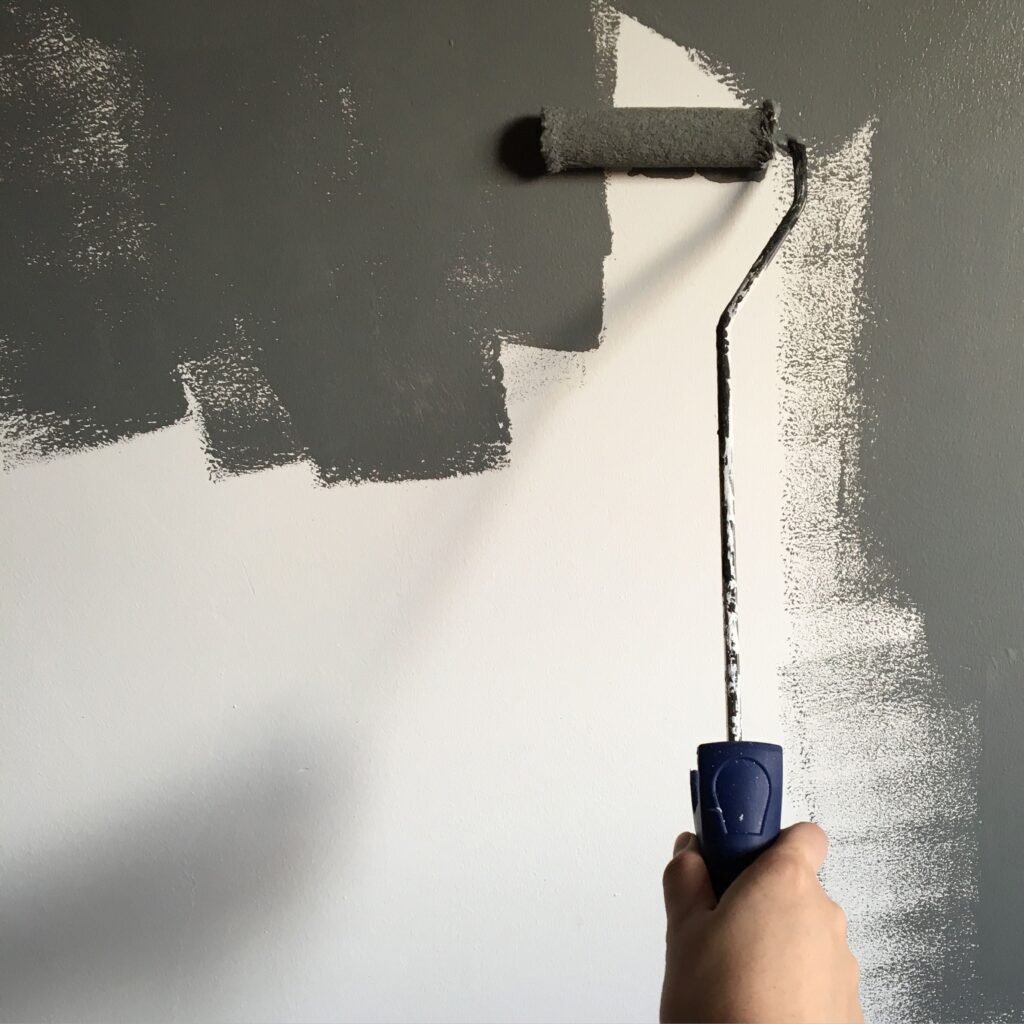
Yes, you can paint matt emulsion over silk, but the existing coating must be sound, clean and prepared for the paint system you intend to use. Do not assume that a coat of matt will reliably bond to an untouched shiny surface. Check the new paint manufacturer’s preparation instructions before choosing between abrasion, a suitable primer or a specified combination.
If you are deciding whether to change the finish at all, start with our matt versus silk paint comparison. This guide focuses on the practical problem of repainting an existing silk-coated wall.
Why can matt over silk go wrong?
A shiny existing finish needs more attention than a clean, absorbent new surface. Painting over contamination, loose layers or an unsuitable surface can undermine the new finish. The problem may show as poor adhesion, flaking or fine cracking.
Dulux’s paint-problem guidance specifically identifies matt applied over silk without removing the sheen as one possible cause of cracking. That does not mean every crack proves this happened: application thickness and the condition of the underlying surface can also matter.
Check the wall before buying more paint
| What you find | What it means for the job | What to do next |
|---|---|---|
| Sound, clean silk with an even sheen | A finish change may be straightforward with the right preparation | Check the intended matt paint’s instructions for previously painted shiny surfaces |
| Greasy or dirty areas | You would be coating contamination | Clean using a suitable method, remove cleaning residue as instructed and allow to dry |
| Loose, peeling or bubbling paint | The existing layers are not a reliable base | Find the cause and prepare back to a sound coating before selecting the repair system |
| Damp patches or recurring staining | Repainting may conceal an unresolved problem | Investigate and resolve the source before decorating |
| Fine cracking in a recently applied matt layer | The new coating may have failed | Identify the layers and ask the manufacturer for a compatible repair specification |
If you cannot identify what is already on the wall, do not treat “silk” as a confirmed diagnosis just because it looks shiny. Tell the paint supplier what you know and what you do not know.
How to prepare silk-painted walls for matt
1. Choose the complete paint system
Before starting, check the product information for the matt finish and any proposed primer. You need instructions that cover the actual substrate: an existing painted wall with a shiny finish, possibly with filled patches. A product described simply as a primer is not automatically suitable for every coating.
Ask the supplier: “This is an existing silk-emulsion wall. Does your matt require the sheen to be abraded, a bonding primer, or both? What preparation and drying times apply?” Keep the answer with the product details.
2. Protect the room and clean the surface
Protect floors and furniture, and provide the ventilation specified by the products. Remove grease and dirt using a cleaner suitable for the coating. Follow the cleaning product’s instructions, including any rinsing requirement, and let the surface dry.
Cleaning comes before abrasion so that you do not simply work contamination into the surface. Dulux’s preparation guidance emphasises cleaning walls and removing residue before decorating.
3. Resolve loose paint and defects
A new coating cannot make a failing underlying layer dependable. Establish why paint is lifting or why damp keeps returning before covering it. Make repairs with materials suitable for the wall and allow them to dry according to their instructions.
Large, growing or recurring cracks need assessment of the underlying cause. Do not assume a filler and a fresh colour solve every crack.
4. Prepare the sheen as specified
Where the paint system requires abrasion, the aim is a uniformly prepared surface rather than patches of untouched shine. Use the abrasive and method recommended for the coating, remove the resulting dust and inspect the wall before proceeding. You do not normally need to strip an otherwise sound wall merely to change its finish, but an existing failure may require more extensive removal.
For old or unidentified coatings, seek advice before sanding or stripping; preparation can create hazardous dust. Follow the product’s precautions and use appropriate protection for the method.
5. Prime where the system requires it
Use a compatible primer if specified for the existing finish or repaired areas. Check coverage, application conditions and recoat time rather than assuming all primers work alike. A bonding primer, a stain blocker and a preparation treatment for absorbent plaster have different purposes.
Do not use a diluted mist coat as a substitute for an appropriate preparation system on silk. Only thin products where their manufacturer tells you to do so, at the stated ratio for the stated surface.
6. Trial the system, then apply the finish
Prepare a small representative area using the whole proposed system before committing to every wall. Let it dry and cure as directed, then inspect it. A trial can reveal a problem early, although it cannot guarantee the performance of every underlying layer elsewhere in the room.
Apply the matt following its instructions for spreading rate, number of coats, ventilation and recoating. Avoid trying to conceal poor preparation with a heavy coat. Touch-dry does not necessarily mean ready for another coat or fully cured.
Can you paint matt over silk without sanding?
Possibly, if the chosen manufacturer explicitly specifies a compatible system for that surface without abrasion. Do not generalise from the word “primer”, a social-media demonstration or a successful job using different products.
If avoiding sanding is essential, ask for a written product recommendation covering the existing coating, cleaning, preparation and topcoat. If the manufacturer cannot confirm the combination, choose a documented system or ask a decorator to assess it.
Why is my matt paint cracking over silk?
Fine surface cracking, sometimes called crazing, differs from paint peeling away in sheets or a crack moving through plaster. Photograph the pattern and record which products were used, their application dates and how the wall was prepared.
Dulux Trade’s guidance on cracked or damaged walls lists matt applied onto silk among possible causes of crazing and describes a product-specific remedy. That is useful diagnostic information, not permission to apply the same remedy over every unknown coating.
Before buying another tin, send the photos and coating history to the paint manufacturer. Ask whether the failed layer needs removing, whether the original layer is sound, and which repair system it recommends. Painting another thick layer over an unresolved failure can leave you with more material to remove.
What to ask a painter and decorator
A useful quote should describe preparation, not just “two coats of paint”. Ask the decorator to record:
- The condition of the existing coating and any unresolved damp or loose areas.
- How grease, sheen and dust will be dealt with.
- The primer, if required, and the named finish.
- Whether filled patches need separate treatment.
- What is included if the existing layers fail during preparation.
- Drying allowances, protection, waste removal and the surfaces included.
For budget context, see our guides to the cost of painting a room and painter and decorator day rates. Ask for a quote based on your actual wall condition; extensive preparation can change the scope substantially.
Frequently asked questions
Will two coats of matt cover silk?
Colour coverage and adhesion are different questions. Two coats might conceal the old colour while still leaving a weak finish if preparation was unsuitable. Follow the specified preparation and coat requirements rather than relying on coat count alone.
Do I have to remove all the silk paint?
Not automatically. A sound existing coating can often be prepared and overpainted using a compatible system. Loose or failed layers require a different assessment.
Can I use any matt paint in a kitchen or bathroom?
Choose a product suitable for the room’s moisture and cleaning demands. “Matt” describes the appearance; it does not by itself establish washability or suitability for every location.
How long should I wait between coats?
Use the recoat time for the exact product and conditions. There is no single waiting time that safely covers all primers, matt finishes, temperatures and ventilation levels.
Need help assessing the wall?
Browse service providers on The Right Guy and check for a painter and decorator covering your area. Share clear photos and the existing paint details where known, and ask for a preparation-led quote. Provider availability varies by area.
Sources and scope
This guide draws on the linked Dulux and Dulux Trade guidance. It is an editorial explanation, not a report of our own product testing. The current instructions for the products you use take precedence over a general guide.

Author: The Right Guy Team
UK service guides published by The Right Guy Ltd.