
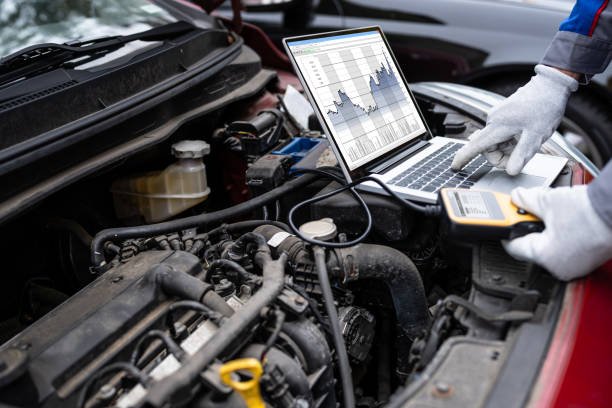
An engine-management light appears on the dashboard. The car starts losing power, making an unusual noise or behaving differently — but there is no obvious explanation.
Before replacing parts and hoping for the best, a mechanic will often recommend a diagnostic test.
So, how much does a car diagnostic test cost in the UK?
For a straightforward diagnostic check, a sensible 2026 budget is around £40–£100, with many independent garages and national providers charging somewhere around £50–£90. More complicated diagnostic work can cost £100–£200 or more if the mechanic needs additional time to investigate an intermittent electrical, engine or electronic fault.
Current UK prices support that range. FixMyCar reports an average car diagnostic price of around £52, while Halfords currently advertises its diagnostic check at £54.99. RAC’s published average is higher at approximately £87.
However, there is an important distinction:
A diagnostic scan reads information stored by your car. A full diagnosis identifies what is actually causing the problem.
Those are not always the same thing.
This guide explains typical car diagnostic test costs in the UK, what happens during a diagnostic check, why some tests cost more than others and whether you really need one when a warning light appears.
Average Car Diagnostic Test Cost in the UK
Typical 2026 prices look roughly like this:
| Diagnostic service | Typical UK cost |
|---|---|
| Basic fault-code scan | £20–£50 |
| Standard garage diagnostic check | £40–£100 |
| Mobile diagnostic visit | £50–£100 |
| Advanced electrical/engine diagnosis | £80–£150+ |
| Complex or intermittent fault diagnosis | £100–£200+ |
| Main-dealer/specialist diagnosis | £100–£200+ |
These figures are guides rather than fixed prices.
Current FixMyCar data puts the average diagnostic test at approximately £52, while Halfords charges £54.99 for its standard diagnostic check.
RAC’s published average is approximately £87.
That means around £50–£90 is a realistic expectation for many straightforward diagnostic appointments, but you should not assume every fault can be identified within a standard one-hour test.
What Is a Car Diagnostic Test?
Modern cars contain numerous electronic control units and sensors monitoring everything from engine operation and emissions to braking and transmission systems.
When the vehicle’s computer detects something outside its expected operating range, it can store a diagnostic trouble code, commonly called a DTC.
A diagnostic scanner connects to the vehicle’s onboard diagnostic system and retrieves this information.
Depending on the vehicle and equipment being used, a mechanic may be able to access information relating to systems such as:
- engine management
- fuel injection
- ignition
- emissions
- transmission
- ABS
- airbags
- electronic steering
- battery and charging systems
- sensors
- climate control
- diesel particulate filters
- other electronic modules
This can dramatically narrow down the search for a fault.
But there is a common misunderstanding about what happens next.
A Fault Code Does Not Always Tell You What Part to Replace
This is probably the most important thing to understand about vehicle diagnostics.
Imagine the scanner reports a fault relating to an oxygen sensor.
That does not necessarily mean:
“Replace the oxygen sensor.”
The sensor may genuinely have failed.
But the reading could potentially be affected by wiring, an air leak, an exhaust problem, an engine-running problem or another fault elsewhere in the system.
The fault code tells the technician where the vehicle’s computer has detected a problem.
Diagnosis determines why that problem exists.
A skilled mechanic may therefore use the diagnostic scanner as the beginning of the investigation rather than the end.
This is why a £20 code-reading service and a £100 diagnostic investigation are not necessarily equivalent products.
What Happens During a Car Diagnostic Test?
The exact procedure depends on the problem and the garage, but the technician will usually begin by discussing the symptoms.
That matters because information from the driver can help narrow down the problem.
For example:
- Does the fault happen when the engine is cold?
- Does the warning light appear under acceleration?
- Is the problem intermittent?
- Has the battery recently been replaced?
- Does the car lose power?
- Does the problem happen after long journeys?
- Are there unusual noises or smells?
The mechanic can then connect diagnostic equipment to the vehicle.
The scanner may retrieve stored and pending fault codes along with other information recorded by the vehicle.
More advanced diagnostic equipment can also display live data from sensors while the engine is operating.
Depending on what the scan reveals, the mechanic may then carry out additional testing.
That could involve checking wiring, measuring voltage, testing a sensor, inspecting a mechanical component or carrying out a road test.
The process ends when enough evidence has been gathered to identify the likely cause and recommend the appropriate repair.
How Long Does a Car Diagnostic Test Take?
A straightforward diagnostic check commonly takes around 30–60 minutes.
Halfords, for example, allows up to one hour for its standard diagnostic check.
However, reading the fault codes themselves can take considerably less time.
The additional time is used to interpret the information and investigate the problem.
Complicated faults can take several hours.
Intermittent electrical problems are particularly challenging because the fault may disappear while the mechanic is testing the vehicle.
If a garage cannot complete the diagnosis within the initial appointment, ask how additional diagnostic time will be charged before authorising further investigation.
Some garages charge a fixed initial diagnostic fee and then an hourly rate.
Why Can Car Diagnostics Cost £100 or More?
It can seem surprising to pay £100 when somebody plugs a computer into your car.
But the price is not simply for connecting the scanner.
Professional diagnostic equipment can be expensive, and garages may pay ongoing fees for software, technical information and manufacturer-specific access.
More importantly, you are paying for the technician’s ability to interpret what the data actually means.
Consider two approaches.
A basic scanner says:
P0302 – Cylinder 2 misfire detected.
A simple code reader has completed its job.
But what caused the misfire?
It could potentially involve:
- spark plug
- ignition coil
- fuel injector
- wiring
- air leak
- compression problem
- fuel-delivery problem
- another mechanical issue
A proper diagnosis involves determining which explanation is actually responsible.
Replacing several parts until the problem disappears can cost far more than paying for diagnostic time at the beginning.
Basic Diagnostic Scan vs Full Diagnostic Investigation
This distinction is worth checking before booking.
Basic fault-code scan
A basic scan usually involves connecting an OBD diagnostic tool and retrieving stored fault codes.
This can be useful if you simply want to know why a warning light has appeared.
It may cost approximately £20–£50, and some garages offer basic scans at a reduced price or alongside other work.
However, it may not identify the underlying cause.
Standard diagnostic check
A standard professional diagnostic appointment typically costs around £40–£100.
The technician may read fault codes, examine relevant data and investigate the most likely causes.
For many straightforward problems, this can be sufficient.
Advanced fault diagnosis
Complex electrical, electronic or intermittent problems may require much more investigation.
A technician might need to test wiring, compare sensor signals, inspect mechanical components or reproduce the fault during a road test.
That can push diagnostic costs beyond £100–£200.
The additional cost does not necessarily mean the garage is expensive. It may simply mean the problem requires considerably more technician time.
How Much Does Mobile Car Diagnostics Cost?
Mobile diagnostics are increasingly common.
A mechanic comes to your home, workplace or wherever the vehicle is parked and connects diagnostic equipment there.
A reasonable budget is approximately £50–£100 for many mobile diagnostic appointments.
Current FixMyCar data puts its average mobile diagnostic price at just over £52.
This can be particularly useful if the car:
- will not start
- is in limp mode
- cannot be driven safely
- has an electrical problem
- is repeatedly breaking down
Instead of paying to recover the vehicle to a garage simply to begin diagnosis, a mobile mechanic may be able to investigate the problem where it sits.
If you are deciding which option suits you, our guide comparing a mobile mechanic vs garage explains the advantages and limitations of both.
What Problems Can a Diagnostic Test Find?
Modern diagnostic equipment can provide information about a huge range of vehicle systems.
Common reasons for booking diagnostics include:
Engine-management light
This is probably the most familiar reason.
The vehicle has detected a problem affecting engine operation or emissions and stored information relating to the fault.
ABS warning light
Diagnostic equipment can communicate with the anti-lock braking system and identify stored faults involving wheel-speed sensors or other ABS components.
Airbag warning light
Modern airbag and restraint systems are electronically monitored.
A warning light can indicate a problem somewhere within the system that needs investigation.
Transmission problems
Automatic transmissions increasingly rely on electronic control.
Fault codes and live data can therefore help diagnose certain gearbox problems.
Starting problems
Diagnostics can sometimes help narrow down starting faults, although traditional electrical and mechanical testing may still be required.
Battery, alternator and starter-motor problems cannot always be diagnosed simply by reading a fault code.
DPF and emissions faults
Diesel vehicles can store information relating to diesel particulate filters, pressure sensors, exhaust temperatures and emissions systems.
Again, identifying a DPF-related code does not automatically mean the filter itself needs replacing.
Do I Need a Diagnostic Test If the Engine Light Comes On?
Often, yes.
An engine-management warning light means the vehicle has detected something outside its expected operating parameters.
The severity depends partly on the warning and the way the vehicle is behaving.
A continuously illuminated warning light may indicate a fault that requires investigation but does not necessarily mean the engine is about to fail.
A flashing engine-management light can indicate a more serious problem and should not simply be ignored.
Likewise, if the car is losing power, running roughly, overheating or displaying a red warning, the appropriate response may be more urgent than simply booking a routine diagnostic appointment.
The purpose of diagnosis is to establish what the warning actually represents rather than guessing from the symbol alone.
Can a Diagnostic Test Find Suspension Problems?
Sometimes diagnostics can help, but many suspension faults still require physical inspection.
Electronic or adaptive suspension systems can store diagnostic fault codes.
However, a conventional worn bush, damaged ball joint, broken coil spring or worn shock absorber may be identified primarily through visual and mechanical inspection rather than a computer scan.
If your car is knocking over bumps, sitting unevenly or handling poorly, our guide to suspension repair costs in the UK explains the common components involved and typical replacement prices.
This is an important reminder that “car diagnostics” does not mean a computer can identify every mechanical problem automatically.
Is a Diagnostic Test Included in a Full Car Service?
Not necessarily.
A routine service and a diagnostic investigation serve different purposes.
A car service focuses on scheduled maintenance, inspections and replacement of relevant service items.
A diagnostic test investigates a particular fault or warning.
Some garages may include basic electronic checks as part of certain service packages, but a detailed investigation into a warning light or intermittent problem can be charged separately.
If your vehicle is simply due for routine maintenance rather than displaying a specific fault, our guide to how much a full car service costs in the UK explains current prices and what is normally included.
When booking, tell the garage about any warning lights or symptoms rather than assuming the standard service will automatically diagnose them.
Is a Diagnostic Test the Same as an MOT?
No.
An MOT is a legally defined annual roadworthiness test for vehicles that require one.
A diagnostic test is troubleshooting.
Your car could pass an MOT and still have an intermittent electrical fault that requires diagnosis.
Likewise, diagnostic equipment does not replace the physical inspections and tests carried out during an MOT.
The two services have different purposes.
Will a Garage Charge for Diagnostics If I Have the Repair Done There?
Sometimes yes, sometimes no.
Garage policies vary.
Some businesses charge the diagnostic fee regardless of whether you proceed with the repair.
Others may reduce or waive some diagnostic charges if you authorise the recommended work.
There is nothing inherently unreasonable about charging for diagnosis.
The technician has spent time identifying the problem whether or not you subsequently choose that garage to repair it.
The best approach is to ask before booking:
“Is the diagnostic fee separate from the repair cost, or is any of it deducted if I have the repair done with you?”
That gives you a clear total before committing.
Can I Buy an OBD Scanner and Diagnose the Car Myself?
Basic OBD fault-code readers are widely available.
Some cost less than a professional diagnostic appointment, which makes DIY scanning tempting.
A basic scanner can certainly be useful.
It may allow you to:
- read engine fault codes
- identify why an engine warning light has appeared
- view basic vehicle data
- clear certain fault codes
However, reading the code and diagnosing the repair are different skills.
For example, if your scanner reports an emissions sensor fault, buying and installing that sensor immediately may not solve the problem if damaged wiring or another engine fault caused the abnormal reading.
DIY diagnostic tools are therefore useful for gathering information, but they should not encourage parts replacement based solely on one fault code.
Should You Clear a Warning Light Yourself?
Clearing a fault code does not repair the problem that caused it.
If the underlying fault remains, the warning will normally return.
More importantly, clearing codes can remove useful diagnostic information that a mechanic might otherwise use to understand what happened.
If a warning light appears unexpectedly and you intend to have the vehicle professionally diagnosed, leaving the stored fault information intact can be useful.
The goal should be to fix the cause rather than simply make the dashboard light disappear.
Why Did the Garage Say “No Fault Found”?
Intermittent faults can be frustrating.
A car may behave badly for several days and then work perfectly when it reaches the workshop.
There are several possible reasons.
The fault may only occur:
- when the engine is cold
- after a long journey
- under heavy acceleration
- in wet weather
- at a particular temperature
- when a certain electrical component operates
The vehicle may also have stored historical fault codes that are not currently active.
Good information from the driver can be extremely useful here.
If possible, note:
- when the problem happens
- engine temperature
- road speed
- weather conditions
- warning lights displayed
- unusual sounds
- whether restarting the engine temporarily fixes it
Videos of intermittent noises or dashboard warnings can also sometimes help a technician understand a problem that refuses to appear in the workshop.
Does a Diagnostic Test Tell You Exactly How Much the Repair Will Cost?
Usually not immediately.
The diagnostic test identifies or narrows down the fault.
Once the mechanic understands what is wrong, they can calculate the cost of parts and labour required to repair it.
For example, diagnostics might identify a problem involving an ignition coil.
The garage can then quote for the appropriate replacement.
But if the initial scan identifies an electrical circuit problem, further testing may be necessary before anybody can accurately price the repair.
This is why a diagnostic fee and repair quote should be treated as separate stages.
Is £100 Expensive for a Car Diagnostic Test?
For a simple fault-code scan, £100 would be relatively expensive.
For an hour of professional diagnostic work using advanced equipment, it can be perfectly reasonable.
The key question is what is included.
A £30 scan that simply gives you a fault-code printout is very different from a £100 investigation where an experienced technician tests circuits, analyses live data and identifies the actual failed component.
Ask what you will receive for the diagnostic charge before comparing prices.
How to Save Money on Car Diagnostics
Start by describing the symptoms accurately when booking.
The more information the mechanic has, the easier it can be to reproduce and diagnose the problem.
If a warning light has appeared, do not repeatedly clear it before the appointment.
When requesting quotes, ask:
- how much the initial diagnostic test costs
- how much time that includes
- what the hourly rate is for additional investigation
- whether you will receive the fault codes or findings
- whether the fee is reduced if you proceed with the repair
- whether a road test is included where necessary
Avoid choosing solely on the cheapest advertised diagnostic scan.
If one garage charges £30 simply to retrieve a code while another charges £60 to investigate its cause, the £60 service may ultimately save you considerably more money.
Frequently Asked Questions
How much does a car diagnostic test cost in the UK?
For a standard car diagnostic test in the UK, around £40–£100 is a sensible 2026 budget. Current market averages sit around £50–£90, while complex investigations can cost £100–£200 or more.
What is the average cost of car diagnostics?
Current UK pricing varies by provider. FixMyCar’s average is around £52, Halfords charges £54.99 for its diagnostic check and RAC reports an average of approximately £87.
How long does a diagnostic test take?
A straightforward diagnostic appointment typically takes around 30–60 minutes. Complex or intermittent faults may require additional investigation.
Does a diagnostic test tell you exactly what’s wrong?
Not always. A scanner identifies stored fault codes and vehicle data. A mechanic may need to carry out further testing to determine what actually caused the code.
Is a diagnostic test included in a car service?
Not necessarily. Routine servicing and fault diagnosis are different services. A garage may charge separately for investigating a warning light or specific problem.
Can a diagnostic test detect every problem with a car?
No. Computer diagnostics are particularly useful for electronically monitored systems. Mechanical problems such as worn suspension bushes, wheel bearings or some physical leaks may require traditional inspection and testing.
How much does mobile car diagnostics cost?
Many mobile diagnostic appointments cost approximately £50–£100, depending on the mechanic, vehicle, location and amount of investigation required.
Can I diagnose my car myself?
A basic OBD scanner can read certain fault codes and vehicle data, but interpreting the cause correctly can require mechanical knowledge, electrical testing and more advanced diagnostic equipment.
Should I pay for diagnostics before a repair?
For an unexplained or complicated fault, diagnosis can prevent unnecessary parts replacement. Paying £50–£100 to establish the likely cause may be considerably cheaper than replacing several components by guesswork.
Will a garage reset the warning light after diagnostics?
If appropriate, a garage may clear stored fault codes, but simply resetting the light does not repair the underlying problem. If the fault remains, the warning is likely to return.
Find a Local Mechanic for Car Diagnostics
So, how much does a car diagnostic test cost in the UK? For most straightforward checks, around £40–£100 is a useful 2026 budget, with current national pricing commonly sitting somewhere around £50–£90.
More complicated problems can cost more because reading a fault code is only the beginning of proper diagnosis.
The real value comes from identifying why the fault occurred.
A good diagnostic investigation can potentially prevent unnecessary repairs, whether the eventual problem turns out to be a relatively inexpensive sensor, a wiring fault or a more substantial mechanical issue.
When comparing quotes, ask what the diagnostic charge actually includes and whether additional investigation will require your approval before further charges are incurred.
If a warning light has appeared, your car is behaving unusually or you need help identifying an unexplained fault, you can use The Right Guy to find local mechanics, mobile mechanics, garages and automotive diagnostic specialists who can investigate the problem and discuss the appropriate next step.

Author: manager
Company test