
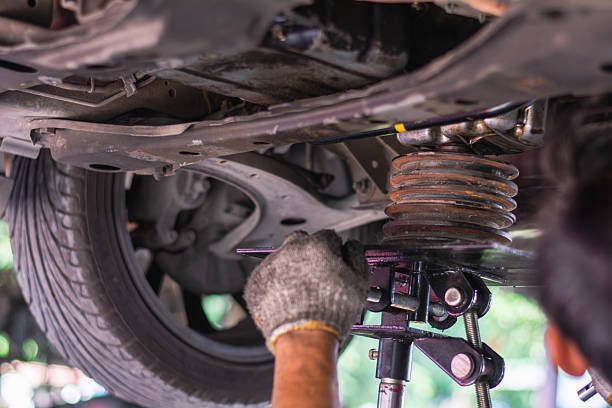
A knocking noise over potholes, a car that feels unusually bouncy or tyres wearing unevenly can all point towards a suspension problem. But when a garage tells you the suspension needs attention, that still does not tell you how expensive the repair will be.
So, how much does suspension repair cost in the UK?
For many common suspension problems, expect to pay somewhere between £80 and £600 in 2026, depending on which component has failed and whether one part or a pair needs replacing. A relatively simple drop-link or suspension-bush repair may cost around £60–£200, while replacing shock absorbers, coil springs or suspension arms can run into several hundred pounds.
More complicated suspension systems — particularly adaptive or air suspension fitted to some premium vehicles — can cost substantially more.
The reason for such a wide range is simple: your car does not have one component called “the suspension”. It has a network of springs, dampers, arms, bushes, joints and links working together.
This guide breaks down typical suspension repair costs in the UK, explains what the different components do, covers the warning signs of suspension trouble and looks at when wheel alignment may be needed after a repair.
Average Suspension Repair Cost in the UK
For a conventional suspension system on a mainstream car, these are useful 2026 budgeting figures:
| Suspension repair | Typical UK fitted cost |
|---|---|
| Anti-roll bar bushes | £50–£150 |
| Drop links | £60–£160 |
| Ball joint | £70–£200+ |
| Suspension bush | £80–£250 |
| Wishbone/control arm | £120–£350 each |
| Coil springs | £150–£450 per pair |
| Shock absorbers | £150–£520 per pair |
| Wheel alignment afterwards | £40–£100 |
| More extensive suspension repairs | £500–£1,000+ |
These figures are guides rather than guaranteed prices.
The exact amount depends on your car, which axle is affected, replacement-part quality, labour rates and whether related components need attention.
Current UK repair data demonstrates the variation. ClickMechanic puts general suspension repair or replacement at approximately £100–£600 and reports average prices of around £200 for a pair of rear shock absorbers and £300 for front shock absorbers.
That means somebody paying £120 and another driver paying £500 could both be receiving perfectly reasonable quotes — they may simply need completely different repairs.
Why Does Suspension Repair Cost Vary So Much?
“Suspension repair” describes an entire category of mechanical work rather than one specific job.
Your vehicle’s suspension can contain components including:
- shock absorbers or dampers
- coil springs
- suspension struts
- wishbones or control arms
- suspension bushes
- ball joints
- anti-roll bars
- drop links
- top mounts
Different suspension designs use these components in different arrangements.
When requesting a quote, therefore, ask the garage to tell you exactly which component has failed.
A mechanic saying “your suspension needs repairing” does not give you enough information to compare prices.
How Much Does Shock Absorber Replacement Cost?
Shock absorbers — also known as dampers — control the movement of the suspension after the springs compress.
Without effective damping, the vehicle can continue bouncing after travelling over a bump instead of quickly settling.
For a pair of conventional shock absorbers, expect approximately £150–£520 fitted, depending on the vehicle and axle.
Current ClickMechanic data puts a pair of rear shock absorbers at around £200 on average, while front replacement averages approximately £300.
Front replacements can be more expensive because the front suspension is often more complex and may use MacPherson strut assemblies where the spring and damper form part of the same structure.
Premium or performance dampers can increase the parts bill substantially.
How Much Does Coil Spring Replacement Cost?
For many mainstream vehicles, replacing a pair of coil springs costs approximately £150–£450.
Current ClickMechanic data puts average front coil-spring replacement at approximately £250, while a pair of rear springs averages around £175.
Coil springs support the weight of the vehicle and compress when the wheels travel over bumps.
They operate under considerable load and are exposed to road dirt, water and winter salt. Corrosion can eventually weaken a spring enough for it to fracture.
A broken spring may cause one corner of the car to sit lower than normal, create knocking or scraping noises or affect the way the vehicle handles.
Whether one or both springs should be replaced depends on the vehicle, condition and manufacturer’s repair guidance. Garages commonly recommend replacing springs or dampers in axle pairs where appropriate to maintain balanced suspension behaviour.
How Much Does a Wishbone Replacement Cost?
A suspension wishbone — also called a control arm — connects parts of the wheel assembly to the vehicle structure while allowing controlled suspension movement.
A typical wishbone replacement can cost approximately £120–£350 per side for many cars.
Some wishbones include bushes or ball joints as part of the complete assembly.
This creates an interesting repair decision.
If only a bush has worn, it may technically be possible to replace the bush separately on certain vehicles. However, pressing an old bush out and installing a new one requires additional labour.
In some cases, replacing the complete arm with new bushes already fitted can therefore make better financial sense.
Ask the garage whether it is quoting for:
a replacement bush only, or
a complete suspension arm.
That distinction can explain a substantial difference between two quotes.
How Much Do Drop Links Cost to Replace?
Anti-roll bar drop links are among the cheaper suspension components to replace.
For many mainstream cars, expect approximately £60–£160, depending on whether one or both sides are being replaced.
Drop links connect the anti-roll bar to the suspension and can develop play as their joints wear.
One common symptom is a rattling or knocking noise when travelling over smaller bumps or uneven roads.
Because drop links are relatively inexpensive and generally easier to access than major suspension components, a suspension knock does not automatically mean you are facing a £500 repair.
Proper diagnosis matters.
How Much Do Suspension Bushes Cost to Replace?
Suspension bushes are relatively inexpensive components, but replacing them can sometimes involve significant labour.
For many vehicles, expect approximately £80–£250 for suspension-bush work, although complicated installations can cost more.
Bushes are usually made from rubber or similar flexible materials and help isolate vibration while allowing controlled movement between suspension components.
As they deteriorate, they can develop cracks, soften or allow excessive movement.
Symptoms can include knocking, vague steering, uneven tyre wear and changes in handling.
Because the bush itself may cost relatively little, drivers are sometimes surprised by the quote. The labour required to remove a suspension arm and press the old bush out can cost considerably more than the replacement rubber component.
What Are the Signs of Worn Suspension?
Suspension wear can appear gradually, making it easy to become accustomed to changes in the way your car drives.
There are several symptoms worth investigating.
Knocking or clunking over bumps
A knock when driving over potholes, speed humps or uneven roads is one of the most common suspension complaints.
Possible causes include worn drop links, bushes, ball joints, top mounts or suspension arms.
The noise alone does not identify the component.
Car feels excessively bouncy
If the vehicle continues moving up and down after travelling over a bump, worn shock absorbers may no longer be controlling spring movement effectively.
You might also notice more body movement through bends.
Uneven tyre wear
Suspension and wheel geometry affect how the tyres contact the road.
Worn components can therefore contribute to irregular tyre wear.
However, incorrect tyre pressures and wheel-alignment problems can cause similar symptoms.
Vehicle sits lower on one corner
A broken or weakened coil spring can sometimes cause one corner of the vehicle to sit lower than the others.
This deserves inspection rather than simply continuing to drive until the next service.
Steering feels vague
Worn suspension joints or bushes can allow movement that makes steering feel less precise.
The car may wander or require more correction than normal.
Car pulls to one side
Suspension problems are one possible reason a vehicle may drift or pull.
However, there are several others — including tyre pressure, wheel alignment and braking problems.
Rather than replacing suspension components based solely on that symptom, read our guide to why your car is pulling to one side for the other common causes worth checking.
Suspension Problem or Wheel Alignment Problem?
The two are closely related but not the same.
Suspension components physically control and locate the wheels, while wheel alignment describes the angles at which those wheels sit relative to the vehicle and road.
A car can have incorrect wheel alignment even when its suspension components are mechanically sound.
Likewise, adjusting the wheel alignment will not repair a worn ball joint, damaged wishbone or broken spring.
That distinction is important because paying for alignment before repairing a worn suspension component may achieve very little. The worn component can allow the wheel geometry to move again.
A mechanic should therefore inspect relevant suspension and steering components if there are signs of excessive play or damage.
If the suspension is sound and the problem is geometry, see our guide to how much wheel alignment costs in the UK for current pricing and the difference between basic tracking and four-wheel alignment.
Do You Need Wheel Alignment After Suspension Repair?
Sometimes, yes.
Replacing certain suspension components can alter or disturb the vehicle’s wheel geometry.
Wishbones, control arms, struts and other components that affect wheel position are particularly relevant.
A wheel-alignment check after appropriate suspension work can ensure the wheels are sitting at the intended angles and help prevent premature tyre wear.
Not every minor suspension repair automatically requires full four-wheel alignment, however.
For example, replacing some anti-roll bar components may not affect adjustable wheel geometry in the same way as replacing a control arm.
Ask the mechanic whether alignment is recommended for the specific repair and whether it is included in the quote.
If it is not included, allow roughly £40–£100 depending on the type of alignment and vehicle.
Will Worn Suspension Fail an MOT?
It can.
Suspension components form part of the MOT inspection, and significant wear, damage or insecurity can result in a failure.
A slightly deteriorated component may initially appear as an advisory if it has not reached the threshold for failure.
More serious deterioration can be classified as a major or dangerous defect depending on the component and severity.
This is another reason not to ignore repeated suspension advisories year after year.
An advisory does not necessarily mean the component needs immediate replacement, but it tells you that the tester has identified deterioration worth monitoring.
If the same suspension component appears repeatedly on MOT advisories, asking a mechanic to assess its remaining condition can help you plan for the eventual repair rather than being surprised at the next test.
Can Potholes Damage Car Suspension?
Yes, a severe pothole impact can damage suspension and steering components.
The exact outcome depends on the speed, depth of the pothole, tyre profile, wheel size and direction of impact.
Possible damage can include:
- bent suspension components
- damaged springs
- damaged dampers
- wheel damage
- tyre damage
- disturbed wheel alignment
However, a car pulling slightly after hitting a pothole does not automatically mean the suspension needs replacing.
The impact may simply have affected wheel alignment.
Equally, paying for alignment without checking for physical damage first can be a mistake.
If the steering suddenly changes after a severe pothole strike, an inspection is the sensible first step.
Should Shock Absorbers Be Replaced in Pairs?
Garages commonly recommend replacing shock absorbers in pairs across the same axle.
The reason is balance.
Installing one brand-new damper next to a significantly worn one can result in different damping performance on opposite sides of the vehicle.
Similar considerations can apply to coil springs.
That is why a quote that appears to be twice the cost you expected may actually cover both sides of the axle rather than one component.
Always ask whether the price quoted is:
per component,
per side, or
per axle pair.
This simple clarification prevents a lot of confusion when comparing suspension repair prices online.
Front vs Rear Suspension Repair Costs
Front suspension work is often more expensive than equivalent work at the rear.
The front wheels need to steer as well as absorb road impacts, so the suspension layout can be more complicated.
Many front-wheel-drive cars also package the engine, gearbox, driveshafts, steering and suspension components into a relatively confined area.
Rear suspension designs vary enormously.
Some small cars use relatively simple torsion-beam arrangements, while premium and performance vehicles may have sophisticated multi-link rear suspension containing numerous arms, bushes and joints.
There is therefore no universal rule that rear suspension is always cheap.
Your vehicle’s actual suspension design matters.
What About Air Suspension Repair Costs?
Air suspension is a separate category from the conventional coil-spring suspension fitted to most cars.
Instead of relying solely on steel springs, air-suspension systems use air springs along with components such as compressors, valves, sensors and electronic control systems.
These systems are common on certain luxury cars, SUVs and premium models.
Repairs can easily cost several hundred pounds per corner, while more substantial system faults can run beyond £1,000.
If your vehicle has air suspension, generic prices for a Ford Fiesta or Volkswagen Golf are therefore not particularly useful.
Ask for a vehicle-specific diagnosis identifying whether the fault involves an air spring, compressor, sensor, valve block or another component before comparing quotes.
Is Suspension Repair Included in a Car Service?
Suspension replacement is not normally included in the standard price of a routine car service.
A service may include visual checks of suspension components, and a mechanic may identify excessive wear, leaks or damage during the inspection.
Any replacement parts and additional labour would normally be quoted separately.
This is why a £200 service can sometimes lead to a considerably larger maintenance estimate if several worn components are discovered.
That does not mean every recommended repair must automatically be authorised immediately.
Ask which items require urgent attention, which are approaching replacement and which are simply being monitored.
Can a Mobile Mechanic Repair Suspension?
Some suspension repairs can be carried out by a mobile mechanic.
Accessible components such as drop links, certain shock absorbers and some suspension arms may be suitable for mobile replacement where there is a safe, level working area.
Other repairs are much easier with a vehicle lift, spring compressor, hydraulic press or wheel-alignment equipment.
For complicated suspension work, a properly equipped garage can therefore be the more practical choice.
If convenience is important but you are unsure which route makes sense, our guide comparing a mobile mechanic vs garage explains the advantages and limitations of each option.
Can You Drive With Damaged Suspension?
It depends on what has failed and how severe the damage is.
A minor worn bush is very different from a broken coil spring or badly worn ball joint.
Because suspension directly affects wheel control and vehicle handling, significant defects should not simply be ignored because the car still moves.
If the vehicle suddenly sits unevenly, steering behaviour has changed substantially, a component appears loose or you hear severe mechanical noises, arrange an inspection before continuing normal use.
For gradual knocking or minor changes in handling, booking diagnosis early can also prevent secondary costs such as premature tyre wear.
Is Suspension Repair Worth It on an Older Car?
A suspension bill of £400–£600 can feel significant on an older vehicle, but the repair should be considered in context.
Suppose a car is worth £3,500, runs reliably and needs £400 of suspension work.
Replacing the entire vehicle simply to avoid that repair would normally cost far more.
The calculation changes if the same car also needs major engine work, tyres, brakes, corrosion repairs and several other expensive jobs.
Consider:
- current vehicle value
- general mechanical condition
- MOT history
- other upcoming repairs
- how long you intend to keep the car
- cost of replacing it with something reliable
Suspension components are wear items. Needing new shocks or bushes does not automatically mean the entire car is reaching the end of its life.
How to Save Money on Suspension Repairs
The most important step is getting an accurate diagnosis.
Do not authorise “suspension replacement” without knowing exactly which components are worn.
Ask for a written quote identifying the parts.
Then compare like for like.
A £220 quote for one shock absorber cannot fairly be compared with a £350 quote covering both sides of the axle.
Likewise, one garage may quote for replacing a suspension bush while another recommends replacing the complete control arm.
Check:
- which component is being replaced
- whether the price covers one side or a pair
- replacement-part brand
- labour
- VAT
- wheel alignment
- warranty
- any additional components recommended
If alignment is required afterwards, compare the total repair price including alignment rather than treating it as an unexpected extra.
Frequently Asked Questions
How much does suspension repair cost in the UK?
Common suspension repair costs in the UK range from roughly £80 to £600, depending on the component. Simple bushes or links can cost towards the lower end, while shock absorbers, springs and suspension arms can cost several hundred pounds. Complex or air-suspension repairs can exceed £1,000.
How much does it cost to replace shock absorbers?
A pair of conventional shock absorbers can cost approximately £150–£520 fitted. Front replacements often cost more than rear ones, depending on the suspension design.
How much does coil spring replacement cost?
For many mainstream cars, expect approximately £150–£450 for a pair of coil springs, although vehicle-specific prices vary.
How much does a suspension arm cost to replace?
A wishbone or control-arm replacement typically costs around £120–£350 per side, depending on the vehicle and whether bushes and ball joints are incorporated into the assembly.
Is suspension expensive to fix?
Not necessarily. Some of the most common suspension components, such as drop links, can be relatively inexpensive. Costs become much higher when dampers, springs, multiple control arms or specialist suspension systems need replacing.
Does suspension repair include wheel alignment?
Not always. Some suspension repairs may require an alignment check afterwards, but this may be charged separately. Ask whether it is included when comparing quotes.
Can bad suspension cause uneven tyre wear?
Yes. Worn suspension components can affect wheel control and geometry, potentially contributing to uneven tyre wear. Incorrect wheel alignment and tyre pressures can also cause irregular wear.
Why does my suspension knock over bumps?
Possible causes include worn drop links, bushes, ball joints, top mounts or other suspension components. The type of noise alone is not enough for a reliable diagnosis.
Should suspension be replaced in pairs?
Some components, particularly shock absorbers and springs, are commonly replaced in axle pairs to maintain balanced performance. Other parts such as individual control arms or ball joints may be replaced only where worn, depending on vehicle design and condition.
Find a Local Mechanic for Suspension Repair
So, how much does suspension repair cost in the UK? For common repairs, approximately £80–£600 is a useful starting range, but the phrase “suspension repair” covers everything from an inexpensive drop link to several hundred pounds’ worth of shocks, springs and control arms.
Before comparing prices, establish exactly what has failed.
If your car is knocking over bumps, sitting unevenly, wearing tyres irregularly or handling differently, diagnosing the underlying component is much more useful than assuming the whole suspension needs replacing.
It is also worth checking whether wheel alignment will be required once the repair is complete, particularly when components affecting wheel geometry are replaced.
If your vehicle needs suspension work, you can use The Right Guy to find local mechanics, garages, suspension specialists and automotive professionals who can inspect the problem and discuss the appropriate repair.

Author: manager
Company test