
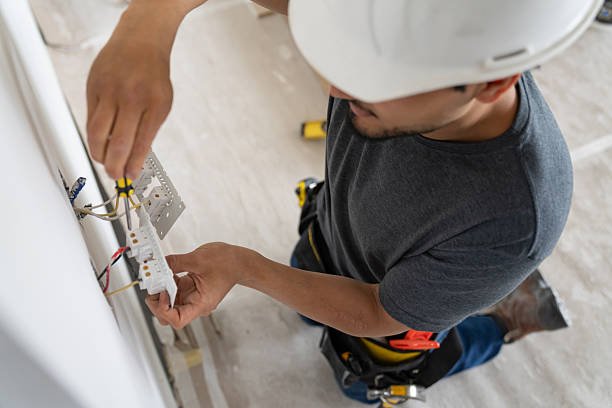
If you need electrical work at home, one of the first questions is usually straightforward: how much does an electrician charge per hour in the UK?
For standard domestic electrical work in 2026, a useful starting point is around £45–£80 per hour, with rates varying according to location, experience, the type of work and whether the job is booked during normal working hours or as an emergency.
That hourly figure does not always tell you what the final bill will be. Electricians may charge a minimum fee, a call-out charge, a half-day rate, a full-day rate or a fixed price for a defined job.
So a better question is often:
What will the complete job cost, including labour, materials, testing and any certification?
This guide explains typical electrician hourly rates in the UK in 2026, day rates, call-out charges, emergency prices, London rates and what you should check before accepting a quote.
If your electrical system has not been checked for some time, our guide to how much an EICR costs in 2026 explains what you may pay for a formal electrical condition inspection.
Average electrician hourly rate in the UK
For ordinary domestic electrical work, a sensible 2026 budget is:
| Electrician charge | Typical UK cost |
|---|---|
| Standard electrician hourly rate | £45–£80 per hour |
| Typical average rate | Around £60 per hour |
| Minimum call-out / first hour | £60–£120 |
| Half-day rate | £180–£300 |
| Full-day rate | £300–£500 |
| Emergency electrician | £80–£150+ per hour |
| London / higher-cost areas | Often £70–£100+ per hour |
These are broad budgeting figures rather than fixed national prices.
Electrical work varies considerably. Replacing a straightforward light fitting is very different from fault-finding on an intermittent circuit problem or installing a new consumer unit.
Why do electricians charge £45–£80+ per hour?
An electrician’s hourly rate is not simply their personal wage.
It also needs to cover the costs of running a professional trade business, including:
- van and fuel;
- tools;
- test equipment;
- insurance;
- training;
- professional registration;
- administration;
- travel between jobs;
- replacement equipment;
- time spent preparing quotations;
- certification and paperwork.
Qualified electricians also invest significantly in training and specialist testing equipment.
That is why even a small electrical job can have a minimum charge.
Do electricians charge a minimum of one hour?
Many do.
Suppose an electrician charges:
£60 per hour
and replacing one damaged socket takes 25 minutes.
You should not automatically expect:
25 minutes = £25 labour.
The electrician may charge a one-hour minimum because the job still requires:
- travelling to your property;
- setting up;
- safely isolating the circuit;
- completing the work;
- testing;
- travelling to the next customer.
For small jobs, ask:
“What is your minimum charge?”
before booking.
What is an electrician call-out charge?
A call-out charge covers the electrician attending your property.
It may include:
- travel;
- first hour;
- initial fault finding;
- testing.
But pricing structures differ.
For example:
Electrician A: £70 call-out including first hour.
Electrician B: £40 call-out + £60 hourly labour.
Electrician C: No call-out but £90 minimum charge.
This is why comparing only the hourly rate can be misleading.
Does the call-out fee include labour?
Sometimes.
Always ask:
- Does the call-out include the first hour?
- When does the hourly rate begin?
- Is testing included?
- Are materials extra?
- Is VAT included where applicable?
A £90 call-out including labour may be better value than a £50 call-out followed immediately by additional hourly charges.
How much does an emergency electrician charge?
Emergency electrical work is usually significantly more expensive.
A realistic 2026 range is around:
£80–£150+ per hour
and sometimes more for late-night, weekend or bank-holiday attendance.
Emergency pricing may also include a separate call-out charge.
Situations where urgent electrical help may be required include:
- burning smells from electrical equipment;
- sparking;
- exposed live wiring;
- repeated serious tripping with signs of a fault;
- electrical damage after flooding;
- complete loss of power caused by an internal installation fault.
If there is immediate danger, avoid touching suspected faulty electrical equipment.
What counts as an electrical emergency?
Not every electrical problem needs a midnight call-out.
A broken decorative light fitting can usually wait.
More serious warning signs include:
- scorch marks;
- melting plugs;
- repeated sparks;
- hot sockets;
- burning smells;
- visible damaged wiring.
Our guide to 12 signs your electrics need checking covers warning signs that should not be ignored.
How much does an electrician charge per day?
For larger jobs, electricians may quote a day rate.
A typical 2026 day rate is around:
£300–£500 per day
depending on location and experience.
This can make more sense for:
- multiple socket installations;
- renovation work;
- several lighting changes;
- first-fix or second-fix electrical work;
- fault-finding across several circuits.
If an electrician charges £60 per hour, eight hours would theoretically equal:
£60 × 8 = £480
so a £400 day rate may be better value.
But always ask how many working hours the day rate actually covers.
Hourly rate vs fixed price: which is better?
For many electrical jobs, a fixed price can be easier to budget for.
Hourly pricing works well for:
- fault finding;
- uncertain problems;
- small maintenance jobs;
- multiple minor tasks.
Fixed pricing works well for:
- extra sockets;
- light fitting installation;
- EICR;
- consumer unit replacement;
- EV charger installation;
- defined renovation work.
Neither approach is automatically cheaper.
The important thing is knowing the scope.
How much does it cost to install an extra socket?
Extra sockets are one of the most common electrician jobs.
The total depends on:
- number of sockets;
- wall type;
- cable route;
- whether existing circuits can be extended;
- whether plastering is required.
A straightforward additional socket may cost around £100–£200, while several sockets can reduce the average cost per point.
Our full 2026 extra socket installation cost guide explains this in more detail.
Example: two-hour electrical job
Imagine an electrician charges £60 per hour.
A job takes two hours.
Labour: £120
Materials cost:
£40
Total before any applicable additional charges:
£160
Now suppose the electrician also charges a £60 call-out fee that does not include labour.
The same job becomes:
Call-out: £60
Labour: £120
Materials: £40
Total: £220
This is why asking only the hourly rate does not tell you the real price.
Are materials included in the hourly rate?
Usually not.
Materials are normally charged separately.
These may include:
- sockets;
- switches;
- cable;
- junction boxes;
- light fittings;
- breakers;
- trunking;
- accessories.
Some fixed quotes include standard materials.
Others list them separately.
Ask before work begins.
Does testing cost extra?
It depends.
A professional electrician will normally need to test completed electrical work.
For some jobs, testing and certification form a substantial part of the work.
This is especially true for:
- new circuits;
- consumer unit changes;
- rewiring;
- EICRs.
Do not compare a quote that includes testing and certification with one that does not.
How much does an EICR cost?
An Electrical Installation Condition Report is usually priced as a complete inspection rather than an hourly job.
The cost depends on:
- property size;
- number of circuits;
- complexity;
- location.
If you need the whole electrical installation checked rather than one repair, see our 2026 EICR cost guide.
What affects electrician hourly rates?
Location
London and the South East usually cost more.
Experience
Highly experienced electricians may charge higher rates.
Specialisation
Complex controls, commercial work or specialist systems may cost more.
Time
Evenings and weekends can attract premium rates.
Emergency attendance
Urgent work is more expensive.
Travel
Remote locations may add travel costs.
Job complexity
Fault finding often takes longer than straightforward installation.
How much does an electrician charge in London?
London rates are often higher than the UK average.
A typical domestic electrician in London might charge:
£70–£100+ per hour
with emergency rates potentially significantly higher.
Parking, congestion, travel time and higher operating costs all contribute.
For larger jobs, London day rates can move comfortably above £400.
Are electricians more expensive at weekends?
Often, yes.
Saturday work may attract:
- normal rate;
- slightly higher rate;
- minimum half-day charge.
Sunday and bank-holiday rates are more likely to be higher.
If the job is not urgent, weekday appointments usually provide better value.
Why can two electricians quote very different prices?
Suppose you receive:
Quote A: £180
Quote B: £260
Quote C: £330
This does not automatically mean the cheapest is best.
One quote may include:
- materials;
- testing;
- certification;
- making good.
Another may cover labour only.
The electricians may also propose different solutions.
Always compare:
scope + quality + certification + materials + total price.
Is £60 an hour reasonable for an electrician?
Yes.
Around £60 per hour is a sensible central benchmark for standard domestic electrical work in many parts of the UK in 2026.
Whether it represents good value depends on:
- location;
- experience;
- materials;
- minimum charges;
- what is included.
Is £100 an hour expensive for an electrician?
For standard weekday domestic work, £100 per hour is towards the expensive end nationally.
But it can be reasonable in:
- London;
- urgent work;
- specialist electrical work;
- evening/weekend call-outs.
Context matters.
Is £50 an hour cheap for an electrician?
£50 per hour is towards the lower-middle end of typical current pricing.
It can represent good value if:
- the electrician is properly qualified;
- the price structure is clear;
- testing is included where necessary;
- there are no large hidden charges.
Do not choose solely on the lowest hourly figure.
Why is fault finding expensive?
Electrical fault finding can be difficult to predict.
The electrician may need to:
- test circuits;
- isolate sections;
- inspect accessories;
- trace wiring;
- test insulation resistance;
- recreate intermittent faults.
They may find the problem in 20 minutes.
Or it may take several hours.
This is why fault-finding jobs are often charged hourly rather than fixed-price.
Should I get three electrician quotes?
For larger planned jobs, yes.
Comparing several quotes can help you understand:
- whether the proposed solution is consistent;
- what materials are being used;
- whether testing is included;
- whether certification is included;
- what the final cost should be.
For a genuine emergency, speed and safety may matter more than collecting multiple quotations.
What should you ask an electrician before hiring them?
Useful questions include:
- What is your hourly rate?
- Do you have a minimum charge?
- Is there a call-out fee?
- Are materials included?
- Is testing included?
- Will I receive certification if required?
- Is VAT included where applicable?
- Can you provide a fixed quote?
- What happens if additional work is required?
Clear pricing prevents misunderstandings later.
Do I need a qualified electrician for every electrical job?
Some very minor tasks, such as changing a lamp or replacing batteries in a device, do not require professional electrical work.
But fixed wiring work is different.
Professional electrical installation or alteration may require:
- proper isolation;
- testing;
- knowledge of circuit protection;
- compliance with current requirements.
For anything beyond basic user maintenance, a qualified electrician is generally the sensible option.
What is Part P?
In England and Wales, Part P of the Building Regulations relates to electrical safety in dwellings.
Certain electrical work can be notifiable.
The exact requirements depend on the nature and location of the work.
A suitably registered electrician may be able to self-certify notifiable work through an appropriate competent person scheme.
If you are planning a significant electrical project, ask whether notification or certification applies.
Do electricians need to provide certificates?
It depends on the work.
Different jobs can involve different documents.
You may receive:
- Electrical Installation Certificate;
- Minor Electrical Installation Works Certificate;
- Electrical Installation Condition Report.
For larger or notifiable work, paperwork can be particularly important.
Keep certificates with your property records.
Can I save money by doing electrical work myself?
Saving labour costs can look attractive, but electrical work is an area where mistakes can create serious risks.
Poor work can result in:
- electric shock;
- overheating;
- fire risk;
- damaged equipment;
- failed inspections;
- expensive corrective work.
It is rarely worth saving £100 if the installation then needs a professional to remove and redo it.
How can I reduce electrician costs?
Group small jobs together
If you need:
- two extra sockets;
- new light fitting;
- faulty switch repaired;
doing them in one visit can reduce repeated minimum charges.
Book normal working hours
Avoid emergency rates where possible.
Clear access
Move furniture before the electrician arrives.
Buy fittings carefully
If supplying decorative fittings yourself, make sure they are suitable.
Get a fixed quote
Useful for clearly defined work.
Plan renovations early
Electrical work is easier before plastering and decorating.
When should electrics be checked?
You may want an electrician to inspect the installation if you notice:
- frequent tripping;
- old fuse box;
- damaged sockets;
- scorch marks;
- buzzing;
- flickering lights;
- burning smells;
- very old wiring.
Our guide to signs your electrics need checking goes into these warning signs in more detail.
Electrician rates during renovation
Electrical work can become a significant renovation expense.
A larger project might include:
- extra sockets;
- moving sockets;
- new lighting;
- kitchen circuits;
- bathroom electrics;
- outdoor power;
- consumer unit work.
When several days of labour are required, ask for a full project quotation rather than paying open-ended hourly rates.
How much do electricians charge for kitchen work?
Kitchen electrical projects can include:
- appliance circuits;
- extra sockets;
- extractor wiring;
- induction hob supply;
- lighting.
Costs vary substantially depending on the existing installation.
A new kitchen may therefore require anything from a few hundred pounds in minor electrical changes to several thousand pounds for more extensive rewiring or new circuits.
How much do electricians charge for bathroom work?
Bathroom electrical work can involve:
- lighting;
- extractor fans;
- heated mirrors;
- electric towel rails;
- underfloor heating.
Bathrooms have additional electrical safety considerations because of their wet environment.
This can increase the planning and installation requirements.
Emergency electrician vs normal appointment
If there is no immediate danger, waiting until normal hours can save a significant amount.
For example:
Normal rate: £60/hour
versus:
Emergency rate: £120/hour
A two-hour job changes from:
£120 labour
to:
£240 labour
before any call-out charges.
But never delay when there is a genuine safety concern.
Common mistakes when hiring an electrician
Choosing only by hourly rate
Look at total price and scope.
Not asking about minimum charges
A 20-minute job may still be charged as one hour.
Ignoring certification
Some electrical work requires appropriate documentation.
Buying unsuitable fittings
Check compatibility before ordering.
Leaving electrical planning until after decorating
This creates unnecessary disruption.
Not comparing quotes for major work
Large electrical projects deserve proper quotations.
Using unqualified people for fixed wiring
Cheap electrical work can become very expensive to correct.
Frequently asked questions
How much does an electrician charge per hour in the UK?
For standard domestic electrical work in 2026, budget around £45–£80 per hour, with approximately £60 being a useful typical figure.
How much does an electrician charge per day?
A typical electrician day rate is around £300–£500, depending on location and the work involved.
Do electricians charge a call-out fee?
Many do, or they operate a minimum one-hour charge. Ask whether the call-out includes labour.
How much does an emergency electrician cost?
Emergency work can cost around £80–£150+ per hour, with additional call-out charges possible.
Is £60 an hour expensive for an electrician?
No. It sits comfortably within typical domestic rates in many UK areas.
How much does an electrician cost in London?
Rates of £70–£100+ per hour are not unusual in London, especially for experienced electricians or more complex work.
Are materials included in the hourly rate?
Usually not unless specifically stated. Ask whether sockets, cable, fittings and other materials are included.
Do electricians charge for testing?
Testing is part of many electrical jobs and can be included within the quote or charged separately depending on the work.
Should I get a certificate after electrical work?
Depending on the work, you may receive an appropriate electrical certificate. Ask your electrician what documentation applies.
Final thoughts: how much should you expect to pay an electrician?
For ordinary domestic electrical work in 2026, £45–£80 per hour is a realistic UK range, with around £60 per hour being a useful central benchmark.
But your actual bill may depend on:
minimum charge + call-out + labour + materials + testing + certification + VAT where applicable.
For a larger job, a fixed quote is usually easier to compare than an open-ended hourly rate.
If you are adding outlets, our guide to how much extra sockets cost to install can help you budget.
If you need the condition of the whole installation assessed, see our 2026 EICR cost guide.
And if you are noticing unusual electrical behaviour, check our 12 warning signs your electrics need checking.
When you need professional help, you can use The Right Guy to discover local electricians and other relevant tradespeople.

Author: The Right Guy Team
UK service guides published by The Right Guy Ltd.