
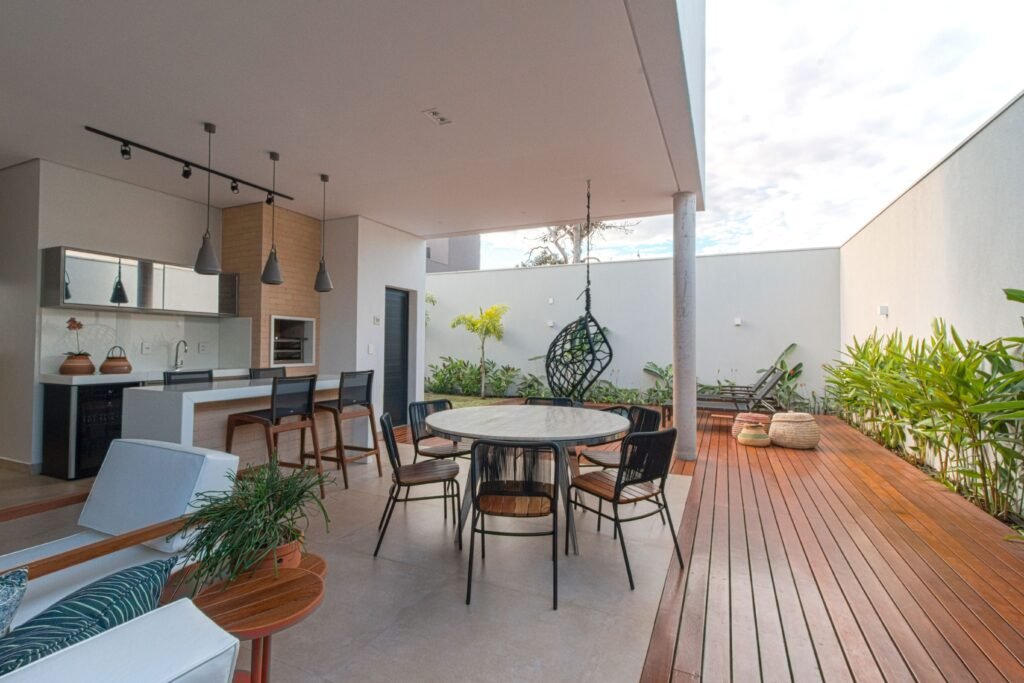
An outdoor kitchen can turn a garden from somewhere you occasionally sit into a space you genuinely use for cooking, eating and entertaining. And you do not need an enormous garden or a Mediterranean climate to make one work.
The best outdoor kitchen ideas for UK gardens are designed around our unpredictable weather, the amount of space available and how you actually like to cook. That might mean a simple BBQ station beside the patio, a compact kitchen along one wall or a fully covered entertaining area with worktops, storage, a sink and dining space.
If you are planning your own garden kitchen, here are 15 ideas ranging from relatively simple DIY projects to more substantial permanent installations.
1. Start with a simple BBQ kitchen
You do not necessarily need a sink, fridge, pizza oven and several metres of cabinetry to call it an outdoor kitchen.
One of the easiest ways to create one is to build your design around a good BBQ. Add a weather-resistant worktop beside it and you immediately have somewhere to prepare food, put down trays and serve guests.
Storage underneath can hold BBQ tools and other suitable outdoor equipment, while shelving or hooks keep frequently used utensils within reach.
This approach works particularly well in smaller gardens because the cooking area can be positioned along a fence, wall or edge of the patio rather than taking over the entire space.
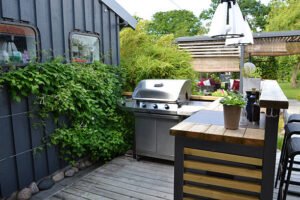
Modern outdoor living:
If you are already considering redesigning the surrounding area, think about the kitchen and patio together rather than as two separate projects. Our guide to patio design ideas has more inspiration for creating a practical entertaining space around your outdoor cooking area.
2. Create an outdoor kitchen along one wall
A single-wall layout is one of the most practical outdoor kitchen ideas for a narrow garden.
Instead of creating a large island in the middle of the patio, arrange the BBQ or cooking appliance, preparation area, storage and possibly a sink along one straight run.
It is essentially the outdoor equivalent of a one-wall indoor kitchen.
This arrangement keeps valuable floor space open for dining furniture and movement. It can also create a much tidier appearance because everything is contained within one defined zone.
If the kitchen sits close to the house, however, consider smoke, heat, ventilation and manufacturer-required clearances before deciding exactly where cooking equipment will go.
3. Build a covered outdoor kitchen
British weather is probably the biggest argument for adding shelter.
A covered outdoor kitchen can remain usable when the weather is less than perfect and also gives the space more of an outdoor-room feeling. Pergolas, roofed structures and purpose-built garden shelters can all work, depending on your budget and the design of the property.
But covering an outdoor kitchen requires more thought than simply placing a roof above a BBQ.
Cooking appliances need suitable ventilation and safe clearances from combustible materials. Never assume that equipment designed for open-air use can automatically be installed underneath any enclosed structure. Follow the appliance manufacturer’s installation requirements and get professional advice where necessary.
A roof can also allow you to incorporate lighting, making the kitchen far more useful during darker evenings.
4. Combine the kitchen with an outdoor dining room
Rather than thinking only about where you will cook, design the entire journey from preparing the food to sitting down to eat it.
A kitchen at one side of the patio with a large dining table nearby creates a natural entertaining zone. Guests can sit and talk while food is being prepared without crowding around the cooking area.
Allow enough space between the kitchen and dining furniture for people to move comfortably, particularly when chairs are pulled away from the table.
For a cohesive look, repeat materials across the space. Timber used on kitchen details might appear again in furniture or decking, while paving can continue beneath both the cooking and dining zones.
5. Add a sink for a more practical garden kitchen
A sink can make an outdoor kitchen considerably more useful, particularly if the cooking area is some distance from your indoor kitchen.
It provides somewhere to wash hands, rinse ingredients and deal with some of the mess created while preparing food.
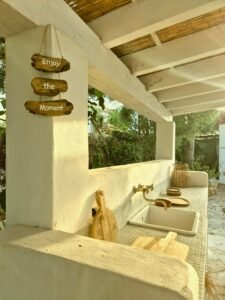
However, adding running water makes the project more complicated. Water supply, drainage, winter protection and the location of existing services all need consideration. Pipework exposed to freezing temperatures can be vulnerable during cold weather, so the installation needs to be designed appropriately for outdoor conditions.
For a permanent plumbed outdoor sink, getting advice from a qualified plumber is sensible rather than improvising connections yourself.
6. Use durable outdoor worktops
Your indoor worktop spends its life in a relatively controlled environment. An outdoor worktop may have to deal with rain, frost, direct sunlight, food spills and significant temperature changes.
Material choice therefore matters.
Suitable options can include certain natural stones, porcelain, concrete and outdoor-rated compact surfaces, depending on the installation. Timber can create a beautiful finish too, but generally requires more maintenance and careful material selection.
Before choosing purely on appearance, ask:
- Is the material suitable for permanent exterior use?
- How does it cope with frost and moisture?
- Will sunlight affect its appearance?
- Does it need sealing or regular maintenance?
- Can it safely be positioned around the chosen cooking appliance?
A slightly more expensive material that survives years outdoors can be better value than an attractive indoor product that was never designed for the job.
7. Create an outdoor kitchen island
If you have a larger patio, an island can turn the kitchen into the centre of the garden.
The cooking side can contain the BBQ and preparation space while the opposite side incorporates stools or a raised bar. This creates a sociable layout where the person cooking does not disappear from the conversation.
An island can also help divide a large garden into zones without building walls. Behind it might be the cooking area; in front, the dining or lounge area.
For a contemporary garden, keep the lines simple and use a limited palette of materials. You can find complementary landscaping inspiration in our modern garden ideas guide.
8. Make a small outdoor kitchen work harder
A small garden does not rule out an outdoor kitchen.
In fact, a compact design can be extremely efficient if every part of it has a purpose.
Choose a small BBQ or cooking appliance and give priority to usable preparation space rather than trying to squeeze in every possible feature. Vertical storage, wall-mounted shelves and hooks can reduce the amount of cabinetry required.
A folding or extendable preparation surface can provide additional workspace while cooking and then be tucked away afterwards.
Keep circulation in mind too. A kitchen that looks impressive but blocks the main route through a small garden will quickly become frustrating.
9. Try a budget-friendly DIY outdoor kitchen
Outdoor kitchens can become expensive, but there is plenty of room between putting a freestanding BBQ on the lawn and commissioning a completely bespoke installation.
A relatively simple project might involve creating a sturdy outdoor counter around an existing BBQ, adding shelving and improving the surrounding patio.
Reusing an appliance you already own can keep the initial cost down considerably.
The important distinction is between jobs that are realistically DIY-friendly and work involving services. Building straightforward storage or decorating an existing structure may be manageable for an experienced DIYer. Gas, complex electrical work and permanent plumbing should be approached differently and may require appropriately qualified tradespeople.
If the wider garden also needs attention, our cheap garden makeover ideas show how smaller changes can improve the surrounding space without rebuilding everything.
10. Include a pizza oven
For many homeowners, the dream outdoor kitchen involves more than burgers on a BBQ.
A pizza oven can become a focal point and expand what you can cook outdoors. Depending on the model, you might choose a compact portable oven or incorporate a larger unit into a permanent kitchen.
Placement is important. Pizza ovens can operate at very high temperatures, so always follow the manufacturer’s requirements regarding surfaces, ventilation and clearances.
Give yourself preparation space nearby too. A pizza oven with nowhere to stretch dough, arrange toppings or put down hot equipment is far less convenient than it looks in photographs.
11. Add outdoor kitchen lighting
The BBQ might be perfectly positioned at 2pm and frustratingly dark by 9pm.
Good lighting makes an outdoor kitchen safer and more enjoyable after sunset. Rather than relying entirely on decorative garden lights, include practical task lighting around food preparation and cooking areas.
Covered kitchens may allow lighting to be integrated into the structure. Elsewhere, suitable exterior wall lights can illuminate the workspace.
Any electrical equipment installed outdoors must be appropriate for its location and environmental exposure. Permanent new electrical installations should be designed and installed in accordance with the relevant requirements, so involve a competent electrician where electrical work is needed.
Decorative lighting can then be layered around the dining area to create atmosphere without leaving the person cooking in the dark.
12. Use planting to soften the kitchen
Cabinetry, paving, appliances and worktops introduce a lot of hard surfaces into a garden. Plants stop an outdoor kitchen from looking like an indoor kitchen that has simply been moved outside.
Herbs are an obvious choice. Pots of rosemary, thyme, mint or parsley can look attractive while keeping ingredients close to the preparation area.
Larger planting around the perimeter can help the kitchen settle into the landscape and partially screen less attractive sides of cabinets or structures.
If you prefer a garden that does not require constant attention, choose planting that suits the site’s light, soil and exposure. Our guide to low-maintenance garden ideas includes ways to create an attractive garden without turning every weekend into a maintenance session.
13. Create privacy around your outdoor dining area
If your new kitchen encourages you to spend considerably more time outside, you may suddenly become much more aware of neighbouring windows.
Privacy can be incorporated into the design using planting, screening, fencing or carefully positioned structures.
The aim does not have to be complete enclosure. Sometimes screening one particular sightline makes an outdoor kitchen and dining area feel substantially more private.
Be careful not to create a dark box around the kitchen, particularly where cooking equipment needs good ventilation.
For more ways to make overlooked gardens feel secluded, see our garden privacy ideas.
14. Connect your indoor and outdoor kitchens
One of the most effective outdoor kitchen layouts begins inside the house.
If possible, position the outdoor cooking area somewhere that makes moving between the indoor kitchen and garden straightforward. Large patio or bifold doors can create an especially strong connection, but even without major structural changes, keeping the two areas relatively close can make entertaining easier.
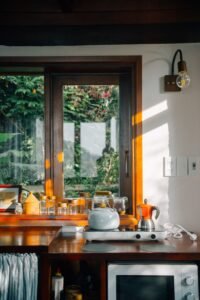
Think about what will remain indoors. You may not need an outdoor fridge, for example, if the indoor fridge is only a few steps away. Likewise, easy access to your existing sink could remove the need for outdoor plumbing in a smaller setup.
Designing around what your house already provides can prevent you from paying to duplicate facilities unnecessarily.
15. Design the kitchen for British weather
A beautiful outdoor kitchen that only works during three perfectly dry weekends each year is not particularly useful.
For UK gardens, weather resistance should influence almost every design decision.
Cabinet carcasses, doors, hinges, worktops and fixings should all be suitable for exterior conditions. Consider where rainwater will travel and whether water can collect on work surfaces or around the base of cabinets.
Shelter can extend the usable season, but wind direction matters too. A roof may keep rain off while leaving the entire seating area exposed to prevailing winds.
Removable covers can protect certain appliances when they are not being used, while storage should be designed so that items inside are suitably protected.
Where should an outdoor kitchen be positioned?
Ideally, choose somewhere relatively close to the house but not where cooking smoke will constantly drift through open windows and doors.
Look at how sunlight moves across the garden, where prevailing winds tend to come from and how people already travel between the house, patio and lawn.
The kitchen should also sit on a stable, appropriate surface rather than an unsuitable or uneven base.
Does an outdoor kitchen need to be covered?
No. A completely open outdoor kitchen can work perfectly well, particularly if you mainly expect to use it during good weather.
Covering it can provide greater protection from rain and create a more substantial entertaining space, but it also introduces additional design considerations around ventilation, heat and the structure itself.
How much does an outdoor kitchen cost in the UK?
There is no single meaningful price because an “outdoor kitchen” can describe anything from a modest DIY BBQ station to a bespoke covered kitchen with premium appliances, plumbing and electrics.
A simple setup using an existing BBQ and basic outdoor preparation unit may cost hundreds rather than thousands of pounds. Permanent fitted kitchens, structural work, premium appliances and professional installation can push the total into several thousand pounds and potentially considerably higher for large bespoke projects.
The final price depends heavily on the size, materials, appliances, groundwork and whether plumbing, electrical, gas or building work is required. For anything beyond a simple setup, obtaining itemised quotes is more useful than relying on a generic national average.
Do you need planning permission for an outdoor kitchen in the UK?
The answer depends on what you are actually building and where you live.
Simply placing movable outdoor kitchen equipment in a garden is very different from constructing a substantial covered structure, altering a listed building or carrying out work in a location with additional planning restrictions.
Some garden structures can fall within permitted development rights, subject to conditions and limitations, but those rights are not identical in every part of the UK and may be restricted for particular properties.
If your outdoor kitchen involves a permanent building, large canopy or significant structural work, check the rules that apply to your property with the relevant local planning authority before starting.
What should every outdoor kitchen include?
At its simplest, a useful outdoor kitchen needs three things: somewhere to cook, somewhere to prepare food and enough space to work comfortably.
Everything else depends on how you intend to use it.
Frequent entertainers may value a large dining area and drinks fridge. Keen cooks might prioritise a pizza oven and generous preparation surfaces. Someone with a small garden may be happier with a BBQ, compact counter and clever storage.
Start with how you cook rather than a catalogue of appliances. You can always design space for additional equipment later.
Turn your outdoor kitchen idea into a practical garden space
The best outdoor kitchen ideas are not necessarily the biggest or most expensive. They are the ones that fit the garden, cope with the weather and make cooking outside genuinely easier.
A compact BBQ station may completely transform a small patio, while a larger garden could accommodate a covered kitchen, dining table and entertaining area. Plan the layout first, choose materials made for outdoor conditions and spend money on the features you will actually use.
For projects involving landscaping, patio construction, plumbing, electrics, joinery or a bespoke outdoor kitchen, professional help can also make the difference between an attractive idea and a space that works properly for years.
You can find local tradespeople and service professionals through The Right Guy, including landscapers, gardeners, patio installers, builders, electricians and plumbers who can help with different stages of an outdoor kitchen project.

Author: manager
Company test