
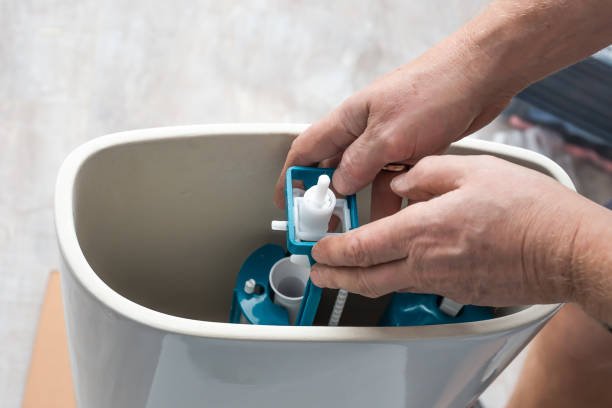
Can you hear water constantly running into your toilet, even though nobody has flushed it?
A running toilet isn’t just annoying—it can waste hundreds of litres of water every day and significantly increase your water bill.
Fortunately, the problem is often caused by a worn or incorrectly adjusted part inside the cistern.
Here’s why your toilet keeps running and what you can do about it.
Common reasons your toilet keeps running
Worn flush valve seal
One of the most common causes is a worn or damaged flush valve seal.
Over time, the rubber seal deteriorates and no longer creates a watertight seal, allowing water to continuously leak from the cistern into the toilet bowl.
Replacing the seal often solves the problem.
Faulty fill valve
The fill valve controls how much water enters the cistern after each flush.
If it becomes faulty, it may continue filling even when the tank is already full.
This can cause water to overflow into the overflow pipe, creating a constantly running toilet.
Float set too high
Inside the cistern is a float that controls the water level.
If it’s set too high, water continues flowing into the overflow system instead of stopping at the correct level.
Adjusting the float can often fix the issue in just a few minutes.
Limescale build-up
In hard water areas, limescale can build up inside the flush or fill valve.
This may stop moving parts from sealing properly, causing water to keep running.
Cleaning or replacing affected components may be necessary.
Loose or damaged flush button
Sometimes the flush button or handle doesn’t fully return after flushing.
If it sticks, the flush valve can remain slightly open, allowing water to run continuously.
Cracked or worn cistern components
Older toilets may develop worn or damaged internal parts that prevent the flushing mechanism from working correctly.
In some cases, replacing several components is more cost-effective than repairing individual parts.
Can I fix a running toilet myself?
Often, yes.
Many running toilets are caused by simple issues such as:
✔ Adjusting the float.
✔ Cleaning the fill valve.
✔ Replacing the flush valve seal.
✔ Replacing the fill valve.
Before carrying out any repairs:
- Turn off the water supply to the toilet.
- Empty the cistern.
- Use replacement parts that match your toilet model.
If you’re unsure or the leak continues, it’s best to contact a plumber.
Should I ignore a running toilet?
No.
Even a small leak can waste a surprising amount of water every day.
Ignoring the problem could lead to:
- Higher water bills
- Wasted water
- Increased wear on the toilet mechanism
- More expensive repairs later
Fixing the issue early is usually quick and inexpensive.
How much does it cost to repair a running toilet?
The cost depends on what’s causing the problem.
| Repair | Estimated 2026 cost |
|---|---|
| Replace flush valve seal | £70–£120 |
| Replace fill valve | £80–£150 |
| Adjust float | £60–£100 |
| Complete cistern repair | £120–£250 |
| Replace toilet | £250–£600+ |
Prices vary depending on your location and the type of toilet.
When should you replace the toilet?
Repairing the toilet is usually worthwhile if it’s in good condition.
However, replacement may be the better option if:
- The toilet is over 15–20 years old.
- Multiple components have failed.
- The cistern is cracked.
- Replacement parts are no longer available.
- You want a more water-efficient model.
Modern toilets often use significantly less water per flush than older models.
How to prevent future problems
A few simple maintenance habits can help keep your toilet working properly:
- Avoid using harsh chemical cleaners inside the cistern.
- Clean away limescale regularly.
- Replace worn seals before they fail.
- Investigate unusual running water promptly.
- Have recurring problems checked by a plumber.
Frequently Asked Questions
Why is my toilet running after I flush?
This is usually caused by a faulty flush valve, a worn seal or a fill valve that isn’t shutting off properly.
Can a running toilet increase my water bill?
Yes.
A continuously running toilet can waste a large amount of water over time, increasing your water bill.
Is a running toilet an emergency?
Usually not.
However, if the toilet is overflowing or you can’t stop the water, turn off the water supply and contact a plumber as soon as possible.
Can I replace the flush valve myself?
If you’re confident with basic DIY, many flush valves can be replaced without specialist tools.
If you’re unsure, it’s safer to hire a qualified plumber.
Final thoughts
A constantly running toilet is usually caused by a worn seal, faulty fill valve or incorrectly adjusted float.
The good news is that most problems are inexpensive to fix if they’re dealt with early.
If you’ve tried adjusting the cistern or replacing worn parts and the toilet still won’t stop running, a professional plumber can quickly identify the fault and prevent further water waste.
Find a trusted plumber
Need help fixing a running toilet?
Use The Right Guy to compare trusted local plumbers, read genuine customer reviews and request quotes from experienced professionals near you.
Own a plumbing business? Create your free business listing on The Right Guy and help more homeowners discover your services.

Author: The Right Guy Team
UK service guides published by The Right Guy Ltd.