
Choosing the best way to heat your home is no longer simply a choice between different boilers.
UK homeowners are now comparing traditional gas heating with heat pumps, solar panels and combinations of all three. The right option depends on your property, insulation, available budget and whether your priority is lower upfront costs, cheaper long-term energy or lower carbon emissions.
For most homes connected to the gas network, a modern gas boiler remains the cheapest option to install. A heat pump is usually the most energy-efficient heating system, while solar panels work best as a supporting technology rather than a complete heating system.
Quick comparison
| Heating option | Typical installation cost | Best for | Main drawback |
|---|---|---|---|
| Gas boiler | Around £3,700 | Lower upfront cost and existing gas-heated homes | Uses fossil fuel |
| Air source heat pump | Around £11,000 before grants | Efficient, well-insulated homes | Higher initial cost |
| Solar panels | Around £6,100 | Reducing electricity bills | Do not directly heat most homes |
| Solar panels and heat pump | Around £17,100 before grants | Long-term efficiency and lower-carbon heating | Largest initial investment |
These are broad averages. The final price depends on your property, system size and any upgrades required.
Do solar panels heat your house?
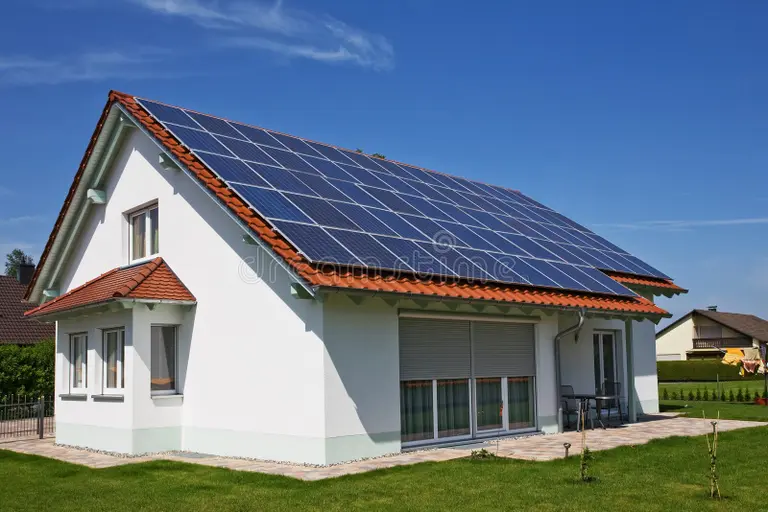
Solar photovoltaic panels do not normally heat your home directly. They generate electricity, which can then power appliances, an immersion heater or an electric heating system such as a heat pump.
A typical domestic solar system is around 3.5kWp and costs approximately £6,100. It usually requires around 10–20m² of usable roof space and performs best on an unshaded, south-facing roof. East- or west-facing systems can still work, although they may generate roughly 15–20% less electricity than a directly south-facing system.
Solar panels can lower the electricity cost of running a heat pump, particularly when the heating system operates during daylight hours. However, solar generation is lower during winter, precisely when your home needs the most heating.
That means solar panels should usually be viewed as an energy-saving addition, not a direct replacement for a boiler.
Advantages of solar panels
- Lower household electricity purchases
- Ability to sell surplus power through an export tariff
- Can support a heat pump or immersion heater
- A typical system may save around one tonne of carbon dioxide annually
The Energy Saving Trust estimates a payback period of approximately 10–15 years for many mainland UK households, depending on location and how much electricity is used at home rather than exported.
Disadvantages of solar panels
- They do not independently provide reliable winter heating
- Savings depend on roof direction, shading and daytime electricity use
- A battery may cost an additional £5,000–£8,000
- Roof repairs may need to be completed before installation
Are heat pumps the best way to heat a house?
A heat pump takes heat from the outside air or ground and transfers it into your home.
Unlike a gas boiler, which creates heat by burning fuel, a heat pump moves existing heat. A properly designed system can produce more than three units of heat for every unit of electricity it consumes.
An air source heat pump typically costs around £11,000 to install. However, eligible homeowners in England and Wales can receive £7,500 through the Boiler Upgrade Scheme, potentially reducing the effective cost to roughly £3,500 before any additional radiator or property upgrades.
Eligible homes without a mains gas connection that replace oil or LPG heating may receive up to £9,000 until 31 March 2027.
Heat pumps work best when:
- The property is reasonably well insulated
- The system has been correctly sized
- Radiators or underfloor heating can operate at lower water temperatures
- There is room for an outdoor unit and hot-water cylinder
- The household uses suitable controls and tariffs
A heat pump installed in a poorly insulated home may still work, but it may require larger radiators, insulation improvements or higher electricity consumption.
Are heat pumps cheaper to run than gas boilers?
Not always.
From 1 July to 30 September 2026, Ofgem’s average price-cap rates for Direct Debit customers are 26.11p per kWh for electricity and 7.33p per kWh for gas. Electricity therefore costs substantially more per unit, although a heat pump uses far fewer units of energy to create the same amount of heat.
The Energy Saving Trust says that heat pumps currently tend to cost slightly more to operate than a new gas boiler in some circumstances. Their running cost depends heavily on system efficiency, radiator sizing, controls and the electricity tariff used.
A heat pump is more likely to produce strong financial savings when replacing:
- Direct electric heating
- Older storage heaters
- LPG heating
- Some oil systems
- An inefficient boiler
Is a gas boiler still worth installing?
For homes already connected to the gas grid, a gas boiler normally has the lowest installation cost.
The Energy Saving Trust estimates an average replacement cost of approximately £3,700 for an efficient gas boiler with thermostatic radiator valves. Gas boilers also work easily with most existing radiators and can provide hot water without needing a large storage cylinder when a combi model is used.
Advantages of a gas boiler
- Lower initial cost
- Familiar technology
- Fast heating and hot water
- Usually works with existing radiators
- Wide availability of qualified engineers
Disadvantages of a gas boiler
- Uses fossil fuel
- Gas prices can fluctuate
- Less energy-efficient than a well-designed heat pump
- Does not benefit from the £7,500 Boiler Upgrade Scheme grant
Any gas boiler installation should be completed by a Gas Safe registered engineer.
Which system is cheapest?
Cheapest to install: gas boiler
A straightforward boiler replacement at around £3,700 is normally cheaper upfront than installing either solar panels or a heat pump.
Lowest energy consumption: heat pump
A well-designed heat pump uses significantly less purchased energy than a boiler because it transfers heat rather than generating all of it from fuel.
Best for reducing electricity bills: solar panels
Solar panels can reduce the amount of electricity you buy from the grid, but their value depends on how much of the generated power you can use during the day.
Best long-term combination: heat pump and solar panels
For a suitable, insulated property, combining a heat pump with solar panels can offer the strongest overall package:
- Efficient heating
- Lower grid-electricity use
- Reduced carbon emissions
- Protection against some future energy-price increases
However, solar panels will not power the heat pump completely throughout winter, so the property will still rely on grid electricity.
What is best for different types of homes?
Older home with limited insulation
Improve insulation and draughtproofing before investing in a major heating-system replacement. A new gas boiler may be the simplest short-term option where the property already has gas.
Well-insulated modern home
An air source heat pump is likely to be a strong choice, especially where underfloor heating or appropriately sized radiators are already installed.
Rural home without mains gas
A heat pump may be particularly attractive when replacing oil, LPG or direct electric heating. Eligible off-grid homes in England and Wales may currently receive the increased £9,000 grant.
Home with a suitable south-facing roof
Solar panels can reduce electricity costs regardless of whether the main heating comes from gas or a heat pump.
Homeowner with a limited budget
Replacing an existing gas boiler is generally the least expensive immediate solution. However, it is worth comparing the net heat-pump cost after available grants rather than comparing headline installation prices alone.
The final verdict
There is no single heating system that is best for every property.
Choose a gas boiler when your priority is the lowest installation cost and your home already has a working gas connection.
Choose a heat pump when your home is reasonably efficient, you can access the available grant and you want a lower-carbon, highly efficient heating system.
Choose solar panels when you want to reduce electricity bills, but remember that they are not normally a complete home-heating solution.
For many suitable homes, the strongest long-term setup is:
Good insulation + an air source heat pump + solar panels
The insulation reduces the amount of heat required, the heat pump produces that heat efficiently, and the solar panels help supply some of the electricity.
Find a trusted heating or renewable-energy installer
Before choosing a system, arrange a proper home assessment and compare at least three detailed quotations.
Use The Right Guy to find local heating engineers, Gas Safe registered boiler installers, MCS-certified heat-pump specialists, solar-panel installers and insulation professionals.
Own a heating or renewable-energy business? Create a free business listing on The Right Guy and help more homeowners discover your services.

Author: The Right Guy Team
UK service guides published by The Right Guy Ltd.