
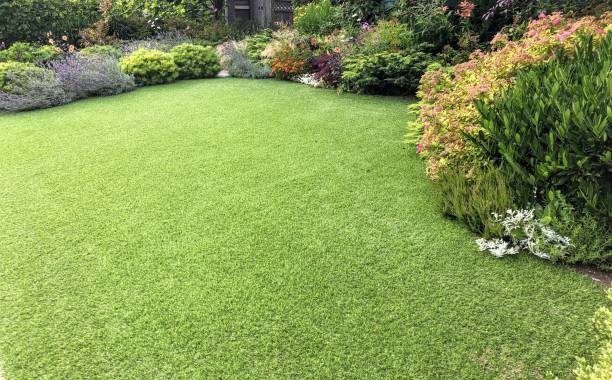
Artificial Grass vs Real Grass: Which Is Better for Your Garden?
Choosing between artificial grass vs real grass is not as simple as deciding whether you enjoy mowing the lawn.
Artificial turf promises a consistently green surface with no mowing, feeding or muddy patches. Real grass requires more ongoing care, but it is a living part of the garden, feels different underfoot and contributes to drainage, cooling and wildlife habitat.
There is also cost to consider. Artificial grass usually requires a much larger upfront investment, particularly when professionally installed, whereas a real lawn can be relatively inexpensive to establish from seed. On the other hand, maintaining a high-quality natural lawn requires time, equipment and sometimes additional products.
So which is actually better for a UK garden?
This guide compares artificial grass vs real grass across appearance, maintenance, installation cost, lifespan, drainage, pets, children, wildlife and long-term value to help you decide which surface genuinely suits your garden.
Artificial grass vs real grass at a glance
If you want the shortest possible answer, neither option wins every category.
| Factor | Real grass | Artificial grass |
|---|---|---|
| Appearance | Natural and changes seasonally | Consistently green |
| Initial cost | Usually lower | Usually higher |
| Maintenance | Regular mowing and lawn care | Lower, but not maintenance-free |
| Wildlife | Provides living habitat | Very limited habitat value |
| Mud | Can become muddy/worn | No soil surface when correctly installed |
| Hot weather | Generally remains cooler | Can become noticeably hot |
| Children | Soft natural surface | Consistent, but product quality matters |
| Pets | Natural and permeable | Convenient but requires cleaning |
| Lifespan | Can regenerate indefinitely with care | Eventually requires replacement |
| Environmental impact | Living surface | Manufactured plastic product |
| Appearance in winter | Can become patchy or muddy | Remains green |
| Installation | Seed or turf | More extensive ground preparation |
Your priorities determine the better choice.
1. Real grass gives you the most natural appearance
Artificial turf has improved enormously compared with the intensely green, carpet-like products many people associate with older installations.
Good products use different blade lengths, shades and textures to imitate natural grass.
But imitation is still the important word.
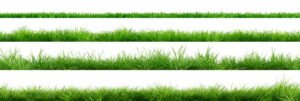
Real grass changes.
It moves in the wind. New growth looks different from older blades. The colour responds to the season and weather. It integrates naturally with flower beds, trees and other planting.
For gardeners who want a lush, traditional garden, that imperfection is often part of its appeal.
Artificial grass offers something different: consistency.
If your priority is having something that appears green and neatly cut throughout the year, artificial turf has the advantage.
2. Artificial grass requires less routine maintenance – but it is not maintenance-free
This is probably the biggest reason people consider artificial turf.
There is no weekly mowing through the growing season. You do not need to reseed worn patches, apply lawn feed or spend spring trying to repair winter damage.
That can make artificial grass attractive to homeowners who have little time for gardening.
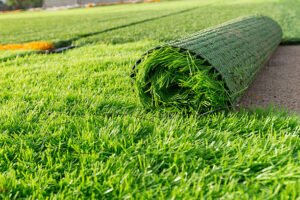
However, calling artificial grass maintenance-free is misleading.
Leaves still fall onto it.
Weeds can sometimes establish around edges, through accumulated organic material or in vulnerable areas. Pet waste still needs removing. The surface may need brushing, and debris needs clearing.
Spills and contamination can require cleaning too.
So the better description is lower routine maintenance, not zero maintenance.
If reducing garden work is your main priority, it is also worth looking beyond the lawn. Our low-maintenance garden ideas explore planting, paving and layout changes that can reduce work without necessarily replacing natural grass.
3. Real grass is usually cheaper to establish
For most gardens, a basic natural lawn has a substantial cost advantage at the beginning.
Grass seed can be particularly inexpensive, although establishing a lawn from seed requires preparation, watering and patience.
Laying turf costs more but gives much faster visual results.
Artificial grass requires the turf itself plus proper ground preparation. Depending on the site and installation system, work can involve removing the existing surface, preparing and compacting appropriate base materials, creating suitable drainage and accurately cutting and joining the artificial turf.
Professional installation therefore tends to cost considerably more than simply buying a roll of artificial grass.
Prices vary significantly according to garden size, turf quality, access, existing ground conditions and preparation required, so compare complete installed prices rather than simply comparing the cost per square metre of the surface material.
4. A real lawn supports a living garden
One of the biggest differences between real grass and artificial grass has nothing to do with appearance.
A natural lawn is alive.
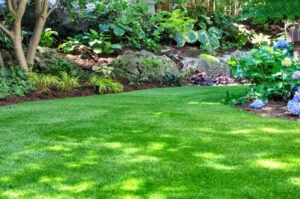
Soil beneath and around grass supports a variety of organisms, while lawns can form part of a wider garden habitat.
How valuable a particular lawn is to wildlife depends on how it is managed. A frequently mown monoculture lawn is very different from longer grass containing a greater variety of plants.
But even if you want a neat central lawn, you can leave selected edges longer or surround it with generous planting.
That works particularly well if you are following some of the ideas in our wildlife garden ideas guide.
Artificial turf, by comparison, does not provide a living habitat.
If biodiversity is one of your priorities, real grass is the stronger choice.
5. Artificial grass stays visually consistent through winter
British winters can be hard on lawns.
Repeated rain, limited growth and foot traffic can turn frequently used routes into muddy patches.
Families with children or dogs may find that the lawn looks excellent in summer but becomes increasingly difficult to use during wetter months.
Artificial turf avoids many of those visual problems.
It does not become dormant or develop mud patches in the same way because the visible surface is synthetic.
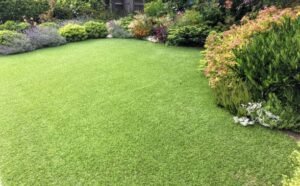
For some households, that consistency is the strongest argument in its favour.
But correct installation matters. Poor drainage or inadequate preparation beneath artificial turf can create its own problems, so the surface should not be treated as something that can simply be rolled over an unsuitable existing garden.
6. Real grass can recover and regenerate
A natural lawn can look terrible one year and considerably better the next.
Worn areas can be reseeded. Bare patches can be repaired. Compacted lawns can be aerated where appropriate. The entire surface can even be renovated without necessarily replacing everything underneath it.
Artificial grass cannot regenerate.
Once the fibres are permanently damaged, excessively worn or the product reaches the end of its useful service life, repair options may be more limited and eventual replacement will be necessary.
That makes lifespan an interesting comparison.
A particular artificial lawn may last for years, but it remains a manufactured surface with a finite service life.
A real lawn does not have an equivalent fixed replacement date. With suitable conditions and maintenance, it can continue growing and being repaired.
7. Artificial grass can work well in awkward small spaces
Not every garden provides ideal lawn-growing conditions.
A tiny courtyard surrounded by tall buildings may receive limited sunlight. A narrow strip may be heavily walked on. A small family garden may have such intensive use that natural grass struggles to recover.
Artificial turf can sometimes provide a practical surface in these situations.
However, do not assume that struggling grass automatically means artificial grass is the only answer.
You could redesign the area instead.
A small patio surrounded by planting, gravel, appropriate ground-cover plants or another surface may work better than trying to preserve the appearance of a lawn where a lawn does not naturally thrive.
Our patio design ideas provide alternatives for gardens where more usable hard landscaping may make sense.
8. Real grass generally feels better in hot weather
This difference becomes particularly noticeable during warm sunny periods.
Natural grass contains moisture and participates in evapotranspiration, which helps it behave differently from synthetic surfaces under strong sunshine.
Artificial grass can become considerably warmer when exposed to direct sun.
That matters if children regularly play barefoot, pets use the garden or the lawn sits in an exposed south-facing position.
Before choosing artificial turf, consider how the garden behaves during the hottest part of summer rather than making the decision during winter.
Shade from trees, pergolas and surrounding structures may influence the conditions significantly.
9. Which is better for dogs: artificial or real grass?
There are advantages and disadvantages to both.
Artificial grass for dogs
Artificial turf avoids muddy paws and dogs cannot create dead grass patches in exactly the same way they can on natural lawns.
However, solid waste still needs to be removed promptly and areas used for urination require appropriate drainage and cleaning.
Odour can become a problem if pet use is frequent and the installation or cleaning routine is inadequate.
If you are choosing artificial grass specifically because you own a dog, look for products and installation systems intended for pet use rather than simply buying the cheapest turf available.
Real grass for dogs
Natural grass provides a familiar outdoor surface and does not require the same cleaning approach as synthetic fibres.
The disadvantage is wear.
Dogs repeatedly running the same route can create bare areas, and urine can sometimes discolour patches of lawn.
For a large garden, the lawn may cope perfectly well. In a very small garden used intensively by several dogs, maintaining pristine grass can be much harder.
10. Which is better for children?
Again, there is no automatic winner.
Real grass is a familiar natural play surface, but heavy use during wet weather can quickly produce mud and worn patches.
Artificial turf creates a more consistent surface and avoids mud, which can be appealing beneath play equipment and in compact family gardens.
However, product selection and installation quality matter.
If artificial turf will be used as a children’s play surface, check the manufacturer’s information for the specific product and intended application rather than assuming every type of artificial grass has identical properties.
Surface temperature is another consideration during hot weather.
11. Real grass can help water soak into the ground
A living lawn over suitable soil provides a permeable surface through which rainfall can infiltrate.
How effectively that happens depends on soil type, compaction, slope and saturation, but the principle is important.
Artificial grass can also be installed as part of a permeable system, but drainage depends on the complete construction beneath the turf rather than simply the artificial grass itself.
This is why installation preparation matters so much.
A badly designed base can lead to standing water or drainage problems despite the artificial surface appearing perfect from above.
Water management is becoming an increasingly important part of modern garden design, as discussed in our guide to garden trends for 2026.
12. Artificial grass can make weed control easier – but weeds are still possible
Replacing a lawn with properly installed artificial turf removes the conditions in which normal lawn weeds grow through natural turf.
But that does not guarantee a completely weed-free surface forever.
Organic debris can accumulate on top, allowing opportunistic weeds to establish, while edges and joints can become vulnerable depending on the installation.
The surrounding garden matters too.
Seeds will continue arriving from nearby plants regardless of what surface you install.
Regular clearing and maintenance are therefore still useful.
If weeds are causing problems throughout the rest of the garden, our guide on how to stop weeds permanently explains practical long-term control through mulching, planting density and better surface preparation.
13. Artificial grass gives you more control over appearance
With real grass, weather gets a vote.
A prolonged dry period may affect colour unless the lawn receives sufficient water. Winter traffic can damage it. Shade can result in thinner growth, and different parts of the garden may perform differently.
Artificial grass largely removes those variables from its visual appearance.
You can choose pile length, colour, density and texture and expect a relatively consistent result.
But be careful when choosing the product.
An unnaturally uniform bright green surface can stand out dramatically against mature natural planting.
For many gardens, slightly varied tones and less exaggerated colour create a more convincing appearance.
Request samples and view them outdoors before making a decision. Artificial turf can look very different in natural daylight from how it appears on a website or inside a showroom.
14. Real grass works particularly well with traditional garden design
If you picture a classic British back garden with established borders, mature shrubs and a central green lawn, natural grass is difficult to replicate convincingly.
Its slight variations complement planting rather than competing with it.
Real lawns also work beautifully with curved borders.
For homeowners interested in creating a more natural, cottage-inspired or wildlife-friendly garden, natural grass is usually the more coherent choice.
That does not mean the lawn needs to be enormous.
Reducing the lawn and increasing the surrounding borders can create a more interesting garden while reducing the amount of mowing required.
15. Artificial grass can suit highly contemporary gardens
Artificial turf tends to look most convincing when it is treated as one material within a wider garden rather than attempting to imitate a huge natural field.
A smaller rectangular area of high-quality turf surrounded by modern paving, raised beds and architectural planting can create a clean contemporary layout.
Strong edges are particularly important.
Poorly finished transitions between artificial grass and paving can immediately reveal the installation and make the garden look unfinished.
If your goal is a highly structured outdoor space, our modern garden ideas show how lawns, paving, planting, fencing and seating can be combined without making the garden feel overly complicated.
Artificial grass vs real grass: which is more environmentally friendly?
This is one of the most important differences to consider.
Artificial grass is a manufactured product, typically containing plastics. It does not grow, provide the same living habitat as natural grass or perform the biological functions of a living planted surface. Eventually, it also needs to be dealt with at the end of its usable life.
Real grass is living vegetation and can contribute to a garden’s ecosystem.
However, maintaining a highly manicured natural lawn can also involve resources. Frequent mowing consumes energy, watering uses water, and lawn treatments have their own impacts.
So the environmental comparison is not simply “real grass has no impact”.
Management matters.
A naturally managed lawn with sensible mowing, limited irrigation and reduced chemical inputs is very different from a lawn maintained intensively to resemble a golf course.
If environmental value is a major priority, real grass — particularly when combined with varied planting and less intensively managed areas — generally offers opportunities artificial turf cannot provide.
Is artificial grass actually cheaper in the long run?
Possibly, but not automatically.
Artificial turf removes mowing and some routine lawn-care costs, but there is a significant upfront installation cost and eventual replacement needs to be considered.
Real grass has lower establishment costs in many cases but requires ongoing maintenance.
The financial result therefore depends heavily on what you would otherwise spend.
Someone who cuts their own modest lawn with equipment they already own has relatively low ongoing costs.
Someone paying a gardener regularly to maintain a difficult lawn may have a very different calculation.
Do not compare artificial grass installation with one year’s lawn maintenance. Consider the likely costs over several years.
Does artificial grass add value to a house?
There is no reliable rule that artificial grass automatically increases or decreases the value of a UK property.
Buyer preferences differ.
Some buyers may appreciate a neat, low-maintenance garden. Others may immediately factor in the cost of removing artificial turf because they strongly prefer natural grass.
This is particularly relevant if you are installing it immediately before selling.
Choose artificial turf because it genuinely suits how you use the property rather than assuming it is an investment that will automatically produce a higher sale price.
A well-designed and maintained garden is likely to make a better impression than focusing on one surface in isolation.
What are the disadvantages of artificial grass?
The main disadvantages to consider are:
- higher initial installation cost;
- it can become hot in direct sunshine;
- it provides very limited habitat value compared with living vegetation;
- it is a manufactured synthetic product;
- it still requires cleaning and maintenance;
- poor installation can cause drainage or appearance problems;
- it eventually needs replacement;
- some homeowners simply dislike the look or feel.
None of these automatically makes artificial grass a bad choice.
They simply need to be weighed against its benefits rather than focusing exclusively on the promise of never mowing again.
What are the disadvantages of real grass?
Natural lawns have their own compromises.
They require mowing during the growing season and may need additional care to remain in excellent condition.
Shade, drought, heavy rain, pets and intensive foot traffic can all affect appearance.
Lawns can become muddy or worn during winter, and achieving a consistently immaculate finish can require considerable effort.
But the amount of work depends partly on your expectations.
A healthy family lawn does not need to resemble a professional bowling green.
Accepting a little seasonal variation can dramatically reduce the amount of maintenance you feel is necessary.
Can you lay artificial grass over real grass?
Simply rolling artificial turf over an existing lawn is generally not an appropriate permanent installation method.
Natural grass and organic material underneath can decompose, the ground can move and the finished surface may become uneven.
Proper artificial grass installation normally involves preparing the ground and constructing a suitable base for the specific site and system.
The exact process depends on existing ground conditions, drainage requirements and the manufacturer’s installation specifications.
This is one area where cutting corners can make an initially cheap project considerably more expensive later.
Can you replace artificial grass with real grass later?
Usually, yes, but it can involve substantial work.
The artificial turf needs removing along with materials that are unsuitable for growing a natural lawn.
The soil conditions may then need to be restored or improved before turf or grass seed can establish successfully.
So if you are uncertain about artificial grass, remember that it is more significant than simply changing garden furniture.
Reversing the decision is possible, but it may involve excavation, disposal, soil preparation and the cost of establishing a new lawn.
Artificial grass vs real grass: which should you choose?
Choose real grass if you value a natural garden, wildlife, a living surface and the ability for the lawn to regenerate over time — and you are comfortable with mowing and seasonal changes.
Choose artificial grass if your priority is a consistently green, lower-maintenance surface and you are prepared for the higher installation cost, occasional cleaning and eventual replacement.
For many UK gardens, there is also a third option worth considering:
less lawn.
Instead of choosing between a huge artificial lawn and a huge natural lawn, reduce the grass area and give more space to borders, paths, seating and other useful features.
That can lower maintenance while retaining natural planting.
It is particularly effective when combined with some of our cheap garden makeover ideas, because changing the shape of an existing lawn and improving surrounding borders can sometimes transform a garden without replacing the entire surface.
The verdict: artificial grass or real grass?
When comparing artificial grass vs real grass, the right answer depends on what you expect from your garden.
Artificial turf wins on visual consistency and reduced routine lawn maintenance. It can be practical in small, heavily used spaces where natural grass repeatedly struggles.
Real grass wins if you want a living garden, natural appearance, better integration with wildlife-friendly planting and a surface capable of regenerating rather than eventually requiring complete replacement.
Do not choose purely because one option is fashionable.
Think about how much sun your garden receives, how heavily the lawn is used, whether you have children or pets, how much maintenance you are willing to do and what you want the garden to become over the next decade.
If you are planning to replace a lawn or redesign the wider outdoor space, you can find local gardeners, landscapers and artificial grass installers through The Right Guy. Comparing a few approaches and quotes can help you decide whether artificial turf, a renovated natural lawn or a completely different garden layout offers the best long-term solution.