How Much Does Tree Pruning Cost in the UK? 2026 Price Guide
Tree pruning can be anything from removing a few low branches from a small ornamental tree to carrying out a full crown reduction on a mature tree above a house, road or neighbouring garden.
That is why there is no single fixed price for the job.
So, how much does tree pruning cost in the UK in 2026?
For many domestic jobs, professional tree pruning costs approximately £250–£1,080, depending mainly on the tree’s size, condition, access and the amount of work required. Current UK pricing from Checkatrade puts small tree pruning at around £250–£360, medium trees at approximately £420–£600, and large trees at around £750–£1,080.
As a practical starting point:
| Tree pruning job | Typical 2026 UK cost |
|---|---|
| Small tree | £250–£360 |
| Medium tree | £420–£600 |
| Large tree | £750–£1,080 |
| Typical crown reduction | Around £270–£550 |
| Tree surgeon labour | Around £30–£50 per hour |
| Tree surgeon day rate | Around £240–£400 |
| Difficult access / specialist equipment | Additional |
| Waste removal | May be included or charged separately |
These are budgeting figures rather than guaranteed quotes. The same six-metre tree could cost £300 in one garden and £600 in another if one can be reached easily from an open lawn while the other stands above a conservatory with no direct vehicle access.
The type of pruning also matters. Crown thinning, crown lifting and crown reduction are different operations, so make sure you know what a contractor is proposing rather than simply asking them to “cut the tree back”.
What Does Tree Pruning Actually Mean?
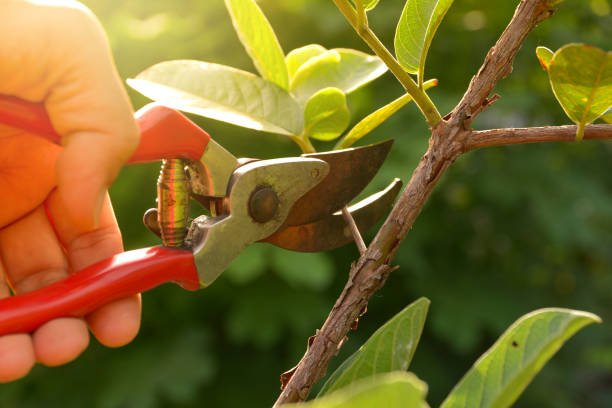
Tree pruning is the selective removal of branches to manage a tree’s size, shape, health, clearance or safety.
It is not necessarily about making the tree smaller.
A tree surgeon may prune a tree to:
- remove dead or damaged branches;
- improve clearance above paths, roads or buildings;
- reduce the overall size of the crown;
- remove crossing or poorly positioned growth;
- reduce excessive end weight on particular branches;
- improve the structure of a young tree;
- maintain an established shape.
Good pruning should have a clear reason behind it.
Simply cutting large sections from a tree because it “looks too big” can create poor growth, unnecessary wounds and potentially expensive problems later.
If the tree has become genuinely unsuitable for its position and pruning is no longer practical, compare the cost with our guide to tree removal prices in the UK before deciding whether continued maintenance makes financial sense.
Tree Pruning Cost by Tree Size
Tree size is one of the easiest ways to understand the likely cost.
Small tree pruning cost
A small tree may cost around £250–£360 to prune professionally.
This might include smaller fruit trees, ornamental garden trees and other relatively accessible specimens requiring straightforward pruning.
The lower end becomes more realistic when:
- the tree is easy to reach;
- there are few obstacles;
- only moderate pruning is required;
- no complex climbing is necessary;
- waste can be removed easily.
A small tree does not automatically mean a cheap job, though.
A small tree growing above a glass conservatory or directly beside a road may require much more careful branch removal than a larger tree standing in the middle of an open garden.
Medium tree pruning cost
For a medium-sized tree, allow approximately £420–£600.
Current Checkatrade estimates place medium tree pruning in exactly this range.
At this size, professional climbing or elevated access is more likely to be required.
There may also be significantly more timber and foliage to process and remove after the pruning is complete.
Large tree pruning cost
Large-tree pruning currently costs around £750–£1,080 according to Checkatrade’s June 2026 cost data.
Large mature trees can require:
- multiple tree surgeons;
- climbing equipment;
- ropes and rigging;
- chainsaws;
- wood chippers;
- traffic management in some locations;
- specialist access platforms;
- extensive waste handling.
For very large or complicated trees, quotes can exceed £1,000.
A mature tree beside several buildings is effectively a specialist arboricultural operation rather than an ordinary gardening job.
How Much Does a Tree Surgeon Charge?
Current 2026 pricing suggests tree-surgeon labour of approximately £30–£50 per hour, or around £240–£400 per day.
But homeowners should be careful with hourly rates.
If a contractor quotes £40 per hour, that does not necessarily mean a large pruning job costs £40 multiplied by the hours one person spends in the tree.
A professional tree team may include:
- a climber;
- one or more ground workers;
- specialist equipment;
- a chipper;
- a vehicle;
- insurance;
- disposal costs.
Whole-job quotations are therefore usually more useful than comparing individual hourly rates.
For example, a two-person crew working for most of a day can easily justify a several-hundred-pound quotation once equipment and waste handling are included.
How Much Does Crown Reduction Cost?
Crown reduction reduces the overall height and/or spread of a tree while maintaining an appropriate natural framework.
It is often used when a tree has become too large for its setting but complete removal is unnecessary.
Current Checkatrade listings put typical UK crown-reduction prices at approximately £272–£553, averaging around £384.
Larger trees can cost much more.
A proper crown reduction is also not simply a matter of cutting every branch back by the same distance.
The contractor should normally specify the reduction clearly, for example:
“Reduce crown height and spread by approximately 2 metres while maintaining natural form.”
or
“Reduce crown volume by approximately 20%.”
That is far more meaningful than a vague instruction such as:
“Cut it down a lot.”
What Is Crown Thinning?
Crown thinning involves selectively removing branches throughout the crown to reduce density while generally maintaining its overall height and spread.
It may be used to:
- reduce branch congestion;
- improve structure;
- remove crossing growth;
- allow more light through the crown.
Because the tree’s outer dimensions may remain broadly similar, crown thinning is not usually the right choice if your main concern is that the tree has simply become too tall.
The cost depends on how much of the crown needs working through and how accessible individual branches are.
For a mature tree, thinning can still involve several hours of specialist climbing.
What Is Crown Lifting?
Crown lifting means removing or shortening lower branches to increase clearance beneath the tree.
For example, it may be done to:
- improve pedestrian clearance;
- prevent branches touching vehicles;
- provide more space above a driveway;
- clear branches from buildings;
- allow more light beneath the tree.
A straightforward crown lift on an accessible tree can be cheaper than a full crown reduction because fewer branches may need work.
But again, location can change the price dramatically.
Removing a lower branch above an empty lawn is very different from removing the same branch over a greenhouse, parked car or public pavement.
Tree Pruning vs Tree Trimming: Is There a Difference?
The terms are often used interchangeably by homeowners, but tree pruning is usually more selective and technically focused than routine trimming.
Trimming might simply mean controlling the outer growth or maintaining a particular shape.
Pruning can involve decisions about:
- branch structure;
- branch unions;
- deadwood;
- weight distribution;
- future growth;
- clearance;
- overall crown form.
For shrubs and hedges, straightforward trimming may be suitable garden-maintenance work.
For mature trees, particularly where climbing or chainsaws are involved, using someone with appropriate tree-work competence is much more important.
If you’re comparing broader garden upkeep, see our guide to garden maintenance costs in the UK.
What Makes Tree Pruning More Expensive?
Two trees of identical height can produce completely different quotations.
Tree height
Taller trees generally require more equipment, skill and time.
Once climbing is necessary, the complexity of the job increases significantly.
Crown spread
A relatively narrow tree and a broad mature tree may be the same height while containing very different amounts of branch material.
The wider crown can take considerably longer to work through.
Amount of pruning required
Removing several dead branches is different from reducing the entire crown.
A quotation should ideally explain what percentage or dimensions of the tree are being reduced.
Access
Access can have a major impact.
A tree in a large front garden with direct vehicle access makes it easier to position:
- wood chippers;
- access platforms;
- trucks;
- lifting equipment.
A tree at the end of a narrow terraced garden may require every branch to be carried manually through a side passage or even through the house.
Nearby property
Branches above:
- roofs;
- sheds;
- conservatories;
- fences;
- garages;
- roads;
- neighbouring gardens
may need to be carefully lowered using ropes rather than simply cut and dropped.
This is called rigging and adds time and specialist work.
Tree condition
Dead, diseased or structurally weak trees can sometimes be more difficult to work on safely because the arborist cannot necessarily rely on branches for secure climbing or rigging.
Waste volume
A large crown reduction produces a surprising amount of waste.
Processing branches through a chipper and transporting material away can represent a substantial part of the job.
Location
Regional labour rates also affect the price.
London and parts of the South East will often cost more than areas with lower operating costs.
Is Waste Removal Included in Tree Pruning?
Often, but not always.
Checkatrade’s current tree-work guidance puts garden-waste removal anywhere from roughly £100 to £800, depending on quantity and disposal requirements.
That does not mean you should automatically add hundreds of pounds to every tree-pruning quote.
Many professional tree surgeons include chipping and waste removal within their price.
Before booking, ask:
“Does the quote include removing all branches, leaves and timber?”
You should also establish what happens to larger logs.
Some homeowners prefer to keep them for firewood or garden projects, although freshly cut timber may need significant drying time before use as fuel.
If you want all logs removed, make sure that is included too.
Can You Save Money by Keeping the Wood?
Potentially.
Removing large timber is more difficult than removing chipped branches.
If you are happy for logs to be cut into manageable sections and left on the property, the contractor may have less material to transport away.
But do not assume this will dramatically reduce the quotation.
The difficult part of the job — climbing, cutting and lowering the branches safely — still needs to happen.
Ask the contractor whether keeping the timber changes the price before deciding.
Do You Need Permission to Prune a Tree?
Sometimes.
This is one of the most important things to check before the work starts.
In England, a tree may be protected by a Tree Preservation Order (TPO). GOV.UK states that a TPO can prohibit cutting down, topping, lopping, uprooting, wilful damage or destruction without the local planning authority’s written consent. Root cutting can also count as prohibited work.
GOV.UK also provides a local-authority service for checking and applying for work to protected trees.
If you know or suspect that your tree has a TPO, do not allow pruning to begin until the required consent has been dealt with.
What If the Tree Is in a Conservation Area?
Different notification rules can apply.
For relevant trees in conservation areas in England, the local planning authority generally needs six weeks’ notice before works such as topping or lopping are carried out, subject to exemptions.
The council then has the opportunity to consider whether the tree should be protected with a Tree Preservation Order.
This is particularly important in older neighbourhoods where homeowners may not realise that conservation-area controls apply to trees within their own gardens.
A competent local tree surgeon may be familiar with the process, but the property owner should still make sure the correct permissions are in place.
Can You Prune a Neighbour’s Tree?
If branches from a neighbour’s tree cross your boundary, the legal and practical position can become more complicated than simply arranging a tree surgeon.
You should not assume you have unrestricted permission to reshape or significantly reduce a tree simply because part of it overhangs your land.
Protected-tree restrictions may still apply, and you must not trespass onto your neighbour’s property to carry out the work without permission.
Large branches can also affect the structure and balance of the tree.
Where substantial pruning is proposed, discussing it with the tree owner and obtaining professional advice is far better than instructing someone to remove everything back to the boundary without considering the consequences.
When Is the Best Time to Prune Trees?
There is no single best month for every species.
The correct timing depends on:
- tree species;
- reason for pruning;
- disease risk;
- age;
- flowering habit;
- the amount being removed.
Some trees respond well to winter pruning.
Others are better worked on at different times of year.
For example, pruning timing can matter for species susceptible to particular diseases or excessive sap bleeding.
This is another reason to ask the tree surgeon why they recommend a particular timing rather than relying on a generic “all trees should be pruned in winter” rule.
Wildlife must also be considered. GOV.UK guidance for protected trees specifically reminds anyone carrying out tree work that wildlife legislation can still apply, including protections affecting birds, bats and other species.
Is Tree Pruning Safe to DIY?
Small branches that can be safely reached from ground level with appropriate hand tools may be within the capability of a competent homeowner.
Climbing and chainsaw work are a completely different matter.
The Health and Safety Executive describes chainsaws as potentially dangerous machines capable of causing major injury and says that people using chainsaws for tree work professionally should have appropriate training and competence.
HSE guidance is also explicit that chainsaws should not be used while standing on a ladder. Tree-climbing and chainsaw use from ropes and harnesses require specialist skills and competence.
For homeowners, that creates a useful dividing line.
Pruning a thin branch with secateurs while standing safely on the ground is one thing.
Climbing a ladder with a chainsaw to remove a heavy branch several metres above the garden is a completely different level of risk.
Why Is Professional Tree Pruning So Expensive?
A quotation of £600 for pruning one tree can initially seem excessive.
But you are rarely paying one person £600 simply to “cut some branches”.
Professional tree work may involve:
- two or three trained workers;
- specialist climbing equipment;
- chainsaws;
- ropes and rigging equipment;
- personal protective equipment;
- wood chippers;
- commercial vehicles;
- insurance;
- fuel;
- waste disposal;
- several hours of physically demanding work.
The person in the tree may also need to remove branches piece by piece so they do not fall onto a roof or neighbouring property.
Viewed as a specialist team operation rather than ordinary gardening, the pricing becomes easier to understand.
Can Pruning Prevent a Tree From Needing Removal?
Sometimes.
Appropriate management can allow a healthy tree to remain safely in a garden for many years.
For example, a crown reduction could potentially manage excessive size without destroying the tree completely.
But pruning cannot solve every problem.
A tree may still require removal where there is:
- serious structural instability;
- extensive irreversible decay;
- an unsuitable location;
- major root-related issues;
- severe storm damage;
- repeated branch failure.
The decision should be based on the tree’s actual condition rather than automatically choosing whichever option costs less today.
How Often Should Trees Be Pruned?
There is no standard schedule such as “every two years” that applies to every tree.
Some trees may need relatively frequent formative work when young and very little once mature.
Others may require periodic clearance because they grow close to buildings or roads.
Repeated heavy pruning every year can be a sign that the species or tree size is simply unsuitable for the available space.
If you are budgeting for the garden as a whole rather than one individual job, our 2026 garden landscaping price guide can help you compare tree work with other outdoor improvements and maintenance costs.
Can Tree Pruning Damage a Tree?
Yes, when it is excessive or badly carried out.
Poor pruning can leave unnecessarily large wounds, remove too much live crown or encourage weak regrowth.
One particularly controversial practice is topping, where the upper crown is heavily cut back to stubs rather than using selective pruning cuts.
Even where a major size reduction is needed, an arborist should normally explain how they intend to preserve an appropriate branch structure and why the proposed reduction is suitable.
If a quote simply says:
“Cut tree in half”
ask for a clearer specification before agreeing.
Tree Pruning or Tree Removal: Which Is Better Value?
Suppose pruning a large tree costs £900 while removing it costs significantly more.
Pruning may look like the obvious choice.
But you also need to consider what happens next.
If the tree can then remain healthy and manageable for many years, £900 may be excellent value.
If you need to pay £900 every two or three years because the tree is fundamentally too large for the space, eventual removal may become more economical.
The opposite can also be true.
Removing a healthy mature tree simply because it requires £400 of occasional maintenance may be unnecessary, particularly if it provides valuable shade and privacy.
There is no universal financial answer.
The better question is:
Is this the right tree for this location, and can sensible pruning keep it that way?
How to Get an Accurate Tree-Pruning Quote
Photographs are useful for initial estimates, but larger trees may require an on-site inspection.
Provide:
- photographs showing the full tree;
- an approximate height if known;
- photos of the trunk and surrounding area;
- details of access;
- whether branches overhang buildings or roads;
- what you actually want to achieve.
Instead of saying:
“I need this tree cut back.”
explain the problem:
“I want more clearance from the roof.”
“The tree is blocking too much light.”
“Several branches appear dead.”
“I want to reduce its overall size while keeping the tree.”
That gives the arborist an objective rather than asking you, as the homeowner, to diagnose the correct pruning operation.
Questions to Ask a Tree Surgeon
Before accepting a quotation, ask:
What type of pruning are you recommending?
How much of the crown will be removed?
Why is that appropriate for this species?
Is all waste removal included?
Are larger logs removed or left behind?
Will climbing or access equipment be required?
Is VAT included in the quote?
Have you checked whether the tree has a TPO?
Do conservation-area rules apply?
What happens if you discover damaged or unsafe branches during the work?
Do you have appropriate insurance for this type of tree work?
A detailed specification allows you to compare quotations properly.
“Prune tree — £500” is far less useful.
Frequently Asked Questions
How much does tree pruning cost in the UK?
Professional tree pruning typically costs around £250–£1,080 in 2026, depending on tree size. Current UK figures put small trees at approximately £250–£360, medium trees at £420–£600 and large trees at £750–£1,080.
How much does it cost to prune a small tree?
Approximately £250–£360 is a useful current budget for a professional small-tree pruning job.
Simple accessible jobs may cost less, while complicated access can increase the price.
How much does it cost to prune a large tree?
Current UK estimates put large-tree pruning at approximately £750–£1,080.
Very large or technically difficult trees can exceed this.
How much does crown reduction cost?
Current listed UK prices suggest approximately £272–£553, with an average around £384, although large mature trees can cost considerably more.
How much does a tree surgeon charge per day?
Checkatrade’s June 2026 figures put tree-surgeon labour at roughly £240–£400 per day, or £30–£50 per hour.
A full tree-work quote can be higher because it may cover multiple workers, equipment and waste disposal.
Do I need permission to prune a tree in my garden?
Not for every tree.
However, trees protected by a Tree Preservation Order may require written local-authority consent before pruning. Trees in conservation areas can also be subject to notification requirements.
Can I prune a tree in a conservation area?
Potentially, but relevant tree works in an English conservation area generally require six weeks’ notice to the local planning authority, subject to exemptions.
Is tree pruning included in normal garden maintenance?
Light work on small trees might be offered by some gardeners.
Large-tree pruning involving climbing, chainsaws or specialist rigging is specialist arboricultural work and is normally priced separately.
Can I prune a large tree myself?
Large-tree DIY work is not recommended.
Chainsaw use, climbing and heavy falling branches introduce significant risks. HSE guidance requires specialist competence for professional chainsaw tree work and warns against using a chainsaw from a ladder.
So, How Much Should You Budget for Tree Pruning?
For professional tree pruning in the UK in 2026, a useful budget is approximately:
£250–£360 for a small tree
£420–£600 for a medium tree
£750–£1,080 for a large tree
A typical crown reduction may sit around £270–£550, while difficult access, specialist equipment, large amounts of waste or work near buildings and roads can increase the cost significantly.
The strongest quotation is not necessarily the cheapest.
Look for one that tells you what type of pruning will be carried out, how much material will be removed, whether waste is included and how the tree will be accessed safely.
And before work begins, check whether the tree is protected by a TPO or affected by conservation-area controls.
If you need professional help, The Right Guy can help you discover local tree surgeons, arborists and garden professionals in your area. Send clear photographs when requesting quotes and explain the problem you want solved rather than simply asking for the tree to be “cut back”.