
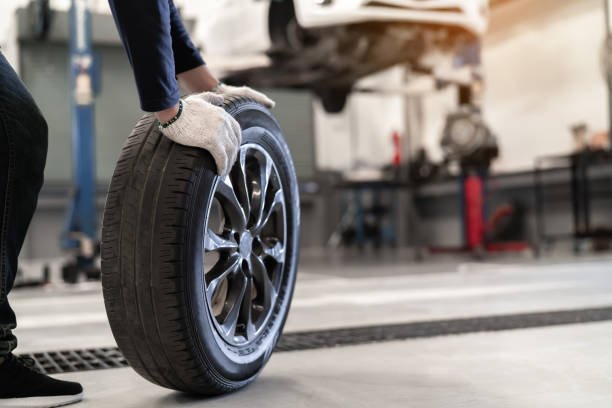
Alloy wheel refurbishment in the UK typically costs around £54–£106 per wheel for wheels up to 20 inches, with an average of about £80 per wheel. For wheels measuring 21 inches or larger, the average rises to roughly £90 per wheel, while a set of four standard-sized alloys averages around £300. Diamond-cut wheels are more expensive, averaging approximately £115 per wheel.
But there is an important difference between having a small kerb scuff repaired and having an alloy wheel completely refurbished.
A lightly scratched wheel may need only a local cosmetic repair. A wheel suffering from widespread corrosion, peeling lacquer and years of kerb damage may need stripping, preparation and refinishing. Diamond-cut wheels require specialist machinery, while a cracked or badly bent wheel may need structural assessment rather than cosmetic refurbishment.
So, when asking how much does alloy wheel refurbishment cost, you need to know what condition the wheel is in and what type of finish you are trying to restore.
This guide covers typical UK alloy wheel refurbishment costs in 2026, including powder coating, diamond-cut alloys, kerb damage and full sets of four wheels.
How much does alloy wheel refurbishment cost in the UK?
Current March 2026 UK cost data provides these useful starting figures:
| Alloy wheel work | Typical UK cost |
|---|---|
| One wheel up to 20″ | £54–£106 |
| Average wheel up to 20″ | Around £80 |
| One wheel 21″+ | £60–£120 |
| Average wheel 21″+ | Around £90 |
| Four wheels up to 20″ | £216–£384 |
| Average set of four up to 20″ | Around £300 |
| Four wheels 21″+ | £250–£430 |
| Average set of four 21″+ | Around £340 |
| Alloy wheel scuff repair | £48–£120 |
| Average scuff repair | Around £89 |
| Diamond-cut wheel refurbishment | Around £115 per wheel |
These should be treated as budgeting figures rather than fixed prices.
FixMyCar’s current marketplace data, for example, shows an average alloy-wheel refurbishment quote of about £297, illustrating how actual job quotes vary depending on the number of wheels and work required.
Your location, wheel size, finish and condition can all move the final price considerably.
What does alloy wheel refurbishment actually involve?
Alloy wheel refurbishment is more extensive than simply touching up a scratch with matching paint.
The exact process varies according to the wheel and finish, but a full refurbishment can involve removing the existing finish, dealing with damage around the rim, preparing the alloy and applying a completely new finish.
A typical professional refurbishment might involve:
- removing the wheel and sometimes the tyre;
- cleaning and inspecting the alloy;
- stripping old paint and lacquer;
- removing corrosion;
- repairing minor kerb damage;
- sanding or blasting the surface;
- applying primer or powder coat;
- applying the required colour;
- adding a protective finish;
- refitting and balancing the wheel where required.
FixMyCar describes a powder-coating refurbishment process that can involve chemical stripping or blasting, dressing damage around the rim, heating the alloy and applying powder-coat layers before further thermal treatment.
That explains why a full £80–£100 refurbishment is fundamentally different from somebody touching paint into one small scratch.
What affects alloy wheel refurbishment cost?
Wheel size
Larger wheels generally cost more to refurbish because there is more surface area to prepare and finish.
Current UK figures average approximately £80 for wheels up to 20 inches and £90 for wheels of 21 inches or larger.
The difference can become more noticeable across four wheels.
Condition
A relatively tidy alloy with one scuff requires less preparation than a badly corroded wheel covered in chips and kerb damage.
More preparation means more labour.
Finish
Standard painted or powder-coated wheels tend to cost less than specialist finishes.
Diamond-cut alloys require specialist equipment and additional processing, which increases the price.
Number of wheels
Having all four refurbished together can reduce the average cost per wheel compared with arranging four separate appointments.
Location
Labour and operating costs differ across the UK.
Tyre removal and balancing
Check whether the quoted refurbishment price includes tyre removal, refitting and balancing.
Current Checkatrade data puts tyre fitting including balancing at approximately £9 per wheel as an additional guide price.
How much does it cost to refurbish all four alloy wheels?
For four wheels measuring up to 20 inches, current 2026 guidance puts the cost at approximately £216–£384, averaging around £300.
For 21-inch and larger wheels, the typical range increases to around £250–£430, with an average of approximately £340.
A £300–£400 budget is therefore a reasonable starting point for a complete set of ordinary alloys.
However, four badly damaged diamond-cut wheels can cost considerably more.
Before comparing quotes, check whether each company includes:
all four wheels + preparation + finishing + tyre handling + balancing + VAT where applicable.
Otherwise, what looks like the cheapest quote may simply exclude part of the job.
How much does alloy wheel scuff repair cost?
If you have caught a kerb and damaged only a small section of the wheel, you may not need a complete refurbishment.
Current 2026 UK figures put an alloy-wheel scuff repair at around £48–£120, averaging approximately £89.
This can make local repair particularly attractive when the rest of the wheel remains in excellent condition.
However, if you have multiple scuffs, corrosion and peeling lacquer, repeatedly repairing individual areas may make less sense than refurbishing the whole wheel.
How much does kerbed alloy wheel repair cost?
Kerbing is probably one of the most familiar forms of alloy-wheel damage.
You misjudge the distance from the pavement, hear that horrible scraping noise and immediately know what has happened.
For minor cosmetic kerb damage, the general £48–£120 scuff-repair range provides a reasonable starting point.
The cost rises if the impact has done more than remove the finish.
A wheel that is bent, cracked or causing a vibration requires a different assessment from one with a purely cosmetic scrape.
That distinction matters.
Cosmetic damage affects appearance. Structural wheel damage can affect how the vehicle drives and should be professionally assessed.
How much does diamond-cut alloy refurbishment cost?
Diamond-cut alloys typically cost more to refurbish than conventional painted wheels.
Current UK guidance puts the average at approximately £115 per wheel.
A diamond-cut wheel has a distinctive bright machined surface, often combined with darker painted sections.
During professional refurbishment, specialist machinery removes a very fine layer from the wheel face to recreate the machined appearance.
Because specialist equipment and additional processing are involved, a simple mobile cosmetic repair may not reproduce the original finish.
FixMyCar notes that mobile technicians generally cannot perform true powder coating or diamond cutting because those processes require large specialist machinery.
If your vehicle has diamond-cut wheels, establish exactly what finish the repairer is offering before booking.
How can I tell if my alloys are diamond cut?
Diamond-cut wheels often have a bright metallic face with extremely fine machining lines visible across the surface.
They frequently combine this silver machined face with darker painted recesses.
However, visual identification is not always straightforward.
If you are unsure, give the refurbishment specialist:
- your vehicle registration;
- clear photographs of the wheel;
- wheel size;
- manufacturer/model information where available.
They should be able to identify the finish and tell you whether diamond cutting is required.
This is important because getting a £70 quote for a conventional painted refurbishment is not useful if your wheel actually requires a £115+ diamond-cut process.
How much does alloy wheel powder coating cost?
Powder coating is a popular way of completely refinishing alloy wheels.
The old finish is removed, the surface is prepared and a dry powder coating is applied before being cured using heat.
Rather than thinking of powder coating as a £20–£30 cosmetic touch-up, it is better to consider it within the broader full-refurbishment price range.
For standard wheels up to 20 inches, current full-refurbishment figures average around £80 per wheel or £300 for four.
Actual powder-coating prices vary according to wheel size, condition, colour and the company doing the work.
Can I change the colour of my alloys during refurbishment?
Yes.
If the wheels are already being stripped and refinished, refurbishment can be an opportunity to change their appearance.
Popular options include variations of:
- silver;
- black;
- anthracite;
- gunmetal;
- other custom colours.
Current Checkatrade data puts the average alloy-wheel painting cost at approximately £72.50 for one wheel or £260 for four, although custom finishes can cost more.
Ask whether your chosen colour changes the quote.
Also think carefully before choosing something dramatically different if resale value matters to you. A finish that suits your taste may not appeal to every future buyer.
Can corroded alloy wheels be refurbished?
Often, yes.
Corrosion does not automatically mean you need four replacement wheels.
One purpose of refurbishment is to remove deteriorated finishes and surface corrosion before applying new protection.
The important question is how severe the corrosion is.
Surface deterioration is very different from significant structural damage.
If corrosion has become extensive or the wheel has other defects, a specialist should assess whether refurbishment remains appropriate.
Do not assume a cosmetic coating can solve every problem underneath it.
Can cracked alloy wheels be refurbished?
This depends on what you mean by refurbishment.
A cracked alloy is not simply a cosmetic issue.
It needs professional assessment to establish whether repair is suitable or whether replacement is the safer and more appropriate option.
A company offering cosmetic wheel refurbishment may not necessarily provide structural wheel repairs.
If you know the wheel is cracked, tell the specialist when requesting a quote rather than booking a standard cosmetic refurbishment.
Can bent alloy wheels be repaired?
Some bent wheels can be professionally straightened.
Whether yours can be repaired depends on the location and severity of the deformation and the wheel itself.
A bent alloy can potentially produce symptoms such as vibration, tyre problems or difficulty balancing the wheel.
If you have hit a substantial pothole and the steering suddenly feels different, don’t assume the visible alloy scuff is the only consequence.
The impact may also have affected tyre condition, wheel balance or alignment.
If the car is pulling to one side or tyres are wearing unevenly, our guide to how much wheel alignment costs in 2026 explains what an alignment check can cost and when one may be worthwhile.
Refurbishment vs replacement: which is cheaper?
For cosmetic damage, refurbishment is usually considerably cheaper than purchasing new wheels.
A £300 refurbishment can transform a tired set of four alloys without the cost of replacing all four.
Replacement becomes more relevant when:
- structural damage is severe;
- repair is not considered appropriate;
- the wheel has already undergone significant previous work;
- replacement is economically more sensible than specialist repair.
Before replacing an expensive original wheel, get a professional assessment.
Equally, don’t keep repairing a wheel indefinitely simply because replacement costs more.
Safety and structural condition take priority over appearance.
Can you refurbish just one alloy wheel?
Absolutely.
If three wheels are immaculate and one has been badly kerbed, there is no automatic reason to refurbish the complete set.
For a standard wheel up to 20 inches, current average pricing is around £80 for one wheel.
The challenge can be matching the existing finish.
If the other wheels are several years old, their colour and lacquer may have changed slightly through weathering, cleaning and brake dust.
A freshly refurbished wheel can sometimes look newer than the other three.
For minor damage, that may not matter.
For a show-quality vehicle, you may prefer to refurbish the complete set for consistency.
Is mobile alloy wheel refurbishment cheaper?
Mobile alloy repair can be very convenient, particularly for smaller cosmetic repairs.
FixMyCar’s current data shows mobile alloy repair pricing varies substantially by vehicle and work required, with mobile repairs spanning roughly £50–£400.
But “mobile refurbishment” can mean something different from a complete workshop-based strip and powder coat.
A technician working from a mobile setup can handle many cosmetic repairs, but specialist processes such as true diamond cutting and powder coating generally require workshop machinery.
So don’t compare:
£70 mobile cosmetic repair
with
£100 full workshop refurbishment
as though they are automatically identical services.
Ask exactly what process each quote includes.
If you are deciding whether mobile automotive services are right for you, see our mobile mechanic vs garage comparison.
How long does alloy wheel refurbishment take?
The answer depends heavily on the process.
A small mobile cosmetic repair may be completed relatively quickly.
A complete workshop refurbishment involving stripping, preparation, powder coating or diamond cutting can take longer.
If all four wheels are being removed from the vehicle, ask whether the company:
- needs the entire car;
- accepts loose wheels;
- provides temporary wheels;
- offers collection and delivery;
- can complete all four within one day.
Turnaround matters particularly if the car is your only means of transport.
A cheap refurbishment becomes less attractive if you unexpectedly discover the vehicle will be unavailable for several days.
Do the tyres need to come off for alloy refurbishment?
For a complete refurbishment, tyres may need to be removed so the entire wheel can be properly processed and refinished.
Local cosmetic repairs may sometimes be carried out without complete tyre removal.
This is another reason to ask exactly what the quotation includes.
If tyres are removed, confirm whether:
removal, refitting, new valves where appropriate and wheel balancing are included in the advertised price.
Checkatrade’s current guide gives around £9 per wheel as an indicative cost for tyre fitting including balancing when charged separately.
Across four wheels, even relatively small extras begin to affect the headline quote.
Do refurbished wheels need balancing?
If the tyre has been removed and refitted, wheel balancing may form part of the process.
Ask rather than assuming.
Correct wheel balance matters because imbalance can cause vibration and uneven tyre wear.
Balancing is also different from wheel alignment.
Balancing concerns the distribution of weight around the wheel and tyre assembly.
Alignment concerns the angles at which the wheels sit relative to the vehicle and road.
One does not automatically replace the other.
Is alloy wheel refurbishment worth it?
For a fundamentally sound wheel, refurbishment can offer excellent value.
Spending around £300 restoring four original wheels can transform the appearance of the vehicle for considerably less than replacing the wheels.
It can be particularly worthwhile when:
- you plan to sell the car;
- the vehicle is otherwise in excellent condition;
- the wheels suffer from widespread cosmetic deterioration;
- replacement wheels are expensive;
- you simply want the car to look better.
But refurbishment does not make equal financial sense on every vehicle.
Spending £500 creating flawless wheels on a very low-value car may not increase its resale value by £500.
Sometimes appearance and personal enjoyment justify the expense anyway.
Should I refurbish alloy wheels before selling my car?
It can be worthwhile because wheels are highly visible.
Four badly kerbed alloys can make an otherwise tidy car look neglected.
Buyers may also start wondering what else has not been looked after.
The calculation is similar to other cosmetic preparation:
refurbishment cost vs likely improvement in presentation and saleability.
If £250–£300 transforms a £15,000 car from visibly scruffy to very presentable, the expenditure may make sense.
On a £1,500 car, the same £300 becomes a much larger proportion of its value.
Does alloy refurbishment remove every scratch?
A full professional refurbishment should deal with ordinary cosmetic damage such as many scuffs, chips and surface imperfections as part of preparing the wheel for refinishing.
But not every form of wheel damage is purely cosmetic.
Deep gouges, cracks, severe bends and missing material require assessment.
Ask what result the specialist expects before approving the job.
“Refurbishment” should not be interpreted as a promise that every damaged wheel can be returned safely to factory condition.
Can alloy refurbishment fix peeling lacquer?
Yes, peeling or deteriorated lacquer is a common reason owners choose refurbishment.
Rather than attempting to patch multiple areas, the existing finish can be stripped and the wheel refinished.
This can be especially relevant to diamond-cut wheels, where deterioration beneath the lacquer can become visually obvious.
The new finish can dramatically improve appearance, but its durability still depends on the refurbishment process, future wheel care and road conditions.
Will refurbished alloys look brand new?
High-quality refurbishment can make a heavily weathered wheel look dramatically better and often close to new.
The result depends on:
- initial damage;
- repair technique;
- quality of preparation;
- finish;
- technician skill.
Ask to see examples of previous work if cosmetic perfection matters to you.
This is particularly useful for diamond-cut and unusual finishes, where the quality difference between repairers may be more noticeable.
How long does alloy wheel refurbishment last?
There is no guaranteed lifespan applicable to every refurbished wheel.
Durability depends on the preparation and coating quality as well as how the vehicle is subsequently used.
Kerbing a freshly refurbished wheel the following week will obviously damage it again.
Road salt, harsh cleaning chemicals and stone impacts can also affect finishes over time.
Use wheel-cleaning products suitable for the finish and avoid unnecessarily aggressive chemicals.
If the wheels are part of a wider effort to restore the appearance of your vehicle, our guide to car detailing costs in 2026 explains the difference between routine cleaning, detailing and more intensive cosmetic restoration.
Can I refurbish alloy wheels myself?
DIY alloy-wheel refurbishment kits are widely available.
For a very small scuff on an older car, a careful DIY repair may improve the appearance enough for your needs.
A full professional-looking refurbishment is considerably more demanding.
It can involve:
- removing the old finish;
- repairing damage;
- creating an even surface;
- masking correctly;
- applying primer;
- achieving consistent colour;
- applying protective lacquer;
- avoiding runs, contamination and uneven coverage.
Diamond cutting is clearly not a realistic driveway DIY process because specialist machinery is required.
Powder coating also requires specialist preparation and curing equipment for the proper process.
If the goal is simply “less noticeable”, DIY can make sense.
If the goal is “looks factory-finished”, professional refurbishment is much more likely to achieve it.
Can damaged alloys affect how the car drives?
Purely cosmetic scuffs generally do not.
A structural problem is different.
A wheel that has become significantly bent or damaged after a pothole impact can potentially contribute to vibration or problems with the tyre/wheel assembly.
If the vehicle suddenly develops steering vibration or unusual handling after an impact, have it inspected rather than booking cosmetic refurbishment alone.
A pothole can affect more than the visible face of the wheel.
Should I get wheel alignment after alloy refurbishment?
Not simply because the wheels have been cosmetically refurbished.
Refinishing a wheel does not itself alter the vehicle’s suspension alignment.
However, the event that damaged the wheel may matter.
If you hit a pothole or kerb hard enough to bend or seriously damage an alloy, and the car subsequently:
- pulls to one side;
- has an off-centre steering wheel;
- develops uneven tyre wear;
- feels different to drive,
then an alignment inspection may be sensible.
Our guide to wheel alignment costs in the UK covers typical prices and symptoms in more detail.
How should I compare alloy wheel refurbishment quotes?
Do not compare the final number until you know what each company is actually doing.
Ask:
- Is this a local repair or complete refurbishment?
- Will the wheel be stripped?
- Is corrosion removal included?
- What finish will be applied?
- Is this powder coating, wet paint or diamond cutting?
- Are tyres removed?
- Is tyre refitting included?
- Is balancing included?
- Is VAT included where applicable?
- How long will you need the car/wheels?
- Is there a warranty on the finish?
A £60 quote and a £100 quote can both be reasonable if they describe fundamentally different processes.
Why is one alloy refurbishment quote twice the price of another?
Several explanations are possible.
One company may be quoting a mobile cosmetic repair while another is completely stripping and powder coating the wheel.
One may include tyre removal and balancing.
Another may not.
The wheel may also be diamond cut, requiring specialist equipment.
Or one repairer may simply charge more.
You cannot know until you compare the scope.
Ask for the process in writing when the difference is substantial.
How can I save money on alloy wheel refurbishment?
The biggest saving often comes from refurbishing several wheels together.
Current UK averages show four standard wheels at around £300, compared with approximately £80 each individually.
You can also avoid paying for a complete refurbishment when only a small local repair is necessary.
But the reverse applies too.
If every wheel has peeling lacquer and multiple kerb marks, paying repeatedly for isolated repairs may not represent good value.
Compare several specialists and decide whether you need:
touch-up → local repair → full refurbishment → structural repair → replacement.
Choosing the correct level of work is more useful than simply choosing the cheapest company.
How much should you budget for alloy wheel refurbishment?
For 2026, a sensible UK starting budget is:
£54–£106 for one standard wheel up to 20 inches.
Around £80 as the current average for one standard wheel.
Around £300 for four wheels up to 20 inches.
Around £340 for four wheels of 21 inches or larger.
Around £115 per wheel for diamond-cut refurbishment.
Around £48–£120 for a more limited alloy-wheel scuff repair.
For an ordinary set of four wheels requiring a complete cosmetic refresh, budgeting around £300–£400 therefore gives you a reasonable starting point.
Specialist finishes and substantial damage can take the total higher.
Alloy wheel refurbishment cost UK: the verdict
So, how much does alloy wheel refurbishment cost?
In 2026, standard alloy wheel refurbishment averages around £80 per wheel for wheels up to 20 inches and £90 for wheels 21 inches or larger. A complete set of four averages approximately £300–£340, while diamond-cut refurbishment costs around £115 per wheel.
But don’t choose a repairer purely because one advert says £60 and another says £100.
Find out what process you are buying.
A local cosmetic scuff repair, full powder-coated refurbishment and diamond-cut restoration are three different services.
Also distinguish cosmetic damage from structural problems. A kerbed finish may simply need restoring. A wheel that is cracked, significantly bent or causing driving problems needs proper assessment before appearance becomes the priority.
If your alloys need repairing or refurbishing, you can find local alloy-wheel specialists and automotive professionals through The Right Guy. Compare like-for-like quotes and tell the specialist your wheel size, finish and extent of damage so you can get a realistic price before booking.

Author: manager
Company test