
If your radiator feels cold at the top but warm at the bottom, trapped air is usually the cause.
The good news? Bleeding a radiator is one of the easiest DIY jobs and usually takes less than five minutes.
Here’s how to do it safely.
Why do radiators need bleeding?
Over time, air can become trapped inside your central heating system.
Because hot water can’t circulate properly, you may notice:
- The top of the radiator stays cold.
- The radiator takes longer to heat up.
- Gurgling or bubbling noises.
- Higher heating bills.
- Rooms that never feel warm enough.
Bleeding the radiator releases the trapped air so hot water can circulate properly again.
What you’ll need
Before you begin, you’ll need:
- A radiator key
- A small container or bowl
- An old towel or cloth
- Gloves (optional)
Radiator keys are inexpensive and available from most DIY stores.
Step 1: Turn off the heating
Always switch your central heating off before bleeding a radiator.
If the heating is running, hot water is still circulating through the system, making the process less effective and increasing the risk of hot water escaping.
Allow the radiators to cool before starting.
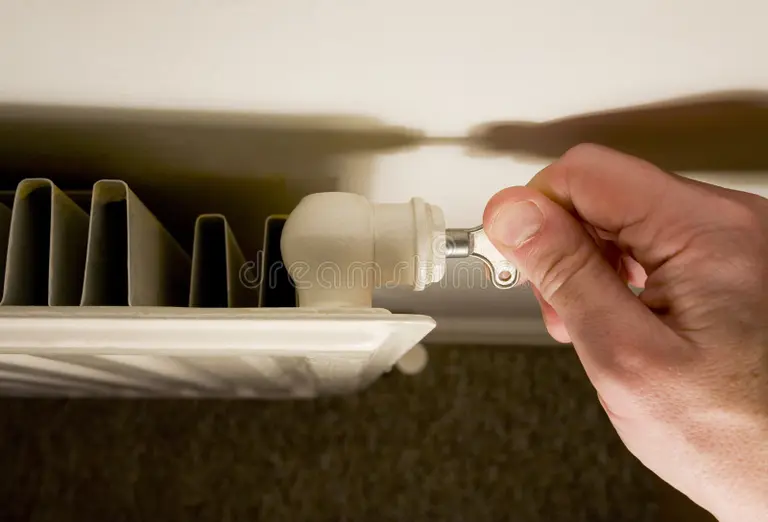
Step 2: Find the bleed valve
The bleed valve is usually located at the top corner of the radiator.
It has a small square pin in the centre where the radiator key fits.
Place your towel underneath to catch any water.
Step 3: Open the valve
Insert the radiator key and slowly turn it anti-clockwise.
You should hear a gentle hissing sound.
This is the trapped air escaping.
There’s no need to remove the valve completely—a quarter to half turn is usually enough.
Step 4: Wait for water
Once the air has escaped, water will begin to flow steadily from the valve.
As soon as this happens, close the valve by turning the key clockwise.
Don’t overtighten it.
Simply close it until it’s snug.
Step 5: Check the boiler pressure
After bleeding one or more radiators, your boiler pressure may drop slightly.
Check the pressure gauge.
For many combi boilers, the pressure should normally be around 1 to 1.5 bar when the system is cold, although always follow the manufacturer’s guidance for your specific boiler.
If the pressure is too low, you may need to top it up using the filling loop.
Step 6: Turn the heating back on
Switch the heating back on and allow the system to warm up.
The radiator should now heat evenly from top to bottom.
If it doesn’t, another issue may be causing the problem.
What if the radiator is still cold?
If bleeding doesn’t solve the issue, the problem may not be trapped air.
Common causes include:
Sludge inside the radiator
If your radiator is hot at the top but cold at the bottom, sludge is usually the culprit.
A power flush or radiator flush may be needed.
Faulty radiator valve
The thermostatic radiator valve (TRV) can sometimes stick, preventing hot water from flowing into the radiator.
Heating system imbalance
If some radiators heat much faster than others, your heating system may need balancing.
How often should you bleed your radiators?
Most homes only need to bleed radiators once or twice a year.
Many homeowners do this:
- Before winter.
- When switching the heating back on after summer.
- Whenever they notice cold spots or strange noises.
If you find yourself bleeding radiators frequently, there could be an underlying problem that needs investigating.
Common mistakes to avoid
Avoid these common errors:
❌ Bleeding the radiator while the heating is on.
❌ Opening the valve too far.
❌ Forgetting to check the boiler pressure afterwards.
❌ Overtightening the bleed valve.
❌ Ignoring repeated air build-up.
If air keeps returning, it’s worth asking a heating engineer to inspect the system.
Frequently Asked Questions
Which way do you turn a radiator key?
Turn it anti-clockwise to release the trapped air and clockwise to close the valve.
Should water come out?
Yes.
After the trapped air escapes, water should begin flowing steadily.
That’s your signal to close the valve.
Why is only one radiator cold?
It could be trapped air, sludge or a faulty radiator valve.
Bleeding is usually the first thing to try.
Is bleeding radiators dangerous?
Not usually.
As long as the heating is switched off and the radiator has cooled down, it’s a simple and safe DIY task.
Final thoughts
Bleeding a radiator is one of the quickest ways to improve your heating system.
If your radiator is cold at the top, releasing trapped air can often restore full heat in just a few minutes.
However, if the problem keeps coming back or the radiator stays cold after bleeding, it’s likely time to call a professional to investigate.
Find a trusted heating engineer
Need help with your heating system?
Use The Right Guy to compare trusted local heating engineers and Gas Safe registered professionals for radiator repairs, boiler servicing and central heating maintenance.
Own a heating or plumbing business? Create your free business listing on The Right Guy and help more homeowners discover your services.

Author: manager
Company test